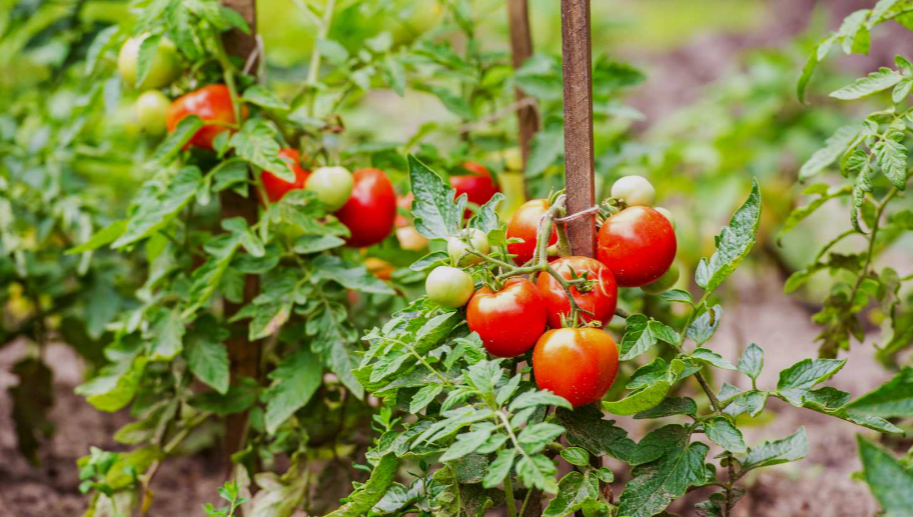
Indeterminate tomato varieties are the vining tomatoes that keep growing, flowering, and ripening fruit all season until frost shuts them down. Where a determinate plant stops at a set size and delivers most of its crop in a few weeks, an indeterminate plant keeps adding new stem, new flower clusters, and new tomatoes for months. That long, steady harvest is why gardeners who want fresh tomatoes all summer reach for them first.
Size is the first thing to plan for. North Carolina State’s extension leaflet puts indeterminate plants at 5 to 8 feet tall, with a fruit cluster forming on the stem between every third leaf, and other sources describe vines of 6 to 10 feet or even 12 feet. Dwarf selections stay 3 to 4 feet, but every one of these plants needs a strong stake, cage, or trellis, along with regular pruning to keep the vine under control.
These plants dominate the tomato world. Wikipedia counts more than 10,000 tomato varieties, and one gardening list of popular varieties found that nearly every tomato on it was indeterminate, including most heirlooms and most cherry tomatoes. Days to maturity vary widely, and Colorado State University Extension sorts them as early at under 69 days, midseason at 70 to 80 days, and late beyond 81 days, all counted from transplanting.
What follows covers 40 indeterminate tomato varieties, organized by type: beefsteaks and large slicers, dark and colorful heirlooms, early varieties, cherry and grape tomatoes, paste and plum tomatoes, and a ribbed Italian classic. Days to maturity and fruit sizes differ between sources and regions, so treat the numbers as a guide rather than a promise. Where sources disagree, the entries show the range.
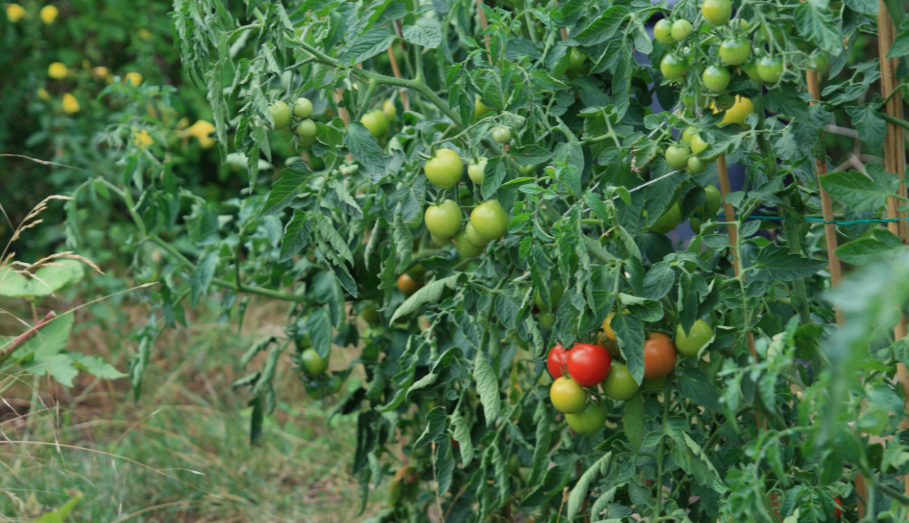
Beefsteaks and Large Slicers
Brandywine
Brandywine is an heirloom beefsteak whose variety dates back to 1885, and it’s one of the most celebrated tomatoes in American gardens. Fruit can reach up to 24 ounces, though Rutgers lists a more typical 10 to 16 ounces on a late-season, open-pollinated plant. Wikipedia’s variety list adds that it has potato-leaf foliage and often shows green shoulders.
Maturity runs from about 80 to 100 days depending on the source, with Colorado State listing 80 days and the University of California Master Gardeners listing 85. That long season means it does best where summers are warm and extended. As a vigorous indeterminate plant it needs a sturdy cage or trellis, and it’s a parent of newer crosses such as Big Brandy.
Cherokee Purple
Cherokee Purple’s modern story begins with Craig LeHoullier of Raleigh, North Carolina, who received a packet of seeds from John Green of Sevierville, Tennessee. Green’s seeds had been passed down for more than 100 years, and the family said they were originally given to them by the Cherokee Nation. Washington State University Extension describes it as a pre-1890s Tennessee Valley heirloom known for a deep dusky purple-pink color, a sweet, spicy flavor, and huge beefsteak fruit.
The University of California Master Gardeners list fruit at about 12 ounces and maturity between 75 and 90 days, while Wikipedia gives 8 to 12 ounces and 70 to 80 days. The spread shows how much fruit size and timing shift with climate. Texas A&M AgriLife includes it among its recommended heirlooms, which says a lot about how well it performs across very different regions.
Better Boy
Better Boy was introduced in 1964 by Petoseed, where breeders John Peto and Paul Thomas developed it as an improved relative of Big Boy. The University of California Master Gardeners list fruit of 6 to 16 ounces in about 72 days and describe it as highly adaptable, thriving in most climates with very good disease resistance. Its resistance to Verticillium wilt, Fusarium wilt, and nematodes is shown by the V, F, and N codes on seed packets.
It holds an unusual record: in 1987, a gardener named Charles Wilber won a Guinness World Record for harvesting 342 pounds of fruit from a single Better Boy plant, according to Tomato Dirt. The same source says more than 2,000 home gardeners named it one of the best tomatoes to grow in a 2009 Mother Earth News poll. Texas A&M describes it as a firm, slicer-type tomato, which fits its reputation for dependable sandwich slices.
Big Boy
Big Boy was developed by Dr. Oved Shifriss at W. Atlee Burpee & Company and released in 1949. It’s best known as the first wildly popular hybrid tomato, and seed packets still sometimes carry the Burpee’s Big Boy name. Rutgers’ variety list describes a mid-season hybrid with fruit of about a pound.
Although it’s technically not an heirloom, it’s among the most established tomatoes in American gardens. Fruit is larger than typical grocery store tomatoes but smaller than giants like Mortgage Lifter. The plant needs a heavy-duty cage, and Better Boy was later bred and marketed as an improved version.
Big Beef
Big Beef is a hybrid that won an All-America Selections award in 1994, as Washington State’s variety list notes. The University of California puts its maturity at 73 days and its fruit at 10 to 12 ounces. Texas A&M says it can get tall but is reliable, producing when other varieties won’t.
Ohio State’s extension service, as relayed by Farm and Dairy, describes the flavor as traditional tomato flavor, good for slicing, salads, sauce, and canning, with fruit of about 10 ounces. That versatility makes it a good all-purpose choice for gardeners who don’t want to grow separate sauce and slicing types. Because it grows tall, a strong stake or cage is worth the effort.
Mortgage Lifter
Mortgage Lifter was developed in the 1930s by Marshall Cletis Byles of Logan, West Virginia, better known as Radiator Charlie because he ran a radiator repair business. Rutgers reports that he crossed the largest tomatoes he could find with the German Johnson tomato. The University of California Master Gardeners say he sold plants for six years and earned enough to pay off his $6,000 mortgage, which gave the tomato its name.
It’s a beefsteak with fruit that the University of California lists at 16 to 32 ounces and about 80 to 90 days to maturity. UC garden writers describe it as indeterminate with resistance to Verticillium, Fusarium, and nematodes. Seed sellers and gardeners report weights from 1 to 2 pounds, and one seed company claims up to 4 pounds.
Kellogg’s Breakfast
Kellogg’s Breakfast is a large orange beefsteak heirloom with a sweet, low-acid flavor. The University of California notes that it came from West Virginia and was preserved and named by a Michigan gardener, Darrell Kellogg. It matures in roughly 80 to 90 days.
The University of Delaware Botanic Gardens describes it as solid and meaty throughout, with a mild flavor. That dense flesh makes it a good slicer for sandwiches. As an indeterminate vine, it needs strong support to carry its heavy fruit.
Yellow Brandywine
Yellow Brandywine is a yellow-fruited relative of the famous heirloom, listed by Johnson’s Garden Center with fruit of 12 to 24 ounces. Its description highlights exceptional quality, a creamy texture, and a rich taste. It takes about 90 days to mature.
That long timeline puts it in Colorado State’s late category of more than 81 days. Gardeners in short-summer regions may struggle to ripen it before frost. In a long, warm season it rewards the wait with some of the largest fruit in this list.
Also Read: Difference Determinate and Indeterminate Tomatoes
Stripey
Stripey is a large heirloom with yellow-orange stripes, listed by Johnson’s Garden Center at 1.5 to 2 pounds per fruit. It’s low in acid and suited to salads, and it matures in about 80 days. The plant is indeterminate, so it keeps growing and flowering all season.
At 80 days it falls at the top of Colorado State’s midseason range. Fruit this heavy needs firm support to keep the branches from breaking. Its mild, low-acid flavor suits people who find red tomatoes too sharp.
Maxwell’s Big Italian
Maxwell’s Big Italian is a large, open-pollinated heirloom that Rutgers lists as an early-season variety with fruit around 16 ounces. It’s classified as indeterminate, so it grows as a vine. Its name signals the big, Italian-style fruit it’s known for.
Early maturity is useful in gardens with short summers, where late heirlooms may never ripen. Fruit this big adds a lot of weight to the plant. A strong cage or trellis is the safest way to support it.
Big Brandy
Big Brandy is a mid-season hybrid from Rutgers’ variety list, with fruit of about 12 ounces. It’s a cross between Brandywine and New Big Dwarf, and Rutgers lists the result as indeterminate. It appears in the same Rutgers list as Brandywine, Mortgage Lifter, and Burpee’s Big Boy.
Its Brandywine parent matures late, at 80 to 100 days, while Big Brandy is listed as mid-season. That faster timing makes the cross attractive to gardeners who want heirloom-style flavor without a very long wait. Like its parents, it needs staking or caging.
Dark and Colorful Heirlooms
Black Krim
Black Krim comes from the Crimea region, with the University of California tracing it to the Isle of Krim in the Black Sea. Washington State describes the fruit as dark red-purple, turning nearly black in sunny conditions. The fruit weighs about 8 ounces and takes 70 to 90 days to mature.
Wikipedia’s variety list notes rather low production, which is a common trade-off with dark heirlooms. Texas A&M lists it as a Master Gardener recommendation, a sign of strong local performance. It’s a good choice for gardeners who prize flavor over yield.
Chef’s Choice Black
Chef’s Choice Black is a hybrid that Colorado State lists at about 75 days in its indeterminate slicing group. A retail listing describes it as an early beefsteak-type tomato with meaty flesh. At 75 days it falls in the midseason range.
It offers the dark-fruited look of heirlooms with a hybrid’s reliability. That makes it a good first step into black tomatoes for gardeners wary of heirloom problems. Like other indeterminate types, it needs staking and pruning.
Pruden’s Purple
Pruden’s Purple is an open-pollinated heirloom that Colorado State lists at 67 days, which falls in its early category of under 69 days. Colorado defines a commercial heirloom as an open-pollinated variety introduced before 1940 or in circulation for more than 50 years. It appears in the heirloom table alongside Brandywine and Cherokee Purple.
An early heirloom is unusual, since many large heirlooms run 80 days or more. That makes it useful in northern gardens where long-season heirlooms can’t finish ripening. It’s still an indeterminate vine and needs support.
Japanese Black Trifele
Japanese Black Trifele is an open-pollinated heirloom that Colorado State lists at 76 days, placing it in the midseason range. It appears in Colorado’s heirloom table and is classed as indeterminate. As the name suggests, the fruit is dark, which adds a distinctive look to a mixed planting.
Because it’s a vigorous vine, it needs staking and regular pruning. Its midseason timing makes it a good companion to an early variety. Together they extend the harvest across the summer.
Arkansas Traveler
Arkansas Traveler was developed at the University of Arkansas and released in 1968, according to the University of California’s 2024 variety list. Fruit weighs 6 to 8 ounces and has a soft, meaty texture with few seeds. Johnson’s Garden Center lists it at 90 days, while another variety list gives about 75 days.
A Southern heirloom, it’s described in one variety list as heat tolerant, with a mild, sweet flavor. Colorado State lists it as an open-pollinated late variety. That combination suits regions with long, hot summers.
Green Zebra
Green Zebra is a green tomato with yellow stripes, ripe when the green fruit gets a yellow blush, according to a retail listing. Fruit is small to medium, about 3 to 5 ounces, with a tangy, zingy flavor. Sources put maturity at 72 to 80 days.
Colorado State lists it as an open-pollinated late indeterminate. The University of California Master Gardeners recommend it for slicing into wedges for salads. Knowing when it’s ripe is the main challenge, since the color change is subtle.
Granny Smith
Granny Smith is an indeterminate tomato that stays green when ripe, weighing about 8 ounces, according to Johnson’s Garden Center. It’s described as great for frying and a good keeper, maturing in about 72 days. The name points to its apple-like green color.
At 72 days it falls in the midseason range. Its keeping quality means ripe fruit holds longer after picking than most tomatoes. That helps gardeners who can’t harvest the moment fruit is ready.
Lemon Boy
Lemon Boy is a hybrid with bright lemon-yellow fruit, a mild, sweet flavor, and fruit of about 7 ounces, according to Ohio State. Colorado State lists it as a late indeterminate. Rutgers Cooperative Extension also lists it among varieties it recommends.
Its mild, sweet flavor makes a gentle contrast to tangier red types. It also adds color to salads and platters. As an indeterminate vine, it needs support all season.
Early Varieties
Early Girl
Early Girl is a hybrid named to complement the existing Better Boy variety, and Wikipedia lists it at 63 days with medium-sized red fruit. Washington State describes large, dependable, early harvests of round, red, meaty tomatoes. Ohio State lists fruit at 4 to 5 ounces with good flavor.
Reported maturity ranges from about 50 to 70 days depending on the source and region, with Colorado State at 50 days and the University of California Master Gardeners at 57 to 59. Johnson’s Garden Center lists 57 days and 4 to 6 ounce fruit. That spread shows how much season length and climate matter.
New Girl
New Girl is a hybrid that matures in about 62 days. The University of California Master Gardeners say it’s even more disease resistant than Early Girl, with better flavor. Colorado State also lists it as a 62-day indeterminate.
The University of California’s variety table lists plants at 5 to 6 feet tall and 2 to 3 feet wide, and describes it as a big climber. That height means it needs a tall trellis despite its early fruit. It’s early, vigorous, and very disease resistant.
Summer Girl
Summer Girl is a hybrid that the University of California lists at 49 to 52 days, among the fastest on any list. It makes round, reddish fruit on plants 55 to 60 inches tall and 40 to 45 inches wide. The table calls it a high yielder and early producer with disease resistance.
At under 52 days, it’s well inside Colorado State’s early category. That speed makes it useful in cool or short-season regions. Because the plant is indeterminate, it keeps producing long after the first fruit.
Stupice
Stupice is an early heirloom, listed at about 60 days by the University of California. Small, slightly oval red fruit grows on vines of 5 to 7 feet. The table notes an early producer with excellent flavor.
Other lists put maturity between 55 and 60 days, and Gardening Channel counts it among its heirloom varieties. A vine that tall needs strong support despite the small fruit. Its early timing is the reason gardeners in cool climates have grown it for decades.
Cherry and Grape Tomatoes
Sungold
Sungold is a hybrid cherry with golden-orange fruit that Ohio State describes as very sweet. The University of California lists it at about 57 days, and Texas A&M lists it as a yellow cherry that’s very sweet. It’s among the most popular cherry tomatoes grown.
Washington State’s list notes that a newer variety, Esterina, is sweeter and more crack resistant than Sungold, implying that Sungold can split in wet weather. University of Florida extension guidance says most cherry tomatoes are indeterminate, and Sungold follows that pattern with a tall, vigorous vine. Plan on a strong trellis.
Super Sweet 100
Super Sweet 100 is a red cherry hybrid listed at 65 days. The University of California says long fruiting stems produce 100 or more super-sweet, 1-inch fruits. Ohio State notes that the fruit grows in clusters.
Washington State calls it an improved cousin of Sweet 100 with better disease resistance. Texas A&M lists it as productive and sweet. A single plant can supply a household with snacking tomatoes all summer.
Sweet 100
Sweet 100 is a hybrid cherry that Ohio State describes as very sweet, with fruit in clusters about half an inch across. Colorado State lists it as a mid-season hybrid. It’s an indeterminate vine and grows tall.
Super Sweet 100 and Sweet Million are described as improved versions of it, with better disease resistance and, in Sweet Million’s case, crack tolerance. Like them, it needs a sturdy trellis. It remains a common choice for children’s gardens and snacking.
Sweet Million
Sweet Million is an improved version of Sweet 100, according to Ohio State, with tolerance to cracking and disease resistance. Fruit grows in the same long clusters. It’s a hybrid cherry tomato.
That makes it a reliable choice in wet or humid weather, when cherry tomatoes tend to split. It’s an easy upgrade for anyone who already grows Sweet 100. As an indeterminate type, it needs staking.
Black Cherry
Black Cherry is an open-pollinated cherry with dusky purple-brown fruit about 1 to 2 ounces. The University of California Master Gardeners describe it as a vigorous plant with large vines that yield very well, producing grape-like tomatoes with a rich, complex flavor. Maturity is listed at 75 days there, 65 days by Colorado State, and 64 days by another seed company.
That spread of 64 to 75 days shows how much timing varies by site. It’s a favorite for adding dark color to a cherry tomato mix. Its big vines need a tall support.
Juliet
Juliet is a red grape-type hybrid, 2 to 2.5 inches long, maturing in about 60 days. The University of California Master Gardeners call it one of the most disease-resistant varieties in their trials. It’s described as a larger sister variety of Santa.
The University of Delaware Botanic Gardens notes the fruit is crack resistant and sweet, and it clings to the vine longer. Johnson’s Garden Center lists clusters of grape-like fruits of about 1 ounce that don’t crack. It’s a dependable, long-lasting producer.
Yellow Pear
Yellow Pear is a pre-1800 heirloom with yellow, pear-shaped fruit and a mild, sweet flavor. The University of California lists the fruit at about 2 inches and 78 days to maturity. Sources range from 70 to 85 days.
One retail listing describes it as bearing clusters of mild, sweet fruit, so plan a strong trellis to support the heavy trusses. It’s among the oldest tomatoes still in common use. That long history makes it a staple of heirloom gardens.
Sugary
Sugary is a hybrid cherry listed at 60 days. The University of California table describes it as extra sweet, early, and high yielding, with fruit in clusters on plants about 47 inches tall. Ohio State notes dark pink fruit of about half an ounce that’s good for gardens or containers.
Its modest height makes it easier to manage than the tallest cherry types. It’s a good choice for gardeners with limited space. Even so, it’s indeterminate and benefits from a stake.
Sweet Gold
Sweet Gold is a hybrid cherry that the University of California lists at 70 days, with plants 5 to 7 feet tall and a full, sweet flavor. It’s described as a vigorous climber that can be early. Colorado State lists it as an early indeterminate hybrid.
Because it climbs so vigorously, it needs a tall trellis. It’s a good choice for gardeners who want an early, climbing cherry. At 70 days it sits at the start of Colorado State’s midseason range, even though Colorado classes it as early.
Sunsugar
Sunsugar is an orange cherry hybrid that Ohio State calls medium-sized and very sweet. The University of Delaware Botanic Gardens describes it as its best-selling cherry tomato, and its catalog lists maturity at about 62 days. It’s an indeterminate vine.
Its sweet flavor and steady production have made it a favorite. At 62 days it falls well inside Colorado State’s early range. It needs a sturdy trellis, like other cherry types.
Chocolate Sprinkles
Chocolate Sprinkles is a hybrid cherry with brick-red fruit marked by dark green stripes, listed at 1 to 2 ounces. Johnson’s Garden Center lists disease resistance with the codes F, N, and T. Colorado State lists it as an early indeterminate.
Retail and extension sources describe slightly different colors, so expect some variation. It’s a fun, sweet addition to a mixed cherry planting. The vine grows tall and needs support.
Vernissage Black
Vernissage Black is a saladette to cherry-size tomato that Texas A&M lists as indeterminate. The fruit is red with dark green to purple striping. It’s recommended in a regional variety list.
It appears on Texas A&M’s recommended list, so it has been vetted for Texas conditions. Texas A&M notes that the plants get big, so give them room. A strong trellis is the best way to manage them.
Purple Boy
Purple Boy is a hybrid that Texas A&M lists as indeterminate, producing saladette to small tomatoes. It’s described as a favorite of one local Master Gardener. The list also mentions resistance to Verticillium and Tomato Mosaic Virus alongside it.
Disease resistance like that helps in gardens with a history of tomato problems. It’s a good choice for gardeners who want a dark, small-fruited tomato. Like other indeterminate types, it needs support.
Paste and Plum Tomatoes
San Marzano
San Marzano is an Italian heirloom paste tomato, with slightly rectangular red fruit, dense flesh, and low moisture. Colorado State lists it as open pollinated at 80 days, while Johnson’s Garden Center lists 70 to 80 days and fruit of about 4 ounces. The University of Delaware Botanic Gardens lists 85 to 90 days and says it has superb flavor.
Most sources class it as indeterminate, though a determinate strain is also sold, so check the packet. As a vine, it keeps producing for sauces all season. That’s unlike many paste tomatoes, which ripen their crop at once.
Amish Paste
Amish Paste is an heirloom paste tomato dating to around the turn of the 20th century, with fruit of about 8 ounces. The University of Delaware Botanic Gardens calls it among the best for canning. Johnson’s Garden Center describes the flesh as low in acid.
Maturity ranges from 74 to 85 days, depending on the source, with Colorado State at 82 days. That spread falls in the midseason to late range. As an indeterminate vine, it produces over a long period.
Ukrainian Purple
Ukrainian Purple is an open-pollinated plum tomato that Colorado State lists at 80 days, with 6-ounce purple and red fruit. It’s classed as indeterminate. Its fruit is purple and red, and it’s classed as a plum type.
It brings the dark color of black tomatoes to a plum shape. Colorado lists it with the plum and paste group. At 80 days it sits at the top of the midseason range.
A Ribbed Italian Classic
Costoluto Fiorentino
Costoluto Fiorentino is a ribbed Italian tomato that Texas A&M lists as indeterminate. Its deep ridges give the fruit a scalloped look. One seed company lists maturity at 85 days.
Texas A&M notes that the plants get big, so plan strong support. At 85 days it falls in Colorado State’s late category. Its ribbed shape sets it apart from the round slicers that dominate most gardens.
Key Takeaways:
- Indeterminate tomatoes continue growing and producing new shoots and fruit throughout the growing season until stopped by cold, disease, or other conditions.
- They generally develop long, sprawling vines, making sturdy stakes, cages, trellises, or other supports useful for keeping plants upright.
- Indeterminate varieties include tomatoes with many different fruit sizes, shapes, colors, and flavors, from small cherry tomatoes to large beefsteak types.
- Because they keep producing over a longer period, they are often a good choice for gardeners who want repeated harvests rather than one concentrated crop.
- Regular pruning, tying, and removal of unwanted suckers can help manage vigorous growth, although pruning needs vary among varieties.
- Choosing the right variety depends on available garden space, climate, desired fruit characteristics, support system, and preferred harvest period.