Tea Tree (Leptospermum spp.): The Plant Behind Manuka Honey
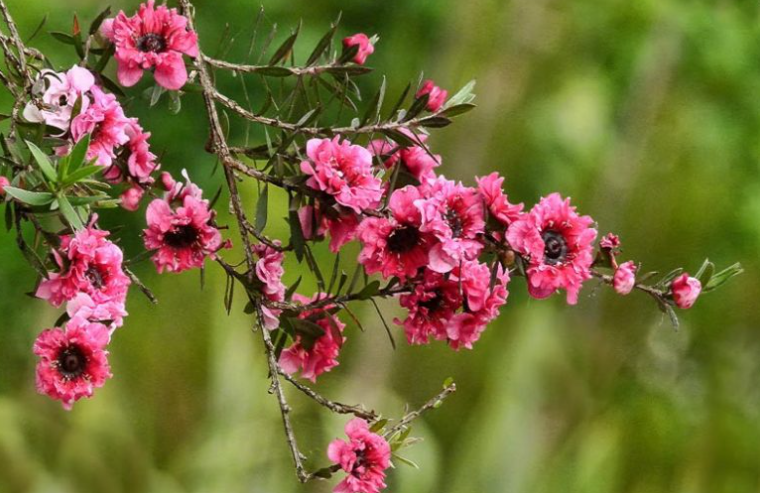
Tea tree is the common name for roughly 90 species in the genus Leptospermum, a group of small-leaved, spiky, evergreen shrubs and small trees almost entirely native to Australia, with a handful of species also found in New Zealand and parts of Southeast Asia. The name has nothing to do with the tea plant that produces the beverage in your cupboard, a completely unrelated species, and everything to do with a desperate attempt by sailors to avoid scurvy on the other side of the world.
The genus’s single most commercially significant member, Leptospermum scoparium, is the source plant behind manuka honey, a product that’s turned a modest, wiry Australasian shrub into a genuine global wellness phenomenon worth considerably more than its humble appearance might suggest. Understanding how that happened, and clearing up a genuinely common point of confusion with a completely different “tea tree” used for essential oil, makes for one of the more interesting stories in the Australian and New Zealand native plant world.
This guide covers the genus’s classification and naming history, how to identify it, where it grows, the naming confusion that trips up even experienced gardeners, its connection to manuka honey, and what it takes to grow one successfully.
Botanical Classification
Leptospermum belongs to the myrtle family, Myrtaceae, and was first formally described by the naturalist Johann Reinhold Forster in 1776. Current estimates place the genus at roughly 86 to 90 species, the overwhelming majority of them native to Australia, with 83 species occurring there and all but 2 of those found nowhere else on Earth.
The genus name itself comes from the Greek words leptos, meaning slender, and sperma, meaning seed, a direct reference to the narrow seeds the plants produce. A handful of Leptospermum species also occur naturally in New Zealand and scattered parts of Southeast Asia, but the genus’s center of diversity, by a wide margin, remains southern Australia. That overwhelming concentration of species within a single country is typical of several other iconic Australian plant genera, reflecting the continent’s long geographic isolation and the considerable diversification that isolation allowed over millions of years.
Brief History
The common name “tea tree” traces directly back to the 1770s and the voyages of Captain James Cook. Cook’s crew brewed the leaves of several Leptospermum species into a tea-like drink specifically to help prevent scurvy during their long sea voyages, and the name stuck permanently to the plant group as a result, even though the beverage itself bore little resemblance to true tea beyond the method of preparation.
That early practical use set the stage for a considerably more commercially significant chapter in the plant’s history centuries later. Manuka, Leptospermum scoparium, evidence suggests actually originated in Australia before the onset of a major arid period in the Miocene epoch, later dispersing to New Zealand through a long-distance dispersal event sometime within roughly the last 20 million years. Today it’s considerably more common in New Zealand than in its original Australian homeland, a genuine reversal of fortune across its 2 native ranges.
Identifying Characteristics
Leptospermum species share a distinctive general look: small, narrow, often spiky evergreen leaves, wiry branching stems, and small 5-petaled flowers that genuinely resemble tiny wild roses, typically white, pink, or red depending on the species or cultivar. That rose-like flower shape is part of what’s made several species popular ornamental garden plants well beyond their native range.
Size varies considerably across the genus. Manuka itself typically grows as a narrow shrub reaching 6 to 10 feet tall and wide in cultivation, though it can occasionally take tree form and reach 15 to 20 feet or more under favorable conditions. Other species range further in both directions: the alpine downy tea tree grows to about 8 feet with notably tiny, delicate leaves, while the woolly tea tree can reach 12 feet with distinctive silvery foliage, and some coastal species like Leptospermum laevigatum are specifically adapted to growing directly in beach sand.
Native Range and Habitat
Leptospermum’s native range is overwhelmingly concentrated in Australia, particularly the southern parts of the country, with manuka itself found growing naturally in New South Wales, Victoria, and Tasmania in addition to its considerable presence across New Zealand, including the Chatham Islands. Within that range, individual species occupy a genuinely wide variety of habitats, from exposed coastal sand dunes to alpine slopes to the damp New Zealand forest understory.
That ecological flexibility across the genus reflects millions of years of diversification following Leptospermum’s likely Australian origin, with individual species adapting to everything from arid, nutrient-poor soil to considerably wetter, cooler conditions depending on where within that broad range they ended up.
The Tea Tree Naming Confusion
Here’s where real, practical confusion sets in for anyone shopping for tea tree products or plants. The “tea tree” most people associate with tea tree oil, the essential oil sold for its antiseptic properties, is actually Melaleuca alternifolia, a completely different genus within the same broader myrtle family rather than any species of Leptospermum at all.
Both genera picked up the same common name through the same general historical pattern of early settlers and sailors brewing various native Australian myrtle-family leaves into makeshift tea, but they are genuinely distinct plants used for largely different commercial purposes today. Leptospermum species, particularly manuka, are primarily valued for their honey and as ornamental garden plants, while Melaleuca alternifolia is grown specifically for essential oil distillation. Checking the scientific name rather than relying on “tea tree” alone is the only reliable way to know which plant, and which product, you’re actually dealing with.
Manuka Honey
Manuka honey is produced when honeybees gather nectar specifically from Leptospermum scoparium flowers, and it’s developed a considerable reputation for antibacterial and antifungal properties beyond those of standard honey. That reputation has turned manuka into a genuine premium product, authenticated in New Zealand through a certification system known as UMF, which verifies a jar’s specific antibacterial potency before it reaches store shelves.
A related but distinct Australian product called jelly bush honey comes from a different species entirely, Leptospermum polygalifolium, also called lemon-scented tea tree, and carries some similar properties without being identical to true manuka honey from Leptospermum scoparium specifically. Given manuka’s considerable commercial value, plant breeders have also made attempts, with only limited commercial success so far, to cross showier New Zealand cultivars with Australian Leptospermum species that show greater resistance to fungal disease.
Manuka vs. Kanuka
Adding yet another layer of naming complexity, manuka is frequently confused with kanuka, a closely related but botanically distinct New Zealand native that was only relatively recently reclassified into its own separate genus, Kunzea, rather than remaining within Leptospermum. The 2 plants share a similar general appearance and overlapping native range, which is exactly why confusion between them persists even among people reasonably familiar with New Zealand native flora.
The most practical way to tell them apart in the field comes down to size: manuka typically grows as a shrub or small tree reaching roughly 13 to 26 feet, while kanuka usually grows considerably taller, commonly reaching 33 to 50 feet under good conditions. That significant height difference, once a plant reaches reasonable maturity, is usually the clearest giveaway available without closer botanical examination of the flowers or foliage.
Landscape Uses
Most Leptospermum species make genuinely desirable garden plants, valued for their fine, textured, evergreen foliage and profuse, rose-like spring flowers. The hardiest species tolerate a reasonable range of garden conditions, and numerous cultivars have been developed specifically for ornamental use, offering a range of flower colors from white through pink to deep red along with variations in overall plant size and form.
Coastal and exposed sites are a particular strength for several species, since their native adaptation to sandy, windy, nutrient-poor Australian and New Zealand coastal conditions translates directly into genuine garden usefulness for a difficult exposed planting site elsewhere. Beyond ornamental use, some Leptospermum species also serve as food plants for various native insects within their natural Australian range. A mass planting of several Leptospermum cultivars together, mixing flower colors and bloom timing, can also extend a garden’s spring floral display considerably longer than relying on just a single variety alone.
Growing Considerations
According to the Missouri Botanical Garden’s Plant Finder, Leptospermum scoparium is hardy in USDA zones 9 through 10 and prefers acidic, fertile, well-drained soil in full sun, though it tolerates light shade reasonably well too. Young plants benefit from consistently moist soil while establishing, but mature, established plants actually prefer moderate, even moisture rather than consistently wet conditions, and heavy, poorly draining soil should be avoided entirely.
Annual pruning right after the flowering period helps maintain a dense, attractive shape rather than letting the plant become leggy or sparse over time. Species forms can be propagated reliably from seed, but named cultivars need to be propagated from cuttings instead to preserve their specific flower color and growth habit true to the parent plant.
Invasiveness and Ecological Notes
Despite its considerable ornamental and commercial value, Leptospermum scoparium has escaped cultivation and become a genuine invasive species in parts of Hawaii, a reminder that a plant perfectly well-behaved in its native Australian and New Zealand range can become a real problem once introduced somewhere lacking the natural checks that kept it in balance at home. Checking local invasive species guidance before planting manuka outside its native range is a genuinely worthwhile step, particularly in a climate warm and humid enough to resemble the conditions that allowed it to spread so successfully in Hawaii.
Within its native range, manuka also supports real ecological relationships, including serving as a food source for the larvae of at least one native New Zealand beetle species, and its flowers draw a range of native pollinators beyond the honeybees responsible for manuka honey production specifically.
The Bottom Line
Tea tree, the genus Leptospermum as a whole, tells a genuinely layered story: a group of roughly 90 mostly Australian shrubs named by sailors desperate to avoid scurvy, one species among them turned into a globally valuable honey crop, and a persistent naming mix-up with an entirely different plant used for essential oil that trips up even careful shoppers. Whether you’re drawn to manuka for its honey, its ornamental rose-like flowers, or simply its remarkable evolutionary journey from Australia to New Zealand, knowing which specific Leptospermum species, or which entirely different genus, you’re actually dealing with makes all the difference.