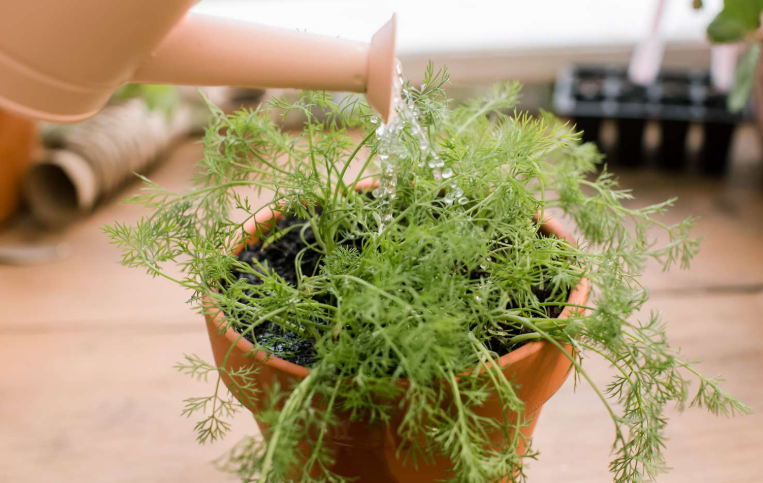
Dill, botanically Anethum graveolens, is an aromatic annual herb in the parsley family, believed to have originated somewhere across the Mediterranean, southern Russia, and central and southern Asia before becoming one of the most widely cultivated culinary herbs on Earth. It’s genuinely the sole species in its own genus, Anethum, a relatively unusual botanical status that sets it apart from larger, more diverse culinary herb genera like Allium or Mentha.
Commercial dill production today is concentrated in a genuinely wide spread of countries, with India and Pakistan recognized as the principal growing regions, alongside significant production in Egypt, Mexico, the Netherlands, the United States, Hungary, and Germany. According to Oregon State University Extension, dill seed is remarkably small and numerous, running approximately 14,000 seeds per ounce, and commercial growers plant anywhere from 1 to 2 pounds of seed per acre for fresh market production, scaling up to 5 to 8 pounds per acre when the crop is grown specifically for oil distillation.
Beyond the kitchen, dill carries real ecological value as a host plant for several butterfly species, including the black swallowtail and anise swallowtail, whose caterpillars feed on the plant’s stems and foliage. The ‘Fernleaf’ cultivar in particular earned recognition as a 1992 All-America Selections winner, a genuine industry distinction awarded to plant varieties judged to perform exceptionally well in trial gardens across North America.
Dill cultivars generally fall into 2 broad breeding categories, those developed mainly for leaf production and selected to resist bolting, and those bred mainly for abundant seed and flower head production, alongside at least one genuinely distinct botanical variety grown specifically in South Asia. What follows covers 21 types of dill varieties.
Bouquet
Bouquet is one of the most widely available dill cultivars, productive for both foliage and seed, growing 2 to 3 feet tall with attractive blue-green foliage and large seed heads. Its dual-purpose productivity has made it a longtime standard choice for home gardeners wanting both fresh dill weed and seed for pickling from the same planting.
It thrives in full sun and rich, well-drained soil, generally reaching maturity within about 70 days from seed. Its considerable popularity and easy availability have made it something of a default choice wherever dill seed is sold.
Dukat
Dukat is a vigorous Danish cultivar known for strong flavor, high aromatic oil content, and large flower umbels, with foliage that stays greener and persists longer on the plant than many other varieties. Its considerable disease resistance and reliably high yields have made it a longtime favorite among commercial growers specifically.
It thrives in full sun and rich soil, typically growing 36 to 48 inches tall. Its mild, sweet flavor, never bitter even as the plant matures, has made it a particularly forgiving variety for a gardener who can’t harvest leaves the moment they’re ready.
Superdukat
Superdukat is an improved selection of Dukat, bred for even higher essential oil content and very slow flowering, with uniform flower head height and a straight, clean growth habit that makes harvesting considerably easier. Its considerable height, reaching up to 5 feet under good conditions, makes it one of the larger dill cultivars commonly grown.
It thrives in full sun and rich, well-drained soil, and its slow-to-flower habit extends the usable leaf-harvest window considerably compared to faster-bolting varieties. Its combination of size and reliability has made it a favorite specifically among growers prioritizing seed production.
Fernleaf
Fernleaf is a compact, slow-bolting dwarf cultivar growing just 18 inches tall with extra feathery, fine-textured foliage, and its recognition as a 1992 All-America Selections winner reflects genuinely strong, independently judged garden performance. Its compact size has made it one of the most popular dill varieties specifically for container growing.
It thrives in full sun to partial shade and well-drained soil, and leaves retain their flavor longer after cutting than many other varieties. Its slow-bolting habit gives gardeners a considerably longer harvest window before the plant shifts energy toward flowering and seed.
Mammoth
Mammoth is a vigorous, large-growing cultivar reaching 3 to 5 feet tall, bolting relatively quickly and considered a top choice specifically for pickling given its robust flavor and generous foliage production. Its considerable size and productivity have made it a longtime garden staple for anyone growing dill primarily to flavor homemade pickles.
It thrives in full sun and rich, well-drained soil, growing quickly enough to supply a substantial pickling harvest in a single season. Its fast growth does mean a correspondingly faster transition to flowering, so timely harvest matters more with this variety than with a slower-bolting type.
Long Island Mammoth
Long Island Mammoth, closely related to standard Mammoth, is a tall, widely available cultivar with sparser, green foliage and large flower heads produced on multiple stalks, generally considered one of the best varieties specifically for pickling. The University of Florida IFAS Extension specifically recommends it as the dill variety that performs best in Florida’s growing conditions.
It thrives in full sun and a range of soil types, including organic muck soil, reaching about 30 inches tall at maturity. Its considerable regional adaptability and reliable pickling-quality seed heads have kept it a popular commercial and home garden choice for generations.
Delikat
Delikat is a cultivar valued for dense foliage that supports genuinely high leaf yields, making it a solid choice for a gardener prioritizing fresh dill weed over seed production. Its considerable foliage density sets it apart from varieties bred more specifically for flower and seed head size.
It thrives in full sun and rich, well-drained soil, performing reliably across a range of growing conditions. Its emphasis on leaf production has made it a practical choice for kitchens that use dill weed more often than dill seed.
Green Sleeves
Green Sleeves is a named dill cultivar recognized among the broader range of commercially available varieties, though detailed published descriptions of its specific distinguishing traits remain less widely documented than for some of the more thoroughly studied cultivars on this list. It’s generally grown and used in the same way as other foliage-focused dill varieties.
It thrives in full sun and well-drained soil, consistent with dill’s broader growing requirements. Its inclusion among recognized named cultivars reflects real, if less extensively documented, horticultural distinction from the straight species.
Hercules
Hercules is a slow-bolting, tetraploid cultivar, meaning it carries 4 full sets of chromosomes rather than the usual 2, bred specifically for foliage production and capable of reaching up to 5 feet tall under ideal conditions. Its tetraploid genetics are credited with its notably slow transition to flowering compared to standard diploid dill varieties.
It thrives in full sun and rich soil, suited to everything from baby leaf harvest to full-size leaf production, and performs well in containers and hydroponic systems. Its considerable height and slow-bolting habit together make it a strong choice for an extended fresh-cut harvest season.
Monia
Monia is a named dill cultivar included among the recognized commercial and garden varieties, though, like Green Sleeves, specific published details about its distinguishing growth habits remain comparatively limited. It’s grown under the same general conditions as other dill cultivars.
It thrives in full sun and well-drained, moderately rich soil. Its place among the broader list of named dill cultivars reflects genuine, if more lightly documented, recognition within the herb seed trade.
Tetra
Tetra is a tetraploid dill variety reaching 25 to 32 inches tall, favored specifically for its slow-bolting tendency, which extends the window for fresh leaf harvest before the plant shifts toward flowering. Its moderate height makes it a practical middle ground between compact container varieties and the larger, more sprawling cultivars grown mainly for seed.
It thrives in full sun and rich, well-drained soil, and its tetraploid genetics, shared with Hercules and Vierling, are part of a broader pattern of breeders using chromosome doubling specifically to slow bolting across several modern dill cultivars. Its reliable performance has made it a solid, if less famous, alternative to some of the more widely marketed slow-bolting varieties.
Vierling
Vierling is a tetraploid heirloom cultivar with dark blue-green foliage and notably strong, thick stems, and its flower and seed heads are popular commercially as a cut flower in addition to the plant’s culinary uses. Its considerable stem strength sets it apart from more delicate varieties whose stalks can flop under the weight of a large flower head.
It thrives in full sun and rich soil, typically reaching 36 to 60 inches tall at maturity. Its dual role as both a culinary herb and a genuine cut-flower crop has made it a favorite among growers supplying florists as well as kitchens.
Szmaragd
Szmaragd, sometimes sold under its English translation, ‘Emerald,’ is a popular Polish cultivar valued for good foliage and seed production alongside strong, well-regarded flavor. Its considerable popularity in its native Poland reflects a genuine regional breeding tradition distinct from the more commonly known Danish and American cultivars on this list.
It thrives in full sun and rich, well-drained soil, performing reliably for both leaf and seed harvest. Its balanced dual-purpose productivity has made it a practical all-around choice wherever it’s available.
Elephant
Elephant is a large, late-flowering cultivar that’s notably slow to bolt, typically reaching 36 to 48 inches tall at maturity. Its considerable size and extended vegetative period before flowering make it a strong choice for a gardener wanting a long season of fresh leaf harvest from a single planting.
It thrives in full sun and rich, well-drained soil, rewarding the extra space its substantial mature size requires. Its slow-bolting habit places it alongside Hercules, Tetra, and Superdukat among the varieties specifically valued for extending the leaf-harvest window.
Hera
Hera is a slow-bolting, compact cultivar with attractive dark green, almost blue foliage, reaching just 12 to 18 inches tall at maturity, which makes it particularly well suited to container growing. Its considerable compactness combined with genuine slow-bolting characteristics gives container gardeners a real option beyond the better-known Fernleaf.
It thrives in full sun to partial shade and well-drained soil, performing reliably in a pot as well as an open garden bed. Its bunching growth habit and manageable size have made it a popular choice specifically for small-space and patio herb gardens.
Teddy
Teddy is a named dill cultivar recognized within the broader range of commercially available varieties, grown and used similarly to other compact, leaf-focused cultivars on this list. Detailed published descriptions of its specific traits remain less extensive than for some of the more established varieties covered here.
It thrives in full sun and well-drained soil, consistent with dill’s general growing requirements. Its recognition as a distinct named cultivar reflects genuine, if more modestly documented, horticultural development within the dill seed trade.
Kronos
Kronos is a named dill cultivar within the broader commercial seed trade, grown under the same general conditions as other dill varieties and generally positioned alongside other seed-production-focused cultivars. Specific published details distinguishing its growth habit from other varieties remain comparatively limited in general horticultural literature.
It thrives in full sun and rich, well-drained soil. Its place among the recognized named dill cultivars reflects real commercial development, even where detailed public documentation is less thorough than for more widely marketed varieties.
Compatto
Compatto is a compact cultivar growing just 18 inches tall, with seeds carrying a notably strong flavor thanks to their high aromatic oil content. Its combination of small stature and intensely flavorful seed makes it a practical choice for a gardener with limited space who still wants a genuinely productive seed harvest.
It thrives in full sun and well-drained soil, fitting comfortably into a container or a small garden bed. Its strong seed flavor relative to its modest size has made it a favorite specifically among gardeners prioritizing dill seed over dill weed.
Ella
Ella is a compact, slow-bolting cultivar with dark green foliage, reaching just 10 to 16 inches tall, and it’s specifically well suited to containers, microgreen production, baby leaf harvest, and hydroponic growing systems. Its considerable compactness, even smaller than Hera, makes it one of the most space-efficient dill varieties available.
It thrives in full sun to partial shade and well-drained soil, performing reliably across a range of small-scale and controlled-environment growing setups. Its versatility across container, hydroponic, and microgreen production has made it a favorite among growers working with limited space or indoor systems.
Indian Dill
Indian dill, scientifically Anethum sowa and sometimes classified as Anethum graveolens var. sowa, is a genuinely distinct botanical variety grown primarily in the Indian states of Rajasthan, Gujarat, Maharashtra, Andhra Pradesh, and Madhya Pradesh. Unlike the annual or biennial European dill that dominates this list, Indian dill grows as a perennial, and its seeds are longer and narrower with paler ridges than standard European dill seed.
It carries a genuinely different essential oil chemistry too, with a higher dillapiole content and lower carvone content than European dill, giving it a more pungent flavor and a noticeably higher specific gravity in its extracted oil. Its distinct chemistry and perennial growth habit make it a genuinely separate botanical entity from the other 20 cultivars on this list, all of which belong to the same annual European species.
Goldkrone
Goldkrone is a vigorous, slow-to-bolt cultivar with dark green, highly aromatic foliage, producing high yields and flowering notably later than many other varieties. Its considerable resistance to premature flowering even under lower light conditions has made it a reliable choice for both fresh-cut and processing markets.
It thrives in full sun to part shade and rich, evenly moist soil, growing as tall as 5 feet if left to mature to the flowering and seed stage. Its dual value as a productive leaf crop and, later, an architecturally striking garden plant with genuinely attractive flower umbels has made it a favorite for gardeners wanting both culinary use and ornamental interest from the same planting.
Key Takeaways
- Dill (Anethum graveolens) is an annual herb in the Apiaceae family, grown mainly for its aromatic leaves and flavorful seeds.
- Dill varieties can differ in plant height, leaf density, maturity time, seed production, flavor, and tendency to bolt.
- Bouquet dill is a popular variety known for abundant foliage and large flower heads, making it useful for both leaves and seeds.
- Fernleaf dill is a compact variety with finely divided foliage that is well suited to containers and small gardens.
- Mammoth dill produces tall plants with substantial foliage and is often grown where there is enough space for vigorous growth.
- Dukat dill is valued for its relatively compact growth and strong, pleasant flavor, particularly when the leaves are harvested fresh.
- Delikat dill is known for its abundant, finely textured foliage and is primarily grown for its leaves.
- Dill varieties can be identified by leaf appearance, plant size, branching habit, flower heads, and seed characteristics.
- Most dill varieties grow best in full sun, fertile soil, and well-drained conditions, with consistent moisture during active growth.
- When choosing a dill variety, consider whether you want fresh leaves, pickling, seed production, container growing, or a slower-bolting plant.