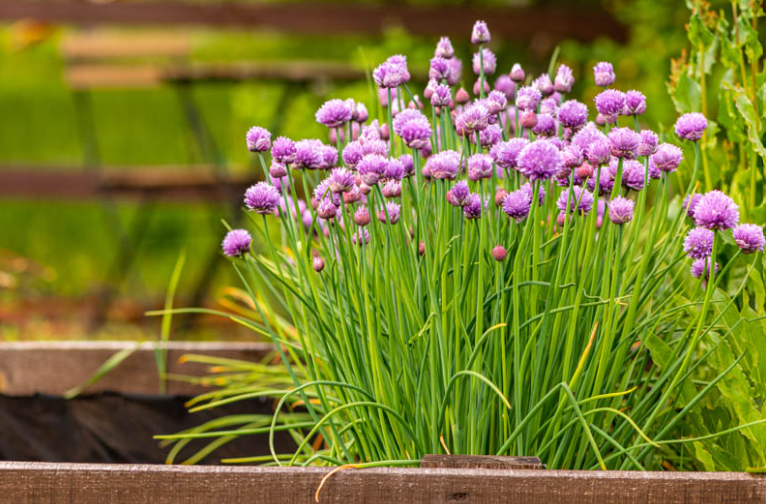
Chives, scientifically Allium schoenoprasum, are a bulb-forming perennial herb in the onion genus, and they hold a genuinely unusual distinction within that genus: they’re the only species of Allium native to both the Old World and the New World, found growing wild across temperate Europe, Asia, and North America. That naturally wide distribution has made chives one of the more adaptable herbs available to a home gardener almost anywhere in the temperate world.
Cultivation of chives for culinary use stretches back more than 5,000 years, among the longer continuous histories of any herb still in common kitchen use today. The genus Allium itself is the largest genus of bulbous plants, and within that considerable genus, chives stand out as the smallest cultivated species, typically reaching just 12 to 20 inches tall, a modest size compared to the onions, garlic, and leeks that share the same genus.
According to NC State Extension, chives produce a notably high volume of nectar, making them a genuinely valuable plant for pollinators, and the same source notes that one particular cultivar, Pink Perfection, has earned the Royal Horticultural Society’s Award of Garden Merit, a distinction reserved for plants judged to perform reliably well in garden conditions. That pollinator value, combined with chives’ low maintenance needs and genuine deer and drought resistance, has helped drive a considerable amount of named cultivar development over the decades, well beyond the plain species sold at most grocery stores.
What follows covers 15 types of chives: the common species and a closely related native variety, the genuinely distinct garlic chive, and a range of named ornamental and commercial cultivars bred for specific flower color, leaf thickness, plant size, or sterility.
Common Chives
Common chives, the straight, unselected form of Allium schoenoprasum, are what most people picture when they think of the herb, forming dense clumps of thin, hollow, tubular leaves topped with pale purple, clover-like flower heads in late spring or summer. This is the baseline form from which nearly every named cultivar on this list has been selected or bred.
It thrives in full sun to partial shade and average, well-drained soil, tolerating heat, drought, and poor soil better than many other culinary herbs. Its considerable ease of care and reliable performance have made it the default chive variety sold at most nurseries and grocery stores.
Wild Chives
Wild chives, formally Allium schoenoprasum var. sibiricum, are documented by the University of Washington as the variety native specifically to North America, found growing naturally in dry, rocky environments and damp grasslands from the Arctic down through cooler mountainous regions at lower latitudes. Genetically and visually similar to the common Eurasian form, this variety represents chives’ native presence on the North American side of their unusually wide natural range.
It tolerates a genuinely broad range of conditions, from near-Arctic latitudes to mountain elevations up to roughly 1,300 feet, reflecting real adaptation to cold, exposed habitats. Its native status in North America has made it of particular interest in native plant restoration work, separate from its culinary use.
Garlic Chives
Garlic chives, Allium tuberosum, are frequently mistaken for true chives but are a genuinely distinct species, native to Southeast Asia rather than the much broader range true chives occupy. Flat, strap-like leaves and white late-summer flowers distinguish them clearly from true chives’ round, hollow leaves and pale purple blooms, and their flavor carries a genuine garlic note rather than chives’ milder onion taste.
It thrives in the same full sun, well-drained conditions true chives prefer, though it’s slightly less cold-hardy overall. Its long culinary history in Chinese and broader Asian cooking, documented as far back as the 6th-century Liang Dynasty, reflects centuries of use entirely independent of true chives’ separate culinary tradition.
Album
Album is a white-flowered cultivar of common chives, offering the same growth habit and mild onion flavor as the species but with pure white blooms instead of the more typical pale purple. Its considerable visual contrast against other purple-flowering chive cultivars has made it a popular choice for a mixed herb or ornamental border.
It thrives in full sun to partial shade and well-drained soil, performing identically to the species in every respect except flower color. Its white blooms make it an easy way to add variety to a planting of multiple chive cultivars without sacrificing any culinary usefulness.
Curly Mauve
Curly Mauve is a distinctive cultivar with prostrate, curling foliage that twists in different directions rather than growing upright, topped with gray-lavender flowers held erect above the shorter, curled leaves. Its unusual foliage texture sets it apart visually from nearly every other chive cultivar, most of which keep a fairly standard upright, grass-like form.
It thrives in full sun and well-drained soil, tolerating the same range of conditions as common chives. Its considerable novelty appeal has made it a favorite among gardeners specifically seeking a more textural, less conventional chive for ornamental use.
Forescate
Forescate is a larger cultivar of common chives, growing 18 to 20 inches tall with notably bigger, brighter flowers than the straight species. Its considerable size advantage has made it a popular choice for a gardener wanting a more substantial, showier chive plant without moving to an entirely different species.
It thrives in full sun to partial shade and well-drained soil, performing much like common chives but with a genuinely larger overall presence in the garden. Its bright, oversized blooms have made it a favorite for ornamental plantings specifically valued for floral impact.
Pink Giant
Pink Giant is a taller cultivar with leaves roughly twice the size of the straight species and large, clear pink blossoms considerably more vivid than common chives’ typical pale purple. Its considerable scale, in both leaf and flower size, has made it one of the more visually dramatic chive cultivars available.
It thrives in full sun and well-drained soil, tolerating the same conditions as common chives despite its larger overall size. Its bold pink flowers have made it a popular choice specifically for a gardener wanting chives to serve a genuine ornamental role alongside their culinary use.
Profusion
Profusion is a sterile cultivar bred specifically to flower over a considerably longer period than the straight species, since it doesn’t expend energy producing viable seed after blooming. That extended flowering window has made it a particularly valuable choice for a pollinator garden wanting nectar availability over a longer stretch of the season.
It thrives in full sun to partial shade and well-drained soil, and its sterility also means it won’t self-seed aggressively around the garden the way common chives sometimes do. Its combination of extended bloom time and non-invasive habit has made it a genuinely practical choice beyond its ornamental appeal alone.
Snowcap
Snowcap is a dwarf, white-flowered cultivar, combining a compact overall size with the same bright white blooms found in the Album cultivar. Its small stature has made it particularly well suited to a container, a rock garden, or the front of a mixed herb border where a full-sized chive plant might feel out of scale.
It thrives in full sun to partial shade and well-drained soil, requiring the same low-maintenance care as other chive cultivars. Its dwarf habit and white flowers together make it a genuinely distinctive, compact option among the many available chive varieties.
Marsha
Marsha is a named cultivar of common chives recognized for reliable garden performance, though detailed published descriptions of its specific distinguishing traits remain less widely available than for some of the more thoroughly documented cultivars on this list. It’s generally grown and used in the same way as common chives.
It thrives in full sun to partial shade and well-drained soil, consistent with the broader species’ growing requirements. Its inclusion among the recognized named cultivars reflects real, if less extensively documented, horticultural distinction from the straight species.
Pink Perfection
Pink Perfection is a cultivar specifically recognized with the Royal Horticultural Society’s Award of Garden Merit, a distinction given to plants that have demonstrated excellent, reliable garden performance under trial conditions. That award reflects genuine, independently verified horticultural quality rather than simply marketing language.
It thrives in full sun to partial shade and well-drained soil, and its pink blooms provide the same high nectar value NC State Extension attributes to chives generally. Its award-winning status has made it one of the more confidently recommended ornamental chive cultivars available to home gardeners.
Polyvert
Polyvert is a commercial production variety bred for wider, thicker leaves than the straight species, developed specifically with serious home cooks and commercial growers in mind. Its considerable leaf thickness and highly uniform growth have made it a favorite for field-scale and market-garden chive production.
It thrives in full sun to partial shade and rich, well-drained soil, clumping to about 10 inches wide at maturity. Its improved leaf size over standard chives has made it a practical choice for anyone wanting a more substantial harvest from the same number of plants.
Staro
Staro is an extra-thick, dark green commercial chive variety bred for a broad range of growing purposes, including forcing and pot production, and suited to both fresh-cut and industrial markets. Its considerable leaf thickness sets it apart from finer-leaved commercial varieties bred more for bunching than bulk.
It thrives in full sun and rich, well-drained soil, reaching 12 to 18 inches tall, making it a practical choice for a container as well as an open garden bed. Its versatility across different production methods has made it a popular choice among commercial growers specifically.
Nelly
Nelly is a fine to medium thick-shafted commercial chive variety, dark blue-green in color, bred for vigorous, upright growth and particularly valued for bunching thanks to its long, slender leaf presentation. Its considerable popularity in both fresh and industrial markets reflects genuine commercial demand for its specific leaf characteristics.
It thrives in full sun and rich, well-drained soil, performing reliably across a broad range of growing purposes. Its slender, uniform leaves have made it a specific favorite among growers supplying chives for retail bunches.
Chivette
Chivette is a patented hybrid chive, mostly sterile, with thin, arching green foliage and light purple flowers, noticeably more compact than common chives at about 13 inches tall compared to the species’ typical 18 inches. Its sterility, like Profusion’s, means it won’t self-seed around the garden the way a fully fertile chive plant can.
It thrives in full sun to partial shade and well-drained soil, offering a more compact, tidier growth habit than the straight species. Its combination of smaller size and reduced seeding has made it a practical choice for a more controlled, ornamental planting.
Key Takeaways
- Chives belong to the Allium genus and are closely related to onions, garlic, leeks, and shallots.
- Common chives (Allium schoenoprasum) are the best-known type, forming clumps of slender, hollow leaves with a mild onion flavor.
- Garlic chives (Allium tuberosum) have flat leaves and white flowers and provide a mild garlic-like flavor.
- Giant Siberian chives are a larger form of common chives, valued for their vigorous growth and attractive flowers.
- Chinese chives generally refers to garlic chives and is widely used in Asian cooking.
- Chive types can be distinguished by leaf shape, leaf thickness, flower color, plant size, aroma, and flavor.
- Most chives prefer full sun to partial shade and fertile, well-drained soil with consistent moisture.
- Chives can be grown in herb gardens, containers, borders, and vegetable gardens, making them useful in small spaces.
- Regular harvesting encourages new leaf growth, while allowing some plants to flower adds ornamental value and provides food for pollinators.
- When choosing a chive type, consider its flavor, appearance, growing habit, climate suitability, and intended culinary use.