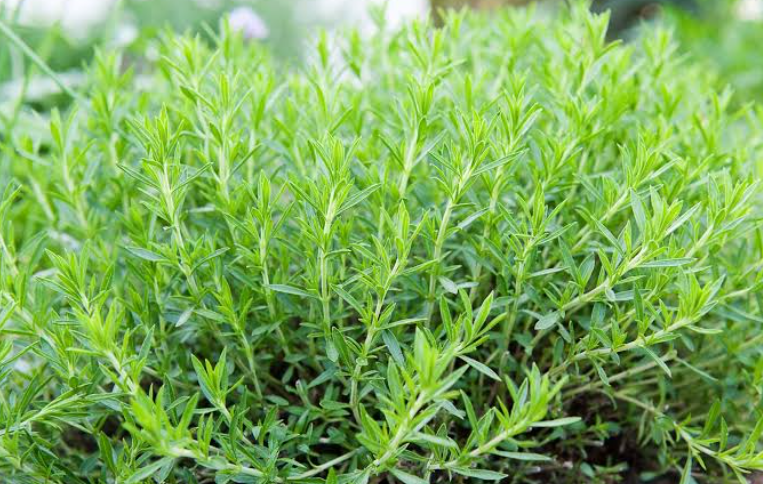
Tarragon, botanically Artemisia dracunculus, is a perennial herb in the sunflower family, native across a genuinely enormous range spanning Eurasia and North America, from dry meadows and roadsides in Europe all the way to Siberia and disturbed habitats throughout much of the United States and Canada. Despite that sprawling wild distribution, only one specific cultivated form, Artemisia dracunculus var. sativa, is what nearly everyone actually means by “tarragon” in the kitchen.
That cultivated form, known as French tarragon, is genuinely sterile and produces no viable seed at all, a trait a 2011 phytochemical review in the Journal of Agricultural and Food Chemistry attributes partly to differences in ploidy level, the number of chromosome sets a plant carries, between French tarragon and its seed-producing relatives. That same review notes that taxonomists have described French and Russian tarragon variously as subspecies, varieties, or even separate species depending on the source, and that researchers in the former Soviet Union alone have historically distinguished as many as 6 regional varieties of wild and cultivated Artemisia dracunculus.
Despite that genuine taxonomic complexity at the research level, the tarragon a home gardener or cook is actually likely to encounter sorts into a much smaller number of recognizable types. Only French tarragon carries the full, sweet, anise-like flavor prized in classical French cooking, and every other form available, including the seed-grown tarragon sold at most nurseries, is some version of a milder or more bitter substitute.
What follows covers the 4 types that are genuinely real, distinct, and documented: French tarragon, Russian tarragon, wild tarragon, and Mexican tarragon, the last of which isn’t a true tarragon at all but deserves inclusion given how often it’s sold and used as one.
French Tarragon
French tarragon, Artemisia dracunculus var. sativa, is the true culinary variety prized in French cooking for its sweet, intense, anise-like flavor. It’s genuinely sterile, producing no viable seed, which means it can only be propagated through division or stem cuttings taken from an already-established plant.
It thrives in full sun to light afternoon shade and well-drained, moderately fertile soil, generally hardy in USDA zones 4 through 8 though it behaves as a somewhat tender, short-lived perennial even within that range. Its superior flavor compared to every other form of tarragon is exactly why seeking out a genuine plant or cutting, rather than a seed packet, matters so much if culinary use is the goal.
Russian Tarragon
Russian tarragon refers to the wild-type, seed-producing form of Artemisia dracunculus, considerably hardier and more vigorous than French tarragon but carrying a noticeably milder, sometimes outright bitter flavor that lacks the refined anise note French tarragon is grown for. Because it sets viable seed, it’s the variety almost universally sold under a generic “tarragon seed” label, often with no indication that it isn’t the culinary French type.
It tolerates a wider range of growing conditions than French tarragon, including more cold and poorer soil, and is hardy across a broader range, with some sources citing USDA zones 3 through 9. Its ease of growth from seed has made it a common, if often disappointing, substitute for gardeners who assumed any tarragon seed packet would deliver French tarragon’s distinctive flavor.
Wild Tarragon
Wild tarragon describes the naturally occurring, unselected populations of Artemisia dracunculus found growing across its enormous native range, from European roadsides to disturbed, weedy ground throughout much of the United States, including states like Arizona where it grows as a native species. Flavor in these wild populations is generally described as considerably more subtle and variable than either French or Russian tarragon, and in some wild populations the characteristic tarragon aroma is reportedly largely absent altogether.
It grows readily in dry, disturbed, and roadside habitats without cultivation, reflecting its genuine adaptability across such a wide native range. Its inconsistent flavor and aroma make it a botanical curiosity and a source population for breeding work rather than a deliberate culinary or garden choice in its own right.
Also Read: How To Grow And Care Tarragon Plant
Mexican Tarragon
Mexican tarragon, also called Spanish tarragon, Texas tarragon, winter tarragon, or Mexican mint marigold, is not a true tarragon at all and isn’t even in the same genus, its scientific name Tagetes lucida placing it firmly within the marigold family instead. It’s native to Mexico and Central America and has been used there as a food, medicinal, and ceremonial plant for well over a thousand years, and its licorice-like flavor, which holds up better with age than Russian tarragon’s, has made it a popular heat-tolerant substitute for French tarragon in hot, humid climates where the true culinary variety struggles.
It thrives in full sun and well-drained soil, tolerating heat and drought considerably better than genuine Artemisia dracunculus does, and it’s hardy as a perennial in USDA zones 9 through 11, generally grown as an annual elsewhere. Its cheerful yellow marigold-like flowers in late summer and fall are a genuine ornamental bonus that none of the true tarragons offer, a visible reminder of just how different a plant it actually is beneath the shared common name.
Key Takeaways
- Tarragon belongs to the Artemisia genus and is part of the Asteraceae family.
- The main types commonly discussed are French tarragon, Russian tarragon, and Mexican tarragon.
- French tarragon is widely preferred for culinary use because of its delicate, aromatic flavor and is commonly used in sauces, salads, and seasoning.
- Russian tarragon is generally more vigorous and easier to grow from seed, but its flavor is milder and less refined than French tarragon.
- Mexican tarragon is botanically different from French and Russian tarragon but has a similar anise-like flavor and is sometimes used as a culinary substitute.
- Tarragon varieties can be distinguished by leaf shape, plant size, growth habit, flowers, aroma, and flavor.
- French tarragon is typically propagated through cuttings or division, while Russian tarragon can be grown from seed.
- The different types vary in their cold tolerance, growth habits, and preferred growing conditions.
- Choosing a variety depends largely on whether you want strong culinary flavor, easy propagation, ornamental value, or adaptation to your local climate.
- Accurate identification is important because plants sold under the name “tarragon” may belong to different species or varieties.