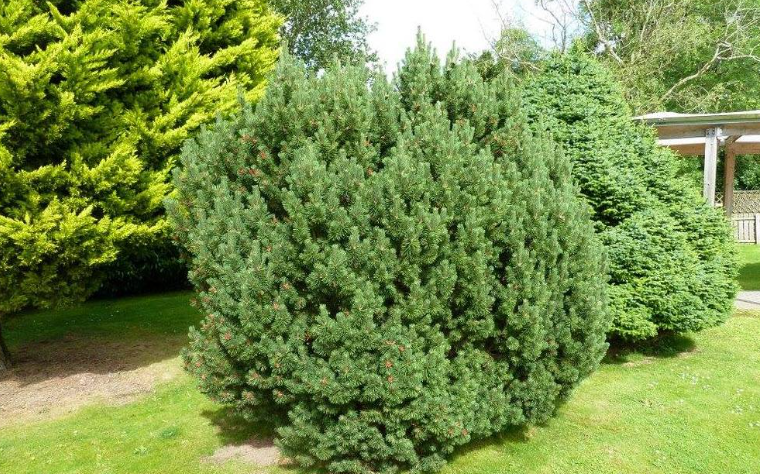
The Ice Age Survivor That Became a Garden Favorite
Serbian spruce is a graceful, narrow conifer with a genuinely remarkable backstory: a tree that once grew across a much wider stretch of Europe, was pushed nearly to extinction by successive ice ages, and today survives in the wild on a strip of land smaller than most city parks. Outside that tiny native range, though, it has become one of the most quietly beloved ornamental spruces planted anywhere in the world.
Its scientific name, Picea omorika, comes from the Balkan vernacular word for spruce generally, and the tree carries a more personal name in its native region too: Pančićeva omorika, or Pančić’s spruce, after the Serbian botanist credited with its scientific discovery. That discovery turned out to be one of the more significant moments in the history of European botany, confirming the Balkans as a genuine refuge where ancient plant species had managed to outlast the ice ages that wiped out their relatives elsewhere.
This guide covers the tree’s classification and discovery, how to identify it, its remarkably narrow native range, its status as a living relict of an earlier geological era, its conservation status, and what it takes to grow one in a garden today.
Botanical Classification
Serbian spruce, scientifically Picea omorika, belongs to the genus Picea within the pine family. Its species name isn’t a scientific Latin coinage at all but simply the everyday Balkan word for spruce, a detail that reflects how thoroughly local knowledge of the tree existed long before Western science formally described it.
The tree was first validly published under its current name by the botanist Karel Purkyně, working from the original description credited to its discoverer. Genetically and structurally, Serbian spruce sits as a distinct, isolated species within the broader spruce genus, its long geographic isolation in a single Balkan river valley having left it with no close living relatives sharing its exact combination of traits.
Also Read: Different Types of Spruce Trees
Discovery
Serbian spruce’s formal scientific discovery is credited to Josif Pančić, a Serbian doctor and botanist who is regarded as the father of Serbian botany and who went on to become the first president of the Serbian Royal Academy. Pančić identified the species near the village of Zaovine on Tara Mountain, in what is now Tara National Park in western Serbia, with most sources dating the discovery to August 1, 1875, though a handful of historical references cite either 1872 or suggest Pančić didn’t personally visit the exact discovery site until 1877.
Over the course of his career, Pančić discovered 47 species entirely new to science, and Serbian spruce remains by far his most celebrated find. His work is credited with firmly establishing Serbian botany within the wider European scientific community, and he’s still commemorated today, including on a Serbian postage stamp issued in 2014 and a mausoleum built in his honor.
Accounts of exactly when Pančić first encountered the tree vary in the historical record, which is itself a small window into how botanical discoveries were often pieced together gradually in the 19th century rather than happening in a single, clean moment. Some sources describe Pančić receiving specimen material in 1875 without personally visiting the remote discovery site until a later expedition, a reminder that even a landmark botanical find could unfold across several separate trips into genuinely difficult, remote terrain.
Identifying Characteristics
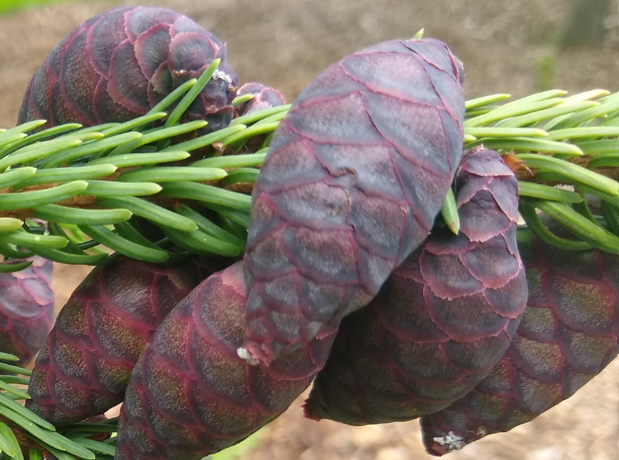
Serbian spruce has a distinctly narrow, tapering, spire-like form, often described as more naturally elegant than the sometimes leggy growth habit of the more common Norway spruce. Its needles are dark green with 2 conspicuous silvery-white bands on their undersides, and that silvery flash becomes especially visible as the wind moves through the branches.
Mature trees typically feature bowed, slightly pendulous branches, a trait that becomes considerably more pronounced with age and even more exaggerated in several named weeping cultivars developed from the species. In the wild, given enough time and favorable conditions, Serbian spruce can ultimately reach around 30 meters, or roughly 100 feet, in height, though cultivated specimens are generally smaller and more restrained in an ordinary garden setting.
Native Range and Habitat
Few conifers anywhere in the world occupy a native range as small as Serbian spruce’s. The species is endemic to a narrow stretch of the Drina River valley straddling the border between western Serbia and eastern Bosnia and Herzegovina, and its total wild range covers only about 60 hectares, an area smaller than many urban parks, concentrated on the steep limestone slopes and outcrops of the Tara and Javor mountains at elevations between roughly 800 and 1,600 meters.
Within that tiny range, Serbian spruce clings to genuinely precarious terrain, extremely steep slopes and exposed limestone outcrops where competition from other, more vigorous tree species is naturally limited. More recent botanical surveys have confirmed the species is present on both the Serbian and Bosnian sides of the Drina, though its overall footprint remains extraordinarily small by the standards of almost any other tree species.
A Living Relict of the Tertiary Period
Serbian spruce’s most remarkable characteristic isn’t visible in its needles or its form at all, it’s written into its evolutionary history. The fossil record shows that Picea omorika once ranged much more widely across Europe, dating back to the Tertiary period, the geological era following the extinction of the dinosaurs. Successive ice ages then repeatedly pushed the species’ range backward, eliminating it from most of the continent and eventually confining it to the single sheltered refuge of the Drina River valley, where the local terrain and microclimate offered enough protection from the worst of the glacial extremes for a small population to survive.
According to researchers studying the species, Serbian spruce’s own limited competitive ability against more vigorous tree species has since prevented it from reclaiming any of that lost range, even as the climate warmed again after the last ice age ended. That combination of ancient origin and continued survival in just one small refuge has earned Serbian spruce genuine recognition as a Tertiary relict, sometimes described informally as a living fossil, and it wasn’t alone in surviving there either; a rare grasshopper species now named in Pančić’s honor also managed to survive the same ice ages in that same sheltered Balkan refuge.
Conservation Status
Serbian spruce is currently classified as Endangered by the IUCN Red List, a formal recognition of just how vulnerable a species can be when its entire wild population is confined to such an extraordinarily small geographic area. Even a single localized disturbance, whether from disease, fire, or human activity, carries real potential to meaningfully affect the tree’s already precarious wild population in a way it simply wouldn’t for a species with a broader natural range.
Conservation efforts within its native Balkan range focus on habitat protection, and Tara National Park itself plays a genuine role in shielding at least part of the species’ population from further disturbance. Given that the tree grows on such steep, exposed limestone terrain to begin with, natural regeneration is already a slow and uncertain process even without added human pressure, which makes continued protection of its existing habitat considerably more urgent than it might be for a species with an easier path to naturally expanding its own range. Outside its tiny native range, ironically, Serbian spruce faces no such precarity at all, since it has become widely and successfully cultivated as an ornamental tree across temperate regions worldwide, a strange split between critical rarity in the wild and genuine abundance in cultivation, one of the more unusual conservation stories among ornamental trees commonly sold today.
Landscape Uses
Serbian spruce has become increasingly popular as a landscape tree specifically because its narrow, upright form takes up considerably less horizontal space than many other spruce species while still offering real vertical presence. That slender profile has made it a genuine favorite for screening, windbreaks, parkland plantings, and as a specimen tree in a garden too small for a wider-spreading conifer. Its dense, dark green foliage and tidy form also hold up well planted in a group, where several Serbian spruces together can form an effective, relatively narrow-footprint privacy screen without the wide spread many other large conifers would demand.
It’s also frequently noted as a particularly good living Christmas tree option, since its naturally tidy, tapering form holds up better than the sometimes gap-branched growth of a Norway spruce grown under similar conditions. Despite these genuine merits, several sources note that Serbian spruce remains underused in ordinary residential landscaping relative to how well it actually performs, especially compared to the far more commonly planted blue and Norway spruce.
Growing Considerations
Serbian spruce is hardy to USDA zone 4 and performs best in deep, rich, moist, well-drained soil in full sun, though it has also shown a genuine ability to tolerate difficult city conditions better than many other conifers. That adaptability, combined with its narrow growth habit, has made it a practical choice for an urban or suburban planting site where space is genuinely limited.
According to Oregon State University’s Landscape Plants database, more recent genetic and field studies have also confirmed Serbian spruce populations present in Bosnia and Herzegovina in addition to the long-documented Serbian side of the border, broadening scientific understanding of the species’ already tiny range. Once established, it’s considered easy to grow and low maintenance, requiring little more than basic care to thrive across a wide range of ground conditions.
Several named cultivars offer further options depending on the specific effect a gardener wants: ‘Nana’ is a compact, rounded selection that’s received the Royal Horticultural Society’s Award of Garden Merit, ‘Pendula,’ also an Award of Garden Merit winner, offers a genuinely weeping habit, and ‘Bruns,’ a narrower selection with light green and blue foliage, reaches about 14 feet tall and just 4 feet wide after 10 years, making it a particularly space-efficient choice for a tight planting site. A pendulous selection called ‘Westerstede’ offers yet another variation, retaining the species’ strong central leader and characteristic bowed branches while showing an even more pronounced weeping habit as the tree matures.
The Bottom Line
Serbian spruce carries one of the more remarkable stories of any tree commonly available at a garden center: a genuine ice age survivor, confined in the wild to a sliver of Balkan river valley smaller than many parks, yet thriving as a graceful, adaptable, and still somewhat underappreciated ornamental tree in gardens across the temperate world. Give it a reasonably good site and a little patience, and you’ll be growing a direct living link to a tree lineage that outlasted the ice ages that wiped out its relatives everywhere else in Europe.
Key Takeaways
- Serbian spruce is a relatively rare conifer native to a small area of the Balkan Peninsula, particularly western Serbia and nearby parts of Bosnia and Herzegovina.
- It has a distinctive narrow, columnar to pyramidal form, making it useful where a tall evergreen with a relatively slim profile is desired.
- Its needles are short, flattened, and dark green on the upper surface, while the undersides often appear silvery because of pale bands.
- The cones are relatively small and hang from the branches, changing from purplish or reddish tones when young to brown as they mature.
- Serbian spruce is valued as an ornamental tree, especially for specimen planting, formal landscapes, parks, and areas where vertical structure is useful.
- It generally prefers cool conditions and well-drained soil, with adequate moisture during the growing season.
- The species is considered rare in its natural range, while cultivated Serbian spruce is grown in various temperate regions as an ornamental conifer.
Further References
- North Carolina State University Extension — Serbian Spruce — Useful for identification and cultivation details, including needles, cones, bark, growth habit, soil, sunlight, hardiness zones, and landscape uses.
- University of Belgrade Botanical Garden — Serbian Spruce — Provides information on the species’ natural distribution, discovery, habitat, distinctive narrow crown, needles, cones, and conservation status in Serbia.
- U.S. Fish & Wildlife Service — Serbian Spruce — Provides authoritative taxonomic and species information for Picea omorika.
- USDA Forest Service — Silvics Manual — A major reference covering conifer species, including information on Serbian spruce and its relationships with other Picea species.
- University of Utah Extension — ‘Riverside’ Serbian Spruce — Helpful for cultivated Serbian spruce, including mature size, hardiness, growth rate, needles, cones, sunlight, and soil drainage.
- University of Utah Extension — Dwarf Serbian Spruce ‘Nana’ — Provides cultivation information for the compact cultivar Picea omorika ‘Nana’, including size, growth rate, needles, soil preferences, and climate tolerance.