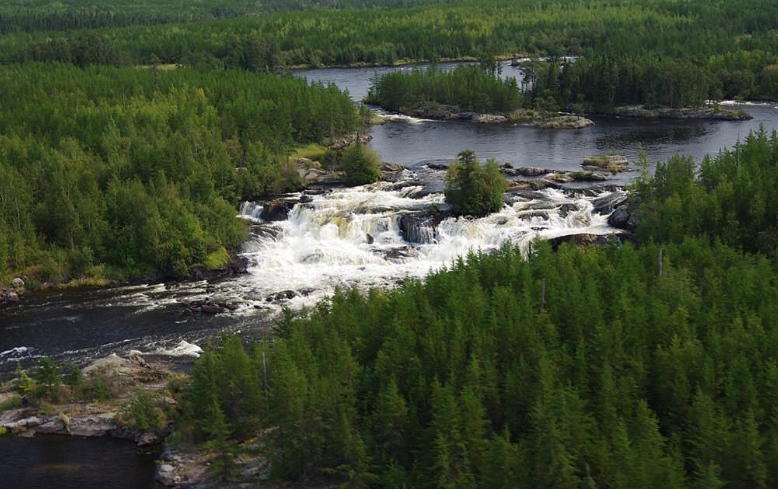
The boreal forest biome is the largest land biome on Earth, a vast band of coniferous forest that rings the entire northern hemisphere between roughly 50 and 65 degrees north latitude. Also called taiga, a Russian word now used almost interchangeably with “boreal forest” in scientific literature, it forms a distinct ecological zone sandwiched between the Arctic tundra to the north and temperate forest to the south.
Despite its enormous size, the boreal biome supports relatively few tree species compared to a tropical or temperate forest, a genuine trade-off of surviving in a climate defined by short, cool summers and long, brutally cold winters. What the biome lacks in species diversity, it makes up for in sheer scale and ecological significance, storing more carbon than the world’s tropical and temperate forests combined and holding a majority of the planet’s remaining surface freshwater.
This article covers the defining characteristics of the boreal forest biome: its geographic extent, its climate, its distinctive soils, its vegetation and forest structure, its biodiversity, its outsized role in the global carbon cycle, and the mounting threats climate change poses to this enormous, largely intact ecosystem.
Geographic Extent and Location
The boreal biome circles the globe across North America, Scandinavia, and Russia, forming a genuinely circumpolar band of forest. About two-thirds of the total boreal forest area lies in Eurasia, primarily across Russia’s vast Siberian expanse, with the remaining third spread across Canada and Alaska.
The biome as a whole covers approximately 30 percent of the world’s total forested area, representing roughly 8 to 10 percent of Earth’s entire land surface, and it constitutes the single largest pool of living biomass found anywhere on the planet’s surface. Its southern boundary transitions gradually into temperate mixed or coniferous forest, while its northern edge thins into a sparser forest-tundra zone before giving way entirely to Arctic tundra.
Climate Characteristics
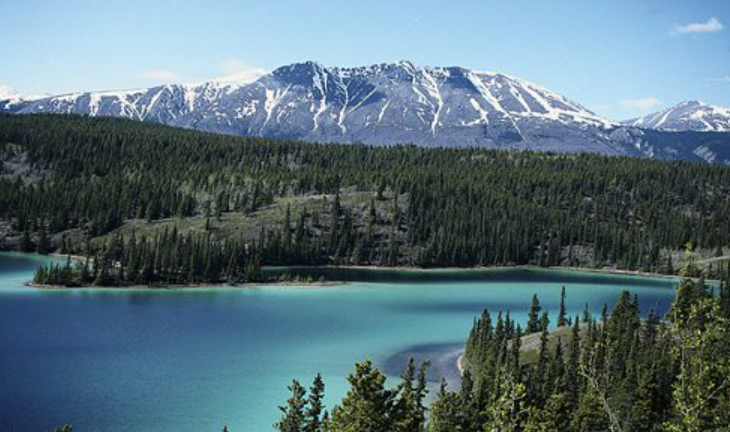
The boreal climate is defined above all by its extremes and its brevity. Summers are short, cool, and mild, while winters are long, harsh, and genuinely severe, with the growing season compressed into just a few frost-free months at most.
Annual precipitation across the biome is relatively modest, typically falling somewhere between 38 and 50 centimeters, or about 15 to 20 inches, and a substantial share of that precipitation arrives as snow rather than rain. Critically, even that modest precipitation total exceeds what the region’s cool temperatures allow to evaporate or transpire back into the atmosphere, a combination of low heat and excess moisture that directly shapes the biome’s distinctive soil chemistry.
Soil Characteristics
According to a peer-reviewed overview of boreal forest ecosystems, boreal forest soil is famously poor, acidic, and low in the nutrients that support more productive ecosystems further south. The dominant soil type across the biome is known as podzol, a soil order that forms specifically as a consequence of low temperatures combined with precipitation that exceeds evapotranspiration, a process called podzolization that leaches minerals downward through the soil profile over time.
A thin organic layer typically caps these mineral soils, and unlike richer temperate or tropical soils, most biological decomposition in a boreal soil is carried out by fungi rather than bacteria. Permafrost, ground that stays frozen year-round, is generally absent or found less than a meter below the surface across the true boreal zone, becoming far more extensive and continuous only as the forest transitions northward into tundra. That shallow frozen or seasonally cold ground forces most boreal tree species to develop notably shallow root systems, since roots simply can’t penetrate deeply frozen or waterlogged soil layers. Wildfire adds a further layer of complexity to this soil picture, since burning vegetation removes the insulating layer that protects permafrost, allowing the frozen ground beneath a burned stand to thaw considerably deeper than it would beneath an intact forest canopy.
Vegetation and Forest Structure
Needle-leaved, typically evergreen conifers with a distinctive conical shape dominate the boreal forest, an efficient growth form for shedding heavy snow load and minimizing water loss during the long winter. Spruce, pine, and fir make up the overwhelming majority of the biome’s tree cover, joined in many regions by a smaller number of broad-leaved deciduous hardwoods, particularly birch and aspen, that colonize disturbed ground quickly after fire or logging. Larch stands as a genuine exception among the biome’s conifers, since it’s deciduous, dropping its needles every autumn rather than holding onto them year-round the way spruce, pine, and fir do.
The biome’s overall structure shifts noticeably from south to north. Closed, continuous forest canopy dominates the warmer southern boreal zone, gradually opening into sparser lichen woodland further north, before finally breaking apart into isolated patches of forest-tundra right at the biome’s northern edge, near the treeline itself. Fire is a defining and recurring force throughout this structure, and many boreal conifers have evolved specific adaptations, including cones that only release their seed after exposure to fire-generated heat, that depend on periodic burning to regenerate successfully.
Biodiversity
Compared to a tropical rainforest or even a temperate deciduous forest, the boreal biome supports relatively low overall species diversity, a direct consequence of its short growing season and demanding climate. What diversity does exist, however, often occurs in genuinely enormous populations, and the biome remains home to a real and ecologically significant variety of animals, from large carnivores and moose to a wide range of migratory birds that breed there each summer before heading south.
Lichens and mosses form a genuinely important groundcover layer throughout much of the biome, particularly in the more open lichen woodland found toward its northern edge, where they serve as critical winter forage for caribou and reindeer. The boreal forest’s ecological value extends well beyond its trees and animals. According to figures compiled by Woodwell Climate Research Center, the biome holds an estimated 60 percent of the world’s remaining surface freshwater, and its extensive wetlands play a genuine, active role in purifying that water by filtering out contaminants as it moves through the system. The same research also identifies 481 million hectares of remaining primary, meaning never logged, boreal forest, representing 41 percent of all primary forest left on Earth.
Carbon Storage
The boreal forest’s single most significant ecological characteristic may be its outsized role in the global carbon cycle. Research summarized in the U.S. Forest Service’s own review of boreal forest ecosystems indicates the biome holds roughly one-third of the planet’s total terrestrial carbon storage, with boreal forest soils alone estimated to hold up to 60 percent of all soil carbon stored in forests worldwide.
Much of that stored carbon sits in peatlands, water-saturated wetland soils where decomposition slows dramatically, and boreal peatlands alone are estimated to store around 270 billion tonnes of carbon. Turnover time for carbon held in boreal soil runs to roughly 50 years on average, according to Woodwell Climate figures, more than twice as long as the turnover rate typical of temperate or tropical forest soil, a direct result of how slowly organic matter decomposes in such cold, often waterlogged conditions. Permafrost specifically adds another dimension to that storage, since permanently frozen ground locks carbon away from decomposition entirely, and current estimates put the total carbon held in permafrost at nearly twice the mass of carbon currently present in Earth’s entire atmosphere. Research from Wilfrid Laurier University on boreal peatlands specifically found that these wetland ecosystems alone house somewhere between 30 and 40 percent of all terrestrial carbon, underscoring just how much of the boreal biome’s total carbon storage is concentrated in its wettest, most waterlogged ground.
Threats and Climate Change
The boreal biome’s greatest long-term vulnerability is also tied directly to its greatest strength. Climate models consistently project that boreal forests will experience the largest temperature increase of any forest biome on the planet over the coming century, and that warming threatens to destabilize the very permafrost and peatland carbon stores that make the biome so ecologically significant in the first place.
As permafrost thaws, previously frozen organic matter becomes newly available for decomposition, releasing methane and carbon dioxide back into the atmosphere in a feedback loop that could meaningfully accelerate global warming rather than continuing to buffer against it. Satellite observations have already documented the boreal-tundra transition zone shifting northward as warming continues, a process sometimes called Arctic greening, and while that northward expansion may sequester some additional carbon in new forest growth, it also changes the region’s surface reflectivity in ways that can drive further regional warming. Resource development, including logging and energy extraction, adds additional pressure to an ecosystem already facing the fastest-changing climate of any forest biome on Earth.
Key Takeaways
- The boreal forest is one of the world’s largest terrestrial biomes, forming a broad belt across northern North America, Europe, and Asia.
- It has a cold climate with long winters and short, relatively cool summers, giving plants a limited growing season.
- Coniferous trees dominate much of the biome, particularly spruce, fir, pine, and larch, although deciduous trees such as birch and aspen are also widespread.
- Boreal forests experience substantial seasonal changes, including freezing temperatures, snow cover, spring thaw, and rapid plant growth during the short summer.
- Soils are often acidic and relatively nutrient-poor, with decomposition occurring slowly because of the cold conditions.
- The biome supports diverse wildlife, including moose, caribou, bears, wolves, lynx, birds, and numerous smaller mammals and insects.
- Wildfires are a natural part of many boreal ecosystems, helping recycle nutrients and create conditions for some tree species to regenerate.
- Boreal forests play an important role in the global carbon cycle, storing large amounts of carbon in vegetation, soils, and peatlands.
The Bottom Line
The boreal forest biome is defined by a distinctive combination of extremes: an enormous global footprint paired with relatively low species diversity, a harsh climate paired with acidic, nutrient-poor podzol soil, and a comparatively modest visible biomass paired with an outsized, genuinely critical role in storing the planet’s carbon. Understanding those characteristics matters well beyond the biome’s own borders, since what happens to boreal permafrost and peatland carbon in a warming world carries consequences for the entire global climate system.