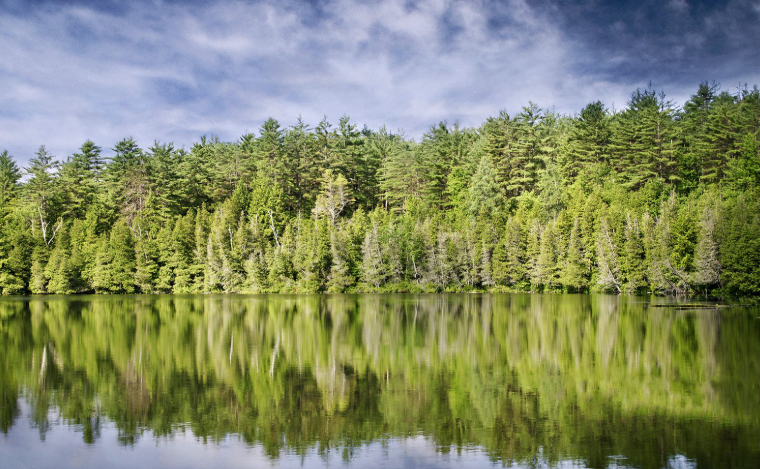
The Canadian boreal forest is one of the largest intact forest ecosystems on Earth, stretching across roughly 53 to 60 percent of the country’s total land area, depending on which government or research source is doing the counting. It represents about a third of the entire circumpolar boreal forest that rings the northern hemisphere, and the forest in its current form only began taking shape after the end of the last Ice Age.
Despite that enormous scale, the boreal forest is home to a relatively small number of tree species compared to a temperate or tropical forest, with roughly 20 species making up the region’s tree cover overall. That’s a genuine trade-off of life at high latitude: the growing season is short and winters are brutal, so only a handful of species have evolved the cold tolerance and specific adaptations needed to dominate such an enormous territory.
A small set of conifers and hardwoods appears again and again across Natural Resources Canada’s forest classification data, provincial statistics, and ecological surveys of the region, and the exact mix shifts depending on latitude, soil, moisture, and fire history. In Ontario’s forest resources inventory alone, black spruce is documented across more than 27 million hectares, making it the single most common tree species in the province, and largely for that reason it’s often treated as the signature tree of the Canadian boreal as a whole.
Fire and insect outbreaks are also a defining part of life in this forest, and cyclical infestations of the spruce budworm periodically damage huge stretches of white spruce, black spruce, and balsam fir across the region. What follows covers the trees that actually make up the Canadian boreal forest, organized into conifers and hardwoods.
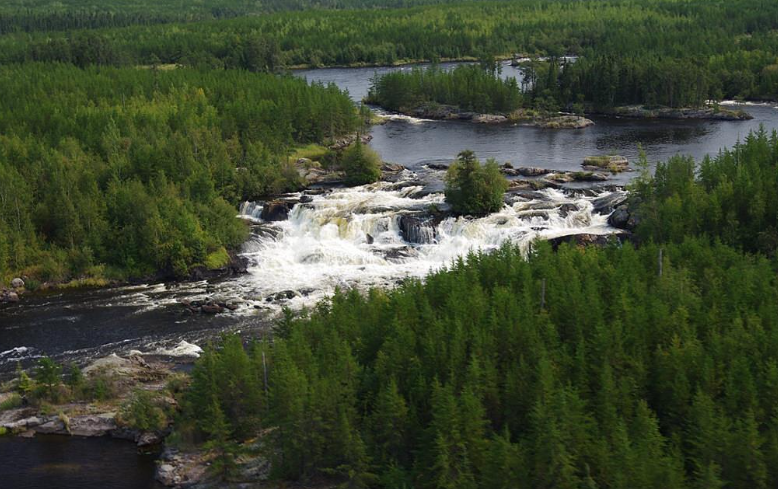
Boreal Conifers
White Spruce
White spruce is one of the 2 defining spruce species of the Canadian boreal forest, found across nearly the entire region from the Yukon to Newfoundland and favoring dry to moderately moist upland sites. It’s a key component of the mixedwood stands that form much of the southern and central boreal forest, often growing alongside trembling aspen and balsam fir.
It tolerates cold, short growing seasons remarkably well, reflecting genuine adaptation to the harsh climate across its enormous range. Its wood is a major source of pulpwood and construction lumber, making it one of the most commercially significant trees in the entire Canadian forest industry.
Black Spruce
Black spruce is the single most widespread tree in Ontario’s boreal forest and one of the most characteristic trees of the Canadian boreal as a whole, dominating the wet, poorly drained lowlands, bogs, and muskeg that cover huge stretches of the region. It’s especially prevalent in the northern Taiga and Hudson Plains ecozones, where it often grows alongside tamarack in consistently soggy ground.
It tolerates waterlogged, acidic, nutrient-poor soil better than almost any other tree in the boreal forest, thriving in exactly the boggy conditions that exclude most other species. Its considerable commercial value for pulpwood has made it a major target of the Canadian forest products industry.
Balsam Fir
Balsam fir is a defining tree of the boreal-forest-transition zone in eastern Canada, forming dense stands alongside white spruce and paper birch across the Atlantic and Ontario-Quebec boreal regions. Its narrow, spire-like crown and soft, fragrant needles have also made it one of the most popular Christmas tree species harvested in the country.
It thrives in cool, moist conditions and tolerates significant shade, allowing it to persist in the understory until an opening in the canopy lets it grow into the overstory. Its vulnerability to cyclical spruce budworm outbreaks makes it one of the trees most affected by that recurring insect damage.
Jack Pine
Jack pine is one of the most fire-adapted trees in the entire boreal forest, its cones often sealed with resin that only opens to release seed when heat from a wildfire melts the bond. That adaptation lets jack pine regenerate quickly and often dominate a landscape in the years immediately following a major fire.
It thrives on dry, sandy, or rocky sites where richer soil isn’t available, tolerating conditions that would challenge most other boreal conifers. Ontario’s own forest inventory documents nearly 12 million hectares containing jack pine, making it one of the province’s most common trees.
Tamarack
Tamarack, also called American larch, is the boreal forest’s only deciduous conifer, dropping its soft needles every autumn after they turn a warm golden color, unlike every other conifer on this list. It’s especially prevalent alongside black spruce in the wet, boggy lowlands of the northern boreal zone.
It tolerates waterlogged, poorly drained soil exceptionally well, often found growing directly in the same muskeg and bog habitat favored by black spruce. Its wood has historically been valued for its considerable rot resistance, making it useful for fence posts and other outdoor applications.
Lodgepole Pine
Lodgepole pine reaches the western edge of the Canadian boreal forest, particularly across Alberta and British Columbia, where it’s a defining tree of the boreal plains alongside white spruce and trembling aspen. Like jack pine further east, many of its cones stay sealed until fire provides the heat needed to release their seed.
It thrives on a wide range of sites but shows a particular affinity for the sandy, well-drained soils common across its western Canadian range. Its considerable commercial value has made it a major component of the forest products industry in Alberta specifically.
Red Spruce
Red spruce marks the eastern, Acadian edge of the boreal-forest-transition zone in the Maritime provinces, typically found growing alongside balsam fir and yellow birch rather than the black and white spruce more common further north and west. Its presence signals the milder, more maritime-influenced climate of Canada’s Atlantic region compared to the harsher interior boreal zone.
It thrives in the cool, humid conditions typical of the Maritimes, tolerating a somewhat gentler climate than the true northern boreal species require. Its wood has long been valued for both lumber and, historically, for musical instrument soundboards.
Boreal Hardwoods
Trembling Aspen
Trembling aspen is the most widely distributed native tree in North America, and within the Canadian boreal forest it’s especially dominant across the southern Boreal Plains, where large, extensive stands are a defining feature of the landscape. Its rounded leaves, attached to flattened stems, flutter constantly in even a light breeze, giving the tree its common name.
It thrives in full sun and a wide range of soil types, often colonizing burned or disturbed ground quickly through extensive root suckering. Its tendency to spread clonally means a single genetic individual can form an enormous connected stand covering a considerable area.
Balsam Poplar
Balsam poplar is a fast-growing hardwood found throughout the boreal forest, particularly along rivers, floodplains, and other disturbed sites where its wind-dispersed, cottony seeds can establish quickly on bare soil. Its sticky, resinous, fragrant spring buds are one of its more distinctive identifying features.
It tolerates moist, alluvial soil particularly well, reflecting its frequent association with river systems and floodplain habitat across the boreal region. Its fast growth has made it one of the first trees to colonize newly disturbed ground after fire, flooding, or logging.
White Birch
White birch, also called paper birch, is instantly recognizable by its bright white, papery bark that peels away in thin curls, a genuine boreal icon historically used by Indigenous peoples for canoe building. It’s especially common in the mixedwood stands of the southern and central boreal forest, often growing alongside white spruce, balsam fir, and trembling aspen.
It thrives in full sun and cool, moist, well-drained soil, tolerating the short growing season typical of much of its boreal range. Its considerable wildlife value and striking year-round appearance have made it one of the most recognizable trees across the entire Canadian boreal region.
Black Ash
Black ash occurs in the wetter margins of the boreal-forest-transition zone, favoring swamps and poorly drained lowlands where few other hardwoods can compete. Its wood has long been valued by Indigenous basket weavers for its tendency to separate into thin, flexible strips when pounded.
It tolerates standing water and poorly drained, swampy soil better than almost any other hardwood in the region. Like ash species further south, the Canadian Encyclopedia’s boreal forest overview notes that fire suppression, pests, and other pressures are an ongoing concern across the region, and black ash specifically now faces a serious, ongoing threat from the invasive emerald ash borer wherever the pest’s range overlaps with the tree’s own.
Willow
Willow covers a genuinely large number of individual species and hybrids found throughout the boreal forest, particularly along riverbanks, lakeshores, and other consistently moist sites, with especially large populations in the southernmost parts of the Boreal Plains. Its considerable diversity within the region means the exact species present varies significantly from one part of the boreal forest to another.
It tolerates consistently wet or waterlogged soil better than almost any other woody plant in the region, thriving in exactly the streamside and wetland habitat many willow species favor. Its dense, tangled growth also provides important shelter and browse for moose and other wildlife across the boreal zone.
Key Takeaways
- Canada’s boreal forest is dominated by coniferous and deciduous trees, with spruce, pine, fir, birch, and aspen among its most characteristic species.
- Black spruce and white spruce are major boreal trees, especially across Canada’s northern forests, where they tolerate cold temperatures and relatively short growing seasons.
- Jack pine is particularly well adapted to boreal conditions, including dry, sandy soils and landscapes affected by wildfire.
- Balsam fir, tamarack, and eastern white cedar are also important trees found across different parts of the Canadian boreal region.
- Trembling aspen and white birch provide important deciduous components of the boreal forest and are often among the first trees to regenerate after disturbances such as wildfire.
- Boreal trees provide essential habitat and food for wildlife, while their forests store carbon and influence water cycles across northern Canada.
- The boreal forest changes considerably from east to west and north to south, so the tree species found in one region may differ substantially from those found elsewhere.