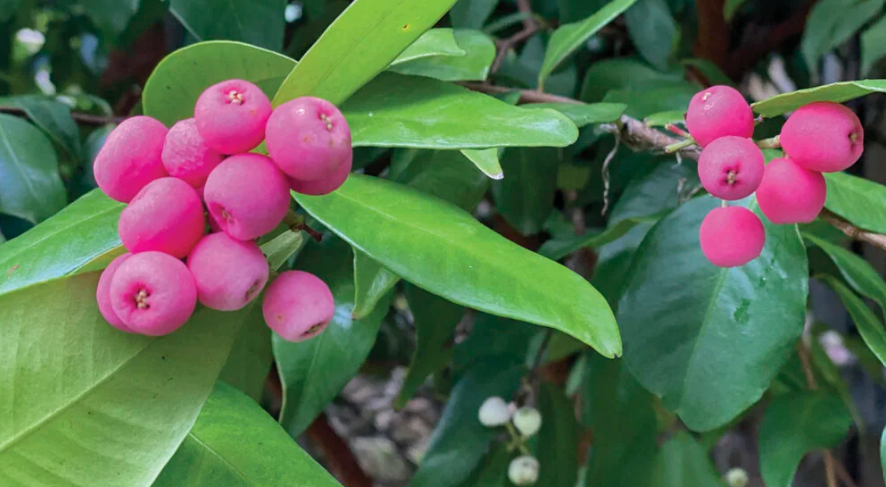
Lilly pilly is a name that covers dozens of plants within the genus Syzygium, a member of the myrtle family alongside eucalypts and tea trees. Globally, botanists recognize around 1,200 Syzygium species, and Australia is home to roughly 50 to 75 of them, spread from the Kimberley in Western Australia across the Top End, Queensland, and the far north of New South Wales.
Few plant groups show this much size variation under one common name. A wild rainforest specimen can climb to 30 or 35 meters and develop substantial buttress roots at ground level, while a garden cultivar bred for small spaces might never exceed a meter, small enough to keep in a pot on a balcony.
The naming history behind these plants is also genuinely tangled. Species once split between the genera Acmena, Eugenia, and Waterhousea have all been folded into Syzygium by modern botanists, yet the older names remain in wide use on plant tags and nursery signage, which explains a lot of the confusion shoppers run into. One species in particular, the magenta lilly pilly, carries an official vulnerable listing under Australian environmental law, a sign that even a genus this heavily planted still has members struggling in the wild.
The cultivars below fall into 2 distinct categories: genuine wild species, each with its own native range and look, and the named cultivars, mostly derived from Syzygium australe, that nurseries sell for hedging. Knowing which is which matters, because a plain “lilly pilly” label could refer to either.
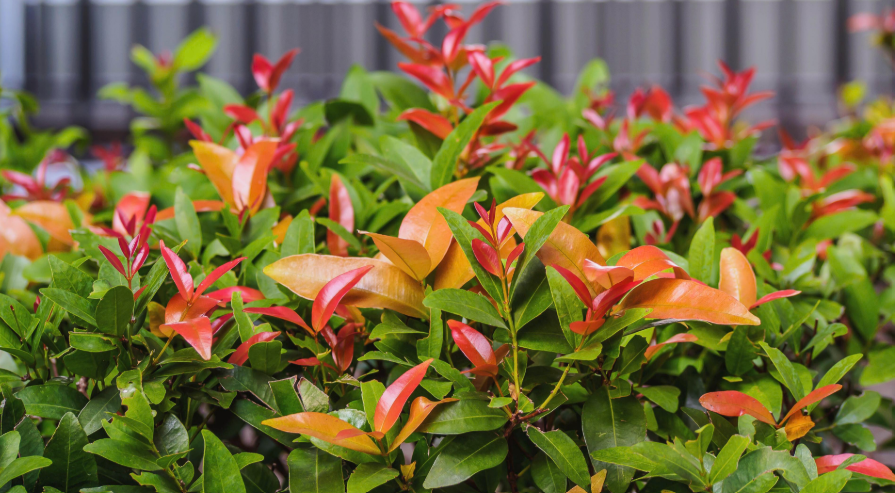
Common Lilly Pilly
Common lilly pilly, known scientifically as Syzygium smithii and still frequently labeled by its older name, Acmena smithii, is the most far-ranging species in the group, turning up in rainforest and damp eucalypt forest anywhere from far north Queensland down to Victoria. Rough bark, waxy green leaves, and pink-tinged new shoots are what usually give it away.
Full sun to part shade suits it well, and once it’s settled in, it shrugs off moderate frost and long dry stretches, although it fills out best with steady watering. It also carries a real practical edge: strong resistance to the psyllid, plus formal recognition by multiple Australian fire agencies as a fire-retardant plant, which makes it useful for more than just looks.
Riberry
Riberry, sometimes called small-leaved lilly pilly or clove lilly pilly, is native to a strip of subtropical coastal rainforest running north from around Kempsey, New South Wales, and reaching into southeast Queensland. What sets its fruit apart is a genuinely spicy edge, closer to clove and nutmeg than the plain sweetness most people expect from a berry.
Give it full sun or part shade and fertile, free-draining soil, and it will grow into a sizable tree if left alone, or stay tidier under a regular pruning routine. Since the early 1980s it’s also carved out a real place in the gourmet bush food market, making it arguably the most commercially valuable lilly pilly species grown today.
Creek Lilly Pilly
Creek lilly pilly answers to several names, brush cherry, scrub cherry, creek satinash, and watergum among them, and it’s a rainforest native to eastern Australia that ranks among the most heavily cultivated lilly pillies anywhere. It’s also the species breeders reach for most often when developing hedging cultivars.
It does best with full sun to part shade and soil that stays reliably damp, echoing the streamside habitat it naturally favors. Because it handles pruning so well, it’s become the go-to starting material for compact, hedge-ready selections.
Magenta Lilly Pilly
Magenta lilly pilly, also known as magenta cherry, is routinely mistaken in nurseries and gardens for the far more widespread brush cherry, even though it holds an official vulnerable listing under Australia’s national environment law. Its fruit ripens into a deep magenta-pink shade, which is exactly where the common name comes from.
It grows well in full sun to part shade and well-drained soil, adapting to a fair spread of garden conditions once established. Given its conservation status, buying stock that’s correctly identified by species, rather than a generic unlabeled “lilly pilly,” is a genuinely worthwhile step for anyone who wants to grow the real thing.
Blue Lilly Pilly
Blue lilly pilly goes by several other names too, blue cherry, scented satinash, and coastal cherry, and it occupies a broad stretch of Australia’s east coast as an understory species, from warm temperate coastal rainforest to more tropical forest higher up. The fruit starts out purplish-red and deepens to a striking purplish-blue as it ripens, a color unusual among lilly pillies.
Full sun to part shade and well-drained soil are all it really asks for, and it copes with a wide variety of forest and garden settings across its considerable range. The blue fruit is genuinely usable too, whether eaten straight off the tree or cooked, adding a practical dimension beyond its garden appeal.
Broad-leaved Lilly Pilly
Broad-leaved lilly pilly, also called blush satinash, cassowary gum, or Eungella gum, is a substantial rainforest tree that can top out at 35 meters where conditions allow. The cassowary gum name isn’t incidental either, its fruit is a genuine food source for the endangered southern cassowary wherever the two share habitat.
It wants full sun to part shade and rich soil that stays consistently moist, in keeping with its origins in mature rainforest. Given how tall it eventually grows, it’s a far better fit for a large block or a bushland restoration project than a typical suburban yard.
Powderpuff Lilly Pilly
Powderpuff lilly pilly earns its name from flowers unlike almost anything else in the genus, fluffy bursts of red or pink that make it one of the most visually dramatic wild lilly pilly species around. That flamboyant bloom sets it well apart from the muted white or cream flowers typical of most of its relatives.
Full sun to part shade paired with well-drained, humus-rich soil suits its rainforest heritage. Its showy flowers have earned it a devoted following among native plant collectors after something more eye-catching than a standard hedge species.
Coolamon
Coolamon carries a handful of alternate names, durobby, rose apple, and watermelon tree among them, and it’s a particularly handsome rainforest tree that can push past 30 meters, carrying a dense, well-filled canopy when growing conditions favor it. Mature trees of this size are genuine landmarks wherever they survive.
Full sun to part shade and rich, moist soil match its rainforest background well. Given its eventual bulk, it’s really only practical on a large property or as part of a significant public planting rather than an ordinary backyard.
Weeping Lilly Pilly
Weeping lilly pilly takes its name from its gently drooping branches, a noticeably softer look than the more upright habit typical of most other lilly pillies. That relaxed shape has made it popular with gardeners chasing a looser, less formal style than the clipped hedge aesthetic most people associate with the group.
It grows readily in full sun to part shade and well-drained soil, handling a decent range of garden situations once established. Its drooping form gives it real value as a specimen tree for anyone after something other than the standard tight hedge.
Watergum
Watergum, or Syzygium francisii, shares its common name with creek lilly pilly, which also goes by watergum in some circles, a real overlap worth being aware of before buying either plant. The 2 are nonetheless separate species with their own native ranges and identifying traits.
Full sun to part shade and consistently damp soil suit it, matching the water-loving background its name hints at. Checking the botanical name rather than trusting the common name alone is really the only reliable way to know exactly which watergum you’re getting.
White Apple
White apple, known too as flaky-barked satinash and brown satinash, grows naturally in both New Guinea and northern Australia, and its peeling, flaky bark is an easy visual cue that separates it from the smoother-barked species further south. A major 1983 revision of the genus placed it under its current scientific name.
It favors full sun to part shade and rich, consistently moist tropical soil, fitting a native range that spans 2 countries’ worth of rainforest. That international spread makes it something of an outlier compared to most other entries here.
Pink Satinash
Pink satinash grows into a large tree, up to 35 meters, with distinctively flaky bark and a native range confined to a specific pocket of tropical Queensland. Its species name honors the naturalist William Sayer, following a common convention in 19th-century Australian plant naming.
It thrives with full sun to part shade and rich, steadily moist tropical soil, reflecting its background in substantial rainforest. Its eventual height makes it far more suitable for genuine rainforest restoration than for planting in a home garden.
White Satinash
White satinash, also known as downy satinash, is a small tree with a natural weeping habit, colorful fruit, and drooping flower clusters, traits that would make it a genuinely attractive garden subject if any nursery actually stocked it, which none currently seem to. It also plays host to the caterpillars of the pale cerulean butterfly.
It’s adapted to the specific rainforest conditions of its native patch of Queensland, though there’s little recorded information on how it would perform in cultivation given how rarely it’s grown. Its role as a butterfly host plant still gives it genuine ecological value in the wild, nursery availability aside.
Lockerbie Satinash
Lockerbie satinash carries a conservation listing that speaks to real concern about its future in the wild. Its native distribution is narrow enough that it remains obscure even to many dedicated native plant enthusiasts.
It’s suited to the particular tropical conditions of its limited native range and stays rare in cultivation. Given its conservation status, protecting its existing habitat is a more meaningful path forward than trying to grow it at home.
Resilience
Resilience is a well-known cultivar bred from creek lilly pilly, developed specifically to deliver dense, compact hedging in a home garden setting. Its consistent, even growth has made it one of the go-to picks for anyone wanting a formal clipped hedge.
Full sun to part shade and well-drained soil work well for it, and it responds readily to regular pruning to keep its dense shape. Its widespread popularity is really a reflection of just how reliably it performs across different garden setups.
Straight and Narrow
Straight and Narrow was bred specifically for a tall, slender growth habit, making it a strong fit for a narrow side passage or any screening job where a wider variety simply wouldn’t fit. Its naturally upright form means far less lateral trimming is needed to keep it within a tight footprint compared with a broader-growing cultivar.
Full sun to part shade and well-drained soil are what it needs, and it’s specifically recognized for lower natural susceptibility to the psyllid than older, unimproved lilly pilly types. That mix of a narrow profile and pest tolerance makes it a genuinely smart pick for tight urban plots.
Bush Christmas
Bush Christmas is a compact form of creek lilly pilly, with a dense, shrubby build that suits a smaller hedge or a foundation planting better than a full-length screen. Its manageable size puts it within reach of gardeners who don’t have space for a bigger hedging option.
It grows well in full sun to part shade and well-drained soil, keeping a naturally neat shape with only light, occasional pruning. Its modest scale makes it a practical fit for the smaller garden footprints common in newer developments.
Aussie Boomer
Aussie Boomer is a shrubby cultivar of creek lilly pilly, developed with an eye toward solid, dependable performance under typical Australian garden conditions. Its toughness comes from breeding aimed squarely at everyday garden resilience rather than chasing novelty.
Full sun to part shade and well-drained soil are enough to keep it happy, and it handles a range of garden conditions without much fuss. That straightforward reliability is a big part of why it’s remained a popular pick among hedging cultivars.
Aussie Compact
Aussie Compact lives up to its name, a smaller-growing form of creek lilly pilly bred to stay noticeably more contained than the species itself or many older cultivars. Its modest mature size suits a smaller garden bed or a shorter hedge just fine.
It grows in full sun to part shade and well-drained soil, and it needs far less hard pruning to keep in check than a bigger cultivar would. That compact habit makes it a sensible option wherever garden space is genuinely tight.
Tiny Trev
Tiny Trev ranks among the smallest lilly pilly cultivars on the market, purpose-built for containers, very low borders, or tightly enclosed garden beds. Its diminutive size clearly separates it from the taller hedging and screening cultivars covered elsewhere in this list.
Full sun to part shade and well-drained soil suit it, and its small stature makes it especially well matched to pot culture. That manageable scale has made it a favorite for courtyards and balconies where a full-size lilly pilly just wouldn’t work.
Allyn Magic
Allyn Magic is a dwarf selection of common lilly pilly, bred for a low, compact habit better suited to a short hedge or topiary shape than a tall screen. Its naturally tight, tidy growth needs far less shaping than a bigger lilly pilly to look neat.
It handles full sun to part shade and well-drained soil, and it takes regular pruning in stride without losing its compact form. That manageable size has made it a favorite specifically for formal, low-edging applications.
Red Head
Red Head stands out for its vividly colored new growth, paired with small white flowers that give way to deeply hued, edible purple fruit. Its striking color through each new growth flush sets it apart from cultivars chosen mainly for density or size.
It grows well in full sun to part shade and well-drained soil, and light, regular pruning keeps producing fresh, colorful growth flushes. That ornamental new growth is exactly what draws gardeners looking for more visual interest than a plain green hedge offers.
Key Takeaways
- Lilly Pilly is a common name for several Australian native trees and shrubs, mainly belonging to the Syzygium and closely related genera.
- Different types vary considerably in size and growth habit, from compact shrubs suitable for hedges to larger trees used as shade or feature plants.
- Their evergreen foliage is one of their main attractions, with some varieties producing colorful new leaves that change as they mature.
- Lilly Pilly flowers are usually small and showy, followed by fleshy berries that can range from pink and purple to red or white, depending on the species.
- Many Lilly Pilly varieties are popular landscaping plants, particularly for screening, hedges, borders, and wildlife-friendly gardens.
- Growing requirements differ between types, but most prefer well-drained soil, adequate moisture, and a sunny to partly shaded position.