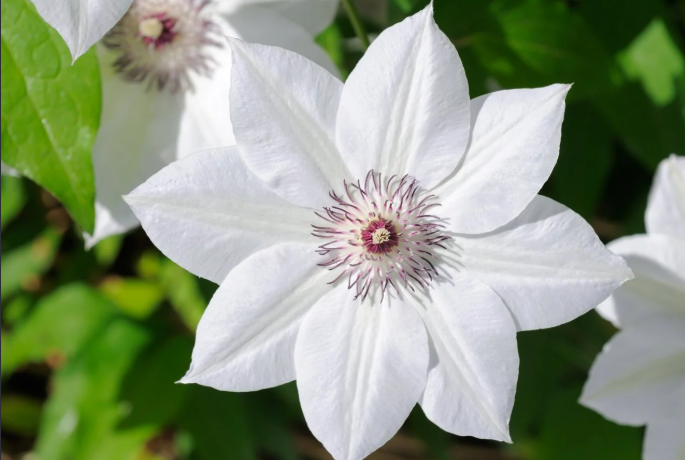
Flowers with white centers usually aren’t just showing off a pretty color contrast, they’re often running a genuine visual guidance system aimed squarely at a pollinator’s eye. Botanists call this a nectar guide, a contrasting pattern near the center of a bloom that functions almost like a runway marker, directing a bee or butterfly straight toward the nectar and pollen rather than leaving it to search a uniformly colored flower at random. A white center against darker or more vividly colored petals is one of the most visually striking versions of that guidance system, at least to a human eye.
It’s worth knowing that plenty of these guides go even further than what people can actually see. Ultraviolet photography has revealed that many flowers looking perfectly uniform to us carry dramatic, contrasting patterns entirely invisible to human vision but clearly visible to a bee, whose eyes detect a considerably wider range of light wavelengths than ours do. The white-centered flowers on this list happen to make their guidance pattern visible in ordinary daylight too, which is exactly why gardeners find them so visually rewarding up close.
That center-to-edge contrast also tends to shift with a flower’s age in several species, since many blooms deliberately change color once they’ve already been pollinated, a genuine signal to incoming pollinators that there’s no reward left worth visiting. A cluster of small flowers on the same plant showing white centers next to older, differently colored blooms is often simply displaying that natural aging process rather than 2 separate flower types.
The Missouri Botanical Garden’s plant finder database documents bloom pattern and color variety details for the vast majority of species covered here. What follows covers 25 flowers with white centers.
Cosmos
Cosmos, particularly in its Sensation and Picotee series, produces vividly colored pink, red, or purple petals surrounding a genuinely distinct pale to white center, a contrast that makes the flower’s nectar guide especially easy to spot from a distance. Its considerable self-seeding tendency means a single planting often continues for years.
It thrives in full sun and average soil, blooming reliably with minimal care and often reseeding itself for the following season. The University of Illinois Extension’s plant biology resources documents the nectar-guide function behind contrasting flower center patterns like this one.
Garden Phlox
Garden phlox commonly produces a genuinely distinct white eye at the center of each individual flower, standing out sharply against pink, purple, or red petals across the rest of the bloom cluster. Its considerable fragrance and reliable midsummer bloom have made it an English border classic well beyond its striking center pattern.
It tolerates full sun to partial shade and consistently moist soil, benefiting from good air circulation to avoid powdery mildew.
Dianthus
Dianthus, commonly called pinks, frequently produces a genuinely striking white or pale eye ringing the center of each flower against considerably darker pink, red, or maroon petals. Its fringed, delicately cut petal edges add real textural interest alongside that distinctive center pattern.
It thrives in full sun and well-drained soil, tolerating considerable heat and drought once established.
Petunia
Petunia varieties frequently produce a genuinely distinct white throat at the flower’s center, a contrast that stands out clearly against the considerably more vivid pink, purple, or red petal color surrounding it. Its long bloom season and reliable performance in both beds and containers have made it a garden staple regardless of the specific color pattern chosen.
It thrives in full sun and well-drained soil, blooming continuously through summer with regular deadheading.
Impatiens
Impatiens, in certain varieties, produces a genuinely visible white center or star pattern against darker pink, red, or orange petals, a contrast that becomes especially noticeable in a densely planted shade bed. Its considerable shade tolerance has made it one of the most popular bedding plants for exactly the spots where fewer other flowering annuals will bloom reliably.
It thrives in partial to full shade and consistently moist soil, blooming continuously through the growing season with minimal maintenance.
Verbena
Verbena produces dense clusters of small tubular flowers, many varieties showing a genuinely distinct white eye at each individual flower’s center against considerably more vivid purple, pink, or red surrounding color. Its low, spreading habit makes that center pattern especially visible en masse across a groundcover planting.
It thrives in full sun and well-drained soil, tolerating heat and drought considerably better than many other nectar-rich bedding plants.
Sweet William
Sweet William, a genuine dianthus relative, is particularly well known for producing a distinctly patterned white eye against deep red, pink, or maroon petals across its dense flower clusters. Its considerable fragrance and cottage garden charm have made it a longtime favorite well beyond the striking center contrast.
It tolerates a range of soil conditions and full sun, often behaving as a biennial that blooms reliably in its second year.
Nicotiana
Nicotiana, also called flowering tobacco, produces genuinely star-shaped flowers with a distinct white center in several varieties, a pattern that stands out clearly against pink, red, or lime-green petal color depending on the specific cultivar. Its considerable evening fragrance, most noticeable after dusk, adds another sensory dimension beyond the visual center pattern.
It thrives in full sun to partial shade and consistently moist soil, releasing its strongest fragrance during the cooler evening hours.
Morning Glory
Morning glory produces a genuinely distinctive white star pattern radiating from the center of its trumpet-shaped bloom, a contrast that stands out sharply against the considerably more vivid blue, purple, or pink color filling the rest of the flower. Its rapid climbing growth and reliable summer bloom have made it a longtime favorite for a trellis or fence.
It thrives in full sun and average soil, climbing vigorously given a support structure to grow on. The Missouri Botanical Garden’s plant science resources document the star-shaped nectar guide pattern common to morning glory and its close relatives.
Hibiscus
Hibiscus, in several “eye” cultivars bred specifically for the contrast, produces a genuinely distinct white or pale center against dramatically darker red, pink, or purple petals spreading outward. Its considerable flower size, among the largest of any common garden bloom, makes that center pattern a genuine focal point even from a distance.
It thrives in full sun and consistently moist, rich soil, producing a fresh flush of large blooms throughout a long summer season.
Anemone
Anemone, in several species commonly called windflower, produces a genuinely distinct white or pale center formed by its cluster of stamens, standing out clearly against blue, purple, or pink petals depending on the variety. Its delicate, cup-shaped bloom and early spring timing have made it a genuine woodland garden favorite.
It tolerates partial shade and consistently moist, well-drained soil, thriving in the same dappled woodland conditions many spring ephemerals favor.
Lisianthus
Lisianthus produces genuinely elegant, rose-like blooms, several varieties showing a distinct pale to white center against considerably deeper purple, pink, or blue petal color toward the outer edges. Its considerable popularity as a cut flower reflects both its long vase life and that refined center-to-edge color gradient.
It thrives in full sun and well-drained soil, rewarding consistent moisture with a long, elegant bloom period.
Nemesia
Nemesia produces small, genuinely two-toned flowers, many varieties showing a distinct white or pale throat against considerably more vivid orange, pink, or purple petal color surrounding it. Its compact habit and considerable fragrance in certain varieties make it a popular container and border choice.
It thrives in full sun to partial shade and consistently moist, well-drained soil, blooming most reliably in cooler spring and fall conditions.
Bacopa
Bacopa produces small, genuinely delicate flowers with distinctly pale to white centers, often appearing almost entirely white with only a subtle darker ring toward the petal edges. Its trailing habit has made it a popular choice for spilling over the edge of a hanging basket or container.
It thrives in full sun to partial shade and consistently moist soil, blooming continuously through a long summer season.
Periwinkle
Periwinkle produces a genuinely distinctive white star-shaped center at the heart of each blue, purple, or pink flower, a pattern visible clearly even from a modest distance across a spreading groundcover planting. Its considerable spread and evergreen foliage have made it a popular, low-maintenance choice for covering a shaded slope or bank.
It tolerates significant shade and poor soil, spreading vigorously enough to create genuine ground-level coverage within a season or 2.
Baby Blue Eyes
Baby blue eyes produces genuinely delicate, cup-shaped flowers with a distinct white center fading outward into a soft, sky-blue petal edge, one of the more subtly beautiful center-to-edge gradients on this entire list. Its low, spreading habit and gentle color palette have made it a favorite for a naturalized wildflower planting.
It thrives in full sun to partial shade and consistently moist soil, blooming most reliably during cooler spring conditions before summer heat sets in.
Gentian
Gentian, in several species, produces a genuinely distinct white or pale throat at the base of its deep blue or purple trumpet-shaped bloom, a contrast that adds real visual depth to an otherwise intensely saturated flower color. Its considerable difficulty to cultivate successfully has made a thriving gentian planting something of a genuine point of pride among alpine and rock garden enthusiasts.
It tolerates cool conditions and consistently moist, well-drained soil, thriving in exactly the alpine or mountainous conditions many species naturally occupy.
Passionflower
Passionflower produces a genuinely elaborate, complex central structure called a corona, its fine, thread-like filaments frequently banded in white against a considerably more vivid blue, purple, or red base color. Its intricate, almost otherworldly appearance has made it one of the most visually striking flowers a home gardener can grow on a simple trellis.
It climbs vigorously given a trellis, tolerating full sun and well-drained soil in a warm to temperate climate.
Columbine
Columbine produces genuinely intricate, spurred flowers, several varieties showing a distinct white or pale center against considerably more vivid outer petal and spur color in shades of purple, pink, red, or yellow. Its delicate, nodding bloom form and considerable appeal to hummingbirds have made it a longtime cottage garden and native plant favorite.
It tolerates partial shade and a range of soil conditions, self-seeding readily enough to naturalize gently throughout a favorable garden bed.
Osteospermum
Osteospermum, also called Cape daisy, produces a genuinely distinct pale to white ring near the center of certain varieties, contrasting against a darker central disc and vividly colored outer petals. Its considerable heat tolerance and long bloom season have made it a popular choice for a sunny border or container.
It thrives in full sun and well-drained soil, blooming most prolifically during the cooler shoulder seasons of spring and fall.
Primrose
Primrose, in certain white-eyed varieties, produces a genuinely distinct pale center against considerably more saturated petal color in shades of yellow, pink, red, or purple. Its early spring bloom timing has made it one of the first considerable flushes of color in many temperate gardens each year.
It tolerates partial shade and consistently moist, rich soil, thriving in the same cool, damp woodland conditions many early spring bloomers favor.
Lantana
Lantana produces dense flower clusters where individual florets genuinely shift color as they age, often showing a paler yellow or white center among the newest blooms while surrounding, older florets have already deepened to orange, pink, or red. That color-changing pattern serves a genuine signaling function, letting pollinators know which individual florets within the cluster still hold a fresh nectar reward.
It thrives in full sun and tolerates a range of soil conditions, blooming continuously through a long, heat-tolerant summer season. The University of Florida IFAS Extension’s pollinator resources documents lantana’s age-related color change as a genuine signal of nectar availability to visiting pollinators.
Freesia
Freesia, in several varieties, produces a genuinely distinct pale to white throat at the base of its trumpet-shaped bloom, a subtle contrast against the considerably more saturated petal color spreading outward. Its remarkable fragrance has made it a longtime favorite for cut flower arrangements regardless of the specific center pattern.
It grows from a corm planted in fall in a mild climate, its considerable fragrance developing most fully as the flower matures.
Foxglove
Foxglove produces genuinely tall flower spikes lined with tubular blooms, the interior throat of each individual flower frequently marked with white and speckled with darker spots that function as a clear, visible nectar guide for a foraging bee. Its dramatic height and considerable cottage garden charm have made it a longtime favorite despite the plant’s genuine toxicity if ingested.
It tolerates partial shade and moist, well-drained soil, its genuine toxicity making real caution around children and pets worth taking seriously. The Royal Horticultural Society’s plant science resources documents the spotted throat pattern’s function as a visible nectar guide for foraging bees.
Clematis
Clematis, in several varieties, produces a genuinely prominent cluster of white or pale stamens at the center of each bloom, creating a visible light-colored center against considerably more vivid purple, pink, or blue petal color surrounding it. Its vigorous climbing habit and considerable bloom size have made it one of the most popular flowering vines for a trellis or arbor.
It tolerates full sun to the flower with shaded roots, a specific combination often summarized as “head in the sun, feet in the shade.”
Key Takeaways
Flowers with white centers can create a striking contrast between the center of the bloom and its surrounding petals. They occur in many colors and forms, including annuals, perennials, wildflowers, and ornamental garden plants, with differences in flower shape, size, foliage, and blooming season.
Identifying these flowers is easier when several features are considered together. Petal color and arrangement, the shape of the white center, leaf characteristics, plant height, flowering period, and growth habit can help distinguish similar-looking species.
When choosing flowers with white centers for a garden, consider the local climate, sunlight, soil, moisture, and available space. Selecting plants suited to the growing conditions and combining varieties with different bloom periods can provide longer-lasting color and seasonal interest.