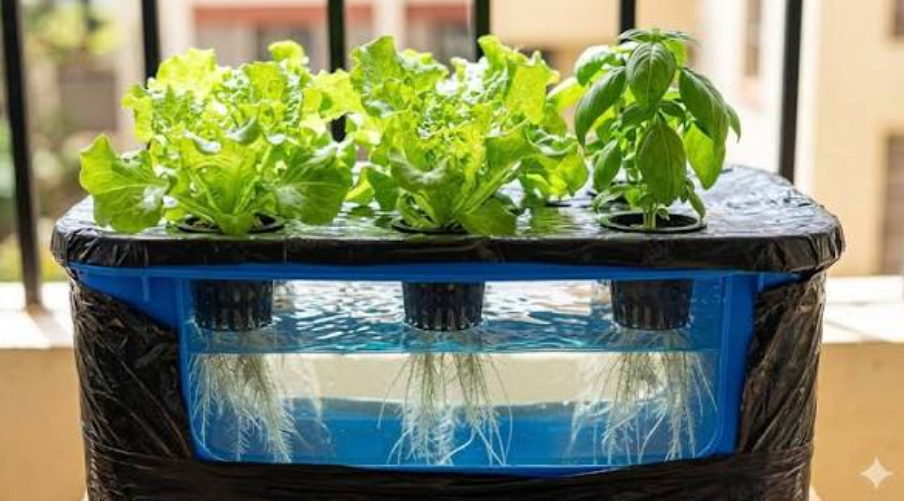
Nearly every serious source on hydroponics agrees on the same foundational list: 6 core methods, wick, deep water culture, ebb and flow, nutrient film technique, drip, and aeroponics, cover the fundamental ways a plant’s roots can receive water, nutrients, and oxygen without soil. Everything else genuinely built on top of that foundation, and there’s a lot of it, represents a real variation, hybrid, or specialized commercial implementation of one of those 6 core approaches rather than an entirely separate invention.
What actually distinguishes one system from another comes down to 2 practical questions: does the system move water actively with a pump, or rely on a passive process like capillary action or a naturally forming air gap, and does the nutrient solution stay in continuous contact with the roots or cycle through intermittent flooding and draining. A wick system and the Kratky method are both passive, needing no electricity or moving parts at all, while ebb and flow, NFT, and aeroponics all depend on active pumping to function. Aeroponics sits at the far end of that spectrum, suspending roots in open air and misting them directly rather than submerging or flowing water past them at all.
Several of the systems on this list are genuine named variations that show up specifically in commercial hydroponic operations and patent literature rather than home hobbyist setups, worth knowing about even if you’ll never build one yourself. Cornell University’s Controlled Environment Agriculture program covers the research side of several of these systems, particularly NFT and deep flow technique, in more technical depth than a general overview can. What follows covers 21 types of hydroponics systems, organized around the 6 core methods and their most well-documented variations.
Wick System
Wick system hydroponics uses a simple length of absorbent material, one end buried in the growing medium and the other submerged in a nutrient reservoir, drawing water and nutrients upward through capillary action alone. It requires no pump, electricity, or moving parts whatsoever, making it the most genuinely passive hydroponic method available.
It works best for smaller, lower-water-demand plants like herbs and lettuce, since the passive wicking action simply can’t keep up with a larger, thirstier crop’s nutrient demands.
Deep Water Culture
Deep water culture suspends a plant’s roots directly in an oxygenated nutrient solution, typically with an air stone and pump providing the dissolved oxygen roots need to avoid rotting in standing water. Its simple, effective design has made it one of the most popular entry points into active hydroponic growing.
It works well for fast-growing crops like lettuce and other leafy greens, generally producing quicker growth than a passive system given the constant nutrient and oxygen availability.
Kratky Method
The Kratky method is a genuinely passive variant of deep water culture, distinguished by adding all nutrients at the very start and never adjusting them again, letting the water level drop naturally as the plant consumes it and creating an air gap that supplies root oxygen without any pump at all. Its complete lack of moving parts and electricity requirement has made it a favorite for a windowsill herb garden built from nothing more than a mason jar.
It works best for leafy greens and herbs that don’t consume enormous amounts of water, since there’s no mechanism to replenish the reservoir once it’s set up.
Recirculating Deep Water Culture
Recirculating deep water culture connects multiple individual DWC buckets or containers to a shared reservoir and pump, allowing nutrient solution to circulate between them rather than sitting static in each separate container. That shared circulation makes nutrient and pH management considerably more consistent across a larger multi-plant setup.
It works well for scaling up a deep water culture operation beyond what a handful of separate buckets could practically manage on their own.
Bubbleponics
Bubbleponics combines deep water culture’s oxygenated root reservoir with an added top-feed drip line delivering additional nutrient solution directly to the base of each plant. That hybrid approach gives growers more precise control over nutrient delivery than standard DWC alone provides.
It works well for growers wanting DWC’s reliable oxygenation combined with the more targeted feeding control a drip system offers.
Nutrient Film Technique
Nutrient film technique circulates a thin, shallow stream of nutrient solution continuously over a plant’s roots through a sloped channel or tube, exposing roots to both moisture and open air simultaneously. That constant thin film delivery is genuinely different from submerging roots outright, the way deep water culture does.
It works particularly well for fast-growing leafy crops with light, fibrous root systems, though a pump failure can stress plants quickly since there’s no standing reservoir of water backing up the system.
Deep Flow Technique
Deep flow technique, sometimes called dynamic root floatation or raceway hydroponics, circulates a considerably deeper layer of nutrient solution, several inches rather than NFT’s thin film, around plant roots using a combination of pump and gravity drainage. That extra depth gives the system more of a buffer against a temporary pump interruption than NFT provides.
It works well for leafy vegetable production at a genuinely commercial scale, where its added water volume provides more stability than a thinner-film system.
Ebb and Flow
Ebb and flow, also called flood and drain, periodically floods a growing tray with nutrient solution before draining it back into a reservoir, giving roots alternating access to moisture and fresh air rather than continuous exposure to either. That intermittent cycle, typically flooding several times a day, genuinely mimics a natural wet-dry cycle roots respond well to.
It works well for a wide range of plant types and growing media, making it one of the more versatile and forgiving active hydroponic systems available.
Media Bed Flood and Drain
Media bed flood and drain applies the same flooding and draining cycle as standard ebb and flow within a larger bed filled with a substrate like expanded clay pebbles rather than individual trays or pots. That substrate provides extra physical support for larger or heavier plants than a typical net pot setup allows.
It works well for larger vining crops needing more root support, since the surrounding media helps anchor the plant in a way an empty flood tray can’t.
Ebb and Flow Table System
Ebb and flow table system refers specifically to the tray-based hobbyist implementation of flood and drain, where individual potted plants sit on a flat, flooded tray rather than a deeper substrate-filled bed. Its modular tray design makes it easy to add or remove individual plants without disturbing the rest of the setup.
It works well for a home or small commercial grower wanting flexibility to rearrange or replace individual plants easily within the same system.
Recirculating Drip System
Recirculating drip system delivers nutrient solution to each plant’s base through individual drip emitters, with any excess solution draining back into a shared reservoir for reuse rather than being discarded. That recovery design considerably reduces water and nutrient waste compared to a single-pass setup.
It works well for a wide range of plant sizes and types, offering precise, individualized feeding control that few other systems match.
Run-to-Waste Drip System
Run-to-waste drip system delivers nutrient solution the same way a recirculating drip setup does, but any excess solution is discarded rather than returned to the reservoir, avoiding the nutrient concentration drift that can build up in a recirculated solution over time. That single-pass approach trades water efficiency for more consistent, predictable nutrient strength.
It works particularly well for growers concerned about disease spreading through a shared, recirculated reservoir, since each plant’s runoff never mixes back with the rest.
Dutch Bucket System
Dutch bucket system, also called a bato bucket system, feeds nutrient solution via drip line into individual buckets filled with growing media, typically used for larger vining crops like tomatoes or cucumbers that need more root support than a net pot provides. Excess solution drains from each bucket back to a shared reservoir for recirculation.
It works especially well for tall, heavy-fruiting plants, since the media-filled bucket gives roots the physical anchoring a purely liquid-based system can’t offer.
Aeroponics
Aeroponics suspends plant roots in open air within an enclosed chamber, misting them at regular intervals with a fine nutrient spray rather than submerging or flowing liquid past them at all. That direct exposure to oxygen-rich air, combined with the misted nutrients, can produce genuinely faster growth than water-based methods.
It works well for growers with reliable power and equipment, since the system depends heavily on consistent misting, and any interruption can stress or kill roots quickly given how little moisture buffer exists.
Fogponics
Fogponics pushes aeroponics a step further, using ultrasonic foggers to convert nutrient solution into an extremely fine mist rather than the coarser spray aeroponics typically uses. That finer particle size lets roots absorb oxygen and moisture even more efficiently, at least in theory, than standard aeroponic misting provides.
It works well for propagation and cloning specifically, along with fast-growing greens and herbs, though the technology remains more specialized and less widely adopted than mainstream aeroponics.
Aquaponics
Aquaponics combines hydroponic plant growing with fish farming, using fish waste as the plant’s nutrient source while the plants, in turn, help filter and clean the water returned to the fish tank. That closed-loop relationship makes it a genuinely distinct hybrid system rather than a pure hydroponic variation.
It works well for growers interested in raising both fish and plants together, though it demands more biological balancing, monitoring pH, ammonia, and nitrate levels, than a purely plant-focused hydroponic system requires.
Raft System
Raft system, also called a floating raft or float system, grows plants in net pots set into holes in a foam raft that floats directly on top of a large nutrient reservoir, similar in principle to deep water culture but built at a genuinely commercial production scale. Its simple, low-maintenance design has made it a standard choice for large-scale lettuce and leafy green production.
It works particularly well for fast-growing leafy crops in a commercial greenhouse setting, where its straightforward mechanics scale up more easily than several of the pump-dependent systems on this list.
Vertical Tower System
Vertical tower system stacks growing sites in a vertical column, typically feeding nutrient solution from the top and letting it trickle or drip down through each level before returning to a base reservoir. That vertical orientation makes it possible to grow considerably more plants in the same floor space than a flat, horizontal system allows.
It works especially well in a space-constrained setting like an indoor grow room or urban vertical farm, where maximizing plants per square foot matters more than in an open field or greenhouse.
A-Frame NFT System
A-frame NFT system arranges nutrient film technique channels in an angled, tent-like structure rather than a flat horizontal run, letting solution flow downward through gravity while doubling the growing surface available in a given footprint. Its angled shape also improves light exposure to plants positioned on either side of the frame.
It works well for a commercial operation wanting to maximize plant density without sacrificing the light access flat NFT trays can struggle to provide evenly.
Aerated Flow Technique
Aerated flow technique modifies deep flow technique by adding dedicated aeration mechanisms that profusely oxygenate the circulating nutrient solution beyond what gravity and pump flow alone provide. That extra oxygenation can support healthier root systems and potentially faster growth than standard deep flow technique delivers on its own.
It works well for growers already using deep flow technique who want to push root health and growth rate further without switching to an entirely different system.
Autopot System
Autopot system uses a gravity-fed valve mechanism to automatically deliver nutrient solution to individual pots whenever the reservoir level in each pot drops below a set threshold, requiring no electricity, pump, or timer to function. That genuinely passive, self-regulating design has made it popular for a remote or off-grid growing setup where reliable power isn’t guaranteed.
It works well for growers wanting drip-style individualized feeding without the electrical dependency most active drip systems require, trading some precision for genuine mechanical simplicity.
Key Takeaways
Hydroponics systems allow plants to grow without traditional soil by delivering water, nutrients, oxygen, and support directly to the roots. Different systems use different methods to supply nutrient-rich water, making hydroponics suitable for a range of plants, growing spaces, and levels of experience.
Common types include deep water culture, nutrient film technique, ebb and flow, drip systems, wick systems, and aeroponics. Each method differs in how nutrients and oxygen reach the roots, as well as in equipment requirements, water use, maintenance, and suitability for particular crops.
Choosing a hydroponic system depends on available space, budget, crop type, experience, and the amount of monitoring required. Maintaining appropriate nutrient levels, water quality, oxygenation, temperature, lighting, and cleanliness is important for healthy plant growth and consistent results.