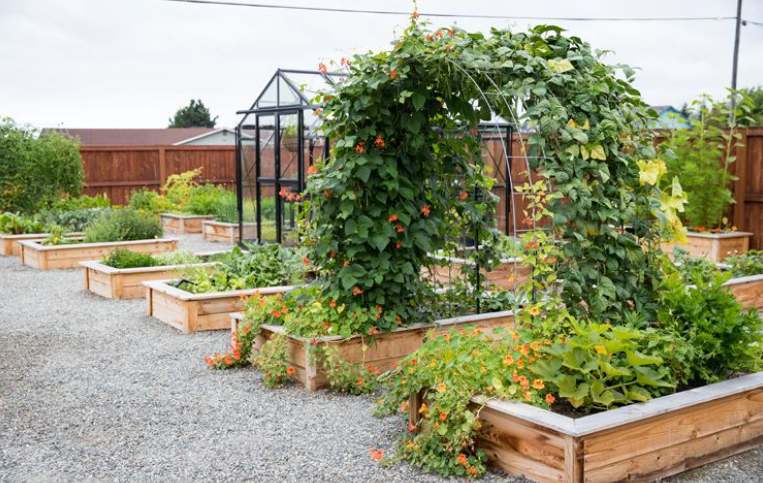
A raised bed solves a specific set of problems that in-ground gardening can’t easily fix: poor or contaminated native soil, drainage that’s either too fast or too slow, a back that can’t handle constant bending, and soil that warms up weeks earlier in spring simply because it sits above ground level and catches more direct sun. Which raised bed idea actually makes sense for a given yard usually comes down to which of those problems is the real one, since a design built for wheelchair accessibility solves a completely different issue than one built for a deep-rooted crop like carrots or a cold climate that needs every extra week of season it can get.
Material choice carries real, practical tradeoffs that are easy to overlook until a bed has been in the ground for a few years. Untreated pine is cheap but breaks down within a handful of seasons, cedar and redwood cost more upfront but naturally resist rot for a decade or longer, and metal beds heat up considerably faster in direct sun than wood does, a genuine consideration for anything with shallow, heat-sensitive roots planted right against the wall. None of these tradeoffs make one material objectively better, they just mean the right choice depends on budget, climate, and how long the bed actually needs to last.
Shape and growing method matter just as much as material once the basic structure is settled. A keyhole garden’s built-in center access point solves a real reach problem a standard rectangular bed doesn’t, and a wicking bed’s internal water reservoir solves an entirely different problem, inconsistent watering, that has nothing to do with the bed’s shape at all. Oregon State University Extension’s raised bed gardening guide covers the soil depth and material safety side of these decisions in more regulatory detail than a general overview can. What follows covers 40 raised garden bed ideas, spanning materials, shapes, heights, and specialized growing methods.
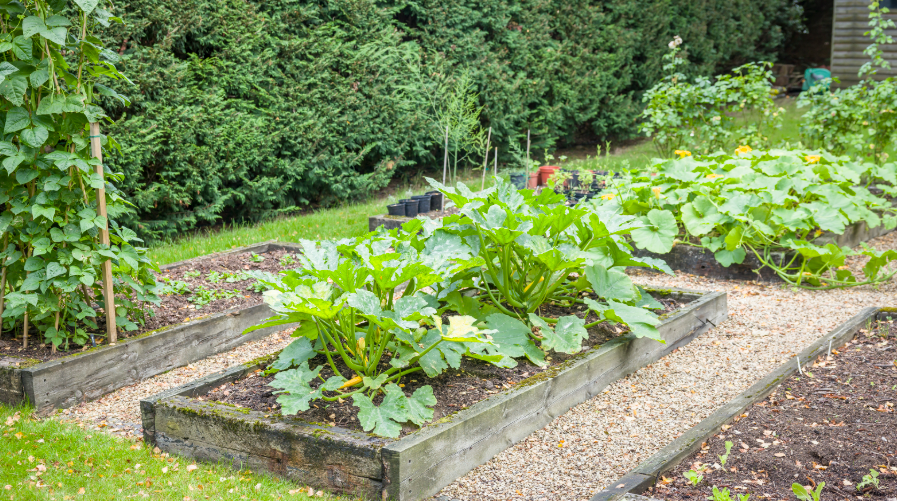
Cedar Wood Raised Bed
Cedar wood raised beds naturally resist rot and insect damage without any chemical treatment, lasting a decade or more even in consistently damp conditions. Its warm, reddish tone also gives a garden a genuinely classic, timeless look that many other materials can’t match.
It costs considerably more upfront than pine or standard construction lumber, a real tradeoff for the extended lifespan and lack of chemical treatment concerns.
Redwood Raised Bed
Redwood raised beds share cedar’s natural rot resistance, drawing on the same kind of naturally occurring oils that discourage decay and insect damage without any added chemical treatment. Its considerably lighter color offers a genuine visual alternative to cedar’s warmer reddish tone.
It’s become increasingly expensive and less widely available than cedar in many regions, a real consideration when comparing the 2 rot-resistant wood options.
Pine Raised Bed with Liner
Pine raised beds cost considerably less than cedar or redwood, making them a practical entry point for a first raised bed project, though untreated pine breaks down within just a few years of consistent ground contact. A plastic liner between the wood and the soil genuinely extends the wood’s usable life by keeping it drier.
It works best as a genuinely budget-conscious option for someone testing out raised bed gardening before committing to a more expensive, longer-lasting material.
Galvanized Steel Raised Bed
Galvanized steel raised beds resist rot entirely, unlike any wood option, and their zinc coating prevents the rust that would otherwise compromise an untreated metal bed within a season or two. Their clean, modern silhouette has made them increasingly popular in contemporary garden design.
They heat up considerably faster in direct sun than wood does, a real concern for shallow-rooted plants positioned right against the metal wall during peak summer heat.
Corten Steel Raised Bed
Corten steel, also called weathering steel, develops a distinctive rust-colored patina over its first year or 2 outdoors that actually protects the metal underneath from further corrosion rather than continuing to degrade it. Its evolving, rustic-industrial appearance has made it a favorite for a modern garden design.
It shares galvanized steel’s heat-retention concern in direct sun, and the initial rusting process can temporarily stain nearby paving or light-colored surfaces before it stabilizes.
Cinder Block Raised Bed
Cinder block raised beds cost relatively little and require no specialized tools to assemble, since the blocks simply stack without mortar for a genuinely permanent, low-maintenance structure. Their hollow cores can double as small planting pockets for herbs or trailing plants along the bed’s edge.
They retain heat noticeably in direct sun, similar to metal, and some gardeners have raised concerns about older cinder block formulations potentially containing fly ash, worth researching before using them for edible crops.
Brick Raised Bed
Brick raised beds offer a genuinely classic, traditional garden appearance, working particularly well alongside an older home or a formal garden design. Their considerable weight and stability mean they rarely shift or need repair once properly set.
They cost more in both materials and labor than most other raised bed options, reflecting the skilled masonry work a well-built brick bed genuinely requires.
Natural Stone Raised Bed
Natural stone raised beds provide genuine permanence and a naturalistic appearance that blends well into a rustic or cottage-style landscape. Their considerable mass also helps moderate soil temperature more evenly than a thinner-walled material would.
They’re among the most labor-intensive and expensive raised bed options to build, particularly if the stone needs to be sourced and transported rather than gathered on-site.
Concrete Block Raised Bed
Concrete block raised beds, using standard cinder block’s larger, more uniform relative, offer genuine structural permanence and can be finished with stucco, paint, or a veneer for a more polished appearance. Their considerable strength supports a taller bed wall than most other materials could manage without additional reinforcement.
They require more upfront construction effort than a simple wood-frame bed, though the resulting structure genuinely outlasts nearly every other option on this list.
Recycled Plastic Lumber Raised Bed
Recycled plastic lumber raised beds resist rot, insects, and weather damage indefinitely, never needing replacement the way even rot-resistant wood eventually does. Their manufactured consistency also means uniform, predictable dimensions that natural wood can’t always guarantee.
They cost more upfront than standard lumber, though the complete absence of ongoing replacement or maintenance can offset that initial expense over the bed’s genuinely long lifespan.
Wattle Raised Bed
Wattle raised beds weave flexible branches, willow is traditional, between upright stakes to form a rustic, woven wall entirely without milled lumber or purchased materials. Their genuinely handmade, organic appearance suits a cottage or woodland-style garden particularly well.
They have a shorter functional lifespan than most other materials on this list, typically needing rebuilding every few years as the woven branches naturally break down.
Straw Bale Garden
Straw bale gardens use the bales themselves as both the bed’s structure and, as they decompose, a genuine growing medium, eliminating the need for any separate frame or imported soil. Their built-in decomposition process also generates modest heat that can extend the growing season slightly.
They require a full conditioning process before planting, essentially pre-composting the bale with water and fertilizer, and the bales themselves need replacing each season as they break down.
Log Raised Bed
Log raised beds stack whole timber logs, sometimes half-buried, into a rustic frame that requires minimal milling or specialized construction skill. Their genuinely natural, woodland appearance suits a rural or forest-edge property particularly well.
They break down faster than milled, rot-resistant lumber, especially where the logs contact damp soil directly, generally needing replacement sooner than a cedar or redwood frame would.
Stock Tank Garden
Stock tank gardens repurpose a galvanized livestock watering trough as an instant, ready-made raised bed, requiring only drainage holes drilled into the bottom before filling with soil. Their considerable depth suits deep-rooted vegetables particularly well.
They share standard galvanized metal’s heat-retention issue in full sun, and a genuinely large tank can be difficult to move once filled with soil.
Repurposed Pallet Raised Bed
Repurposed pallet raised beds convert discarded wooden shipping pallets into a low-cost, low-waste bed frame, often stacked and lined to create a functional planting container. Their genuinely minimal material cost makes them an appealing option for a budget-conscious first project.
They typically have a shorter lifespan than purpose-built lumber, and it’s worth confirming a pallet wasn’t chemically treated with anything unsuitable for a food-growing bed before using it.
Keyhole Garden Bed
Keyhole garden beds build a circular raised bed with a wedge-shaped notch cut toward the center, providing direct access to a central composting basket that feeds nutrients outward to the surrounding soil. Their distinctive shape solves the reach problem a standard round bed would otherwise create.
They require more upfront construction planning than a simple rectangular frame, given the internal composting structure and the precise cutout needed for center access.
Spiral Herb Garden
Spiral herb gardens stack material, often stone or brick, into a rising spiral form that creates a genuine microclimate gradient, drier and sunnier near the top, moister and shadier near the base. That built-in variation lets a single small bed host herbs with genuinely different soil and light preferences.
They work best for a collection of herbs specifically, since the gradient effect that makes the design useful doesn’t offer much practical advantage for a single uniform crop.
Tiered Raised Bed
Tiered raised beds stack multiple bed levels at increasing heights, creating a genuine stair-step effect that improves both visual interest and accessibility to different planting depths. Their layered structure also helps manage a sloped yard that would otherwise need separate leveling work.
They require more material and construction effort than a single-level bed of comparable planting area, reflecting the added structural complexity of each additional tier.
U-Shaped Raised Bed
U-shaped raised beds wrap around 3 sides of a central walking or seating area, putting every part of the bed within comfortable reach without stepping into the growing space itself. Their shape works particularly well for a dedicated herb or salad garden accessed frequently throughout the week.
They take up more total yard space than a simple rectangular bed offering the same planting area, given the open access zone built into the design.
L-Shaped Raised Bed
L-shaped raised beds fit efficiently into a corner of a yard or patio, making productive use of an area a rectangular bed might otherwise leave awkwardly unused. Their bent shape also naturally divides a growing space into 2 practical sections for crop rotation or plant grouping.
They require more precise construction planning at the corner joint than a simple straight-sided bed, particularly if a uniform wall height is wanted throughout.
Circular Raised Bed
Circular raised beds offer a genuinely different visual rhythm than the rectangular beds that dominate most vegetable gardens, working particularly well as a focal point specimen bed rather than a purely functional growing space. Their curved walls also eliminate the sharp corners where soil can compact and drain poorly in a square design.
They’re somewhat less space-efficient than a rectangular bed of comparable material cost, since a circle covers less growing area per unit of perimeter wall.
Hexagonal Raised Bed
Hexagonal raised beds offer a genuinely modular shape that tiles together efficiently if multiple beds are planned side by side, unlike a circular design that leaves awkward gaps between units. Their angular geometry also provides a distinctive, modern garden aesthetic.
They require more precise angle cutting during construction than a simple rectangular or square frame, adding real complexity to a DIY build.
Modular Interlocking Raised Bed
Modular interlocking raised beds use a pre-engineered connector system that lets a gardener configure and reconfigure bed shapes without any cutting or specialized tools. Their genuine flexibility makes it easy to expand a garden gradually over several seasons.
They typically cost more per square foot of growing space than a simple custom-built wood frame, reflecting the engineering and manufacturing behind the connector system.
Standard Height Raised Bed
Standard height raised beds, typically 6 to 12 inches tall, provide enough depth for most vegetables while keeping material and soil costs reasonable compared to a taller design. Their modest height still delivers the core raised-bed benefits of improved drainage and earlier spring soil warming.
They still require bending or kneeling to work the soil, a real consideration for anyone specifically seeking a bed built for physical accessibility.
Elevated Table-Height Raised Bed
Elevated table-height raised beds sit on legs at roughly waist height, eliminating bending entirely and making gardening genuinely accessible for someone using a wheelchair or unable to kneel. Their compact size also suits a patio or balcony where ground-level growing space isn’t available at all.
They hold less total soil volume than a ground-level bed of the same footprint, limiting the size of what can realistically be grown to smaller or shallower-rooted crops.
Deep-Root Raised Bed
Deep-root raised beds, often built 18 inches or deeper, provide genuinely adequate space for long root vegetables like carrots or parsnips that would otherwise hit compacted native soil and fork or stunt. Their extra depth also holds more moisture reserve between waterings than a shallow bed can manage.
They require considerably more soil volume to fill than a standard-depth bed, a real cost consideration when budgeting a new build.
Waist-High Raised Bed
Waist-high raised beds split the difference between a standard ground-level bed and a fully elevated table design, reducing bending considerably without requiring the legged structure an elevated bed needs. Their substantial height also deters some digging pests that would otherwise reach a shorter bed easily.
They need genuinely sturdy wall construction to safely hold that much soil weight and pressure, more structural reinforcement than a shorter bed typically requires.
Hugelkultur Raised Bed
Hugelkultur raised beds bury logs, branches, and other woody debris beneath the soil layer, creating a slowly decomposing core that releases nutrients and retains moisture for years without additional fertilizing. Their mounded, layered construction also improves drainage naturally as the buried wood breaks down and creates air pockets.
They need a full season or more to settle before performing at their best, since the buried wood initially ties up available nitrogen as it begins decomposing.
Wicking Bed
Wicking beds include a hidden water reservoir at the base that draws moisture upward into the soil through capillary action, dramatically reducing how often the bed needs manual watering. Their built-in reservoir also buffers plants against a missed watering day far better than a standard bed can.
They require more complex initial construction, including a waterproof liner and overflow drainage, than a standard open-bottom raised bed.
Square Foot Gardening Bed
Square foot gardening beds divide a compact growing space into a grid of 1-foot squares, each planted with a specific, carefully calculated number of a given crop to maximize yield per square foot. Their intensive, highly organized layout makes them genuinely efficient for a small urban or suburban yard.
They demand more careful planning and record-keeping than a looser, more casual planting approach, since the entire system depends on following the grid’s spacing guidelines.
Lasagna No-Dig Raised Bed
Lasagna no-dig raised beds build up alternating layers of organic material, cardboard, compost, straw, directly within the bed frame rather than filling it with purchased topsoil outright. Their layered construction breaks down over time into genuinely rich, fertile growing soil without any digging or tilling required.
They typically need several months to fully settle and become plantable, making fall construction for spring planting the most practical timing.
Cold Frame Raised Bed
Cold frame raised beds incorporate a clear glass or plastic lid over the growing space, trapping solar heat to extend the growing season by several weeks on either end compared to an uncovered bed. Their built-in protection also shields tender seedlings from a late spring frost.
They need active daily monitoring during sunny weather, since the enclosed space can overheat quickly and needs venting to avoid cooking the plants inside.
Trellised Raised Bed
Trellised raised beds incorporate a built-in vertical structure along one edge, letting vining crops like beans, cucumbers, or peas climb upward rather than sprawling across the bed’s limited soil surface. Their vertical growing space effectively multiplies the bed’s productive capacity without expanding its footprint.
They need the trellis structure to be sturdy enough to handle a mature, fruit-laden vine, a real engineering consideration when building the frame.
Self-Watering Container Bed
Self-watering container beds use an internal reservoir and wicking system similar to a wicking bed, but built into a smaller, often portable container rather than a full in-ground frame. Their compact, movable design suits a patio, deck, or small urban space particularly well.
They hold less total soil and water volume than a full-sized wicking bed, meaning the reservoir needs refilling more frequently despite its water-saving design.
Cottage Garden Raised Bed
Cottage garden raised beds favor a looser, less rigidly geometric layout, often built from a mix of reclaimed materials and softened with overflowing, informally arranged plantings. Their relaxed, romantic aesthetic suits a mixed flower-and-vegetable garden particularly well.
They require more ongoing maintenance to keep the intentionally loose planting style from tipping into genuine overgrowth or disorder.
Modern Minimalist Raised Bed
Modern minimalist raised beds favor clean geometric lines, a single consistent material like galvanized steel or Corten, and a restrained plant palette that emphasizes structure over abundance. Their pared-down aesthetic works particularly well in a contemporary architectural setting.
They can look visually sparse during a plant’s early growth stages before foliage fills in, a real consideration for anyone wanting immediate visual impact.
Vertical Pallet Garden
Vertical pallet gardens stand a wooden pallet upright, lined and filled with soil in the gaps between slats, turning a flat footprint into a genuinely vertical growing surface. Their space-efficient design suits a small yard, balcony, or fence line particularly well.
They dry out considerably faster than a horizontal bed given their thin soil depth and vertical orientation, requiring more frequent watering to keep plants healthy.
Raised Bed with Bench Border
Raised beds with a bench border incorporate a wide, flat cap along the top edge of the wall, doing double duty as both structural bracing and a genuine place to sit while gardening. Their added seating makes extended garden work considerably more comfortable, particularly for an older gardener.
They require additional lumber and construction time compared to a simple wall-only frame, a real cost and effort tradeoff for the added functionality.
Raised Bed with Hoop House Frame
Raised beds with a hoop house frame incorporate arched supports over the growing space, ready to be covered with row cover fabric or plastic sheeting to extend the growing season or protect against frost and pests. Their removable cover system offers more flexibility than a fixed cold frame lid.
They need the cover material replaced periodically as it degrades from sun exposure, an ongoing cost beyond the initial frame construction.
Raised Bed with Drip Irrigation Built In
Raised beds with drip irrigation built in run tubing directly through the bed during construction, connecting to a timer for consistent, hands-off watering regardless of how busy a gardener’s schedule gets. Their automated system also reduces water waste compared to overhead watering, since moisture goes directly to the root zone.
They require upfront investment in tubing, emitters, and a timer, along with periodic checking to make sure emitters haven’t clogged or shifted out of position.
Key Takeaways
Raised garden bed ideas can make growing vegetables, herbs, flowers, and other plants more organized and accessible. Raised beds can be built in different shapes, sizes, and materials, allowing gardeners to adapt the design to available space, soil conditions, and the overall style of the landscape.
Choosing a raised bed design depends on the available space, budget, materials, drainage, sunlight, and types of plants to be grown. Wood, stone, metal, and other durable materials can be used, while adequate soil depth and good drainage are important for healthy root development. The bed should also be positioned where plants receive sufficient sunlight.
A well-planned raised garden bed can improve space use and make planting, watering, weeding, and harvesting easier. Adding quality soil, maintaining appropriate moisture, replenishing nutrients, and rotating crops when practical can help keep raised beds productive and healthy throughout the growing season.