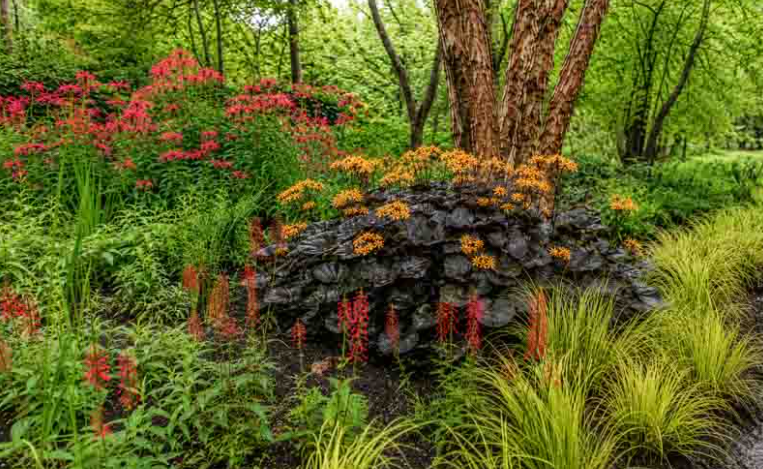
Wet clay is a genuinely different challenge than either wet soil or clay soil on its own, and most general drought-tolerant or clay-tolerant plant lists quietly assume reasonable drainage that a low, soggy clay spot simply doesn’t have. When clay’s naturally poor drainage combines with a consistently wet site, a low corner of the yard, the runoff zone below a downspout, the edge of a rain garden, the ground stays saturated for extended stretches, and most ordinary garden perennials rot at the root before they ever get established.
The plants that genuinely thrive here share a specific physiological trick most garden perennials lack: a tissue structure that lets oxygen move down into waterlogged roots even when the surrounding soil has almost none available. That adaptation is exactly why so many of the flowers on this list are wetland or streambank natives rather than typical border perennials, since it evolved specifically in response to naturally soggy ground rather than being bred in afterward. A plant without that trait essentially suffocates in consistently saturated clay, regardless of how tolerant it is of clay’s density or compaction in a drier form.
That difficult spot in a yard doesn’t have to stay a liability, either. A genuinely thoughtful planting of wet-clay-adapted perennials can turn a low, soggy corner into one of the more interesting parts of a garden, since several of these species, cardinal flower and Japanese iris in particular, are showier than what would typically go in a well-drained bed. The Missouri Botanical Garden’s plant finder lets you filter specifically for wet soil tolerance alongside clay tolerance, which narrows the search considerably faster than checking each trait separately. What follows covers 45 perennial flowers for wet, clay soil.
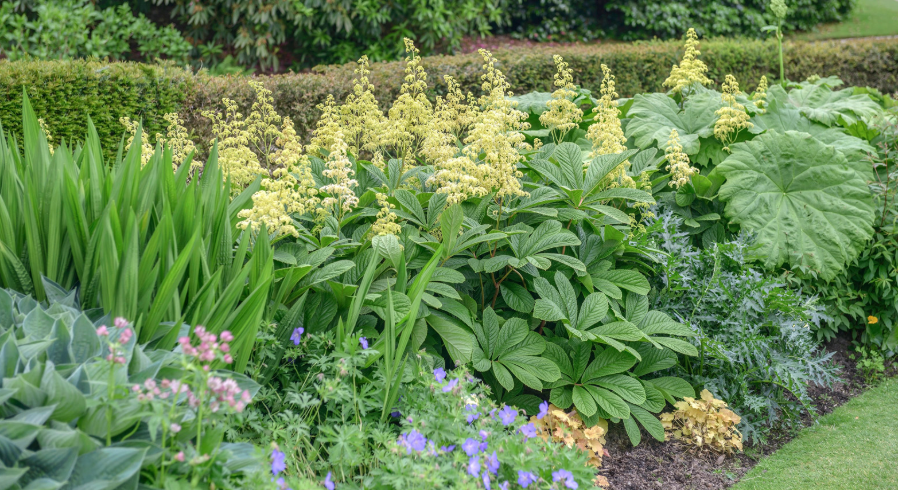
Cardinal Flower
Cardinal flower produces vivid scarlet, tubular blooms on tall spikes, genuinely thriving in the consistently saturated clay found along a stream bank or the edge of a rain garden. Its color is a magnet for hummingbirds throughout its summer bloom period.
It tolerates standing water for short stretches and prefers a spot that never fully dries out, making it one of the more reliable choices for a genuinely soggy corner.
Great Blue Lobelia
Great blue lobelia shares cardinal flower’s tolerance for consistently wet clay, producing tall spikes of vivid blue flowers rather than its relative’s scarlet ones. Its color offers a genuine alternative for a wet planting that already has enough red.
It thrives in consistently moist to wet soil and tolerates partial shade well, often growing naturally alongside cardinal flower in the wild.
Joe Pye Weed
Joe pye weed produces enormous, dome-shaped clusters of small pink-purple flowers on a tall native perennial that genuinely thrives in wet clay where many showier perennials would simply rot. Its considerable scale makes it a real focal point in a larger, damp planting.
It tolerates consistently moist to wet soil and full sun to partial shade, thriving particularly well near a rain garden or pond edge.
Swamp Milkweed
Swamp milkweed, distinct from the dry-soil-loving butterfly weed, genuinely tolerates wet clay and even periodic standing water while still serving as a monarch caterpillar host plant. Its clusters of pink flowers provide real nectar value alongside that host plant role.
It thrives in consistently moist to wet soil, tolerating conditions that would kill most other milkweed species outright.
Marsh Marigold
Marsh marigold produces cheerful, bright yellow, buttercup-like flowers in very early spring, genuinely thriving in standing water or consistently saturated clay along a pond edge or stream bank. Its early bloom timing provides welcome color before most other wet-loving perennials have even emerged.
It tolerates standing water for extended periods, making it one of the few perennials on this list genuinely suited to a spot that never fully drains.
Turtlehead
Turtlehead produces distinctive white, snapdragon-like flowers resembling a turtle’s head, blooming in late summer on a plant genuinely adapted to consistently wet clay. Its unusual flower shape makes it a genuine conversation piece in a damp border.
It tolerates consistently moist to wet soil and partial shade, thriving in exactly the soggy conditions many other flowering perennials can’t survive.
Rose Turtlehead
Rose turtlehead shares standard turtlehead’s genuine wet-clay tolerance, distinguished by pink rather than white flowers on a plant that blooms during the same late-summer window. Its color offers a warmer alternative within the same genus.
It tolerates consistently moist to wet soil, sharing its white-flowered relative’s general care needs and bloom timing.
Blue Flag Iris
Blue flag iris produces classic purple-blue iris flowers on a native wetland plant genuinely adapted to standing water and saturated clay along a pond edge or marsh. Its sword-like foliage provides attractive vertical structure even outside the bloom period.
It tolerates standing water and consistently wet soil, thriving in exactly the saturated conditions that would kill most other iris types.
Siberian Iris
Siberian iris tolerates wet clay considerably better than many other iris types, producing elegant purple, blue, or white flowers on fine, grass-like foliage. Its refined texture suits both a formal border and a more naturalized wet planting.
It tolerates consistently moist soil and some standing water, though it also adapts reasonably well to a normal garden bed if conditions change.
Japanese Iris
Japanese iris produces some of the largest, most elaborate iris flowers available, genuinely thriving in consistently wet, acidic clay along a pond edge. Its considerable flower size and range of colors make it a genuine showpiece for a wet garden.
It tolerates standing water during the growing season, though it generally wants somewhat drier conditions through winter dormancy.
Louisiana Iris
Louisiana iris, a genuine Southern wetland native, tolerates standing water and consistently saturated clay about as well as any iris available, reflecting its origin in the bayou and marsh habitat of the Gulf Coast. Its considerable color range spans nearly the entire spectrum.
It thrives in consistently wet to standing water conditions, performing best in a genuinely warm, humid climate.
Astilbe
Astilbe produces feathery, plume-like flower spikes in shades of pink, red, and white on a plant that genuinely tolerates consistently moist clay in partial shade. Its fine, fern-like foliage provides attractive texture even before flowering.
It tolerates consistently moist soil and partial to full shade, struggling considerably if the soil is allowed to dry out even briefly.
Ligularia
Ligularia produces bold, dramatic yellow-orange flower spikes atop large, glossy leaves, genuinely thriving in consistently moist clay and partial shade. Its considerable size and bold texture make it a real focal point in a damp shade garden.
It tolerates consistently wet soil and shade well, wilting dramatically if conditions turn even briefly dry, a useful visual warning sign.
Rodgersia
Rodgersia produces large, bold, deeply textured leaves and plume-like flower clusters, genuinely thriving in the consistently moist clay found along a stream bank or pond edge. Its considerable scale provides real architectural presence in a damp shade garden.
It tolerates consistently wet soil and partial shade, struggling in anything approaching genuine drought.
Queen of the Prairie
Queen of the prairie produces enormous, fluffy pink flower clusters on a tall native perennial genuinely adapted to consistently wet clay and prairie wetland habitat. Its considerable height makes it a real statement plant in a larger damp border.
It tolerates consistently moist to wet soil and full sun to partial shade, thriving in exactly the saturated conditions its native prairie wetland habitat provides.
Meadowsweet
Meadowsweet, a close relative of queen of the prairie, produces fragrant, frothy clusters of white or pink flowers on a plant genuinely adapted to consistently wet soil. Its fine, airy flower texture provides a softer look than its bolder relative.
It tolerates consistently moist to wet soil and full sun to partial shade, sharing its relative’s general wetland adaptation.
Culver’s Root
Culver’s root produces tall, elegant spikes of small white flowers on a native prairie wetland plant that tolerates consistently moist clay well. Its narrow, upright form provides genuine vertical structure without excessive width.
It tolerates consistently moist to wet soil and full sun to partial shade, thriving in the same prairie wetland conditions as several of its native neighbors.
Obedient Plant
Obedient plant produces tall spikes of pink or white tubular flowers, genuinely tolerating consistently moist clay while spreading somewhat aggressively via rhizome in favorable conditions. Its individual flowers can be bent and will hold their new position, giving the plant its unusual common name.
It tolerates consistently moist soil and full sun to partial shade, spreading enough in a genuinely wet bed that some containment or regular division helps keep it in bounds.
Bee Balm
Bee balm tolerates consistently moist clay considerably better than many other flowering perennials, its shaggy red or purple flower heads drawing hummingbirds and butterflies alike through much of summer. Its aromatic foliage has a long history as a traditional herbal tea ingredient.
It tolerates a range of soil moisture, including genuinely wet clay, though good air circulation helps prevent the powdery mildew it can be prone to in humid conditions.
Black-Eyed Susan
Black-eyed Susan tolerates a surprisingly wide range of soil conditions, including consistently moist clay, producing cheerful yellow-orange daisy-like flowers throughout a long summer bloom period. Its reliable, low-maintenance nature has made it a native garden staple regardless of soil type.
It tolerates a range of soil moisture and full sun, often self-seeding readily once established in a favorable spot.
Cutleaf Coneflower
Cutleaf coneflower, a considerably taller relative of black-eyed Susan, genuinely thrives in consistently moist clay along a stream bank or damp meadow edge. Its deeply lobed leaves and yellow flowers provide a bolder presence than its more common relative.
It tolerates consistently moist to wet soil and full sun to partial shade, reaching a considerable height in genuinely favorable wet conditions.
New England Aster
New England aster tolerates consistently moist clay well, producing abundant purple-pink flowers specifically in late summer and fall when many other wet-tolerant perennials have finished blooming. Its considerable height makes it a genuine back-of-border plant.
It tolerates a range of soil moisture, including wet clay, thriving in full sun with a midsummer pinch back to encourage bushier growth.
Ironweed
Ironweed produces clusters of deep purple flowers on a tall native perennial genuinely adapted to consistently moist clay soil. Its considerable height suits a larger, more naturalized wet planting rather than a tidy formal border.
It tolerates a range of soil moisture, including consistently wet clay, thriving in full sun.
Hardy Hibiscus
Hardy hibiscus, also called rose mallow, produces dinner-plate-sized flowers on a plant genuinely adapted to consistently wet clay along a pond edge or rain garden. Its enormous individual bloom size makes it a genuine focal point even in a difficult, soggy spot.
It tolerates consistently wet soil, including genuinely saturated clay, thriving in full sun with regular moisture.
Candelabra Primrose
Candelabra primrose produces tiered whorls of flowers in shades of pink, orange, and yellow stacked up a tall stem, genuinely thriving in consistently moist clay along a stream bank. Its unusual stacked flower structure gives the plant its common name.
It tolerates consistently moist to wet soil and partial shade, struggling considerably if allowed to dry out.
Japanese Primrose
Japanese primrose shares candelabra primrose’s tiered flower structure and genuine wet-clay tolerance, often naturalizing readily along a consistently damp stream bank or pond edge. Its considerable color range spans much of the pink-to-red spectrum.
It tolerates consistently moist to wet soil and partial shade, self-seeding readily in genuinely favorable wet conditions.
Virginia Bluebells
Virginia bluebells produce nodding clusters of blue, bell-shaped spring flowers on a native woodland perennial that tolerates consistently moist clay well. Its foliage goes fully dormant and disappears by midsummer, a normal part of its life cycle rather than a sign of trouble.
It tolerates consistently moist soil and partial to full shade, thriving in the same woodland floodplain conditions its native habitat provides.
Solomon’s Seal
Solomon’s seal produces small, dangling white flowers along an arching stem, tolerating consistently moist clay and significant shade well. Its graceful, architectural form provides genuine structure in a damp woodland planting.
It tolerates consistently moist soil and shade, spreading slowly by rhizome into an attractive colony over time.
Globeflower
Globeflower produces distinctive, perfectly rounded yellow or orange flowers on a plant genuinely adapted to consistently wet clay and boggy ground. Its unusual, almost spherical bloom shape sets it apart from most other perennials on this list.
It tolerates consistently wet soil, including standing water for brief periods, thriving in full sun to partial shade.
Black Cohosh
Black cohosh produces tall, wand-like spikes of small white flowers on a substantial native woodland perennial tolerating consistently moist clay and shade well. Its considerable height provides genuine vertical structure in a damp shade garden.
It tolerates consistently moist soil and partial to full shade, thriving in the same rich, damp woodland conditions its native range provides.
Goat’s Beard
Goat’s beard produces enormous, plume-like white flower clusters on a genuinely substantial perennial that tolerates consistently moist clay in partial shade. Its considerable scale makes a mature specimen resemble a shrub more than a typical herbaceous perennial.
It tolerates consistently moist soil and partial shade, struggling in anything approaching genuine drought.
Bleeding Heart
Bleeding heart produces distinctive, heart-shaped pink or white flowers dangling along an arching stem, tolerating consistently moist clay in shade reasonably well during its spring bloom window. Its unusual flower form makes it a genuine cottage garden conversation piece.
It tolerates consistently moist soil and partial to full shade, typically going dormant and disappearing entirely by midsummer.
Toad Lily
Toad lily produces unusual, speckled, orchid-like flowers in late summer and fall, tolerating consistently moist clay and significant shade well. Its unusual bloom timing provides genuine late-season interest in a damp shade garden.
It tolerates consistently moist soil and shade, thriving in exactly the woodland conditions most late-blooming perennials can’t tolerate.
Sneezeweed
Sneezeweed, despite the unfortunate common name, doesn’t actually cause allergies and produces abundant daisy-like flowers in warm shades of orange, red, and yellow on a plant genuinely tolerant of consistently moist clay. Its long summer bloom period provides reliable color in a damp border.
It tolerates a range of soil moisture, including consistently wet clay, thriving in full sun.
Boneset
Boneset produces flat clusters of small white flowers on a native wetland perennial historically used in traditional medicine, tolerating consistently moist to wet clay well. Its distinctive perfoliate leaves, which appear to be pierced by the stem, make identification straightforward.
It tolerates consistently moist to wet soil and full sun to partial shade, thriving in the same wetland habitat as several of its native neighbors.
Blue Vervain
Blue vervain produces tall, narrow spikes of small purple flowers on a native wetland perennial genuinely tolerant of consistently moist clay. Its fine, upright form provides vertical structure without excessive width in a damp border.
It tolerates consistently moist to wet soil and full sun, thriving in the same prairie wetland conditions as several of its native neighbors.
Monkey Flower
Monkey flower produces distinctive, snapdragon-like flowers in shades of yellow, pink, or red on a native wetland plant genuinely adapted to consistently wet, even boggy, ground. Its unusual flower shape gives the plant its common name.
It tolerates standing water and consistently saturated soil, thriving in exactly the boggy conditions that would kill most other flowering perennials.
Water Avens
Water avens produces nodding, bell-shaped, reddish-pink flowers on a native wetland perennial that tolerates consistently moist to wet clay well. Its understated, drooping blooms provide a subtler alternative to some of the bolder flowers on this list.
It tolerates consistently moist to wet soil and partial shade, thriving in the same damp meadow and streambank habitat as several other native wetland perennials.
Swamp Sunflower
Swamp sunflower produces abundant bright yellow daisy-like flowers in fall on a tall native perennial genuinely adapted to consistently wet clay. Its considerable height and late bloom timing provide real late-season color in a damp border.
It tolerates consistently moist to wet soil and full sun, thriving in the same wetland habitat its common name suggests.
Spiderwort
Spiderwort produces distinctive 3-petaled blue, purple, or pink flowers that each last only a single day, tolerating consistently moist clay considerably better than many other perennials. Its grass-like foliage provides attractive texture even outside the bloom period.
It tolerates a range of soil moisture, including wet clay, thriving in full sun to partial shade.
Golden Ragwort
Golden ragwort produces clusters of small yellow daisy-like flowers in spring on a low, spreading native groundcover genuinely tolerant of consistently moist clay. Its evergreen basal foliage provides year-round ground coverage in a damp bed.
It tolerates consistently moist soil and partial shade, spreading readily to form an attractive, low-maintenance groundcover in genuinely wet conditions.
Blazing Star
Blazing star produces tall, dense spikes of purple flowers that open from the top down, tolerating consistently moist clay considerably better than some of its drier-prairie relatives. Its unusual upright spike form provides genuine vertical structure in a damp border.
It tolerates a range of soil moisture, including consistently moist clay, thriving in full sun.
Sweet Flag
Sweet flag produces narrow, iris-like foliage and small, inconspicuous flower spikes on a genuine wetland plant tolerating standing water and consistently saturated clay. Its fragrant, spicy-scented leaves and roots have a long history of traditional use.
It tolerates standing water and consistently wet soil, thriving in exactly the boggy, saturated conditions most garden perennials can’t survive.
Pickerelweed
Pickerelweed produces spikes of vivid purple-blue flowers on a genuine pond-edge and wetland native, tolerating standing water and consistently saturated clay better than almost any other perennial on this list. Its broad, arrow-shaped leaves provide attractive texture at the water’s edge.
It thrives in standing water and consistently saturated soil, making it one of the few true aquatic-margin perennials suited to the wettest possible spot in a garden.
Halberd-Leaved Rose Mallow
Halberd-leaved rose mallow, a hibiscus relative distinct from the more common rose mallow cultivars, produces large white or pink flowers with a deep red throat on a genuinely wet-clay-adapted native perennial. Its distinctively lobed, arrow-shaped leaves set it apart from other hibiscus relatives at a glance.
It tolerates consistently wet soil, including standing water for brief periods, thriving in full sun along a marsh edge or rain garden.
Key Takeaways
Perennial flowers for wet or clay soil can provide color and seasonal interest in areas where many plants struggle because of poor drainage or heavy soil. Suitable varieties can tolerate higher moisture levels and compacted soil while adding different flower colors, foliage textures, heights, and growth habits to the landscape.
Choosing the right plants depends on the level of moisture, soil condition, sunlight, climate, and available space. Some perennials tolerate consistently moist soil, while others prefer clay soil that drains reasonably well between periods of rainfall. Improving drainage where possible can also create better growing conditions.
With suitable plant selection and proper care, wet or clay areas can become productive and attractive garden spaces. Adding organic matter where appropriate, avoiding excessive soil compaction, providing adequate spacing, and monitoring moisture levels can help perennial flowers establish stronger roots and maintain healthy growth.