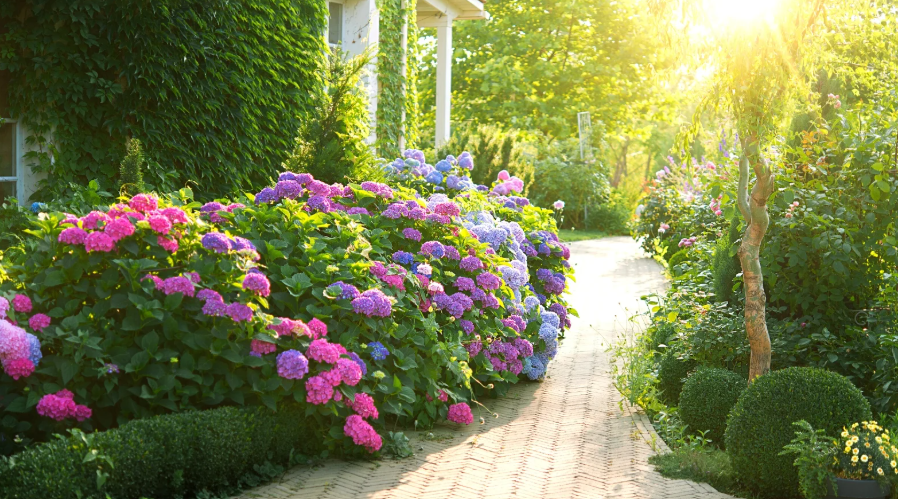
Foundation planting started as a genuinely practical fix rather than a decorative tradition. Early 20th-century houses were built on tall, visually unappealing poured concrete or stone foundations, and the shrubs planted directly against them were originally meant to hide that exposed base rather than serve any broader landscape design purpose. That practical origin still shapes the category today, even though a modern foundation planting does considerably more decorative work than the purely functional screening it started as.
The single most common foundation planting mistake is choosing something that eventually outgrows its spot, and it happens constantly because a plant’s mature size is so easy to underestimate from a small nursery container. A shrub planted a comfortable 2 feet below a windowsill can climb well past it within a decade, and a foundation plant that’s grown too large creates a genuine problem: it blocks light, traps moisture against the siding, and often needs the kind of aggressive, unattractive pruning that a properly sized plant would never require in the first place.
The soil right against a house also behaves differently than the open yard a few feet away, a detail worth planning around before anything goes in the ground. A roof overhang shades and rain-shadows the immediate foundation bed, often leaving it considerably drier than the rest of the landscape, while a south- or west-facing wall reflects real additional heat and light onto whatever’s planted against it. The University of Illinois Extension’s guide to foundation planting design covers mature-size planning in more detail than a general list can. What follows covers 50 of the best foundation plants for landscaping.
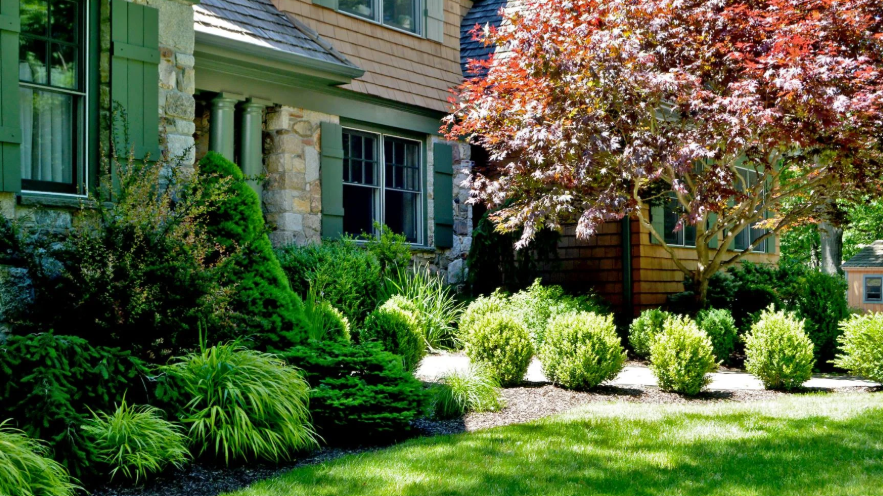
Foundation Plants (Bushes and Shrubs)
Boxwood
Boxwood forms a dense, naturally rounded evergreen shrub that holds its shape with minimal shearing, staying genuinely predictable in size decade after decade against a foundation. Its fine, small leaves stay attractive year-round in most climates.
It tolerates a range of soil types and light conditions, needing only occasional watering once established, though the dry pocket right under an eave still warrants some attention.
Dwarf Boxwood
Dwarf boxwood shares standard boxwood’s dense, evergreen structure on a considerably more compact scale, genuinely well suited to a foundation bed beneath a low window. Its naturally small stature keeps it from ever needing the aggressive size-reduction pruning a larger shrub might eventually require.
It tolerates a range of soil types, growing slowly enough that it rarely outpaces the modest space many foundation beds actually offer.
Compact Korean Boxwood
Compact Korean boxwood offers notably better cold tolerance than common boxwood varieties, extending reliable foundation structure into colder climates where other boxwood types can suffer winter damage against an exposed wall. Its foliage takes on a bronze tint in cold weather before greening back up in spring.
It tolerates a range of soil conditions and needs minimal pruning to maintain a neat, rounded form beneath a window.
Japanese Holly
Japanese holly produces small, boxwood-like evergreen leaves on a dense shrub that’s become a popular boxwood substitute in regions where boxwood blight is a genuine concern. Its fine texture works particularly well framing an entryway or filling a foundation corner.
It tolerates a range of soil and light conditions, needing minimal fertilizer once its root system is established against the house.
Compact Inkberry Holly
Compact inkberry holly, a naturally dwarf cultivar of the native evergreen holly, stays dense and rounded without the legginess that can develop in the straight species over time. Its tolerance for both sun and shade makes it genuinely flexible across a house’s different exposures.
It handles the varied light a foundation bed often receives across a single wall, adapting well to both a sunny corner and a shadier stretch beneath an overhang.
Dwarf Yaupon Holly
Dwarf yaupon holly stays naturally low and dense without the pruning a full-sized yaupon eventually needs, its fine evergreen foliage providing tidy, predictable foundation structure. Its considerable drought tolerance makes it a strong choice for the dry pocket directly beneath a roof overhang.
It tolerates poor, sandy soil and drought considerably better than many other evergreen foundation options.
Japanese Yew
Japanese yew produces dense, dark green needles on a genuinely shade-tolerant evergreen conifer, one of the few needled evergreens that performs well on a north-facing foundation wall with limited direct sun. Its considerable longevity has made it a traditional foundation planting for centuries.
It tolerates significant shade and a range of soil types, responding well to shearing if a more formal, controlled foundation shape is wanted.
Globe Arborvitae
Globe arborvitae forms a naturally rounded evergreen shrub requiring minimal shearing to maintain its tidy, ball-like shape, a genuinely predictable choice for anchoring a foundation corner. Its dense, scale-like foliage provides year-round green structure.
It tolerates a range of soil conditions and full sun to light shade, asking for very little beyond occasional watering during the driest stretches near a wall.
Dwarf Alberta Spruce
Dwarf Alberta spruce forms a naturally dense, perfectly conical evergreen shrub requiring no shearing to maintain its classic form, a genuinely popular choice for flanking a front door symmetrically. Its fine, soft needles provide a formal presence at a house’s entrance.
It tolerates full sun to partial shade, growing slowly enough that it rarely outgrows its intended foundation spot even over many years.
Dwarf Mugo Pine
Dwarf mugo pine forms a low, naturally rounded evergreen mound requiring essentially no pruning to maintain its compact form, genuinely well suited to tucking beneath a low window. Its dense needles provide year-round texture directly against the foundation.
It tolerates a range of soil conditions and full sun, needing no fertilizer or special care once established.
Podocarpus
Podocarpus produces fine, yew-like evergreen needles on a versatile shrub commonly sheared into a tidy foundation hedge or grown as a taller screening plant near a corner. Its adaptable growth habit suits a range of foundation uses.
It tolerates a range of soil and light conditions, needing a mild climate free of hard, prolonged freezes.
Dwarf Nandina
Dwarf nandina provides evergreen structure and vivid red winter foliage color at a genuinely compact scale, staying well beneath most windowsills without any significant pruning. Its fine, layered texture works particularly well massed along a foundation bed’s front edge.
It tolerates a wide range of soil and light conditions, needing minimal water or fertilizer once established.
Dwarf Hinoki Cypress
Dwarf Hinoki cypress produces distinctive fan-shaped, layered evergreen foliage on a considerably compact, slow-growing form well suited to a foundation bed’s modest scale. Its sculptural shape provides genuine focal-point value near an entryway.
It prefers consistently moist, well-drained soil and partial shade, needing supplemental water in the drier pocket beneath a roof overhang.
Bird’s Nest Spruce
Bird’s nest spruce forms a distinctive, flattened, nest-shaped mound of dense evergreen needles, growing so slowly that it rarely needs any size-related pruning near a foundation for decades. Its low, spreading habit fits neatly beneath a low window.
It tolerates full sun to partial shade, staying genuinely low-maintenance in exactly the way a foundation planting benefits from most.
Encore Azalea
Encore azalea produces flowers in spring, summer, and fall rather than just once, staying compact enough for most foundation applications while providing considerably more seasonal color than a standard azalea’s single spring display. Its reblooming habit makes it a genuine standout near a front entrance.
It tolerates partial shade and acidic, well-drained soil, needing an occasional acidic feeding to maintain vigorous rebloom.
Bobo Hydrangea
Bobo hydrangea is a genuinely dwarf panicle hydrangea cultivar, staying under 3 feet tall, making it one of the few hydrangeas actually suited to a foundation bed without eventually outgrowing a window. Its abundant white flower clusters bloom reliably on new wood each summer.
It tolerates full sun and needs consistent moisture, particularly important in the drier soil pocket a foundation bed often creates.
Dwarf Spirea
Dwarf spirea produces small flower clusters over a long bloom period on a genuinely compact shrub that stays well below most windowsills without regular pruning. Its fine-textured foliage requires little more than an occasional shearing to stay tidy.
It tolerates a range of soil types and full sun to light shade, blooming reliably without any fussy pruning schedule.
Sonic Bloom Weigela
Sonic Bloom is a reblooming weigela series bred to flower continuously through summer, staying compact enough for a foundation planting while providing considerably more color than a standard single-flush weigela. Its extended bloom display makes it a genuine standout near an entryway.
It tolerates a range of soil conditions and full sun to light shade, needing only light deadheading to maintain the strongest rebloom.
Abelia
Abelia produces small, fragrant, tubular flowers over a genuinely long bloom period on an evergreen or semi-evergreen shrub that stays reasonably compact against a foundation. Its glossy foliage and reliable flowering have made it a popular low-fuss choice.
It tolerates a range of soil types and light conditions, needing only occasional deep watering once established.
PJM Rhododendron
PJM rhododendron is a compact, cold-hardy rhododendron hybrid staying genuinely proportional to a foundation bed’s modest scale, producing bright lavender-pink spring flowers on evergreen foliage that takes on a plum color in winter. Its smaller mature size reduces the need for corrective pruning near a window.
It tolerates more sun and cold than many other rhododendron types, needing acidic, well-drained soil to thrive.
Compact Camellia
Compact camellia cultivars produce the same elegant, rose-like flowers as full-sized camellias on a genuinely more restrained plant better suited to a foundation bed’s limited space. Its glossy evergreen foliage provides handsome year-round structure between bloom periods.
It requires partial shade and consistently moist, acidic soil, struggling in full sun or alkaline conditions.
Dwarf Fothergilla
Dwarf fothergilla produces fragrant, bottlebrush-like white flowers in spring and vivid orange-to-red fall color on a genuinely compact native shrub that fits well into a smaller foundation bed. Its restrained size keeps it well below most windowsills.
It tolerates both sun and partial shade, requiring minimal pruning and no regular fertilizing to perform reliably year after year.
Little Henry Itea
Little Henry is a compact cultivar of Virginia sweetspire, staying considerably smaller than the straight species while still producing fragrant white flower spikes and vivid burgundy fall color. Its restrained size makes it genuinely well suited to a foundation bed a full-sized itea would eventually overwhelm.
It tolerates wet soil and shade well, making it a useful choice for a foundation bed on a consistently damp side of the house.
St. John’s Wort
St. John’s wort produces bright yellow flowers with prominent stamens over a long summer bloom period on a genuinely compact shrub well suited to a foundation bed’s modest scale. Its reliable flowering requires very little active management.
It tolerates a range of soil conditions and full sun to partial shade, needing minimal ongoing care once established.
Dwarf Fountain Grass
Dwarf fountain grass forms a compact, arching clump considerably smaller than standard fountain grass varieties, its fuzzy flower spikes adding soft texture against a foundation’s hard architectural lines. Its restrained size keeps it well suited to a tighter planting scale near the house.
It thrives in full sun and well-drained soil, staying compact enough to avoid crowding a window or walkway.
Blue Fescue
Blue fescue forms a tight, low clump of fine, silvery-blue foliage, its genuinely predictable, non-spreading habit making it a reliable choice for softening the front edge of a foundation bed. Its compact size suits the tighter scale many foundation plantings require.
It needs excellent drainage and full sun, struggling in anything consistently damp or shaded.
Mondo Grass
Mondo grass forms dense, grass-like tufts that spread slowly and predictably, genuinely well suited to filling the narrow strip between a foundation bed’s taller shrubs and an adjacent walkway. Its dark green color provides a neutral, low-profile backdrop.
It tolerates shade and a range of soil conditions, growing slowly enough that it holds its shape for years without needing division.
Japanese Forest Grass
Japanese forest grass cascades in soft, arching mounds of fine foliage, genuinely well suited to a shaded foundation bed on the north or east side of a house where flowering shrubs often struggle. Several variegated cultivars add gold or cream striping without sacrificing that same flowing texture.
It prefers shade and consistently moist soil, needing supplemental water if the foundation bed sits in a genuinely dry pocket beneath an overhang.
Hosta
Hosta produces bold, often variegated foliage in a genuine range of sizes, providing substantial texture in a shaded foundation bed where flowering plants often underperform. Its considerable variety in leaf color and pattern makes it a foliage-focused foundation anchor.
It tolerates partial to full shade and consistently moist soil, remaining one of the most popular shade perennials for softening a foundation’s front edge.
Coral Bells
Coral bells produce mounds of colorful foliage, ranging from deep purple to lime green depending on the cultivar, providing genuine year-round foundation-bed color beyond its modest flower spikes. Its compact, predictable size makes it a popular choice for framing taller shrubs.
It tolerates partial shade and well-drained soil, valued as much for foliage color as for its actual flowers.
Compact Daylily
Compact daylily varieties stay genuinely proportional to a foundation bed’s modest scale while still producing reliable, colorful summer blooms with essentially no fuss. Their considerable toughness means they rarely need anything beyond an occasional deadheading.
They tolerate a wide range of soil and light conditions, remaining one of the most forgiving perennials for a foundation planting.
Catmint
Catmint produces long-blooming spikes of small lavender-blue flowers on a low, mounding plant that softens a foundation bed’s hard edge along a front walkway. Its aromatic gray-green foliage provides attractive texture even between bloom flushes.
It thrives in full sun and well-drained soil, often reblooming with a simple midsummer shearing.
Dwarf Salvia
Dwarf salvia produces spikes of tubular flowers on a considerably more compact plant than standard salvia varieties, genuinely well suited to a foundation bed’s tighter scale. Its long bloom period provides reliable seasonal color along the base of taller shrubs.
It thrives in full sun and well-drained soil, staying compact enough to avoid overwhelming a smaller foundation planting.
Liriope
Liriope forms dense, grass-like clumps tolerating a wide range of soil and light conditions, its purple flower spikes in late summer adding seasonal interest to an otherwise foliage-focused foundation edge. Its compact, well-behaved growth habit suits the confined space along a walkway.
It tolerates poor soil and considerable neglect, remaining one of the more forgiving foundation-edge plants available.
Dwarf Astilbe
Dwarf astilbe produces feathery, plume-like flower spikes in shades of pink, red, and white on a genuinely compact plant well suited to a shaded foundation bed’s tighter scale. Its fine, fern-like foliage provides attractive texture even before flowering.
It tolerates consistently moist soil and partial to full shade, struggling considerably if the soil dries out even briefly.
Lenten Rose
Lenten rose produces nodding, cup-shaped flowers in late winter through early spring, one of the few genuinely evergreen flowering perennials suited to a shaded foundation bed. Its considerable cold tolerance means it’s often blooming while snow is still nearby.
It tolerates significant shade and a range of soil conditions, requiring minimal ongoing care once established.
Compact Gardenia
Compact gardenia cultivars produce the same intensely fragrant white flowers as full-sized gardenias on a genuinely more restrained plant suited to a foundation bed near a frequently used entrance. Its glossy evergreen foliage and legendary scent make the extra care worthwhile.
It requires acidic, well-drained soil and consistent warmth, struggling considerably in alkaline conditions or a hard freeze.
Daphne
Daphne produces intensely fragrant, often pink or white flowers on a compact evergreen shrub genuinely well suited to a foundation bed near a path or entry where the fragrance can be appreciated. Its relatively modest size suits a smaller foundation bed particularly well.
It demands excellent drainage and can be genuinely temperamental about being disturbed once planted, so choose its spot carefully from the start.
Sweet Box
Sweet box produces small, intensely fragrant white flowers in late winter on an evergreen shrub well suited to the shaded, dry foundation bed beneath a north-facing overhang where few other flowering plants perform at all. Its glossy, dark green foliage stays attractive year-round.
It tolerates dry shade better than almost any other flowering evergreen, making it a genuine solution for a difficult foundation spot.
Dwarf Osmanthus
Dwarf osmanthus produces small, intensely fragrant flowers on a genuinely compact evergreen shrub suited to a foundation bed near an entry or window. Its scent, often compared to apricot, is a genuine seasonal highlight.
It tolerates partial shade and a range of soil types, needing minimal pruning to maintain a tidy foundation-appropriate size.
Compact Loropetalum
Compact loropetalum cultivars produce the same distinctive, spidery pink or white flowers and rich burgundy foliage as full-sized varieties on a genuinely more restrained plant suited to a foundation bed’s modest space. Its unusual bloom shape provides real seasonal interest.
It wants full sun to partial shade, tolerating considerably drier conditions than its lush appearance suggests, useful in a dry foundation pocket.
Distylium
Distylium produces fine, glossy evergreen foliage on a genuinely tough, disease-resistant shrub increasingly used as a foundation planting alternative to boxwood. Its small, inconspicuous flowers focus attention on the reliable foliage itself.
It tolerates a wide range of soil and light conditions, showing notable resistance to the pests and diseases that trouble some other foundation evergreens.
Variegated Euonymus
Variegated euonymus produces dense, glossy evergreen foliage marked with cream or gold, adding genuine brightness to a shaded foundation corner where a plain green shrub might otherwise disappear. Its adaptability has made it a popular foundation choice for decades.
It tolerates a range of soil and light conditions, though it can be susceptible to scale insects in some regions.
Aucuba
Aucuba produces bold, glossy evergreen leaves often speckled with gold variegation, tolerating some of the deepest shade of any broadleaf evergreen, a genuine solution for the darkest corner of a foundation bed. Its dramatic foliage brightens a spot most other foundation plants would fail in.
It tolerates heavy shade and poor soil, asking for very little once established in the right spot.
Leucothoe
Leucothoe produces arching stems of small, bell-shaped white flowers and glossy evergreen foliage that often takes on a bronze or purple tint in cold weather, its low, cascading form working particularly well beneath a foundation bed’s taller shrubs. Its shade tolerance suits a north-facing wall well.
It tolerates shade and acidic soil well, needing minimal pruning beyond removing an occasional damaged stem.
Dwarf Crape Myrtle
Dwarf crape myrtle produces long-lasting summer flower clusters and attractive peeling bark on a genuinely compact plant that stays well below eave height, unlike its full-sized relative. Its considerable drought tolerance reduces watering needs in a dry foundation bed.
It wants full sun for the best flowering, tolerating considerably drier conditions than many other flowering foundation shrubs.
Indian Hawthorn
Indian hawthorn produces clusters of pink or white spring flowers and dark blue berries on a compact, genuinely low-maintenance evergreen shrub well suited to a foundation bed’s modest scale. Its naturally rounded form needs little corrective pruning.
It wants full sun to partial shade and tolerates poor soil, needing only occasional deep watering once established.
Little Gem Southern Magnolia
Little Gem is a compact Southern magnolia cultivar producing the species’ classic glossy evergreen leaves and large, fragrant white flowers on a considerably smaller tree than the standard species, though still substantial enough to need real distance from a foundation. Its reduced mature size fits a residential setting the full-sized species would eventually overwhelm.
It tolerates full sun to partial shade and a range of soil types, needing minimal pruning to maintain its naturally dense, pyramidal form.
Japanese Euonymus
Japanese euonymus produces dense, glossy evergreen foliage on a versatile shrub that tolerates shearing into a tidy, formal foundation shape. Its adaptability across a range of light conditions has made it a popular foundation choice for decades.
It tolerates a range of soil and light conditions, though it can be susceptible to scale insects in some regions.
Skip Laurel
Skip laurel, a compact cultivar of cherry laurel, produces glossy, dark evergreen foliage on a shrub considerably more resistant to shot hole disease than the standard species, well suited to a larger foundation corner needing more substantial screening. Its dense growth makes it a popular privacy element near a foundation.
It tolerates partial shade and a range of soil conditions, requiring minimal pruning to maintain a full, dense form.
Key Takeaway
Foundation plants for landscaping can help soften the appearance of a home, define entryways, and create a transition between the building and the surrounding yard. Shrubs, small trees, ornamental grasses, perennials, and ground covers can provide different heights, textures, colors, and seasonal interest.
Choosing foundation plants depends on the home’s architecture, local climate, soil type, sunlight, available space, and maintenance needs. Plants should be selected according to their mature size so they do not overcrowd windows, doors, pathways, or utility areas. Evergreen varieties can provide structure throughout the year, while flowering plants can add seasonal color.
A well-planned foundation planting combines attractive plants with practical spacing and long-term growth in mind. Using plants with complementary heights, textures, and flowering periods can create a balanced landscape while allowing enough room for maintenance, air circulation, and access around the home.