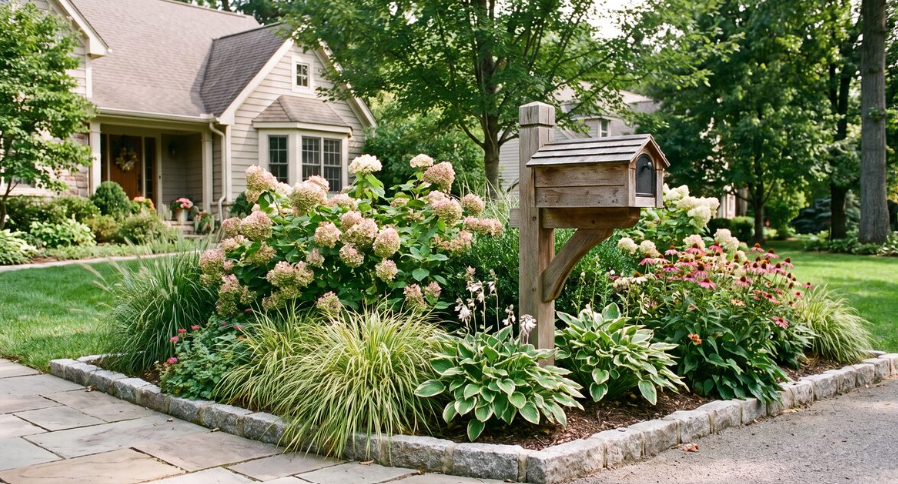
A mailbox landscaping project has to work around one genuinely non-negotiable constraint before any design decision even enters the picture: the mail carrier needs clear, unobstructed access to open the box and reach inside. The USPS generally expects a mailbox to remain approachable from a vehicle without anything blocking the door or crowding the post, which rules out a lot of otherwise appealing ideas, a dense hedge growing right up against the box, a trellis positioned where it would catch on a delivery truck’s mirror, before they ever get built. That single practical limit shapes almost every genuinely successful mailbox design.
Within that constraint, though, the design possibilities are considerably broader than most people assume, spanning far beyond simply picking a few flowers to tuck around the post. Bed shape, hardscape material, structural additions like a small trellis arch or an attached planter box, and an overall style theme all shape how a mailbox reads from the street, and a genuinely well-designed mailbox area functions almost like a small preview of the rest of the property’s landscaping style.
Durability matters more here than in almost any other landscaping spot too, since a roadside mailbox bed regularly takes abuse a bed closer to the house never has to handle, mower damage, snowplow spray, the occasional wayward delivery truck. The USPS guidelines for mailbox placement cover the specific clearance and height requirements worth checking before finalizing any design. What follows covers 50 landscaping ideas around a mailbox, spanning bed shapes, hardscape materials, structural features, and style themes.
Low Maintenance Mailbox Landscaping Ideas
Circular Mailbox Garden Bed
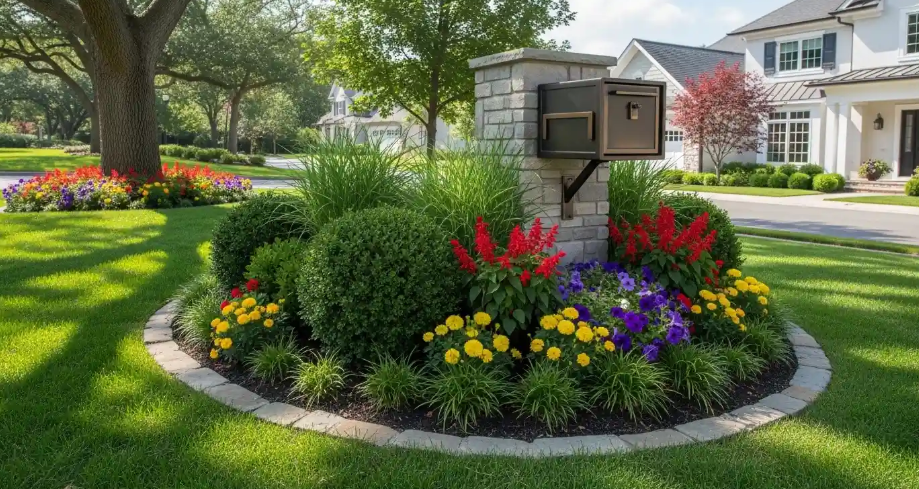
Circular mailbox garden beds center the post within a simple round planting area, offering a clean, uncomplicated shape that reads as intentional from any approach angle. Their symmetrical form works particularly well with a balanced, evenly distributed planting scheme.
They need the post positioned genuinely centered within the circle to avoid an awkward, lopsided appearance once plantings fill in.
Semi-Circle Mailbox Bed
Semi-circle mailbox beds curve the planting area around the road-facing side of the post while leaving the opposite side open, keeping mail carrier access completely unobstructed by design. Their half-moon shape is one of the most common and practical mailbox bed layouts available.
They need the flat, open side oriented toward wherever a vehicle would actually approach the box, whether that’s the road itself or a driveway pull-off.
Kidney-Shaped Mailbox Bed
Kidney-shaped mailbox beds use a gently curved, asymmetrical outline that reads as more naturalistic than a strict geometric shape, blending easily into an informal landscape style. Their irregular form also allows the bed to follow a yard’s natural contours more closely than a rigid circle or rectangle.
They require more careful initial layout than a simple geometric shape, since the curved outline needs to be marked out with a flexible garden hose before digging begins.
Rectangular Formal Mailbox Bed
Rectangular formal mailbox beds use crisp, straight-edged geometry that suits a more traditional or formal home exterior particularly well. Their clean lines pair naturally with a symmetrical planting arrangement on either side of the post.
They need precise edging maintenance to keep the straight lines looking genuinely crisp, since a formal shape shows any drift or blurring more obviously than a looser design would.
Figure-Eight Mailbox Bed
Figure-eight mailbox beds wrap planting areas on both sides of the post in a pinched, hourglass-like shape, creating visual interest from multiple viewing angles as traffic passes in either direction. Their distinctive form stands out from the more common single-curve designs.
They need the pinch point positioned to keep the immediate area around the mailbox door genuinely clear, rather than letting the design compromise actual accessibility.
Tiered Mailbox Bed
Tiered mailbox beds step the planting area up in low, stacked levels, adding genuine visual dimension to what’s often a flat roadside strip. Their layered structure also helps manage a mailbox positioned on a gentle slope.
They require more construction effort than a single-level bed, given the retaining edges needed between each tier.
Raised Mailbox Planter Bed
Raised mailbox planter beds elevate the entire planting area above the surrounding grade using a low retaining wall or timber frame, improving drainage in a spot that often sits in compacted roadside soil. Their elevated structure also makes the bed genuinely easier to maintain without excessive bending.
They require more upfront construction than a flush, ground-level bed, given the retaining structure needed to hold the raised soil in place.
Minimalist Mulch Ring Mailbox Bed
Minimalist mulch ring mailbox beds skip a dedicated planting bed almost entirely, simply surrounding the post with a clean ring of mulch and perhaps a single accent plant. Their simplicity makes them the fastest, lowest-cost mailbox landscaping option available.
They still benefit from a defined edge between the mulch and surrounding lawn, since an undefined mulch ring tends to spread and look neglected over time.
Stone-Bordered Mailbox Bed
Stone-bordered mailbox beds use natural fieldstone or river rock to define the planting area’s edge, offering a genuinely durable border that shrugs off mower contact and occasional plow damage better than a softer edging material. Their rustic texture suits a naturalistic or cottage-style planting particularly well.
They need stones large enough to stay genuinely in place, since smaller loose rock can scatter with mowing or heavy rain.
Brick-Edged Mailbox Bed
Brick-edged mailbox beds use a formal, traditional border material that pairs particularly well with a brick-exterior home or a more classic landscaping style. Their considerable weight and stability mean they rarely shift once properly set.
They cost more in both materials and labor than a simple mulch or plastic edging alternative, reflecting the masonry work a well-built brick border requires.
Paver Apron Mailbox Base
Paver apron mailbox bases install a small paved surface directly at the mailbox’s base, providing a stable, mud-free standing area for both the mail carrier and anyone retrieving mail during wet weather. Their hard surface also keeps grass and weeds from creeping directly against the post.
They need a proper gravel base beneath the pavers to prevent shifting or settling over time, particularly in a spot exposed to regular vehicle vibration from passing traffic.
Decorative Gravel Mailbox Bed
Decorative gravel mailbox beds spread a layer of colored or textured crushed stone around the planting area instead of traditional mulch, providing sharp drainage and a genuinely low-maintenance surface. Their neutral, textured backdrop lets individual plants stand out more clearly.
They need periodic weeding despite the gravel’s suppressive effect, since wind-blown seed and organic debris still accumulate on the surface over time.
Stone Veneer Mailbox Post
Stone veneer mailbox posts wrap a plain wood or metal post in a thin stone facing, giving an otherwise ordinary mailbox structure a genuinely substantial, upgraded appearance. Their transformation of the post itself, rather than just the surrounding bed, makes for a more cohesive overall look.
They need the veneer installed by someone comfortable with masonry work, or professionally, to ensure it holds up to years of weather exposure at the roadside.
Rock Garden Mailbox Base
Rock garden mailbox bases combine stone accents with drought-tolerant alpine or succulent plantings directly around the post, creating a genuinely low-maintenance, textural planting well suited to a sunny, exposed roadside spot. Their sharp drainage also helps the bed handle the poor, compacted soil often found at the curb.
They benefit from the same sharp-draining gravel base a true rock garden depends on elsewhere in a landscape, rather than standard garden soil.
Flagstone Path to Mailbox
Flagstone paths to a mailbox provide a stable, attractive walking surface from the driveway or front walk out to the curb, genuinely useful in a wet climate where the grass route would otherwise turn muddy. Their irregular, natural stone shapes suit an informal landscape style particularly well.
They need stones set firmly and levelly to avoid becoming a tripping hazard, particularly important given how frequently a mailbox path gets used.
Cottage-Style Mailbox Garden
Cottage-style mailbox gardens fill the bed with an informal, densely layered mix of flowering perennials and self-seeding annuals, creating a genuinely romantic, overflowing look. Their relaxed abundance makes a strong first impression from the road.
They require more ongoing maintenance to keep the intentionally loose planting style from tipping into genuine overgrowth that could interfere with mailbox access.
Xeriscape Mailbox Garden
Xeriscape mailbox gardens combine drought-tolerant plants with gravel or rock mulch, minimizing the water this often-neglected roadside spot actually needs to look good. Their practical, low-water design suits a mailbox bed particularly well, since it’s rarely the first spot to get manual watering attention.
They benefit from plants genuinely suited to poor, compacted roadside soil, since xeriscape design alone doesn’t guarantee success without the right species selection.
Formal Symmetrical Mailbox Garden
Formal symmetrical mailbox gardens mirror identical plantings on either side of the post, creating a balanced, deliberate composition that reads as genuinely intentional from a distance. Their disciplined structure suits a more traditional or classical home exterior.
They require matched plant pairs that grow at genuinely similar rates, since uneven growth on either side quickly breaks the symmetry the design depends on.
Native Wildflower Mailbox Garden
Native wildflower mailbox gardens fill the bed with regionally appropriate perennials, supporting local pollinators while requiring less water and fertilizer than an imported ornamental palette. Their naturalistic, ever-changing seasonal display offers genuine variety through the growing season.
They typically need a season or 2 to fully establish and look lush, requiring some patience and weed management during that early period.
Coastal-Themed Mailbox Garden
Coastal-themed mailbox gardens incorporate salt-tolerant plants and beach-inspired materials like driftwood or shells, suited specifically to a property near the ocean where salt spray rules out many standard mailbox plant choices. Their weathered, breezy aesthetic reflects the surrounding coastal landscape.
They need a genuinely narrower plant palette than an inland design, since salt tolerance eliminates a considerable share of typical mailbox garden species.
Pollinator Mailbox Garden
Pollinator mailbox gardens select flowering species specifically for their nectar and pollen value to bees and butterflies, turning a small roadside bed into a genuine wildlife habitat contribution. Their intentional plant selection also tends to provide reliable color through a long bloom season.
They benefit from staggering bloom times across the planting, since a garden that flowers only in June leaves pollinators without a food source the rest of the season.
Japanese-Inspired Mailbox Garden
Japanese-inspired mailbox gardens combine carefully placed stones with restrained, simple plantings, drawing on traditional principles of asymmetry and considered composition. Their deliberate simplicity offers a genuine contrast to a densely planted cottage-style bed.
They benefit from a genuinely limited plant palette, since the style depends on restraint rather than abundance to achieve its effect.
Rustic Farmhouse Mailbox Garden
Rustic farmhouse mailbox gardens pair weathered wood, galvanized metal accents, and cottage-style flowers for a look that suits a rural property or a farmhouse-style home particularly well. Their charmingly imperfect materials add genuine character.
They benefit from materials genuinely suited to sitting outdoors for years, since a rustic aesthetic still depends on structural durability underneath the weathered look.
Modern Minimalist Mailbox Garden
Modern minimalist mailbox gardens favor clean geometric bed shapes, a single consistent material like gravel or metal edging, and a restrained plant palette that emphasizes structure over abundance. Their pared-down aesthetic suits a contemporary architectural home particularly well.
They can look visually sparse during a plant’s early growth stages before foliage fills in, a real consideration for anyone wanting immediate visual impact.
All-Season Bloom Succession Mailbox Garden
All-season bloom succession mailbox gardens deliberately stagger plant selection so something is flowering nearly year-round, from early spring bulbs through late fall perennials. Their careful planning avoids the common mailbox garden problem of looking spectacular for 3 weeks and bare the rest of the year.
They require more upfront research into regional bloom timing than a simpler single-season planting, though the payoff is genuinely continuous curb appeal.
Trellis Arch Mailbox
Trellis arch mailboxes incorporate a small arched structure over or beside the post, providing support for a climbing plant while adding genuine vertical architectural interest to an otherwise flat roadside spot. Their overhead element makes the mailbox itself a more prominent landscape feature.
They need the arch positioned with genuine clearance for the mail carrier and any vehicle pulling alongside, never crowding the actual mailbox door.
Climbing Vine Mailbox Post
Climbing vine mailbox posts train a flowering vine directly up the post itself, softening the hard vertical line of the structure with genuine living color. Their vertical growth adds height without requiring additional bed space.
They need a genuinely well-behaved, non-aggressive vine species, since an overly vigorous climber can quickly obscure the mailbox door or flag entirely.
Attached Wooden Planter Box
Attached wooden planter boxes mount directly to the mailbox post itself, adding a contained pocket of color at a convenient viewing height without expanding the footprint of the surrounding bed. Their compact, self-contained design works well even where ground space is genuinely limited.
They need regular watering given their small soil volume, drying out faster than an in-ground bed during a hot summer stretch.
Decorative Post Cap Mailbox
Decorative post caps replace a plain, utilitarian mailbox post top with a genuinely ornamental finial, ball, or architectural detail, adding polish to the entire structure for relatively little cost. Their small scale makes them one of the easiest mailbox upgrades to install.
They need to be genuinely weatherproof and securely attached, since a post cap exposed to wind and rain needs to hold up for years without maintenance.
Solar Post Lighting Mailbox
Solar post lighting mailboxes incorporate small, battery-free fixtures that illuminate the post and immediate bed after dark, improving both visibility and safety for evening mail retrieval. Their self-contained power source requires no wiring or electrical connection.
They depend on reliable daytime sun exposure to keep the battery charged, a real limitation if the mailbox sits in a shaded spot.
Hanging Basket Mailbox Arm
Hanging basket mailbox arms extend a small bracket from the post specifically to hold a suspended basket of trailing flowers, adding color at a height that doesn’t interfere with ground-level plantings. Their elevated position also keeps the basket safely above most mower and trimmer contact.
They need regular watering given a typical hanging basket’s limited soil volume, drying out faster than an in-ground planting.
Stone Address Plaque Mailbox
Stone address plaque mailboxes incorporate the house number directly into a stone or concrete marker set into the surrounding bed, combining genuine function with a permanent landscape feature. Their durable material means the address stays legible for decades without repainting or replacement.
They need the numbers sized and positioned for genuine visibility from the road, since a beautifully crafted plaque that’s hard to read defeats its own practical purpose.
Matching Topiary Pair Mailbox
Matching topiary pair mailboxes flank the post with 2 identically shaped, sheared evergreen shrubs, creating a formal, symmetrical presentation. Their disciplined, matched form suits a more classical or formal home exterior particularly well.
They require regular shearing to keep both shrubs genuinely matched in size and shape, since even a season of neglect can leave one noticeably larger than the other.
Birdhouse Post Mailbox
Birdhouse post mailboxes mount a small birdhouse on or near the mailbox structure, adding a functional wildlife feature alongside the planting. Their addition turns a purely utilitarian spot into a small habitat contribution.
They need the birdhouse positioned with genuine distance from the mailbox door itself, so nesting activity doesn’t interfere with actual mail delivery.
Decorative Fence Border Mailbox
Decorative fence border mailboxes surround the bed with a short section of picket, wire, or wattle fencing, defining the planting area with a genuine structural element rather than relying on edging or mulch alone. Their fence style can echo a home’s existing exterior fencing for visual continuity.
They need the fence height kept low enough to avoid blocking mailbox visibility from an approaching vehicle.
Spring Bulb Layer Mailbox Garden
Spring bulb layer mailbox gardens plant tulips, daffodils, and crocus beneath the summer planting’s soil surface, providing genuine early-season color before the main perennials have even emerged. Their layered timing extends the bed’s interest considerably earlier into the year.
They need bulb foliage left in place until it yellows naturally after blooming, even though it looks untidy for a few weeks, since cutting it early weakens next year’s bloom.
Fall Color Mailbox Garden
Fall color mailbox gardens prioritize plants that peak specifically in September and October, mums, asters, ornamental grasses, extending the bed’s visual interest well past summer’s traditional peak. Their late-season focus fills a gap many mailbox gardens otherwise leave bare.
They benefit from combining a few different fall-blooming species, since relying on a single plant type leaves the display considerably shorter than a staggered combination would provide.
Winter Evergreen Structure Mailbox Garden
Winter evergreen structure mailbox gardens incorporate at least one genuinely evergreen shrub or dwarf conifer, ensuring the bed still has visual presence during the months when herbaceous plants have died back completely. Their year-round structure prevents the mailbox area from looking abandoned through winter.
They benefit from choosing an evergreen genuinely proportional to the bed’s overall scale, since an oversized specimen can eventually overwhelm the rest of the planting.
Drip Irrigation Mailbox Garden
Drip irrigation mailbox gardens run tubing to the bed connected to a timer, ensuring consistent watering despite this being one of the most commonly neglected spots on a property. Their automated system solves the practical problem of a mailbox bed simply being too easy to forget about.
They require upfront investment in tubing and a timer, along with periodic checking to make sure emitters haven’t clogged or shifted.
Solar Water Feature Mailbox Garden
Solar water feature mailbox gardens add a small, self-contained fountain or bubbler powered by a solar panel, introducing movement and sound to an otherwise static roadside planting. Their self-powered design requires no wiring out to this typically remote corner of the property.
They depend on reliable sun exposure to keep the pump running, and periodic cleaning helps prevent algae buildup in the small reservoir.
Weed-Barrier Fabric Mailbox Bed
Weed-barrier fabric mailbox beds install a permeable landscape fabric beneath the mulch layer, genuinely reducing the weed pressure a low-attention roadside bed would otherwise accumulate. Their practical maintenance benefit matters more here than in a bed that gets regular hands-on care.
They need occasional fabric inspection and mulch top-off, since fabric exposed at the surface degrades and becomes visually unattractive over time.
Rural Roadside Mailbox Garden
Rural roadside mailbox gardens plan for a larger scale and genuinely tougher plant palette than a suburban design, since a country road often means faster traffic, wider mowing margins, and less predictable maintenance. Their scale needs to hold up visually from a greater viewing distance.
They benefit from plants tolerant of occasional mower or equipment contact, since rural roadside maintenance tends to be less precise than a residential lawn service.
Suburban Cul-de-Sac Mailbox Garden
Suburban cul-de-sac mailbox gardens often sit at a lower traffic speed and closer viewing distance than a rural roadside bed, allowing for more delicate plant choices and finer design detail. Their visibility to slow-passing neighbors also makes overall polish matter more.
They benefit from checking neighborhood or HOA landscaping expectations, since a cul-de-sac’s shared visual character often carries unspoken or explicit design norms.
HOA-Compliant Mailbox Garden
HOA-compliant mailbox gardens balance genuine personal style with a homeowners association’s specific landscaping rules, which often dictate approved plant heights, mailbox styles, or bed dimensions. Their design needs to work within those constraints from the very start rather than risk a violation notice later.
They benefit from reviewing the specific HOA’s written guidelines before installation, since requirements vary considerably between communities.
Cluster Mailbox Bank Landscaping
Cluster mailbox bank landscaping addresses a shared, multi-unit mailbox structure serving several homes at once, requiring a design that reads as neutral and universally appealing rather than reflecting any single household’s taste. Their shared nature also means low-maintenance plant choices matter more given divided or unclear care responsibility.
They benefit from clear community agreement on maintenance responsibility, since a shared bed without defined care roles tends to fall into neglect.
Corner Lot Mailbox Garden
Corner lot mailbox gardens sit visible from 2 intersecting streets rather than just one, making overall composition and consistency matter from multiple viewing angles simultaneously. Their heightened visibility also means sightline safety at the intersection needs genuine consideration.
They need plantings kept low enough near the actual corner to avoid blocking driver sightlines, a genuine safety concern beyond simple mailbox access.
Long Driveway Mailbox Garden
Long driveway mailbox gardens, positioned well away from the house itself at the road, need a genuinely self-sufficient, low-maintenance design given how easy this remote spot is to forget about during routine yard care. Their distance from the house also often means less convenient access to a hose for watering.
They benefit from drought-tolerant plants and, ideally, some form of automated irrigation given the practical challenge of remembering to water a spot this far from daily foot traffic.
House-Matching Mailbox Garden
House-matching mailbox gardens echo the same plant palette, color scheme, or hardscape materials used in the home’s foundation planting, creating a genuine sense of continuity between the house and the street. Their coordinated design reads as more intentional than a mailbox bed planted with no relationship to the rest of the property.
They benefit from choosing a few signature plants or materials specifically repeated in both locations, rather than an exact wholesale duplication of the foundation bed.
Low Retaining Wall Mailbox Garden
Low retaining wall mailbox gardens use a short stone or timber wall to raise and define the planting area, particularly useful where the mailbox sits at the base of a gentle slope or ditch. Their structural element also helps prevent soil erosion into the roadway during heavy rain.
They need genuine attention to drainage behind the wall, since trapped water can undermine even a low retaining structure over time.
Scalloped Metal Edging Mailbox Garden
Scalloped metal edging mailbox gardens use a decorative, wavy-topped metal border to define the bed’s shape, a genuinely classic, low-cost edging style that holds a curved line better than many other materials. Their distinctive silhouette adds a small but recognizable decorative touch.
They need the edging installed deep enough to stay genuinely anchored, since a shallow installation can heave or shift with seasonal freeze-thaw cycles.
Key Takeaway
Landscaping around a mailbox can improve the appearance of a front yard while creating a more attractive transition between the mailbox and surrounding landscape. Flowers, shrubs, ornamental grasses, ground covers, mulch, rocks, and decorative edging can all be used to create different styles and add seasonal interest.
When choosing plants and materials, consider the amount of sunlight, soil conditions, available space, climate, and maintenance requirements. Plants should be positioned so they do not block access to the mailbox, interfere with mail delivery, or grow into the walking area. Low-growing and compact plants are often easier to maintain around the mailbox.
A well-planned mailbox garden can combine attractive plants with practical access and simple maintenance. Using plants with different heights, textures, and flowering periods can create year-round interest while keeping the area neat, accessible, and complementary to the overall landscape.