Flip over almost any rock that’s been sitting in place for a while and you’re not looking at empty ground, you’re looking into a genuine microhabitat, a small, self-contained environment shaped by exactly what a rock does to the space beneath it. A rock traps moisture against evaporation, buffers the ground beneath from temperature swings that would otherwise bake or freeze it, and physically blocks the eyes of a hungry bird or lizard looking for a meal. For a soft-bodied or temperature-sensitive animal, that combination of shelter, humidity, and thermal stability can matter more than almost any other single habitat feature available.
One naturalist has described turning over a single unremarkable rock on a trek and finding a scorpion, a frog, a centipede, a cockroach, several ants, and 2 species of spiders all sharing the same small space beneath it, each one drawn there by the same basic advantages despite being predator and prey to each other under normal circumstances. That’s really the defining trait of a good under-rock microhabitat: it’s crowded, genuinely diverse, and held together by conditions that have nothing to do with any single species and everything to do with the rock itself.
It’s worth handling this kind of exploration carefully, since the same stability that makes a rock valuable to its residents also means a disturbed or permanently moved rock can eliminate a microhabitat that took years to develop. Gently replacing a rock roughly where it was found, rather than leaving it flipped, genuinely matters to whatever was living underneath. The Missouri Department of Conservation’s guide to backyard wildlife covers responsible wildlife observation practices in more detail. What follows covers 30 animals that live under rocks, spanning garden invertebrates, reptiles and amphibians, and a handful of larger species.
Pill Bugs
Pill bugs, also called roly-polies, are actually terrestrial crustaceans rather than insects, and they gather beneath rocks specifically because the moist microclimate there keeps their gill-like breathing structures from drying out. Their ability to roll into a tight, armored ball when disturbed is a genuine defense mechanism that gives the species its common name.
They feed primarily on decaying organic matter, making them a genuinely beneficial presence in a garden’s decomposition cycle rather than a pest.
Sow Bugs
Sow bugs look almost identical to pill bugs at a glance, sharing the same crustacean origin and moisture-dependent lifestyle beneath a rock’s cool underside, but they lack the ability to roll into a defensive ball. Their flatter, more exposed body shape is the easiest way to tell the 2 genuinely different species apart.
They rely on the humidity a rock traps to keep their exposed gills functional, making them considerably more restricted to consistently damp habitat than their rolling relatives.
Centipedes
Centipedes hunt actively beneath rocks, using the cool, dark, moist conditions both as shelter from predators and as a base for ambushing the smaller invertebrates that share the same space. Their considerable speed and venomous front claws make them genuine predators within the under-rock community.
They lose moisture through their exoskeleton quickly in dry, exposed conditions, making a rock’s humidity genuinely essential to their survival rather than simply convenient.
Millipedes
Millipedes, unlike the actively hunting centipedes they’re often confused with, feed primarily on decaying plant matter and fungi, finding both food and moisture-retaining shelter beneath the same rock. Their considerably slower movement and lack of venom set them apart from centipedes despite the superficial resemblance.
They curl into a tight coil when threatened rather than fleeing, a defense that depends on their many legs and segmented armor rather than speed.
Earthworms
Earthworms surface beneath a rock’s edge where the soil stays consistently moist, avoiding the direct sun exposure that would otherwise dry out their genuinely permeable skin within a short time. Their burrowing activity also helps aerate and enrich the soil directly beneath the rock.
They breathe through their skin, making moisture retention a literal survival necessity rather than simply a comfort preference.
Ground Beetles
Ground beetles shelter beneath rocks during the day, emerging at night to hunt other invertebrates using the same cool, humid refuge as a home base between foraging trips. Many species are genuinely beneficial predators, consuming garden pests like slugs and caterpillar larvae.
They tolerate a somewhat wider range of moisture conditions than some other under-rock invertebrates, though they still favor the stable microclimate a rock provides.
Earwigs
Earwigs cluster in genuinely large numbers beneath a single rock, drawn by both the moisture and the darkness, emerging at night to feed on decaying plant material and smaller insects. Their pincer-like appendages look intimidating but are rarely capable of causing real harm to a person.
They tolerate somewhat drier conditions than some other under-rock invertebrates, though they still strongly prefer the humidity a rock’s shade provides.
Slugs
Slugs depend entirely on moisture to survive, since their soft, unprotected bodies dry out rapidly in direct sun, making the humid shelter beneath a rock genuinely essential rather than optional. They emerge to feed primarily at night or during damp, overcast weather.
They produce a mucus trail that helps them move and retain moisture, a genuine physiological adaptation to exactly the kind of damp, sheltered environment a rock provides.
Snails
Snails share slugs’ fundamental need for moisture, sheltering beneath a rock during dry daylight hours and emerging to feed once humidity rises in the evening or after rain. Their protective shell offers some additional defense that soft-bodied slugs entirely lack.
They can seal themselves into their shell with a mucus membrane during an extended dry spell, a backup strategy beyond simply finding rock shelter.
Wolf Spiders
Wolf spiders hunt on foot rather than building webs, using the shelter beneath a rock as a home base between active hunting trips at night. Their considerable speed and keen eyesight make them effective predators of the other invertebrates sharing the same microhabitat.
They’re genuinely harmless to people despite their sometimes intimidating size, playing an important role controlling insect populations in a garden or natural area.
Woodlouse Spiders
Woodlouse spiders are genuine dietary specialists, hunting almost exclusively the pill bugs and sow bugs that share their under-rock habitat rather than a broader range of prey. Their oversized fangs are specifically adapted to pierce a pill bug’s armored shell.
They hunt on foot rather than spinning a web, relying on the same cool, damp rock shelter as their prey to stay close to a reliable food source.
Ants
Ants frequently establish entire colony entrances beneath a flat rock, using the stone as a genuine roof that regulates temperature and humidity for the nest chambers below. A single rock can shelter thousands of individual ants working as one colony.
They excavate extensive tunnel systems beneath the rock’s footprint, sometimes extending considerably further into the surrounding soil than the rock itself would suggest.
Camel Crickets
Camel crickets shelter in genuinely dark, damp spaces beneath rocks and other debris, their humped backs and long antennae giving them a distinctive silhouette. Unlike true crickets, they don’t chirp, relying on their antennae to navigate their sheltered habitat instead.
They tolerate considerably lower light and higher humidity than most other cricket species, reflecting their strong preference for a rock’s sheltered underside.
Skinks
Skinks, a genuinely widespread group of smooth-scaled lizards, shelter beneath rocks both to escape predators and to regulate their body temperature as ectothermic reptiles. Many species feed on the smaller invertebrates already sheltering in the same microhabitat.
They rely on external heat sources to stay active, making a sun-warmed rock’s underside a genuinely useful thermal resource rather than purely a hiding spot.
Fence Lizards
Fence lizards shelter beneath rocks in open, sunny habitat, using the shade for temperature regulation and predator avoidance while still staying close to the warm, exposed surfaces they favor for basking. Their spiny, textured scales provide some camouflage against rocky terrain.
They dart quickly between sun-exposed basking spots and rock shelter throughout the day, using both microhabitats in combination rather than relying on either alone.
Garter Snakes
Garter snakes shelter beneath rocks to escape predators, regulate their body temperature, and rest between active hunting periods. Their limbless bodies and protective scales let them move efficiently through the same tight rock crevices many other under-rock animals favor.
They’re generally harmless to people, and a garter snake found beneath a rock is far more likely to flee than to strike.
Rattlesnakes
Rattlesnakes shelter beneath rocks for the same temperature regulation and predator avoidance reasons as other snake species, particularly in rocky, arid habitat where suitable shelter is limited. Their presence is a genuine reason to exercise real caution before lifting any rock in known rattlesnake habitat.
They rely on rock shelter especially heavily during temperature extremes, seeking it out both to escape summer heat and during a winter brumation period.
Salamanders
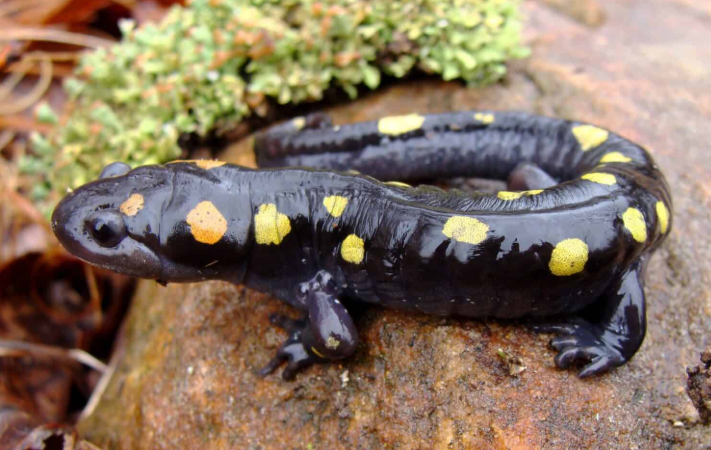
Salamanders depend entirely on moisture for their skin and reproductive needs, making the humid shelter beneath a rock a genuine necessity rather than a simple convenience. Many species lay their eggs in water before the larvae eventually transition to a more terrestrial, rock-sheltering life stage.
They lack the scales and claws lizards have, relying instead on their soft, permeable skin, which is exactly why moisture retention matters so much to their survival.
Eastern Hellbender
Eastern hellbenders are enormous aquatic salamanders, reaching 12 to 30 inches long, that shelter beneath large, algae- and moss-covered rocks on the bottom of clean, fast-flowing creeks throughout the eastern United States. Their considerable size can genuinely startle anyone who stumbles across one unexpectedly.
They’re completely harmless and notably shy despite their imposing size, relying almost entirely on their rock shelter and camouflage rather than any aggressive defense.
Toads
Toads shelter beneath rocks during the day, emerging at dusk to feed on insects drawn to the same cool, humid microhabitat. Their thicker, drier skin tolerates somewhat less moisture-dependent conditions than a true salamander requires.
They return to the same general shelter location repeatedly if left undisturbed, making a rock genuinely valuable as a long-term home base rather than a one-time refuge.
Newts
Newts, a genuine subgroup of salamanders, shelter beneath rocks near water during their terrestrial life stage, depending on the same moisture-retention benefits as their salamander relatives. Their skin secretes toxins in some species, a genuine chemical defense against predators.
They move between aquatic breeding habitat and terrestrial rock shelter depending on the season and life stage, using both environments at different points in their life cycle.
Alligator Lizards
Alligator lizards shelter beneath rocks in a range of habitats, using the cover both for predator avoidance and temperature regulation as ectothermic reptiles. Their elongated bodies and reduced limbs give them a genuinely snake-like appearance at a quick glance.
They feed on the smaller invertebrates commonly found in the same under-rock microhabitat, making a single rock both shelter and hunting ground.
Geckos
Geckos, particularly in arid and Mediterranean climates, shelter beneath rocks during the heat of the day, emerging at dusk when temperatures drop to more comfortable hunting conditions. Their specialized toe pads also let them climb the rough underside of a rock with ease.
They tolerate drier conditions than many other under-rock reptiles, reflecting their evolutionary adaptation to genuinely arid habitat.
Scorpions
Scorpions are among the most iconic desert under-rock dwellers, sheltering from intense daytime heat and UV exposure while hunting the smaller invertebrates active in the same cool microhabitat. Their venomous stinger, located at the tip of their curled tail, is used both for hunting prey and self-defense.
They tolerate genuinely extreme heat and aridity better than most other under-rock animals, making rock shelter specifically about avoiding the very hottest daytime extremes rather than moisture retention.
Tarantulas
Tarantulas, in certain species, use rock crevices as a genuine daytime retreat, emerging at night to hunt insects and other small prey in the surrounding habitat. Their considerable size and hairy appearance often intimidate people more than their actual threat level warrants.
They’re generally docile toward people despite their fearsome reputation, relying on their rock shelter for protection rather than aggression as their primary defense strategy.
Horned Lizards
Horned lizards, adapted to arid, rocky terrain, shelter beneath rocks and partially bury themselves in loose soil to escape both predators and extreme desert heat. Their spiny, camouflaged appearance provides additional protection even when partially exposed.
They rely on genuinely specialized ant prey for much of their diet, often found in the same rocky habitat their own shelter depends on.
Pikas
Pikas, small mountain-dwelling relatives of rabbits rather than true rodents, live among talus and boulder fields where gaps between rocks provide genuinely stable subsurface temperatures researchers have specifically linked to their survival. They remain active through winter, foraging and storing dried plants in caches called haypiles rather than hibernating.
They’re increasingly studied as a sentinel species for climate change, since their dependence on cool, thermally stable rock microrefuges makes them especially vulnerable as those conditions shift.
Shrews
Shrews shelter beneath rocks and other ground debris, using the cover both to escape predators and to access the abundant insect prey that shares the same microhabitat. Their extraordinarily high metabolism means they need to feed almost constantly, making a prey-rich rock shelter genuinely valuable real estate.
They rely on scent and touch more than sight to navigate their sheltered habitat, reflecting their small eyes and generally poor vision.
Wood Rats
Wood rats, also called packrats, build elaborate nests in rock crevices throughout much of the arid West, incorporating sticks, cactus spines, and collected debris into a genuinely fortified shelter. Their nests, called middens, can persist and accumulate material for centuries in a sufficiently stable rock formation.
They cache a wide variety of collected objects within their rock shelter, a genuine behavioral quirk that gives the species its common name.
Crayfish
Crayfish shelter beneath submerged rocks in streams and ponds, using the cover both to escape predators like fish and birds and to ambush the smaller invertebrates drifting through the same current. Their protective exoskeleton and defensive claws provide additional security beyond the rock shelter itself.
They’re genuinely sensitive to water quality, making a healthy population of crayfish sheltering beneath stream rocks a useful indicator of overall water health.
Key Takeaway
Animals that live under rocks use these sheltered spaces for protection from predators, sunlight, temperature changes, and drying conditions. Depending on the habitat, you may find insects, spiders, worms, snails, amphibians, reptiles, and other small animals beneath rocks.
The animals found under rocks vary with moisture, soil type, temperature, vegetation, and the surrounding environment. Some species spend much of their lives in these sheltered areas, while others use them temporarily for hiding, hunting, resting, or maintaining moisture.
When looking under rocks, it is important to avoid disturbing animals unnecessarily and to replace rocks carefully after observation. Understanding the habitat beneath rocks can provide useful insight into local biodiversity and the relationships between small animals, soil, plants, and decomposing organic matter.