The real payoff of attracting insect-eating birds to a garden shows up most dramatically during nesting season, when the math gets genuinely staggering. A single pair of chickadees raising one brood of chicks needs to deliver something like 6,000 to 9,000 caterpillars before those chicks fledge, all of it protein a garden’s existing insect population supplies for free. That single fact is really the whole case for bird-friendly gardening as pest control: a handful of nesting songbirds working a yard through spring and summer can outpace almost any other non-chemical pest management strategy available.
It’s worth correcting one persistent myth before getting into the list, since it shows up on birdhouse packaging constantly. Purple martins are often marketed as devouring thousands of mosquitoes a day, but mosquitoes are mostly active at dusk and after dark, while purple martins feed during daylight hours, and their actual diet leans heavily on larger flying insects like dragonflies and beetles rather than mosquitoes specifically. They’re still genuinely useful insect predators, just not for the exact reason the marketing usually claims.
Different birds target genuinely different pests too, which is part of why a diverse bird population does more pest-control work than any single species could manage alone. Woodpeckers dig wood-boring larvae out of bark that a songbird would never reach, owls and hawks handle the rodent problem insect-eaters can’t touch, and ground-foraging birds pick off the slugs and grubs that spend their time below the canopy other species patrol. The Cornell Lab of Ornithology’s All About Birds database is a useful reference for regional range and habitat needs for attracting any specific species. What follows covers 30 birds that eat garden pests.
Chickadees
Chickadees feed their nestlings an almost exclusively insect diet, with caterpillars making up the overwhelming majority, consuming genuinely enormous quantities of garden pests during the several weeks it takes to raise a single brood. Their year-round presence in many regions means they continue hunting insects well outside the nesting season too.
They favor a yard with mature trees and shrubs for foraging and nesting cavities, readily using a properly sized nest box where natural cavities are scarce.
House Wren
House wrens feed almost entirely on insects and spiders, actively gleaning them from garden foliage, mulch, and low shrubs throughout the breeding season. Their considerable appetite and constant activity make them genuinely effective pest control in a smaller garden space.
They readily use a nest box positioned near dense shrubbery, and their cheerful, bubbling song is a genuine bonus alongside their pest-control value.
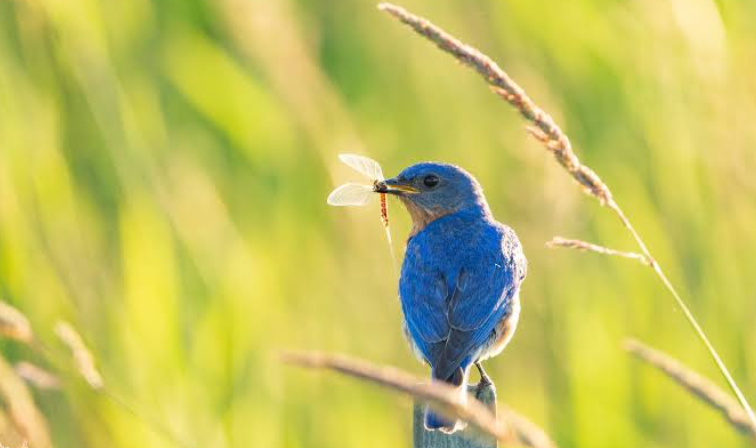
Eastern Bluebird
Eastern bluebirds hunt insects from an open perch, dropping down to catch beetles, caterpillars, and grasshoppers from the ground below, a hunting style called sallying that makes them particularly effective in an open garden or lawn edge. Their diet shifts toward fruit in winter when insects become scarce.
They favor open habitat with scattered perches and readily use a properly spaced nest box, having benefited considerably from dedicated bluebird trail conservation efforts.
White-Breasted Nuthatch
White-breasted nuthatches forage along tree bark, probing crevices for insect eggs, larvae, and adult insects that overwinter or hide within the bark itself. Their distinctive habit of moving headfirst down a trunk lets them spot prey other bark-foraging birds miss from the opposite angle.
They readily visit a yard with mature trees, particularly benefiting from suet offered during colder months when insect availability drops.
Tufted Titmouse
Tufted titmice forage actively through tree canopy and shrub layers, taking a significant share of caterpillars, beetles, and other insects alongside seeds and nuts. Their considerable agility lets them hang upside down while gleaning insects from the underside of leaves.
They readily visit a yard with mature trees and shrubs, often forming small mixed foraging flocks with chickadees and nuthatches outside the breeding season.
Warblers
Warblers, as a genuinely large and diverse group, feed almost entirely on insects during their spring and fall migration through most of the country, gleaning caterpillars and other soft-bodied prey from foliage. Their considerable diversity means different species specialize in slightly different foraging heights and techniques.
They favor a yard with varied native vegetation, particularly benefiting from the caterpillar-rich native trees and shrubs that support their migratory fueling needs.
Eastern Phoebe
Eastern phoebes hunt flying insects from an open perch, darting out to snatch a passing insect midair before returning to the same lookout spot repeatedly. Their tail-wagging habit while perched is a distinctive identifying behavior.
They favor a yard near water or open space with a clear perch, often nesting under an eave or similar overhang close to human structures.
Barn Swallow
Barn swallows hunt flying insects almost exclusively, covering considerable distances in swooping, agile flight to catch mosquitoes, flies, and other airborne pests over open garden and field space. Their considerable daily insect consumption makes them genuinely valuable around livestock or a large open yard.
They favor open space with a barn, shed, or similar structure for their mud nests, historically explaining much of the species’ common name.
Tree Swallow
Tree swallows hunt flying insects over open water and fields, consuming considerable quantities of mosquitoes and other small flying pests during daylight hours. Their readiness to use a nest box has made them one of the easier swallow species to attract deliberately.
They favor open habitat near water and readily use a properly positioned nest box, particularly one placed away from dense vegetation.
Purple Martin
Purple martins hunt flying insects in open airspace, though their diet leans more toward larger insects like dragonflies and beetles than the mosquitoes often credited to them, since mosquitoes are mostly active after the martins have finished their daytime feeding. Their genuinely social nesting habit has made colony housing a popular, deliberate attraction strategy.
They favor open space free of tall trees near their housing, historically relying heavily on human-provided martin houses in much of their eastern range.
American Robin
American robins forage on lawns and garden beds for earthworms, grubs, and caterpillars, using their keen eyesight and hearing to detect movement just below the soil surface. Their considerable ground-foraging activity makes them effective at controlling subsurface lawn pests other birds rarely target.
They favor open lawn adjacent to trees or shrubs for nesting, remaining one of the most widespread and familiar garden birds across the country.
Song Sparrow
Song sparrows forage on the ground and in low vegetation, taking a significant share of insects, particularly during breeding season when their diet shifts heavily toward protein for growing chicks. Their considerable adaptability lets them thrive in a wide range of garden settings.
They favor dense low cover for nesting, readily using a brushy garden edge or hedgerow left a bit less manicured than the rest of the yard.
Warbling Vireo
Warbling vireos feed almost entirely on caterpillars and other insects, foraging methodically through tree canopy foliage with a deliberate, unhurried style distinct from more frenetic warbler movement. Their considerable appetite for caterpillars makes them valuable in a yard with mature deciduous trees.
They favor open woodland or a yard with scattered large trees, their persistent, warbling song often more noticeable than the bird itself.
Golden-Crowned Kinglet
Golden-crowned kinglets forage almost constantly through conifer foliage, taking tiny insects and insect eggs that larger birds would overlook entirely. Their genuinely tiny size and constant motion make them easy to miss despite their considerable foraging activity.
They favor a yard with conifers, particularly valuable during winter when they remain active hunting overwintering insect eggs and larvae that other birds have already moved on from.
Baltimore Oriole
Baltimore orioles feed on caterpillars, including the tent caterpillars many gardeners specifically struggle to control, alongside their better-known preference for fruit and nectar. Their considerable size and bright coloring make their pest-control activity genuinely easy to observe.
They favor tall deciduous trees for nesting, often drawn to a garden that also offers orange halves or nectar feeders during migration.
Rose-Breasted Grosbeak
Rose-breasted grosbeaks are specifically documented consuming large numbers of Colorado potato beetles, a genuinely significant garden and agricultural pest that few other birds target as effectively. Their considerable seed-cracking bill, typically associated with a seed-heavy diet, handles beetles just as readily.
They favor a yard with a mix of trees and shrubs, particularly valuable in a vegetable garden dealing with a real potato beetle problem.
Northern Cardinal
Northern cardinals feed their nestlings a diet heavy in insects despite an adult diet that leans more toward seeds, meaning their pest-control value peaks specifically during breeding season. Their considerable year-round presence in many regions makes them a familiar garden resident.
They favor dense shrubs for nesting and cover, readily visiting a yard with a mix of feeders and natural foraging habitat.
Gray Catbird
Gray catbirds forage through dense shrubs and garden beds for insects, spiders, and other invertebrates, supplementing their diet with fruit later in the season. Their considerable vocal mimicry, including a genuine cat-like mewing call, makes them easy to identify by sound alone.
They favor dense, tangled shrub cover for both nesting and foraging, benefiting from a garden with at least one less manicured, brushier corner.
Brown Thrasher
Brown thrashers forage on the ground beneath shrubs, using their long bill to flip leaf litter and dig for beetles, grubs, and other soil-dwelling insects. Their considerable size and rich song make them a genuinely rewarding species to attract.
They favor dense shrub thickets for both cover and nesting, readily using a hedgerow or overgrown garden edge left intentionally a bit wild.
Eastern Towhee
Eastern towhees forage on the ground, using a distinctive double-footed scratching motion to uncover insects and seeds hidden in leaf litter beneath shrubs. Their considerable ground-foraging activity makes them effective at controlling pests that shelter in garden debris.
They favor dense, brushy undergrowth, benefiting from a garden that leaves some fallen leaves and brush intact rather than clearing every bed to bare soil.
Downy Woodpecker
Downy woodpeckers excavate wood-boring insect larvae from tree bark and dead wood, reaching pests that no foliage-gleaning songbird could ever access. Their genuinely small size lets them forage on branches too thin for larger woodpecker species.
They favor a yard with mature or dead trees, readily visiting a suet feeder as well, particularly valuable during colder months.
Red-Bellied Woodpecker
Red-bellied woodpeckers excavate wood-boring insects from bark and dead wood, supplementing that diet with fruit, nuts, and the occasional lizard or nestling bird. Their considerable size and strength let them access deeper wood-boring larvae than smaller woodpecker species can reach.
They favor a yard with mature trees, readily visiting a suet feeder alongside their natural bark-foraging activity.
Northern Flicker
Northern flickers forage on the ground far more than most other woodpecker species, specifically targeting ants in genuinely large quantities using their long, sticky tongue to extract them from soil and turf. Their unusual ground-feeding habit sets them apart from the bark-foraging behavior typical of the woodpecker family.
They favor open lawn adjacent to trees, their distinctive ground-foraging making them a genuinely effective control for a lawn dealing with an ant problem.
Barn Owl
Barn owls consume enormous numbers of rodents, with a single family capable of eating well over 1,000 mice and voles in a single breeding season, making them among the most effective rodent-control animals available in any form. Their genuinely silent flight lets them hunt without alerting prey until the final moment.
They favor open agricultural or garden edge habitat and readily use a properly sized nest box, particularly valuable where rodent pressure on stored produce or bulbs is a genuine problem.
Eastern Screech-Owl
Eastern screech-owls hunt a genuinely wide range of prey including large insects, small rodents, and occasionally small reptiles or amphibians, making them versatile nighttime pest control in a yard with mature trees. Their small size and excellent camouflage mean they’re rarely seen despite being present.
They readily use a properly sized nest box, particularly one positioned near mature trees that also provide natural cavity options.
American Kestrel
American kestrels, the smallest falcon in North America, hunt large insects like grasshoppers alongside small rodents, hovering distinctively in open air before diving on prey below. Their considerable hunting versatility makes them useful against both insect and rodent garden pests.
They favor open habitat with scattered perches and readily use a properly positioned nest box, having declined in many areas due to habitat loss.
Red-Tailed Hawk
Red-tailed hawks hunt rodents and other small mammals from a high perch or while soaring, providing genuine large-scale pest control for a property dealing with a significant rodent population. Their considerable size makes them one of the most visible daytime raptors in most regions.
They favor open habitat with tall perches like large trees or utility poles, generally hunting across a considerably larger territory than any songbird on this list.
Blue Jay
Blue jays consume a genuinely significant number of insects, including caterpillars and beetles, despite a reputation built more around their acorn-caching behavior and occasional raids on other birds’ nests. Their considerable intelligence and adaptability make them a common presence in most yards with mature trees.
They favor a yard with oak or other nut-producing trees, readily visiting feeders while also foraging naturally for insects throughout the garden.
European Starling
European starlings consume large quantities of grubs and other soil insects, probing lawns with their sharp bills in a genuinely effective foraging technique, though the species is a non-native introduction that competes aggressively with native cavity-nesting birds for nest sites. Their considerable flocking behavior can also make them a nuisance in large numbers.
They favor open lawn for foraging, and while their pest-control value is real, many bird conservation programs specifically discourage encouraging starlings given the competitive pressure they place on native species.
Northern Mockingbird
Northern mockingbirds forage on the ground and in shrubs for insects, spiders, and other invertebrates, supplementing that diet with fruit later in the season. Their remarkable ability to mimic other birds’ songs, along with car alarms and other environmental sounds, makes them one of the more entertaining garden residents.
They favor open habitat with scattered shrubs for both foraging and nesting, often defending a territory aggressively enough to be genuinely noticeable.
Key Takeaways
Birds that eat garden pests can play an important role in garden ecosystems by feeding on insects, caterpillars, beetles, grasshoppers, and other small organisms. Different bird species have different diets and feeding habits, so the types of pests they consume can vary depending on the species and season.
Creating suitable conditions can make gardens more attractive to insect-eating birds. Providing native plants, natural shelter, clean water, and suitable nesting areas can offer food and habitat, while reducing unnecessary pesticide use can help protect birds and the insects they feed on.
Encouraging pest-eating birds can complement other garden management practices and contribute to a more diverse outdoor environment. Identifying the birds that visit your garden and understanding their feeding habits can help you make informed choices about plants, habitat features, and pest management.