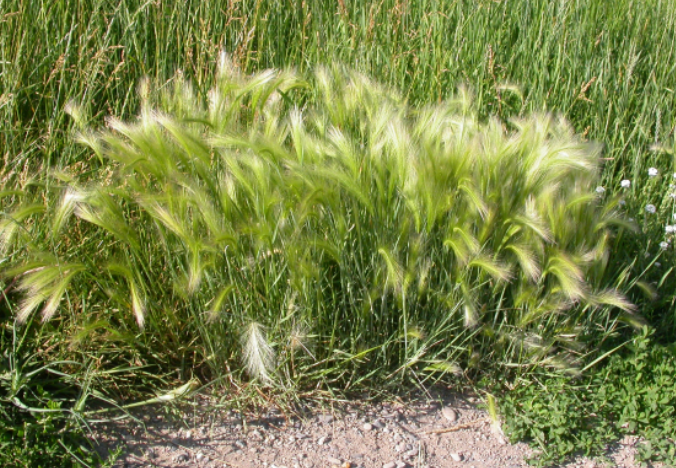
Barley’s most recognizable feature is its dense, bristly seed head, a true spike lined with long, needle-like awns that give a barley field its distinctive shaggy, almost fur-covered silhouette when it’s ready for harvest. That specific structure, a tight column of spikelets each trailing its own long bristle, turns out to be shared by a surprising number of barley’s own close relatives, which is really the whole story behind most of the confusion on this list. Most plants that genuinely resemble barley aren’t distant look-alikes at all, they’re other members of the same wheat tribe, Triticeae, carrying a family resemblance that goes considerably deeper than coincidence.
That close relationship isn’t just a botanical curiosity, either. Foxtail barley, wall barley, and several other wild relatives on this list produce the same kind of sharp, barbed awns that make actual barley grain hazardous to livestock if eaten carelessly, since the awns can lodge in an animal’s mouth, throat, or eyes and cause genuine injury. A wild patch that looks like an escaped or volunteer barley plant deserves the same caution as the real crop, even when it technically isn’t barley at all.
A handful of other grasses cause confusion for a different reason, sharing barley’s general bristly, awned look without belonging to the same genus or even the same tribe. The USDA Natural Resources Conservation Service’s plant database is a solid tool for confirming a specific species’ actual classification before assuming a barley-like seed head means a genuine close relative. What follows covers 10 grasses that look like barley, along with how closely each one is actually related to the real thing.
Foxtail Barley
Foxtail barley is a genuine wild relative of cultivated barley, sharing the same Hordeum genus and producing an even showier, silkier version of barley’s characteristic bristly seed head. Its long, soft, drooping awns catch light and move in the wind in a way that’s earned it a spot in ornamental plantings despite its weedy reputation in agricultural settings.
Its sharp, barbed awns pose the same injury risk to grazing livestock as cultivated barley’s, capable of working into an animal’s mouth or eyes if the plant is eaten in quantity.
Wall Barley
Wall barley is another true wild Hordeum species, closely related to cultivated barley and sharing its dense, bristly spike structure on a smaller, weedier plant typically found along roadsides, walls, and disturbed urban ground. It’s considerably shorter and less showy than foxtail barley’s more ornamental seed head.
Like other wild barley relatives, its awns can cause genuine irritation or injury to pets and livestock that come into repeated contact with the seed heads, particularly around the mouth and paws.
Squirreltail Grass
Squirreltail grass produces a dense, bristly seed head with long, spreading awns that closely resembles barley’s own spike, though it belongs to a different genus within the same broader wheat tribe. Its native range across the western United States rangeland puts it in considerably drier, harsher habitat than cultivated barley typically grows in.
Its barbed seeds can work into the mouths, eyes, and skin of grazing animals just as readily as true barley’s awns can, a genuine consideration for anyone managing rangeland where it grows.
Wheat
Wheat, particularly awned varieties, produces a spike remarkably similar to barley’s in general silhouette, dense, upright, and lined with long bristles, which is why the 2 crops are sometimes confused by anyone unfamiliar with either one. The spikelets themselves are arranged somewhat differently along the stem, a detail that becomes clear on close comparison.
Awnless or “beardless” wheat varieties exist specifically to avoid barley’s bristly appearance altogether, so the resemblance genuinely depends on which wheat variety is being compared.
Rye
Rye produces a tall, slender, densely awned spike that shares barley’s general bristly silhouette closely enough to cause confusion in an unharvested field. Its spike tends to run narrower and more elongated than barley’s typically thicker, denser head.
As a genuine member of the same wheat tribe as barley, rye shares a real evolutionary relationship behind that visual similarity rather than a coincidental resemblance.
Jointed Goatgrass
Jointed goatgrass produces a spike that closely resembles both wheat and barley, dense and cylindrical with prominent awns, making it a persistent and genuinely difficult agricultural contaminant to spot and remove from a grain field. Its close relationship to wheat within the same tribe is part of why it’s so hard to separate out during harvest and seed cleaning.
It’s classified as a federal and state noxious weed in several jurisdictions specifically because of how easily it contaminates wheat and barley seed stock, an economic problem as much as an identification one.
Quackgrass
Quackgrass produces a genuine spike-type seed head, the same basic inflorescence structure as barley, reflecting its place within the same broader wheat tribe despite belonging to its own distinct genus. Its spike is generally less densely awned and less bristly-looking than true barley’s, though the underlying structure is recognizably similar.
Its extensive rhizome system, a genuine perennial spreading structure barley entirely lacks, is the clearest way to confirm it isn’t a wild barley relative growing in a field margin.
Crested Wheatgrass
Crested wheatgrass produces a dense, bristly, somewhat flattened spike that can resemble a compact version of barley’s own seed head, particularly before it’s fully matured. Its introduced status and widespread use for rangeland restoration across the Great Plains and intermountain West reflects a very different purpose than any cultivated grain crop.
It shares barley’s membership in the wheat tribe, giving the resemblance a genuine evolutionary basis rather than coincidental convergence.
Cheatgrass
Cheatgrass, also called downy brome, produces a drooping, awned seed head that can suggest an unkempt or immature barley plant to an inexperienced eye, particularly earlier in the season before the full seed head has developed. Its awns are notably fine and hair-like compared to barley’s stiffer, more substantial bristles.
Its rapid, aggressive spread through disturbed rangeland has made it one of the most significant invasive grass species in the western United States, an economic and ecological concern well beyond any simple visual confusion with barley.
Green Foxtail
Green foxtail produces a dense, bristly, bottlebrush-shaped seed head that can superficially suggest barley’s own bristly spike from a distance, though the 2 plants belong to entirely different genera outside the wheat tribe altogether. Its seed head is rounder and more uniformly cylindrical than barley’s flatter, more angular spike.
Unlike the true wheat-tribe relatives on this list, green foxtail shares no close evolutionary relationship with barley at all, making its resemblance a case of superficial convergence rather than genuine family similarity.
Key Takeaway
Grass that looks like barley can include several grasses and grass-like plants with narrow leaves, upright stems, and elongated seedheads. Some may closely resemble barley at certain growth stages, making it useful to examine the entire plant rather than relying on its overall appearance alone.
Key identification features include the shape and arrangement of the leaves, stem structure, seedhead form, awns, plant height, and growth habit. The location where the grass is growing can also provide helpful clues, as soil type, moisture, climate, and surrounding vegetation may narrow down the possibilities.
Correct identification can help determine whether the plant is a crop, wild grass, ornamental species, or unwanted weed. Understanding its characteristics and growing requirements can make it easier to decide how to manage, remove, or incorporate the plant into a landscape.