Bamboo’s jointed, segmented cane is such a recognizable shape that plants from wildly different families have converged on something close to it, or simply borrowed the name outright regardless of how unrelated they actually are. Once you drop the requirement that a bamboo look-alike has to be another grass, the category opens up considerably: orchids, begonias, palms, conifers, and houseplants from half a dozen unrelated families all show up on a genuine “looks like bamboo” list, connected by nothing more than a segmented stem or a marketing department’s choice of name.
Some of that resemblance comes from real, if superficial, structural convergence, plants independently evolving a jointed, cane-like stem because it happens to be a genuinely efficient way to grow tall quickly. Cane-type begonias and bamboo orchids both produce distinctly segmented stems for reasons that have nothing to do with bamboo’s own evolutionary history, yet the visual similarity is close enough that both plants carry the comparison right in their common names. Other cases are pure marketing, a segmented stem or a vaguely Asian aesthetic stretched into a name with zero botanical justification behind it.
Lucky bamboo remains the single most widely recognized example of that second category, sold worldwide under a name that has nothing to do with what the plant actually is. The Missouri Botanical Garden’s plant finder is a useful way to check the actual family and genus behind any of these plants before assuming a common name reflects a real botanical relationship. What follows covers 15 plants commonly compared to or mistaken for bamboo, spanning genuine structural look-alikes and outright naming misnomers, with an honest note on which is which.
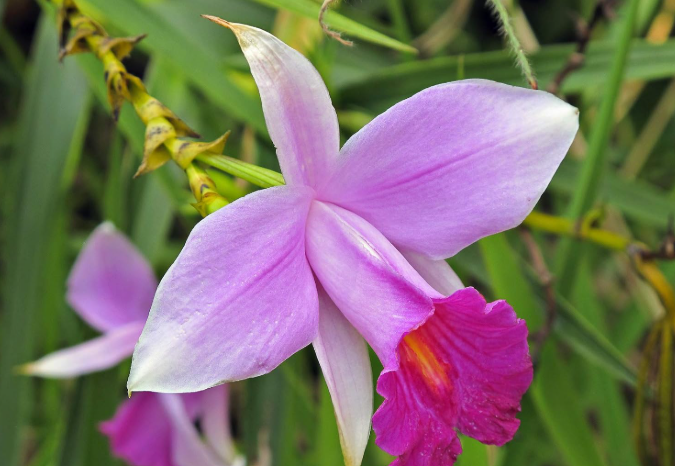
Bamboo Orchid
Bamboo orchid produces tall, genuinely jointed, cane-like stems topped with attractive purple or white flowers, and the resemblance to true bamboo is close enough that the comparison is baked directly into its common name. Unlike true bamboo, though, it’s a true orchid, flowering repeatedly along the length of its cane-like stem.
It’s grown both as a garden ornamental in frost-free climates and as a houseplant elsewhere, valued as much for its flowers as for the bamboo-like structural resemblance that gives it its name.
Corn Plant
Corn plant, a Dracaena species despite the unrelated common name, produces a thick, woody, segmented stem topped with arching, strap-like leaves that can resemble a small bamboo cane once the lower leaves drop with age. Its ringed stem markings, left behind by old leaf scars, mimic bamboo’s natural joints closely enough to fool a casual glance.
It’s one of the most common low-light houseplants sold in the country, tolerating considerably less light and more neglect than true bamboo ever could.
Dragon Tree
Dragon tree, another Dracaena species, develops a slender, woody, segmented trunk over time that can resemble a mature bamboo cane, particularly once older specimens lose their lower leaves and reveal the ringed stem beneath. Its narrow, often red-edged leaves give it a distinctly different crown than any true bamboo species.
It’s a slow-growing, long-lived houseplant that tolerates low light and irregular watering far better than actual bamboo, which generally wants more consistent moisture and brighter conditions.
Ti Plant
Ti plant produces a slender, cane-like stem that can resemble a young bamboo shoot, particularly in varieties with plain green foliage rather than the more common vividly colored leaves. Its segmented stem structure, similar to its Dracaena relatives, is what drives most of the visual comparison.
It’s popular throughout Pacific Island cultures for both ornamental and traditional uses, entirely unrelated to any actual bamboo despite the passing structural resemblance.
Cane Begonia
Cane begonia produces distinctly jointed, bamboo-like stem segments, a growth habit striking enough that “cane-type” has become a standard category name within the begonia world specifically because of the resemblance. Its showy, often spotted or textured leaves make it easy to tell apart from true bamboo the moment you look past the stem.
It’s grown as a houseplant and shade garden specimen, tolerating considerably less light than most flowering plants while still producing attractive blooms in the right conditions.
Angel Wing Begonia
Angel wing begonia is a specific type of cane begonia named for its wing-shaped, often silver-spotted leaves, sharing the same jointed, bamboo-like stem segments as its broader cane begonia family. Its showy foliage and drooping flower clusters make it a popular houseplant well beyond its bamboo-adjacent stem structure.
It thrives in bright, indirect light and consistently moist soil, care requirements considerably gentler than what most true bamboo species actually need.
Giant Horsetail
Giant horsetail, a considerably larger relative of common horsetail, produces tall, jointed, hollow stems that can resemble a genuine bamboo cane from a short distance, especially in dense plantings. Its complete lack of true leaves, replaced by small scale-like structures at each stem joint, separates it clearly from bamboo on close inspection.
It’s an ancient fern relative rather than a flowering plant at all, and its aggressive rhizome spread has earned it a reputation as genuinely difficult to remove once established in a garden bed.
Casuarina
Casuarina, also called Australian pine or she-oak despite being neither a true pine nor an oak, produces fine, jointed, needle-like branchlets that resemble a delicate, segmented bamboo cane structure when viewed up close. Its overall tree form looks nothing like bamboo, but the branch texture alone has drawn the comparison.
It’s classified as an invasive species along parts of the Florida and Gulf Coast, where its dense shade and needle litter displace native coastal vegetation.
Windmill Palm
Windmill palm, while young, develops a slender trunk marked with distinct horizontal rings left behind by old frond bases, a pattern that can resemble bamboo’s natural stem joints before the tree matures into its full fan-leafed form. Older specimens lose much of that ringed resemblance as the trunk thickens and develops a shaggier, fibrous texture.
It’s one of the most cold-hardy palm species commonly grown, tolerating winters that would kill nearly every true bamboo species planted in the same climate.
Giant Bird of Paradise
Giant bird of paradise produces thick, upright, somewhat segmented stems topped with large, banana-like leaves, a structure that can suggest bamboo from a distance despite the completely different foliage once you look up. Its dramatic scale and tropical appearance have made it a popular large-specimen landscape plant.
It flowers only after reaching considerable maturity, producing a striking white and blue bloom that looks nothing like anything true bamboo ever produces.
Lucky Bamboo
Lucky bamboo isn’t bamboo at all, it’s a Dracaena, a member of the asparagus family typically sold as small, twisted stalks rooted in a shallow dish of water rather than soil. Its segmented, jointed stem structure is entirely what earned it the bamboo name, despite no genuine botanical relationship whatsoever.
It thrives in low light and water culture in a way true bamboo simply can’t, since actual bamboo needs soil and considerably more direct light to survive over the long term.
Heavenly Bamboo
Heavenly bamboo, more accurately called nandina, is a flowering shrub in the barberry family, given its bamboo-adjacent name purely because its slender, cane-like stems and delicate, layered foliage resemble bamboo from a distance. Its bright red berries and vivid fall foliage color set it apart from true bamboo the moment either feature appears.
Its berries contain compounds linked to cyanide poisoning in birds that feed on them in quantity, a genuine safety consideration entirely unrelated to any actual bamboo relative.
Bamboo Palm
Bamboo palm is a true palm species, not a grass or bamboo relative in any sense, named for the ringed, segmented pattern along its slender trunk that resembles bamboo’s natural cane joints. Its actual fronds and overall growth habit are entirely palm-like once you look past that trunk pattern.
It’s a popular low-light indoor plant, thriving in conditions that would stress most true bamboo species, which generally need considerably more direct light to perform well.
Papyrus
Papyrus is a sedge rather than a grass or bamboo relative, producing tall, triangular, leafless stems topped with a distinctive burst of thread-like fronds that can suggest a bamboo grove from a distance despite an entirely different stem structure underneath. Rolling a stem between your fingers reveals the sedge family’s telltale triangular cross-section immediately.
It thrives in consistently wet or even standing water, a growing requirement quite different from most true bamboo species, which generally prefer well-drained soil.
Umbrella Palm
Umbrella palm, despite its common name, is also a sedge rather than a true palm or bamboo relative, producing slender, upright stems topped with a whorl of leaf-like bracts that can resemble a young bamboo shoot at a glance. Its triangular stem cross-section reveals its true sedge-family identity on close inspection.
It thrives in boggy soil or shallow standing water, making it a popular choice for a pond edge or water garden where true bamboo would generally struggle to survive.
Key Takeaway
Plants that look like bamboo can include ornamental grasses, palms, shrubs, and other plants with tall stems, narrow leaves, or upright growth habits. Although they may have a bamboo-like appearance, these plants can differ significantly in their structure, mature size, growth rate, and growing requirements.
When identifying a bamboo-like plant, examine its stems, leaves, growth pattern, height, and branching habit. True bamboo has distinctive jointed stems called culms, while similar-looking plants may have smooth or branching stems, different leaf arrangements, or other identifying features. The plant’s habitat and growing conditions can also provide useful clues.
Understanding the differences between bamboo and similar-looking plants can help gardeners choose suitable species for their landscape. Checking mature size, sunlight, soil, moisture needs, and spreading habits is important before planting, especially when selecting fast-growing or potentially invasive plants.