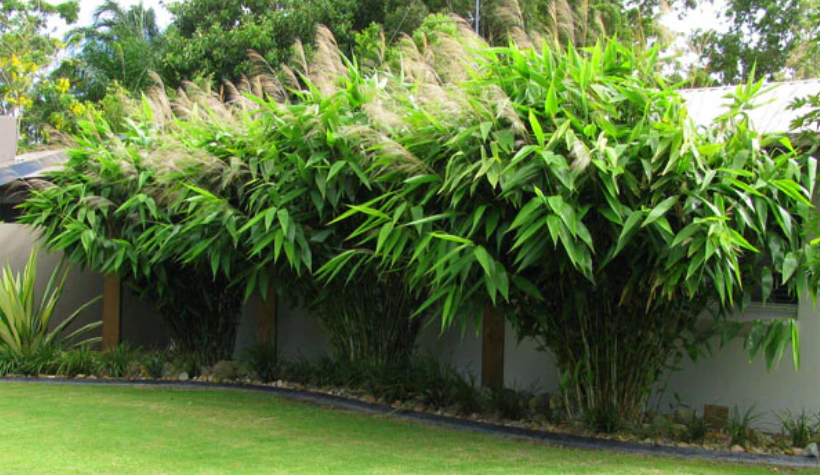
Bamboo itself is a true grass, a member of the same family as lawn turf and wheat, which makes the plants on this list a genuinely strange category: things that resemble a grass so specifically that they get called “bamboo” even when they aren’t bamboo at all. Some of them really are grasses, just not the Bambusoideae subfamily that produces actual bamboo. A surprising number of the most famous “bamboo” plants people buy and grow aren’t grasses in any sense, botanically unrelated to bamboo despite the name stuck to them.
Lucky bamboo is the clearest example of just how far that naming confusion goes. It’s not a grass, not even distantly, it’s actually a Dracaena, a member of the asparagus family sold in decorative water-filled vases and marketed under a name that has nothing to do with its actual botanical identity. Heavenly bamboo, more commonly called nandina, tells a similar story: it’s a flowering shrub in the barberry family, chosen for the name purely because its cane-like stems and delicate foliage happen to resemble bamboo from a distance.
The genuine grass lookalikes on this list earned their resemblance more honestly, sharing bamboo’s tall, jointed, hollow-stemmed growth habit as an actual evolutionary trait rather than a marketing coincidence. The American Bamboo Society maintains useful reference material distinguishing true bamboo species from the many unrelated plants that borrow its name. What follows covers 15 plants commonly mistaken for or compared to bamboo, along with an honest note on which ones are actual grasses and which ones simply borrowed the name.
Giant Reed
Giant reed is probably the single most convincing bamboo look-alike among true grasses, growing into towering, jointed, cane-like stalks reaching 20 feet or more that genuinely resemble a bamboo grove from a distance. Its rapid growth rate matches or exceeds many true bamboo species.
It’s a documented invasive species along waterways throughout much of the southern and western United States, so its bamboo-like appearance comes with a real ecological caution that true, well-managed bamboo plantings don’t always carry.
Common Reed
Common reed, particularly the invasive non-native lineage of Phragmites, grows into dense, towering stands with jointed, hollow stems that can superficially resemble a stand of bamboo, especially along a wetland or shoreline edge. Its feathery seed plumes are a clear visual difference once the plant flowers.
It’s one of the most aggressive wetland invasive species in North America, and unlike many ornamental bamboo lookalikes, it should never be deliberately planted given how thoroughly it displaces native marsh vegetation.
Sugarcane
Sugarcane produces thick, jointed, cane-like stalks that closely resemble true bamboo in general silhouette, tall, segmented, and growing in dense clustered stands. The resemblance is close enough that the 2 plants are sometimes confused by anyone unfamiliar with either crop.
It’s grown commercially for the sugar-rich juice inside its stalks, an entirely different economic purpose than ornamental or structural bamboo, even though the plants share a similar jointed cane structure.
Elephant Grass
Elephant grass, also called Napier grass, grows into tall, thick, cane-like stands reaching over 10 feet, with a growth rate and general silhouette that can pass for bamboo at a casual glance. It’s grown widely throughout the tropics as a forage and biomass crop.
Its stems lack the true hollow, rigid, woody structure of actual bamboo canes, staying comparatively softer and more fibrous even at full maturity.
Giant Miscanthus
Giant miscanthus, a large-scale ornamental grass hybrid, grows into tall, dense stands that can resemble a modest bamboo grove from across a garden, particularly once it reaches its full mature height each season. Its silky flower plumes are the clearest visual difference from true bamboo.
It’s grown both ornamentally and as a biomass crop, dying back to the ground each winter in most climates rather than maintaining the persistent woody canes true bamboo keeps year-round.
Ravenna Grass
Ravenna grass, sometimes called hardy pampas grass, grows into a towering, architectural clump that can read as bamboo-like from a distance given its considerable height and upright form. Its large, plume-like flower heads set it apart from true bamboo once it flowers.
It’s become invasive in some regions after escaping cultivation, so its bamboo-like scale comes with the same kind of caution that applies to several other tall, fast-growing grasses on this list.
Bamboo Muhly
Bamboo muhly earns its common name honestly, producing fine, airy, jointed-looking stems that genuinely resemble a delicate, miniature bamboo despite belonging to the Muhlenbergia genus rather than true bamboo. Its soft, feathery texture is actually considerably finer than real bamboo’s stiffer canes.
It’s a popular landscaping choice specifically for that light, airy bamboo-like appearance without the aggressive spreading habit that running bamboo species are known for.
Job’s Tears
Job’s tears produces tall, jointed stems and distinctive teardrop-shaped seeds that have made it a traditional ornamental and craft plant across parts of Asia, with a cane-like structure that can suggest bamboo at a glance. Its seeds, rather than its stems, are really its most distinctive feature.
It’s grown as an annual or short-lived perennial depending on climate, lacking the multi-year woody persistence that characterizes true bamboo canes.
Horsetail
Horsetail isn’t a grass at all, it’s an ancient fern relative with jointed, hollow, ribbed stems that genuinely resemble a slender bamboo cane, especially in the tall, upright species commonly sold for water gardens. Its complete lack of true leaves, replaced instead by tiny scale-like structures at each joint, is a clear giveaway once you look closely.
It spreads aggressively via rhizome and has a well-earned reputation for becoming difficult to remove once established, a genuine caution regardless of how attractive its bamboo-like stems look in a container.
Lucky Bamboo
Lucky bamboo isn’t a grass or true bamboo in any sense, it’s actually a Dracaena, a member of the asparagus family typically sold as small, twisted stalks rooted in a shallow dish of water. Its segmented, jointed stem structure is what earned it the bamboo name despite the plant having no real botanical relationship to it.
It thrives in low light and water culture in a way true bamboo genuinely can’t, since actual bamboo needs soil and considerably more light to survive long-term.
Heavenly Bamboo
Heavenly bamboo, more accurately called nandina, is a flowering shrub in the barberry family, chosen for its bamboo-adjacent name purely because its slender, cane-like stems and delicate, layered foliage resemble bamboo from a distance. Its bright red berries and vivid fall foliage color make it visually distinct from true bamboo the moment it fruits or changes color.
Its berries contain compounds linked to cyanide poisoning in birds that feed on them in quantity, a genuine safety consideration that has nothing to do with any actual bamboo relative.
Bamboo Palm
Bamboo palm is a true palm species, not a grass or bamboo relative of any kind, named for the ringed, segmented pattern on its slender trunk that resembles bamboo cane joints. Its actual fronds and growth habit are entirely palm-like once you look past the trunk pattern.
It’s a popular low-light indoor plant, thriving in conditions that would stress most true bamboo species, which generally want considerably more direct light to perform well.
Papyrus
Papyrus isn’t a grass, it’s a sedge, producing tall, triangular, leafless stems topped with a distinctive burst of thread-like fronds that can suggest a bamboo grove from a distance despite the completely different stem cross-section. Rolling a stem between your fingers reveals the sedge family’s telltale triangular shape immediately.
It thrives in consistently wet or even standing water, a growing requirement quite different from most true bamboo species, which generally prefer well-drained soil.
Umbrella Palm
Umbrella palm, despite its common name, is also a sedge rather than a true palm or bamboo relative, producing slender, upright stems topped with a whorl of leaf-like bracts that can resemble a young bamboo shoot at a glance. Its triangular stem cross-section gives away its true sedge-family identity on close inspection.
It thrives in boggy soil or shallow standing water, making it a popular choice for a pond edge or water garden where true bamboo would generally struggle.
Corn
Corn produces a tall, jointed, cane-like stalk that shares a genuine structural resemblance to bamboo, segmented at regular intervals along its height in a similar pattern. As an annual crop, though, it completes its entire life cycle and dies within a single growing season.
It lacks the persistent, multi-year woody structure that defines true bamboo, and its purpose as a food crop puts it in an entirely different category despite the superficial stem similarity.
Key Takeaway
Several grasses can resemble bamboo because they have tall, upright stems, narrow leaves, or a clumping growth habit. Some ornamental grasses can develop bamboo-like forms, while certain plants that are not true grasses may also be mistaken for bamboo because of their segmented stems and overall appearance.
When identifying bamboo-like grass, examine the stems, leaves, growth pattern, and plant height closely. True bamboo has distinctive jointed stems called culms, while similar grasses may have different stem structures, seedheads, or leaf arrangements. The plant’s habitat and growing conditions can also provide useful identification clues.
Accurate identification is important because different grasses and bamboo-like plants have very different growth habits and maintenance needs. Understanding whether a plant is a true bamboo, ornamental grass, or another species can help gardeners choose appropriate planting, pruning, and management practices.