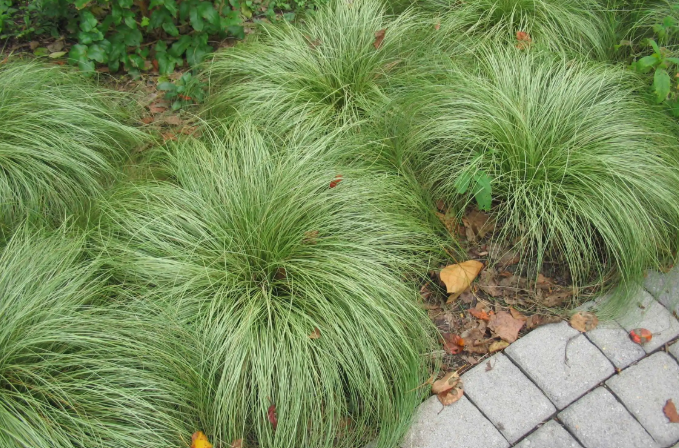
A grass earns a genuine hair-like look from a fairly narrow combination of traits: blades thin enough to catch and move with the slightest breeze, enough flexibility to arch and cascade rather than stand stiffly upright, and often a naturally curling or wavy habit that only reinforces the resemblance. Mexican feather grass is probably the purest example, a plant whose common name barely bothers to disguise the comparison, moving in a way that genuinely looks more like a head of hair caught in the wind than a clump of foliage rooted in soil.
It’s worth knowing upfront that several of the best “hair grasses” sold at garden centers aren’t actually grasses at all. Fiber optic grass and corkscrew rush both belong to the rush family, and the various curly-leaved “hair sedges” popular in container gardens are, as the name suggests, sedges rather than true members of the grass family. None of that makes them any less convincing as a hair-like accent plant, but it’s a useful distinction to know before assuming every fine-textured, flowing plant at the nursery is botanically a grass.
The plants on this list span true ornamental grasses, a handful of sedges, and 2 genuine rushes, grouped together because they all deliver that same visual effect regardless of which family they technically belong to. The Missouri Botanical Garden’s plant finder is a useful way to check the specific family and growing needs of any individual species before assuming it behaves like the true grasses on this list. What follows covers 21 of them, along with the specific texture and growth habit that earns each one its place on a “looks like hair” list.
Mexican Feather Grass
Mexican feather grass forms a fine, wispy, almost impossibly thin-bladed clump that moves constantly in even the lightest breeze, arguably the single most convincing hair-like grass commonly sold. Its pale golden color as it matures only adds to the resemblance, especially en masse in a border.
It self-seeds readily in favorable conditions, enough that some regions consider it a management concern, so it’s worth checking local guidance before planting it extensively.
Tufted Hair Grass
Tufted hair grass, whose common name states the comparison outright, forms a dense, fine-textured clump topped with airy, cloud-like flower panicles that drift and shimmer in wind. Its foliage stays evergreen in milder climates, keeping that hair-like texture visible even outside the flowering season.
It tolerates more shade and moisture than many other fine-textured ornamental grasses, making it a useful option for a spot too damp or shaded for Mexican feather grass to thrive.
Wavy Hair Grass
Wavy hair grass produces extremely fine, thread-like foliage in a low, tousled clump, with delicate flower stalks that genuinely wave and ripple overhead in a light wind. Its diminutive scale makes it a good fit for a rock garden or the front of a mixed border.
It tolerates poor, acidic soil better than many other ornamental grasses, thriving in exactly the lean conditions that would leave a showier species struggling.
Blue Hair Grass
Blue hair grass forms a low, fine clump of steel-blue foliage, combining the same wispy texture as its green relatives with a distinctive cool color that sets it apart in a mixed planting. Its delicate flower heads add further movement above the tidy base clump.
It prefers sharp drainage and full sun, struggling in anything consistently damp the way several other hair-textured grasses can tolerate.
Silver Hair Grass
Silver hair grass produces exceptionally fine, silvery-green foliage in a compact tuft, among the most delicately textured ornamental grasses commonly available. Its diminutive size makes it easy to underestimate in a nursery pot, though it fills out attractively once established.
It thrives in poor, sandy, dry soil, tolerating neglect and drought considerably better than richer garden conditions would suggest it needs.
Hakone Grass
Hakone grass, also called Japanese forest grass, cascades in soft, arching mounds of fine foliage that genuinely flow like loose hair draped over a garden edge or container rim. Several variegated cultivars add gold or cream striping without sacrificing that same flowing texture.
It prefers shade and consistently moist soil, a genuine departure from most other hair-textured grasses on this list, which tend to favor full sun and drier conditions instead.
Pink Muhly Grass
Pink muhly grass produces a fine, airy base of foliage that turns into an unmistakable cloud of pink-purple, hair-like flower plumes each fall, among the most visually striking transformations of any grass on this list. That fall display is really the plant’s signature feature.
It tolerates heat, humidity, and drought remarkably well once established, making it a reliable choice for a Southern garden despite its delicate appearance.
Weeping Lovegrass
Weeping lovegrass forms a dense, arching clump of fine, drooping foliage that genuinely resembles a cascade of loose hair spilling outward from a central point. Its soft, weeping texture has made it popular for erosion control in addition to ornamental use.
It’s not native to North America and has become invasive in parts of the country, so its rapid establishment and hair-like texture come with a genuine ecological caution attached.
Prairie Dropseed
Prairie dropseed forms a neat, fountain-like clump of fine foliage that arches outward in a genuinely hair-like cascade, releasing a distinctive, sweet, popcorn-like fragrance when it flowers in late summer. Its restrained, tidy habit makes it a popular choice for a formal native-plant border.
It grows slowly, taking a few years to reach its full, graceful mature form, so patience is part of the deal with this particular hair-textured grass.
Autumn Moor Grass
Autumn moor grass forms tight, compact mounds of fine foliage with a subtly hair-like texture, topped with delicate flower spikes in late summer. Its neat, well-behaved growth habit makes it a lower-drama choice than some of the more sprawling grasses on this list.
It tolerates a range of soil pH and drainage conditions without much complaint, a genuinely adaptable trait alongside its fine texture.
Blue Fescue
Blue fescue forms a tight, spiky, silvery-blue tuft that reads as more bristled than flowing, but its fine individual blades still earn it a spot among hair-textured ornamental grasses. Popular cultivars include Elijah Blue and Beyond Blue.
It needs excellent drainage and full sun to hold its color and tight form, struggling in anything consistently damp or shaded.
Bunny Tails Grass
Bunny tails grass produces fine, narrow foliage topped with small, fluffy, oval flower heads that add a soft, tactile quality more like fur than flowing hair, though the overall effect lands in a similar visual category. Its compact size makes it a popular choice for containers and border edges.
It’s typically grown as an annual outside its genuinely warm native range, since it isn’t reliably cold-hardy through a real winter.
Fiber Optic Grass
Fiber optic grass isn’t actually a grass at all, it’s a rush, but its extremely fine, thread-like stems topped with tiny star-shaped tufts have made it one of the most convincing “hair” plants sold for containers and water gardens. Its unusual texture genuinely resembles a bundle of fiber optic cables as much as hair.
It prefers consistently moist to boggy soil, making it a good fit for a pond edge or a container that stays reliably damp.
Corkscrew Rush
Corkscrew rush is also a true rush rather than a grass, distinguished by tightly spiraling, curled stems that create a genuinely unusual, hair-like tangle unlike the straighter blades of most true grasses. Its twisting form makes it a popular novelty accent in a container or water garden.
It thrives in consistently wet or even standing water, tolerating boggy conditions that would rot most true grasses on this list.
New Zealand Hair Sedge
New Zealand hair sedge is a true sedge rather than a grass, producing fine, cascading, bronze-toned foliage that drapes over a container edge in a genuinely hair-like curtain. Its warm coloring sets it apart from the cooler blues and greens typical of most other fine-textured grasses.
It tolerates a range of light conditions from full sun to partial shade, more flexible than several true grasses with a similar delicate texture.
Frosted Curls Sedge
Frosted Curls is a cultivar of New Zealand hair sedge selected for pale, silvery-green foliage that curls distinctly at the tips, adding a genuinely tousled, just-out-of-bed texture to its already hair-like base form. Its light color makes it a good contrast plant against darker foliage nearby.
Like other Carex comans cultivars, it prefers well-drained soil and tolerates a range of light conditions reasonably well.
Toffee Twist Sedge
Toffee Twist produces warm, coppery-orange foliage in the same cascading, hair-like habit as its New Zealand hair sedge relatives, with a color that genuinely resembles a head of auburn hair more than any other plant on this list. Its unusual coloring has made it a popular container specimen.
It tolerates full sun to partial shade and average garden soil, sharing its relatives’ general adaptability.
Bronze Curls Sedge
Bronze Curls shares Toffee Twist’s warm coloring in a slightly different shade, with distinctly curled leaf tips that add extra textural interest to its cascading, hair-like base form. It works well planted alongside its paler Frosted Curls relative for color contrast.
It shares the broader New Zealand hair sedge group’s general care needs, preferring decent drainage and tolerating a range of light exposure.
Japanese Sweet Flag
Japanese sweet flag isn’t a true grass either, it belongs to its own distinct plant family, but its narrow, grass-like foliage in fine, arching clumps has made it a popular “ornamental grass” substitute for a consistently moist or boggy spot. Golden variegated cultivars add extra visual interest to that same fine texture.
It thrives in wet soil and even shallow standing water, a genuinely different growing requirement than most of the true grasses on this list.
Cape Rush
Cape rush, a South African restio rather than a true grass, produces wiry, fine, almost hair-like stems in a naturally tousled, upright clump. Its unusual texture and origin have made it an increasingly popular specialty plant in mild-climate gardens.
It tolerates poor, sandy soil and drought reasonably well once established, reflecting its native South African fynbos habitat.
California Fescue
California fescue forms a substantial, arching clump of fine, silvery-blue-green foliage, genuinely flowing and hair-like on a larger scale than some of the more compact fescues on this list. Its native range makes it a good choice for a California or Mediterranean-climate garden specifically.
It tolerates both sun and partial shade better than many other fine-textured fescues, giving it more placement flexibility across a varied garden.
Key Takeaway
Grass that looks like hair can refer to several fine-leaved grasses and grass-like plants with thin, threadlike blades. These plants can vary greatly in appearance, growth habit, height, and habitat, so close observation is often needed for accurate identification.
Key features to examine include blade thickness, color, plant height, growth pattern, seedheads, and whether the plant forms dense clumps or spreads across the ground. Growing conditions such as soil type, moisture, sunlight, and location can also help distinguish similar-looking grasses.
Correct identification makes it easier to determine whether the plant is a desirable ornamental grass, lawn grass, or an unwanted weed. Understanding its growth habit and environmental requirements can help gardeners decide how best to manage or incorporate it into the landscape.