Fast growth in a grass is genuinely a double-edged trait, and it’s worth understanding both edges before picking a species based on speed alone. The same aggressive spreading habit that fills in a bare lawn patch within weeks, or stabilizes an eroding slope before the next hard rain, is often exactly what turns a plant into an invasive problem once it escapes the spot it was planted in. Several of the fastest-growing perennial grasses in the world, running bamboo and giant reed among them, are prized specifically for that speed in the right context and actively fought as invasive nuisances in the wrong one.
Speed also means different things depending on what a grass is actually being asked to do. A turf grass being judged on speed usually means fast germination and quick lawn coverage, the kind of trait perennial ryegrass is specifically valued for. An ornamental grass being judged on speed usually means how fast it reaches full mature size each season, which is where something like Miscanthus or switchgrass earns its reputation. And a grass being planted specifically for erosion control or biomass production is being judged on root growth and total plant mass, an entirely different kind of speed that vetiver grass and elephant grass are built around.
Knowing which category actually matters for a given project makes the difference between choosing a genuinely useful fast grower and accidentally planting something that becomes a maintenance headache for years. What follows covers 15 fast-growing perennial grasses, along with what kind of speed each one actually delivers and any real caution worth knowing before planting it.
Perennial Ryegrass
Perennial ryegrass germinates faster than almost any other common turf grass, often showing visible growth within 5 to 10 days of seeding under decent conditions. That speed makes it the standard choice for quickly establishing cover on a new or damaged lawn area.
Its long-term persistence doesn’t match its establishment speed, since a stand relying on ryegrass alone tends to thin out within a few years, making it more useful as a fast-starting component of a blend than a permanent solution on its own.
Bermudagrass
Bermudagrass spreads aggressively via both above-ground stolons and below-ground rhizomes, filling in bare patches and recovering from damage faster than nearly any other warm-season turf option. That speed is exactly why it dominates sports turf and high-wear lawns across the South.
Its same aggressive spread becomes a genuine nuisance in a garden bed it isn’t meant to occupy, since runners will happily invade adjacent plantings given enough sun and warmth to fuel the growth.
Running Bamboo
Running bamboo is among the fastest-growing plants on Earth, with some species capable of adding several feet of new cane height in a single day under ideal conditions, and it’s technically a member of the grass family despite its tree-like appearance. That growth rate makes it a genuinely effective, fast-establishing privacy screen.
Its underground rhizome system spreads just as aggressively as its above-ground growth, and running bamboo has escaped confinement and become a serious nuisance in countless yards, so a physical root barrier is essentially mandatory rather than optional.
Giant Reed
Giant reed grows into a towering, bamboo-like stand reaching 20 feet or more within a single fast growing season, among the most rapid biomass producers of any perennial grass. Its speed has made it a candidate crop for biofuel production in some regions.
It’s also a documented invasive species along waterways in much of the southern and western United States, where its rapid spread crowds out native riparian vegetation, so planting it deliberately outside a carefully controlled setting carries real ecological risk.
Miscanthus
Miscanthus, commonly called maiden grass, reaches its full mature height and produces its characteristic flower plumes within a single growing season once established, a genuinely fast seasonal growth cycle for an ornamental grass. Its silky fall tassels have made it one of the most widely planted ornamental grasses in the country.
Some Miscanthus varieties self-seed aggressively enough to raise invasive concerns in certain regions, so choosing a sterile or low-seed cultivar is worth checking before planting in an area with sensitive nearby habitat.
Pampas Grass
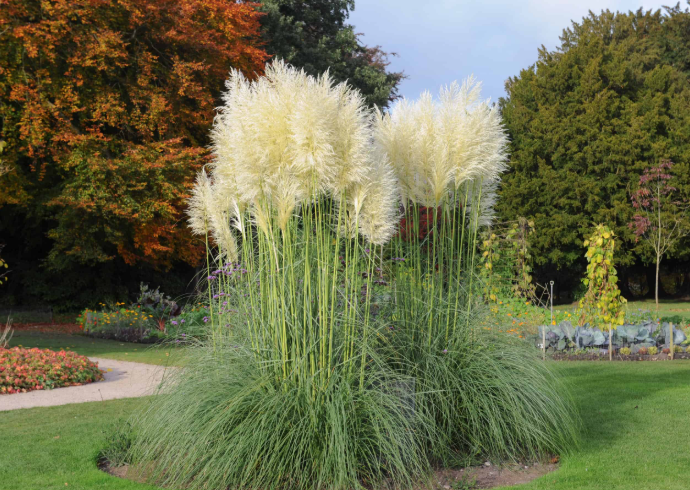
Pampas grass grows rapidly toward its enormous mature size, often reaching 8 to 10 feet within just a couple of growing seasons once established in a warm climate. Its large, plume-like flower heads make that rapid growth immediately visible in a landscape.
It’s become an invasive problem in parts of the West Coast and other mild climates, escaping cultivation and spreading via wind-dispersed seed, so a sterile cultivar is the more responsible choice where it’s still legal and available to plant.
Switchgrass
Switchgrass grows quickly once established, producing substantial biomass each season, which is exactly why it’s been studied and used as a biofuel feedstock alongside its more traditional role in prairie restoration. Its deep, fast-developing root system also makes it valuable for erosion control on disturbed ground.
It’s native to North America, so its rapid growth doesn’t carry the same invasive risk as several of the introduced fast growers on this list, a genuine advantage for anyone wanting speed without that particular downside.
Fountain Grass
Fountain grass fills out to its full arching, fountain-like form within a single growing season, producing its fuzzy flower spikes reliably once established in a sunny bed. That speed makes it a popular choice for gardeners wanting quick visual impact from a new planting.
Some Pennisetum species have become invasive in warmer climates through self-seeding, so it’s worth checking regional guidance and considering a sterile cultivar before planting it in a genuinely hot, dry region.
Karl Foerster Feather Reed Grass
Karl Foerster reaches its tall, upright mature form quickly and reliably, producing its feathery golden seed heads within the first full growing season after planting. Its fast, predictable growth has made it one of the most widely used architectural grasses in modern landscape design.
It’s also largely sterile, which means its speed comes without the self-seeding invasive risk that affects several other fast-growing ornamental grasses on this list.
Lemongrass
Lemongrass grows into a dense, substantial clump within a single warm growing season, and in a genuinely frost-free climate, an established plant just keeps expanding year after year without dying back. Its rapid growth makes it a productive culinary herb even for a gardener starting from a small division.
It’s not cold-hardy, so in any climate with real winter freezes, that fast growth resets each year as the plant is either replanted or grown as a container specimen brought indoors.
Vetiver Grass
Vetiver grass develops an extraordinarily fast, deep root system, capable of reaching several feet down within its first year, which is exactly why it’s used worldwide specifically for erosion control and slope stabilization. Its above-ground growth is comparatively modest next to that dramatic root development.
It’s a clumping rather than a spreading grass, so despite its rapid root growth, it doesn’t carry the same invasive risk as rhizome-spreading fast growers like running bamboo or giant reed.
Kikuyugrass
Kikuyugrass spreads with real aggression via both above- and below-ground runners, establishing a dense turf faster than almost any other warm-season lawn grass once conditions are favorable. That speed has made it popular in some coastal and Mediterranean-climate regions specifically for quick lawn coverage.
Its vigorous growth becomes a genuine problem the moment it escapes into a neighboring garden bed, since its runners spread with the same enthusiasm regardless of whether they’re welcome there.
St. Augustinegrass
St. Augustinegrass spreads via above-ground stolons quickly enough to fill in a new lawn or repair damage faster than many other warm-season turf species, particularly in the warm, humid conditions it prefers. That speed is part of why it remains the default lawn choice across much of Florida and the Gulf Coast.
Its water needs are higher than some other fast-growing warm-season options, so that rapid establishment depends on more consistent irrigation than a tougher, slower-growing alternative would require.
Common Reed
Common reed, specifically the invasive non-native lineage of Phragmites, grows into dense stands reaching 15 feet or taller within just a couple of seasons, spreading through both prolific seed production and an aggressive rhizome network. Few plants match its speed at colonizing open wetland and shoreline habitat.
It’s one of the most damaging wetland invasive species in North America precisely because of that growth rate, and it should never be deliberately planted under any circumstances given how thoroughly it displaces native marsh vegetation.
Elephant Grass
Elephant grass, also called Napier grass, is among the fastest-growing grasses in the world, capable of reaching over 10 feet tall within a single growing season and regrowing just as quickly after being cut. That extraordinary growth rate has made it a major forage and biomass crop throughout the tropics.
It’s a clumping rather than an aggressively spreading species, which limits its invasive potential compared to rhizome-spreading fast growers, though its sheer size still makes it unsuitable for anything but a large, dedicated growing area.
Key Takeaway
Fast-growing perennial grasses can provide reliable coverage, texture, and structure in gardens, landscapes, pastures, and other outdoor spaces. Unlike annual grasses, perennial varieties can return for multiple growing seasons, while their growth rate varies depending on climate, soil, sunlight, moisture, and the specific grass.
Choosing a fast-growing perennial grass depends on its intended use and local growing conditions. Some varieties spread quickly and can help cover open ground, while others form tall clumps and are better suited to ornamental plantings or larger landscapes. Understanding mature size, spreading habit, hardiness, and moisture requirements can help with selection.
With suitable planting conditions and regular care, perennial grasses can establish strong growth and provide long-term landscape value. Proper watering during establishment, appropriate soil preparation, and timely trimming or mowing can help maintain healthy growth and prevent unwanted spreading where it is a concern.