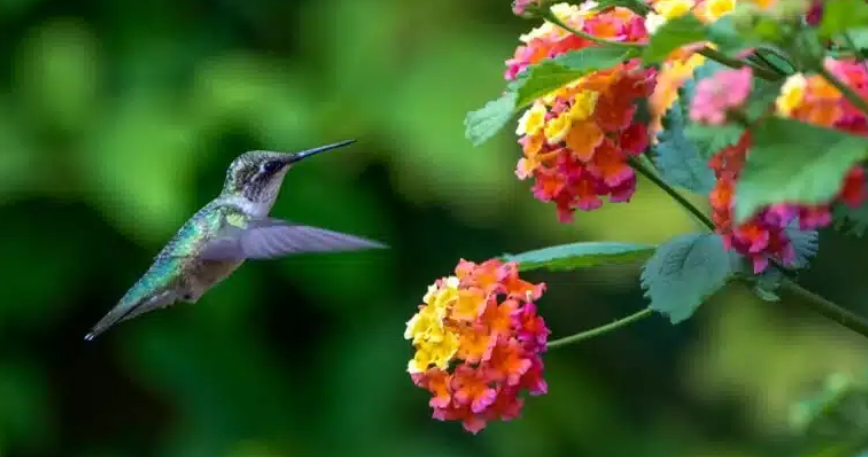
Hummingbirds and bees are drawn to almost opposite sets of traits, which turns out to be a genuinely useful fact for anyone designing a yard around one or the other. A hummingbird sees red vividly, has essentially no sense of smell to speak of, and carries a long, thin bill and tongue built specifically for reaching deep into a narrow floral tube. A bee, by contrast, sees red poorly, relies heavily on scent, and has a considerably shorter tongue that simply can’t reach the nectar inside many of the flowers hummingbirds specialize in.
That difference shows up directly in which flowers make this list. Red, orange, and deep pink tubular blooms dominate here for exactly the reasons they underperform on a bee-focused planting: the color reads as vivid and unmissable to a hummingbird’s eye, and the narrow floral tube matches a hummingbird’s bill length almost perfectly. High nectar volume matters more than fragrance too, since a hummingbird is hunting by sight and needs a genuine caloric reward to justify the energy spent visiting a flower in the first place.
Timing and placement matter beyond flower choice alone. Hummingbirds return to the same reliable feeding routes year after year, so a consistent, layered succession of blooms from spring through fall does more to keep them coming back than any single spectacular flower ever could. The Cornell Lab of Ornithology’s hummingbird resources are a solid reference for understanding broader hummingbird behavior and migration timing alongside flower choice. What follows covers 55 flowers that naturally attract hummingbirds, spanning perennials, annuals, vines, and flowering shrubs.
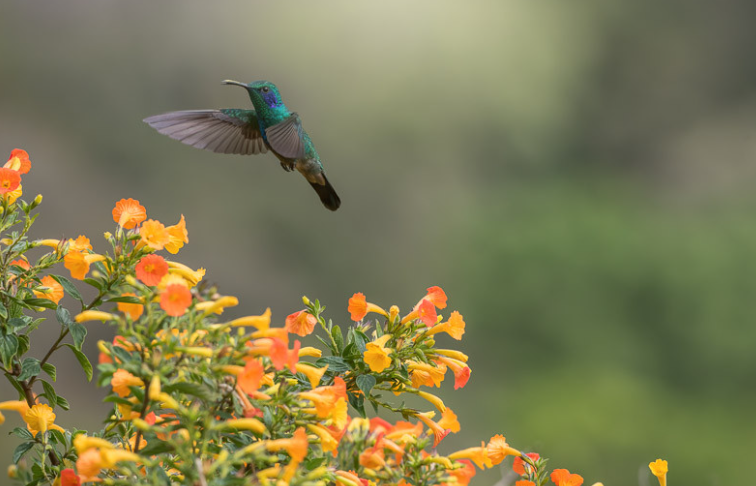
Cardinal Flower
Cardinal flower produces vivid scarlet, tubular blooms on tall spikes specifically adapted to hummingbird pollination, with a floral tube shaped almost exactly to match a hummingbird’s bill length. Its color is close to unmissable against the surrounding green foliage.
It thrives in consistently moist soil and partial shade, often planted along a stream bank or pond edge where hummingbirds reliably patrol.
Coral Honeysuckle
Coral honeysuckle, a North American native distinct from the more commonly planted Asian honeysuckle species, produces clusters of coral-red tubular flowers that hummingbirds visit heavily throughout a long bloom season. Its native status also supports a broader range of local wildlife beyond just hummingbirds.
It climbs a trellis or fence readily, tolerating a range of soil conditions in full sun to partial shade.
Bee Balm
Bee balm, despite the misleading name, is genuinely one of the most reliable hummingbird plants available, its shaggy red or scarlet flower heads packed with tubular florets perfectly suited to a hummingbird’s bill. Its aromatic foliage has a long history as a traditional herbal tea ingredient.
It tolerates a range of soil conditions and full sun to light shade, though good air circulation helps prevent the powdery mildew it can be prone to in humid climates.
Trumpet Vine
Trumpet vine produces large, vivid orange-red, trumpet-shaped flowers specifically adapted to hummingbird pollination, with a floral tube long and narrow enough to exclude most other visitors entirely. Its vigorous, aggressive growth habit can become a genuine management challenge if left unchecked.
It climbs aggressively given any nearby structure to grow on, tolerating poor soil and considerable neglect once established.
Cypress Vine
Cypress vine produces small, star-shaped red tubular flowers on a delicate, fern-like climbing vine, a genuine hummingbird favorite given its color and narrow floral tube. Its fine, lacy foliage provides ornamental value beyond the flowers themselves.
It grows quickly from seed each season, climbing a trellis or fence readily in full sun.
Also Read: Flowers That Do Not Attract Bees
Cardinal Climber
Cardinal climber, a close relative of cypress vine, shares the same star-shaped red flowers and delicate, divided foliage on a slightly more vigorous climbing vine. Hummingbirds visit both species with equal enthusiasm.
It grows quickly from seed in full sun, climbing readily given a trellis or fence to scramble up.
Fuchsia
Fuchsia produces pendant, tubular flowers in red, pink, and purple that hang downward in a shape hummingbirds hover beneath with ease, even though the pendant form makes the same flowers awkward for a bee to approach. Its cascading habit works particularly well in a hanging basket.
It prefers partial shade and consistently moist soil, thriving where a shaded porch or patio gives hummingbirds a comfortable, protected feeding spot.
Scarlet Sage
Scarlet sage produces tall spikes of tubular red flowers bred and selected specifically for hummingbird appeal, blooming continuously from early summer through the first frost. Its reliable, long bloom period makes it a genuine hummingbird garden staple.
It thrives in full sun and average garden soil, requiring minimal care beyond regular watering to bloom all season.
Pineapple Sage
Pineapple sage produces spikes of tubular red flowers specifically in late summer and fall, providing a crucial late-season nectar source just as hummingbirds are fueling up for fall migration. Its pineapple-scented foliage is a genuine bonus when brushed against.
It thrives in full sun to partial shade, blooming later in the season than many other salvia types.
Salvia Guaranitica
Salvia guaranitica, commonly called Black and Blue salvia, produces deep blue tubular flowers with striking black calyxes, considered by many hummingbird gardeners to be one of the single most attractive salvia varieties available. Its considerable height makes it a genuine focal point in a border.
It thrives in full sun to partial shade and regular moisture, blooming continuously from summer through fall.
Zinnia
Zinnia produces flat, daisy-like flowers in a wide range of colors that hummingbirds visit readily for nectar, particularly the taller, single-flowered varieties rather than fully doubled types. Its long bloom period and easy care have made it a garden staple for generations.
It thrives in full sun and well-drained soil, blooming reliably from summer through the first frost with minimal maintenance.
Butterfly Bush
Butterfly bush produces long, arching clusters of fragrant flowers that draw hummingbirds alongside its more famous butterfly visitors, blooming continuously from early summer through fall. Some regions consider it an invasive concern given its prolific self-seeding.
It wants full sun and tolerates a range of soil types, blooming most reliably with regular deadheading.
Foxglove
Foxglove produces tall spikes of tubular, bell-shaped flowers in pink, purple, or white, a shape hummingbirds can access readily despite the plant’s toxicity if ingested by people or pets. Its dramatic vertical form provides real structure in a border.
It tolerates partial shade and moist, well-drained soil, typically behaving as a biennial that flowers in its second year.
Hollyhock
Hollyhock produces tall spikes of large, open flowers in a range of colors, and while its wide-open bloom shape is less specialized than a true tubular flower, hummingbirds still visit readily for the abundant nectar reward. Its considerable height makes it a genuine backdrop plant.
It thrives in full sun and well-drained soil, often self-seeding readily once established in a favorable spot.
Daylily
Daylily, particularly in red and orange varieties, produces trumpet-shaped flowers that hummingbirds visit reliably throughout a long summer bloom period. Each individual flower lasts only a single day, but a mature clump produces a continuous supply of new blooms.
It tolerates a wide range of soil and light conditions, remaining one of the most reliable, low-maintenance perennials available.
Weigela
Weigela produces abundant trumpet-shaped spring flowers in pink, red, or white that hummingbirds visit heavily during the plant’s main bloom flush. Several reblooming cultivars extend that hummingbird appeal considerably further into summer.
It requires minimal pruning beyond an occasional post-bloom shaping and tolerates both sun and light shade.
Rhododendron
Rhododendron produces large, showy flower clusters in spring that hummingbirds visit for nectar during a season when relatively few other flowering shrubs are in full bloom. Its considerable size makes a mature specimen a substantial nectar source during its bloom window.
It tolerates partial shade and requires acidic, well-drained soil, struggling in alkaline conditions.
Lupine
Lupine produces tall spikes of pea-like flowers in a range of colors, offering hummingbirds a genuine nectar reward from each individual floret packed along the spike. Its striking vertical form provides real structure in a cottage-style border.
It tolerates poor, well-drained soil and full sun, often struggling in the heat and humidity of a genuinely hot summer climate.
Delphinium
Delphinium produces tall spikes of vivid blue, purple, pink, or white flowers that hummingbirds visit readily for nectar, despite the entire plant being toxic if ingested. Its dramatic height and color have made it a classic English cottage garden staple.
It thrives in full sun and rich, well-drained soil, typically needing staking to keep its tall flower spikes from toppling in wind or rain.
Verbena
Verbena produces dense clusters of small tubular flowers in red, purple, and pink, a genuine hummingbird draw throughout a long summer and fall bloom period. Its low, spreading habit works well massed along a border edge.
It thrives in full sun and well-drained soil, tolerating heat and drought considerably better than many other bedding plants.
Garden Phlox
Garden phlox produces large, fragrant flower clusters in a range of colors that hummingbirds visit readily throughout a long midsummer bloom period. Its considerable height and reliable performance have made it a border staple for generations.
It tolerates full sun to partial shade and consistently moist soil, benefiting from good air circulation to avoid powdery mildew.
Impatiens
Impatiens produces flat, spurred flowers that hummingbirds visit for nectar even though the same shallow flower structure offers relatively little reward to a foraging bee. Its reliable shade performance provides color in spots too dim for most sun-loving flowers.
It thrives in shade to partial shade, providing continuous color throughout the growing season with minimal care.
Red Hot Poker
Red hot poker produces tall, torch-shaped flower spikes transitioning from red at the top to yellow near the base, a genuinely striking color combination that draws hummingbirds reliably. Its bold, architectural form makes it a real focal point in a border.
It tolerates a range of soil conditions and full sun, blooming from early summer into fall depending on the specific variety.
Also Read: Shrubs that Attract Hummingbirds
Cleome
Cleome, also called spider flower, produces airy, spidery flower clusters atop tall stems that hummingbirds visit readily throughout a long summer bloom period. Its unusual flower form and considerable height provide genuine textural interest.
It thrives in full sun and average soil, often self-seeding readily once established in a favorable spot.
Flowering Tobacco
Flowering tobacco produces star-shaped, tubular flowers, with red and pink varieties drawing hummingbirds particularly well during the day, while its fragrance intensifies in the evening to attract moths instead. That dual pollinator strategy gives it genuine round-the-clock garden activity.
It thrives in full sun to partial shade, blooming continuously from summer through the first frost.
Morning Glory
Morning glory produces trumpet-shaped flowers that open fresh each morning, drawing hummingbirds during exactly the early hours when the birds are most actively feeding after an overnight fast. Its vigorous climbing habit quickly covers a trellis or fence.
It thrives in full sun and average soil, often self-seeding enough to become a minor nuisance in a favorable climate.
Hummingbird Mint
Hummingbird mint, botanically agastache, carries the hummingbird connection right in its common name, producing tall spikes of tubular flowers in shades of orange, pink, and purple. Its aromatic, licorice-scented foliage is a genuine bonus.
It thrives in full sun and well-drained soil, tolerating considerable heat and drought once established.
Penstemon
Penstemon, also called beardtongue, produces tubular flowers in a range of colors, with red and pink varieties drawing considerably more hummingbird interest than the blue and purple types that favor bees instead. Its long bloom period spans much of the summer.
It thrives in full sun and well-drained, even poor soil, tolerating considerable drought once established.
Bearded Iris
Bearded iris produces large, elaborate flowers in a huge range of colors that hummingbirds visit for nectar during the plant’s relatively brief but showy spring bloom period. Its distinctive ruffled petals add real ornamental drama to a border.
It thrives in full sun and well-drained soil, requiring division every few years to maintain vigorous flowering.
Bleeding Heart
Bleeding heart produces distinctive, heart-shaped pink or white flowers dangling along an arching stem, a shape hummingbirds can access for nectar during the plant’s spring bloom window. Its unusual flower form makes it a genuine cottage garden conversation piece.
It tolerates partial to full shade and consistently moist soil, typically going dormant and disappearing entirely by midsummer.
Jewelweed
Jewelweed, a native wildflower, produces small, spurred orange flowers that hummingbirds visit reliably throughout a long summer bloom period in moist, shaded habitat. Its seed pods burst open at the slightest touch once mature, giving the plant its other common name, touch-me-not.
It thrives in consistently moist, shaded soil, often found naturally along a stream bank or in a damp woodland edge.
Also Read: Drought Tolerant Shrubs For Landscaping
Asiatic Lily
Asiatic lily, particularly in red and orange varieties, produces large, trumpet-shaped flowers that hummingbirds visit readily during a concentrated early to midsummer bloom period. Its bold color and considerable flower size make it hard to miss.
It thrives in full sun and well-drained soil, growing from a bulb planted in fall for reliable spring emergence.
Snapdragon
Snapdragon produces tall spikes of tubular, hinged flowers that hummingbirds can access more easily than many bees, given the flower’s specific shape and the bird’s longer bill. Its cool-season preference makes it a genuine spring and fall bloomer in a hot climate.
It thrives in full sun and well-drained soil, often struggling through the most intense heat of a genuinely hot summer.
Mexican Sunflower
Mexican sunflower produces bold, vivid orange-red daisy-like flowers on a tall, fast-growing annual that draws hummingbirds and butterflies in equal measure. Its considerable height makes it a genuine back-of-border plant.
It thrives in full sun and average to poor soil, tolerating heat and drought considerably better than many other showy annuals.
Flowering Quince
Flowering quince produces clusters of red, pink, or orange flowers in very early spring, often before its leaves have even emerged, providing a genuinely early nectar source for the first returning hummingbirds of the season. Its thorny branches also offer some nesting protection.
It tolerates a range of soil conditions and full sun to partial shade, requiring minimal pruning beyond an occasional post-bloom shaping.
Butterfly Weed
Butterfly weed, a milkweed relative, produces clusters of vivid orange flowers that draw hummingbirds alongside its better-known role as a monarch butterfly host plant. Its considerable drought tolerance once established makes it a genuinely low-maintenance choice.
It thrives in full sun and well-drained, even poor soil, tolerating considerable neglect once its deep taproot is established.
Red Yucca
Red yucca, despite the name, isn’t a true yucca, producing tall, coral-red flower spikes that are a genuine hummingbird favorite throughout its long summer bloom period. Its fine, grass-like foliage provides year-round structure.
It thrives in full sun and excellent drainage, tolerating extreme heat and drought with minimal ongoing care.
Agave
Agave produces a single, dramatic flower stalk once in its lifetime, often reaching many feet tall, and that rare bloom event draws hummingbirds from a considerable distance given the sheer volume of nectar on offer. Its long vegetative life before that single bloom makes the eventual flowering a genuine garden event.
It thrives in full sun and extremely well-drained soil, tolerating drought about as well as any plant used in Southwestern landscaping.
Aloe
Aloe produces tall spikes of tubular orange or red flowers, a genuine winter and early spring nectar source for hummingbirds in a mild, frost-free climate when relatively little else is blooming. Its succulent foliage provides year-round structure beyond the bloom period.
It thrives in full sun and extremely well-drained soil, tolerating drought and neglect with real ease.
Crocosmia
Crocosmia produces arching sprays of vivid red or orange, trumpet-shaped flowers on a plant grown from a corm, blooming reliably through mid to late summer. Its narrow, sword-like foliage provides attractive texture even before flowering begins.
It thrives in full sun and well-drained soil, multiplying readily once established into a substantial clump over a few seasons.
Gladiolus
Gladiolus, particularly red varieties, produces tall spikes of trumpet-shaped flowers that draw hummingbirds reliably during a concentrated summer bloom period. Other colors, particularly purple and blue shades, draw more bee attention by comparison.
It grows from a corm planted in spring, providing a dramatic, long-lasting cut flower display through summer.
Four O’Clocks
Four o’clocks produce fragrant, trumpet-shaped flowers that open in late afternoon and remain open through the evening, timing that overlaps with the last active feeding window hummingbirds use before settling in for the night. Its considerable fragrance is a bonus for evening garden visitors.
It grows as a tender perennial or annual depending on climate, self-seeding readily once established in a sunny bed.
Canna Lily
Canna lily produces bold, vividly red or orange, tropical-looking blooms on a tall, dramatic plant that hummingbirds visit heavily throughout a long summer bloom period. Its large, banana-like leaves provide additional ornamental value beyond the flowers.
It thrives in full sun and consistently moist, rich soil, often grown near a pond edge or in a large container.
Scarlet Runner Bean
Scarlet runner bean produces vivid red, tubular flowers on a vigorous climbing vine specifically favored by hummingbirds, blooming continuously through a long summer growing season. Its edible beans provide a genuine food crop beyond the ornamental flower display.
It climbs readily given a trellis or fence, thriving in full sun with regular watering.
Coral Bells
Coral bells produce delicate spikes of small, tubular red or pink flowers on a plant grown primarily for its colorful foliage, though the flowers themselves draw reliable hummingbird visits during their bloom window. Its considerable foliage color range remains a year-round garden asset.
It thrives in partial shade and well-drained soil, valued as much for leaf color as for its modest but genuine flower display.
Columbine
Columbine, particularly red and yellow varieties with long floral spurs, favors hummingbird pollination heavily, while blue and purple types tend to draw more bee interest by comparison. That color and spur-length pattern holds consistently across the genus.
It thrives in partial shade and well-drained soil, often self-seeding readily once established in a favorable woodland-edge planting.
Red Bird of Paradise
Red bird of paradise produces striking red and orange flowers with long, protruding stamens specifically adapted to hummingbird pollination, blooming continuously through a long hot summer. Its dramatic, exotic appearance is a genuine garden focal point.
It thrives in full sun and tolerates considerable heat and drought, common throughout warm Southwestern and desert landscaping.
Firecracker Plant
Firecracker plant produces abundant small, tubular red-orange flowers continuously through the warm season, a genuine hummingbird magnet given both its color and its considerable flower volume. Its fine, arching foliage provides a soft, cascading form.
It thrives in full sun to partial shade in a frost-free or lightly frost-prone climate, tolerating heat and humidity well.
Shrimp Plant
Shrimp plant produces unusual, curved, shrimp-shaped flower bracts in a warm coppery-orange color, with the actual small white flowers emerging from within the bracts to draw reliable hummingbird visits. Its unusual bloom structure provides genuine year-round interest in a mild climate.
It thrives in partial shade to full sun in a frost-free climate, blooming nearly continuously where winters stay mild.
Also Read: Best Annual Flowers That Attract Hummingbirds
Firespike
Firespike produces tall, vivid red flower spikes specifically in fall, providing a crucial late-season nectar source just as hummingbirds prepare for migration. Its considerable height makes it a genuine focal point in a warm-climate border.
It thrives in partial shade to full sun in a frost-free or lightly frost-prone climate, tolerating a range of soil conditions.
Turk’s Cap
Turk’s cap produces distinctive, twisted red flowers that never fully open, a shape genuinely well suited to a hummingbird’s bill even though it looks unusual to a casual observer. Its shade tolerance sets it apart from many other hummingbird-favored plants that need full sun.
It tolerates partial shade and a range of soil conditions, blooming continuously through a long, hot summer.
Cigar Plant
Cigar plant produces small, narrow, tubular orange-red flowers tipped in black and white, resembling a lit cigar closely enough to earn the plant its common name. Its abundant, continuous bloom makes it a genuine hummingbird workhorse.
It thrives in full sun and well-drained soil, blooming continuously from summer through fall.
Rose of Sharon
Rose of Sharon produces large, hibiscus-like flowers continuously through the heat of late summer, drawing hummingbirds throughout that extended bloom window when few other shrubs are still flowering. Its considerable heat and humidity tolerance make it a reliable summer performer.
It tolerates a wide range of soil types and full sun, self-seeding readily enough that deadheading is worth considering.
Hosta
Hosta, grown primarily for its foliage, produces tall spikes of tubular purple or white flowers in mid to late summer that hummingbirds visit for nectar even though the blooms are mostly an afterthought to the plant’s main foliage appeal. Fragrant varieties in particular draw reliable evening visits.
It thrives in partial to full shade and consistently moist soil, remaining one of the most popular shade perennials available.
Rose Campion
Rose campion produces vivid magenta-pink flowers atop silvery, felted foliage, a color combination that draws reliable hummingbird attention throughout a long early to midsummer bloom period. Its silvery leaves provide attractive contrast even before flowering begins.
It thrives in full sun and well-drained soil, often self-seeding readily once established in a favorable spot.
Also Read: Flowers That Attract Cardinals
Conclusion
Flowers that naturally attract hummingbirds can bring movement and color to gardens while providing an important source of nectar. Many hummingbird-friendly flowers have bright, tubular blooms that make them easy for these small birds to reach and feed from.
Choosing suitable flowers depends on the local climate, sunlight, soil conditions, and available garden space. Planting a variety of species with different blooming periods can provide nectar throughout more of the growing season, while shrubs, vines, and trees can add additional shelter and perching areas.
With proper plant selection and basic care, a garden can become more inviting to hummingbirds and provide seasonal interest for people as well. Avoiding unnecessary pesticides and maintaining a diverse selection of flowering plants can further support hummingbirds and other beneficial wildlife.