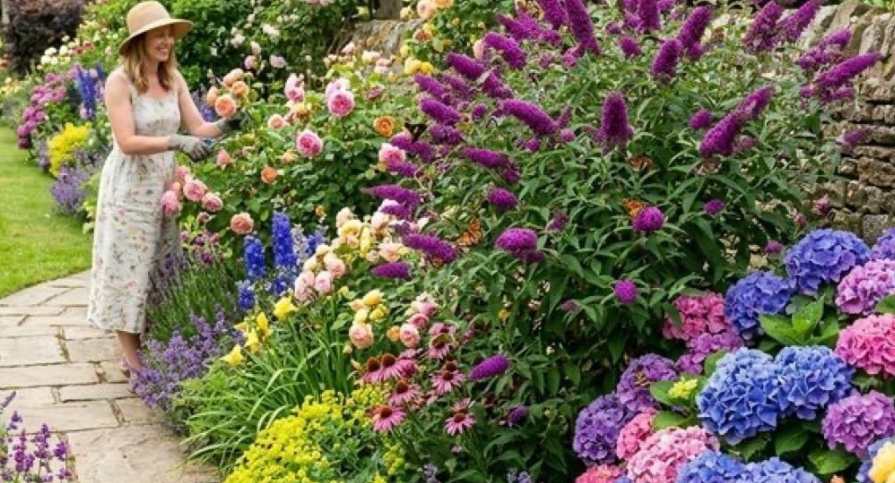
Most classic flowering shrubs, lilac, forsythia, azalea, spirea in its older forms, put on one genuinely spectacular show and then go quiet for the rest of the year. That single-flush pattern is simply how they evolved, timing a burst of energy into one concentrated spring bloom rather than spreading it out. A shrub that blooms all summer instead is doing something genuinely different, either producing flowers continuously on new growth throughout the season or repeating multiple bloom cycles rather than firing once and stopping.
Modern plant breeding has made that second category considerably larger than it used to be. Reblooming hydrangea, lilac, weigela, and spirea varieties have been specifically bred to flower on both old and new wood, or to push out repeated flushes through the growing season, something the straight species they’re derived from never reliably did. Alongside that breeding effort, a genuine group of naturally long-blooming shrubs, mostly from warmer climates where an extended growing season rewards continuous flowering, has always bloomed this way without any modern intervention at all.
The American Hydrangea Society’s variety guide is a useful resource specifically for sorting through the growing number of reblooming hydrangea cultivars, since the differences between them can otherwise be difficult to track. What follows covers 58 shrubs that bloom all summer, spanning bred reblooming cultivars and naturally long-flowering species.
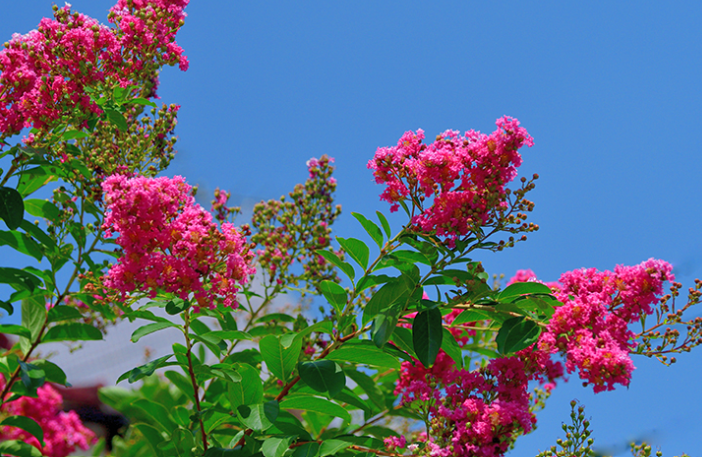
Panicle Hydrangea
Panicle hydrangea produces large, cone-shaped flower clusters that bloom reliably on new wood from mid-summer through fall, eliminating the pruning-timing guesswork that plagues some other hydrangea types. Its flowers gradually shift color as the season progresses, often aging from white to pink.
It tolerates considerably more sun than most other hydrangeas, needing regular water but very little other fuss to bloom reliably all season.
Also Read: Low-Maintenance Shrubs
Limelight Hydrangea
Limelight is a panicle hydrangea cultivar producing lime-green flower clusters that age to pink as summer progresses, blooming reliably from midsummer into fall on a substantial, sturdy shrub. Its strong stems hold the large flower heads upright without flopping.
It tolerates full sun and a range of soil conditions, sharing standard panicle hydrangea’s reliable new-wood blooming habit.
Little Lime Hydrangea
Little Lime is a compact version of Limelight, producing the same lime-green-to-pink flower color transition on a considerably smaller shrub suited to a more modest garden space. Its extended bloom period matches its larger relative.
It tolerates full sun and needs only regular watering, blooming dependably from summer through fall on new growth.
Vanilla Strawberry Hydrangea
Vanilla Strawberry produces flower clusters that transition through white, pink, and finally deep strawberry-red over the course of a long summer bloom period. Its dramatic color progression makes it one of the more visually striking panicle hydrangea cultivars.
It tolerates full sun and blooms reliably on new wood, needing only consistent water to perform at its best.
Quick Fire Hydrangea
Quick Fire blooms noticeably earlier than most other panicle hydrangea cultivars, often starting in early summer rather than midsummer, and extends its color show considerably longer as a result. Its flowers age from white through pink to a deep rosy red.
It tolerates full sun and a range of soil types, sharing the reliable new-wood blooming habit typical of the panicle hydrangea group.
Fire Light Hydrangea
Fire Light produces sturdy, upright flower clusters that hold their shape without flopping, aging from white to a deep, rich red over a long summer and fall bloom period. Its strong stems make it a reliable choice where wind or rain might otherwise damage a floppier cultivar.
It tolerates full sun and needs only consistent watering, blooming dependably on new growth throughout the season.
Pinky Winky Hydrangea
Pinky Winky produces distinctive bicolor flower clusters, with the lower portion of each cluster aging to pink while the upper portion remains white, creating a genuinely two-toned effect. Its long bloom period runs from midsummer well into fall.
It tolerates full sun and a range of soil conditions, sharing the panicle hydrangea group’s reliable new-wood flowering habit.
Also Read: Drought Tolerant Shrubs For Landscaping
Annabelle Hydrangea
Annabelle produces enormous, rounded white flower clusters on a smooth hydrangea variety that blooms reliably on new wood throughout summer regardless of winter pruning severity. Its considerable flower size has made it a garden favorite for generations.
It tolerates partial shade better than panicle hydrangea types, needing consistent moisture to support its large blooms.
Incrediball Hydrangea
Incrediball produces even larger flower clusters than standard Annabelle on notably sturdier stems that hold the substantial blooms upright without flopping. Its extended summer bloom period matches its parent variety.
It tolerates partial shade and needs consistent water, blooming reliably on new wood throughout the growing season.
Endless Summer Hydrangea
Endless Summer was one of the first widely available reblooming bigleaf hydrangeas, flowering on both old and new wood to extend color considerably further into summer than a traditional bigleaf hydrangea. Its flower color shifts between blue and pink depending on soil pH.
It tolerates partial shade and needs consistent moisture, rewarding that care with a genuinely extended bloom season compared to older bigleaf varieties.
Bluebird Hydrangea
Bluebird produces lacecap-style flower clusters that rebloom over an extended summer period, offering a more delicate, open flower form than the mophead types typical of many other bigleaf hydrangeas. Its color also shifts with soil pH.
It tolerates partial shade and consistent moisture, blooming on both old and new wood for a longer overall season.
Rose of Sharon
Rose of Sharon produces large, hibiscus-like flowers continuously through the heat of late summer, a season when few other shrubs are still blooming at all. Its considerable heat and humidity tolerance make it a reliable summer performer.
It tolerates a wide range of soil types and full sun, self-seeding readily enough that deadheading is worth considering if volunteer seedlings aren’t wanted.
Diana Rose of Sharon
Diana is a Rose of Sharon cultivar producing pure white flowers that stay open longer each day than many other varieties, extending the visual bloom display through a long summer season. It’s also largely sterile, avoiding the self-seeding some other Rose of Sharon types are prone to.
It tolerates full sun and a wide range of soil types, blooming reliably from midsummer into fall.
Bluebird Rose of Sharon
Bluebird produces true blue flowers with a red central eye, among the most distinctly colored Rose of Sharon cultivars available, blooming continuously through summer. Its color sets it apart from the more common pink and white varieties.
It tolerates full sun and a range of soil conditions, sharing the species’ considerable heat tolerance.
Aphrodite Rose of Sharon
Aphrodite produces vivid pink-red flowers with a darker red center, blooming continuously from midsummer through fall on a genuinely reliable, low-maintenance shrub. Its rich color provides a bolder alternative to paler Rose of Sharon cultivars.
It tolerates full sun and a wide range of soil types, needing only occasional deep watering during genuinely dry stretches.
Butterfly Bush
Butterfly bush produces long, arching clusters of fragrant flowers continuously from early summer through fall, drawing butterflies in genuinely large numbers throughout that extended bloom period. Some regions consider it an invasive concern given its prolific self-seeding.
It wants full sun and tolerates a range of soil types, blooming most reliably with regular deadheading to encourage repeat flowering.
Miss Molly Butterfly Bush
Miss Molly produces vivid, deep pink-red flower spikes continuously through summer on a butterfly bush cultivar bred for improved color intensity compared to older varieties. Its considerable flower power matches the straight species.
It wants full sun and tolerates a range of soil conditions, blooming most heavily with regular deadheading.
Also Read: Best Drought-Tolerant Grasses
Lo and Behold Butterfly Bush
Lo and Behold is a dwarf, compact butterfly bush series bred for a more manageable size than standard varieties while retaining the same continuous summer bloom period. Several cultivars in the series have also been bred to be sterile, avoiding self-seeding concerns.
It wants full sun and tolerates a range of soil types, fitting into a smaller garden space than a full-sized butterfly bush would allow.
Crape Myrtle
Crape myrtle produces long-lasting summer flower clusters in a range of colors, blooming continuously from early summer through fall once established. Its attractive, peeling bark provides additional winter interest after the leaves drop.
It wants full sun for the best flowering, tolerating considerably drier conditions than many other flowering landscape shrubs.
Abelia
Abelia produces small, fragrant, tubular flowers continuously from late spring through fall on a genuinely long-blooming evergreen or semi-evergreen shrub. Its glossy foliage and reliable flowering have made it a popular low-fuss landscape choice.
It wants full sun to partial shade and tolerates poor soil, needing only occasional deep watering once established.
Potentilla
Potentilla produces small, buttery yellow flowers continuously from late spring through fall on a compact, genuinely long-blooming shrub. Its fine-textured foliage and reliable flowering require very little active management.
It tolerates poor, rocky soil and full sun, needing minimal supplemental water or fertilizer once established.
Blue Mist Shrub
Blue mist shrub, also called caryopteris, produces clouds of small blue flowers specifically in late summer, filling a genuine gap when many spring-blooming shrubs have long since finished. Its fine, aromatic foliage draws pollinators throughout its bloom window.
It wants full sun and well-drained soil, and cutting it back each spring keeps its naturally loose growth habit tidy.
St. John’s Wort
St. John’s wort produces bright yellow flowers with prominent stamens continuously through summer on a genuinely long-blooming shrub. Its compact size and reliable flowering have made it a popular low-fuss border plant.
It tolerates a range of soil conditions and full sun to partial shade, needing minimal ongoing care once established.
Knockout Rose
Knockout rose blooms continuously from spring through the first hard frost, a genuine breakthrough in disease resistance and rebloom reliability that made it one of the most widely planted landscape roses in the country. Its self-cleaning habit means spent blooms drop on their own without deadheading.
It wants full sun and tolerates a range of soil conditions, requiring considerably less spraying and maintenance than older rose varieties.
Drift Rose
Drift rose produces a low, spreading, groundcover-form bloom continuously through the growing season, combining a rose’s flower with a considerably more compact, spreading habit than a traditional shrub rose. Its self-cleaning flowers require no deadheading.
It wants full sun and tolerates a range of soil types, fitting into a border or slope where a taller rose wouldn’t be appropriate.
Flower Carpet Rose
Flower Carpet rose blooms continuously from late spring through fall on a low, spreading, disease-resistant landscape rose bred specifically for extended color with minimal care. Its dense, spreading habit works well as a flowering groundcover.
It wants full sun and tolerates a range of soil conditions, needing considerably less spraying than older rose varieties to stay healthy.
Also Read: Evergreen Shrubs For Outdoor Planting
Oso Easy Rose
Oso Easy is a landscape rose series bred for continuous summer bloom and strong disease resistance, requiring minimal spraying or deadheading to perform reliably. Its compact size suits a smaller garden bed or mixed border.
It wants full sun and tolerates a range of soil types, blooming from late spring through the first hard frost.
Bloomerang Lilac
Bloomerang lilac produces its main flush of fragrant purple flowers in spring, then reblooms intermittently through summer into fall, a genuine departure from common lilac’s single spring show. Its more compact size also suits a smaller garden than a full-sized lilac would.
It tolerates a range of soil conditions and full sun, needing only a light deadheading to encourage the strongest summer rebloom.
Goldflame Spirea
Goldflame spirea produces small pink flower clusters intermittently through summer on a shrub grown as much for its colorful, shifting foliage as for its blooms. Its leaves emerge orange-red, mature to gold, and often take on reddish tones again in fall.
It tolerates a range of soil conditions and full sun, blooming considerably longer than older spring-only spirea varieties.
Double Play Spirea
Double Play is a modern spirea series bred for both extended summer reblooming and improved foliage color, offering considerably more season-long interest than older spirea cultivars. Its compact size fits well into a smaller border.
It tolerates a range of soil conditions and full sun, deadheading readily to encourage continued summer flowering.
Anthony Waterer Spirea
Anthony Waterer produces flat clusters of pink flowers that rebloom intermittently through summer if spent blooms are removed, a classic spirea cultivar that’s remained popular for generations. Its compact size suits a foundation planting.
It tolerates a range of soil types and full sun, blooming most reliably with regular deadheading through the season.
Magic Carpet Spirea
Magic Carpet produces small pink flower clusters on a low, spreading spirea cultivar valued as much for its vivid red-orange new foliage growth as for its reblooming summer flowers. Its compact, groundcover-like habit suits a border edge.
It tolerates a range of soil conditions and full sun, reblooming through summer with occasional deadheading.
Sonic Bloom Weigela
Sonic Bloom is a reblooming weigela series bred specifically to flower continuously through summer rather than in the single spring flush typical of standard weigela. Its extended color display has made it increasingly popular in modern landscaping.
It tolerates a range of soil conditions and full sun to light shade, needing only light deadheading to maintain the strongest rebloom.
Wine and Roses Weigela
Wine and Roses produces near-black burgundy foliage alongside pink spring flowers with some reliable summer rebloom, offering season-long color from its foliage even between flower flushes. Its dark leaves provide dramatic contrast in a mixed border.
It grows well throughout USDA zones 4 through 8, tolerating a range of soil conditions in full sun to light shade.
Vitex
Vitex, also called chaste tree, produces long spikes of lavender-blue flowers continuously through summer on a large, drought-tolerant shrub or small tree. Its aromatic, palmately compound leaves add fragrance when brushed against.
It tolerates heat and drought well once established, thriving in full sun with minimal supplemental care.
Plumbago
Plumbago produces clusters of sky-blue flowers continuously through the warm months in a frost-free or lightly frost-prone climate, providing months of reliable color. Its sprawling, semi-vining habit works well cascading over a wall.
It tolerates heat and a range of soil conditions, blooming most heavily in full sun.
Lantana
Lantana produces clusters of small, multicolored flowers continuously from spring through the first frost, tolerating heat and drought about as well as any flowering shrub available. Its long bloom period makes it a butterfly magnet throughout the growing season.
It thrives in full sun and poor to average soil, often grown as an annual in colder climates where it can’t survive winter.
Tropical Hibiscus
Tropical hibiscus produces enormous, vividly colored flowers continuously through the warm season in a frost-free climate, with individual blooms typically lasting just a single day before being replaced by new ones. Its constant flower turnover keeps color coming all summer.
It thrives in full sun and consistently moist, well-drained soil, often grown as a container plant brought indoors for winter in colder regions.
Hardy Hibiscus
Hardy hibiscus, also called rose mallow, produces dinner-plate-sized flowers continuously from mid to late summer on a plant considerably more cold-tolerant than tropical hibiscus. Its enormous individual bloom size makes it a genuine garden focal point.
It tolerates a range of soil conditions, including consistently moist ground, thriving in full sun with regular watering.
Also Read: Shrubs With Red Berries
Confederate Rose
Confederate rose, botanically a hibiscus rather than a true rose, produces large flowers that often open white or pink in the morning and deepen to a darker red by evening, blooming from late summer into fall. Its considerable size makes it more of a large shrub or small tree.
It tolerates full sun and a range of soil types, thriving in the warm, humid conditions typical of the Deep South.
Bottlebrush
Bottlebrush produces distinctive red, brush-shaped flower spikes continuously through much of the year in a mild climate, tolerating poor soil and considerable neglect. Its blooms are a reliable hummingbird attractant throughout the bloom season.
It wants full sun and tolerates poor soil, needing only occasional deep watering once established.
Texas Sage
Texas sage, also called cenizo, produces repeated flushes of purple flowers specifically triggered by humidity spikes ahead of rain throughout the summer, earning it the nickname barometer bush. It’s a genuinely tough choice for hot, dry Southwestern landscaping.
It wants full sun and excellent drainage, tolerating extreme heat and drought with minimal ongoing care.
Rock Rose
Rock rose produces papery, crepe-like flowers continuously through late spring and summer on a compact, drought-tolerant Mediterranean shrub. Its resinous, aromatic foliage stays evergreen through mild winters.
It wants full sun and lean, well-drained soil, tolerating genuine neglect once established.
Autumn Sage
Autumn sage, botanically Salvia greggii, produces small tubular flowers continuously from late spring through fall in a range of colors, tolerating heat and drought remarkably well. Its long bloom period and hummingbird appeal make it a genuine garden workhorse.
It wants full sun and well-drained soil, blooming most heavily with an occasional light shearing during the growing season.
Russian Sage
Russian sage produces tall, airy spikes of small purple-blue flowers continuously from mid-summer through fall on silvery, aromatic foliage. Its long bloom period and fine texture make it a popular xeriscape border plant.
It wants full sun and well-drained soil, and cutting it back hard each spring keeps its naturally sprawling growth habit tidy.
Summersweet
Summersweet, also called clethra, produces fragrant white or pink flower spikes continuously through mid to late summer, drawing pollinators in genuine numbers during a season when fewer other shrubs are blooming. Its native status suits it to a range of regional soil conditions.
It tolerates wet soil and partial shade well, needing only an occasional light shaping rather than any real structural pruning.
Buttonbush
Buttonbush produces distinctive, spherical white flower clusters continuously through mid-summer, a native shrub tolerating consistently wet soil better than almost any other flowering option. Its unusual bloom shape draws pollinators in real numbers.
It thrives in a rain garden or pond edge setting, requiring minimal pruning and no special fertility program to perform well.
Also Read: Shrubs With Red Berries
Gardenia Jubilation
Jubilation is a reblooming gardenia cultivar bred to flower repeatedly through summer rather than in the single spring flush typical of most gardenias, extending its famously fragrant white blooms considerably longer. Its glossy evergreen foliage provides year-round structure between flushes.
It requires a mild climate and acidic, well-drained soil, struggling considerably in alkaline conditions or a hard freeze.
Encore Azalea
Encore azalea produces flowers in spring, summer, and fall rather than just once, extending seasonal interest well beyond a standard azalea’s single spring display. Its repeated bloom cycle has made it a popular low-fuss choice.
It tolerates partial shade and acidic, well-drained soil, needing an occasional acidic feeding to maintain vigorous rebloom.
Oleander
Oleander produces abundant, showy flowers continuously through the warm season on a large, drought-tolerant shrub widely used in Mediterranean and desert Southwest landscaping. Every part of the plant is toxic if ingested, a genuine safety consideration around children and pets.
It wants full sun and tolerates poor soil, heat, and drought with minimal complaint once established.
Smoke Bush
Smoke bush produces airy, smoke-like flower plumes in early summer that persist as an ornamental haze for weeks afterward, extending the visual bloom effect well beyond the actual flowering period. Its richly colored purple or green foliage provides additional season-long interest.
It wants full sun for the best foliage color, tolerating considerably drier conditions than many other showy flowering shrubs.
Reblooming Deutzia
Reblooming deutzia varieties flower in a strong spring flush and then continue producing scattered blooms through summer, a genuine improvement over older deutzia cultivars that bloomed only once. Its fine-textured foliage provides a soft backdrop between flushes.
It tolerates a range of soil conditions and full sun to light shade, needing minimal ongoing care once established.
Pomegranate
Pomegranate produces vivid orange-red flowers continuously through much of summer on a genuinely drought-tolerant Mediterranean shrub, with edible fruit following the flowers on a mature plant. Ornamental dwarf varieties are also available for a smaller landscape.
It wants full sun and tolerates poor soil, needing considerably less water than most other fruiting landscape plants.
Angel’s Trumpet
Angel’s trumpet produces enormous, pendant, trumpet-shaped flowers continuously through the warm season, releasing their strongest fragrance at night. Every part of the plant is toxic if ingested, a genuine safety consideration.
It thrives in full sun to partial shade in a frost-free climate, grown as a container specimen brought indoors for winter in colder regions.
Cape Honeysuckle
Cape honeysuckle produces clusters of tubular orange-red flowers nearly continuously in a mild, frost-free climate, drawing hummingbirds throughout its extended bloom period. Its sprawling, semi-vining habit can be trained as a hedge or allowed to climb.
It tolerates a range of soil conditions and full sun, blooming most reliably in genuinely warm, frost-free regions.
Esperanza
Esperanza, also called yellow bells, produces clusters of bright yellow, trumpet-shaped flowers continuously through the hottest part of summer on a shrub genuinely built for heat. Its glossy, deeply divided leaves provide attractive texture between bloom flushes.
It tolerates extreme heat and drought once established, thriving in full sun with minimal supplemental water.
Firebush
Firebush produces clusters of small, tubular orange-red flowers continuously through the warm season, a genuine hummingbird and butterfly magnet in a frost-free or lightly frost-prone climate. Its considerable heat tolerance makes it a reliable summer performer.
It tolerates full sun and a range of soil conditions, often grown as an annual in colder climates where it can’t survive winter.
Also Read: Different Types of Deciduous Shrubs
Mexican Bird of Paradise
Mexican bird of paradise produces clusters of vivid yellow-orange flowers continuously through summer on a fast-growing, drought-tolerant shrub well suited to hot Southwestern landscaping. Its fine, fern-like foliage provides a soft textural contrast to its bold blooms.
It tolerates extreme heat and drought once established, thriving in full sun with minimal ongoing care.
Conclusion
Shrubs that bloom all summer can provide long-lasting color and visual interest when many other plants have finished their early-season flowering. Depending on the variety, these shrubs can produce flowers for several months while also adding structure and foliage to gardens and landscapes.
Choosing the right summer-blooming shrub depends on the local climate, sunlight, soil, available space, and desired flower color. Some varieties perform best in full sun, while others tolerate partial shade. Regular watering, appropriate pruning, and suitable soil conditions can also encourage healthy growth and continued flowering.
With proper selection and care, summer-blooming shrubs can create a colorful and attractive landscape throughout the warmer months. Planting several varieties with different flowering periods can also help extend seasonal interest and provide a continuous display of flowers.