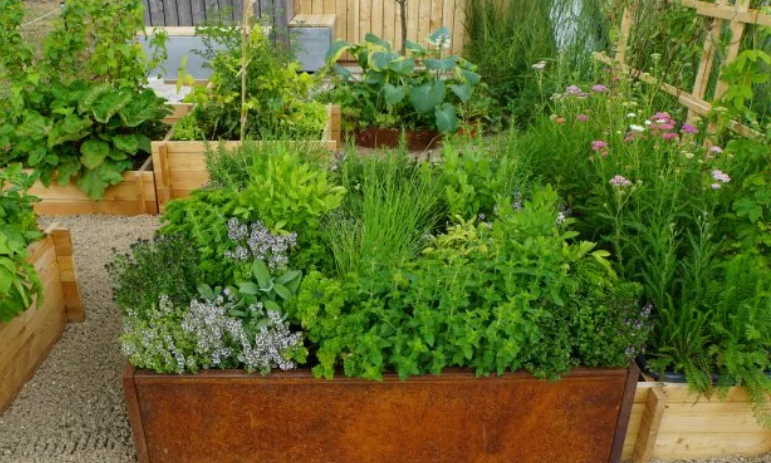
Zone 4 doesn’t leave much room for negotiation. Winters here can bottom out at negative 30 to negative 20 degrees Fahrenheit, and that kind of cold ends the conversation for a lot of herbs before it even starts. There’s no cold-hardy rosemary cultivar tucked against a wall that’s making it through that, no French tarragon surviving on a good layer of mulch. This is genuinely a shorter list than what you’d get for Zone 5 or 6, and the point of it isn’t to stretch the boundaries. It’s to hand you the herbs that don’t need any boundary-stretching at all.
The Missouri Botanical Garden’s plant finder is a genuinely useful tool if you want to double-check the exact hardiness rating on any individual herb before committing garden space to it, since a lot of nursery labels are optimistic at best. What follows is a list of herbs that don’t just survive Zone 4, they thrive in it, coming back reliably year after year without any winter drama.
Chives
Chives are about as tough as an herb gets, returning from their little bulb every single spring regardless of how brutal the winter was. The mild, onion-flavored leaves and edible purple flowers ask for almost nothing in return, just full sun and soil that isn’t waterlogged.
Let a few flowers go to seed if you don’t mind the occasional volunteer plant showing up nearby, or trim them off early if you’d rather keep things contained.
Garlic Chives
Garlic chives are basically standard chives with a garlic accent instead of an onion one, and they share the exact same bulletproof cold tolerance. If you already have chives in the ground and want a second flavor for zero extra effort, this is the obvious next planting.
They self-seed a bit more freely than regular chives, so cut the white flowers back before they go to seed if you want to avoid extra volunteers.
Sage
Sage’s silvery, fuzzy leaves hang onto their color through most of a Zone 4 winter, and the plant itself doesn’t even notice the cold that’s killing everything around it. What actually threatens sage here is wet soil, not frost, so drainage matters more than any amount of winter protection.
Give it a spot that dries out fast after rain, and plan on replacing the plant every few years once the center gets woody and unproductive.
Horseradish
Horseradish shrugs off Zone 4 cold entirely, and once its thick root system settles into a bed, you’ll spend more effort trying to get rid of it than keeping it alive. That’s not really a criticism, it’s just an honest heads-up before you plant it somewhere you might regret.
Give it its own dedicated corner away from anything delicate, and harvest the root deeper down for a sharper, more pungent flavor.
Yarrow
Yarrow’s fine, fern-like foliage and flat flower clusters do best in genuinely poor, rough soil, the kind of ground that would leave most other perennials struggling. Its cold tolerance goes well beyond anything Zone 4 ever tests it with.
Resist the urge to amend its soil too generously, since yarrow actually performs worse in overly rich beds than in lean, unimproved dirt.
Echinacea
Echinacea handles Zone 4 winters without a hint of concern, and its coarse leaves and purple-pink coneflowers do double duty as a pollinator plant and a traditional medicinal herb. Leave the dried seed heads standing through winter instead of tidying them away, since finches will work through them for food when little else is available.
It’s genuinely drought tolerant once established, needing far less supplemental water than most other perennials in a dry summer.
Bee Balm
Bee balm’s shaggy red or lavender flowers pull in hummingbirds and native bees all summer, and the plant itself comes back from its roots every spring no matter how cold the winter got. Its actual weak point isn’t the cold, it’s powdery mildew in a humid summer.
Space plants generously to keep air moving between them, since good airflow prevents more problems here than winter ever will.
Catnip
Catnip is close to unkillable in a Zone 4 bed, returning with real enthusiasm every spring regardless of what the previous winter threw at it. Beyond the well-known effect on cats, it’s had a long life as a mild medicinal herb in its own right.
It self-seeds readily enough that one original planting can turn into a small colony within a couple of years, so decide early whether that’s something you want.
Lemon Balm
Lemon balm’s bright, citrusy leaves make a genuinely good tea, and the plant returns every spring with the same eagerness as its mint-family relatives, including their shared habit of spreading further than you meant them to. A periodic division keeps it in check.
It tolerates more shade than most of the sun-loving herbs on this list, so it’s a reasonable choice for a bed that doesn’t get full sun all day long.
Comfrey
Comfrey grows into a genuinely large plant, with big, bristly leaves and a deep taproot that couldn’t care less about a Zone 4 winter. It’s more valuable in the garden as a soil-nutrient accumulator than as something you’d actually eat.
Give it its own space, because its mature size will crowd out smaller plants nearby within a season or two.
Sorrel
Sorrel’s tart, lemony leaves come back every spring after dying completely to the ground over winter, with the sourness coming from naturally occurring oxalic acid rather than anything added. It’s a genuinely useful sharp, acidic green for soups and sauces.
It wants cooler, moister soil than the drought-tolerant Mediterranean herbs it sometimes gets planted next to, so keep that in mind when placing it.
Lovage
Lovage tastes like an oversized, more intense version of celery, and it grows to match, easily reaching several feet once it’s established. It’s hardy through Zone 4 without complaint and genuinely deserves its own dedicated space rather than a cramped corner.
Divide an established clump every few years if you want to manage its size, or just let it fill out if you’ve got the room to spare.
Peppermint
Peppermint spreads through underground runners with real determination, which is exactly why most people who’ve grown it once in open ground switch to a container the second time. Cold has never been peppermint’s problem; taking over the entire bed is.
It handles more shade and more moisture than most other herbs here, part of what makes it both easy to grow and easy to regret planting directly in the soil.
Spearmint
Spearmint shares peppermint’s total cold tolerance and its habit of spreading wherever it pleases, distinguished mainly by a sweeter, milder flavor better suited to drinks and desserts. The same container advice applies here too.
It tolerates shade and consistently damp soil better than the sun-hungry Mediterranean herbs on this list.
Valerian
Valerian produces clusters of small, fragrant flowers on a tall, cold-hardy perennial best known for its long history as a traditional sleep aid. It handles Zone 4 winters without any trouble and asks for little beyond a spot with decent moisture.
Its root, which is the part traditionally used, develops best on a plant left undisturbed for a couple of years before harvest.
Salad Burnet
Salad burnet’s finely divided, cucumber-flavored leaves come from a compact, genuinely cold-hardy perennial that stays semi-evergreen through much of a mild winter stretch. Its mild, refreshing flavor makes it a nice addition to a salad or a cold summer drink.
It grows well in average soil and full sun to partial shade, without asking for anything special beyond that.
Thyme
Thyme, particularly common English thyme, forms a low, woody mat that survives a Zone 4 winter reliably, though it’s worth choosing an English or common variety over some of the more delicate lemon or variegated types, which can be less consistently hardy this far north. It stays at least partially evergreen in a milder winter.
It wants lean, fast-draining soil and full sun, the same lean conditions most of the toughest herbs on this list prefer.
Winter Savory
Winter savory earns its name honestly, tolerating Zone 4 cold with a genuine track record of coming through winter intact. The flavor is peppery with a slightly resinous edge, and it pairs especially well with beans and other hearty cold-weather dishes.
It wants the same lean, well-drained soil as thyme, and it resents sitting in wet ground far more than it resents cold.
Conclusion
Zone 4 has cold winters and a relatively short growing season, so selecting hardy herbs is especially important. Many perennial herbs can survive these conditions when planted in suitable locations with well-drained soil and adequate sunlight.
Some herbs may need extra winter protection, while others can be grown as annuals during the warmer months. Mulching around the base of perennial herbs can help protect their roots from severe cold, while containers can make it easier to move less-hardy plants to a sheltered location.
With careful plant selection and proper care, gardeners in Zone 4 can grow a useful variety of herbs. Choosing plants suited to the local climate can provide fresh flavors, fragrance, and attractive foliage while helping the garden return successfully each growing season.