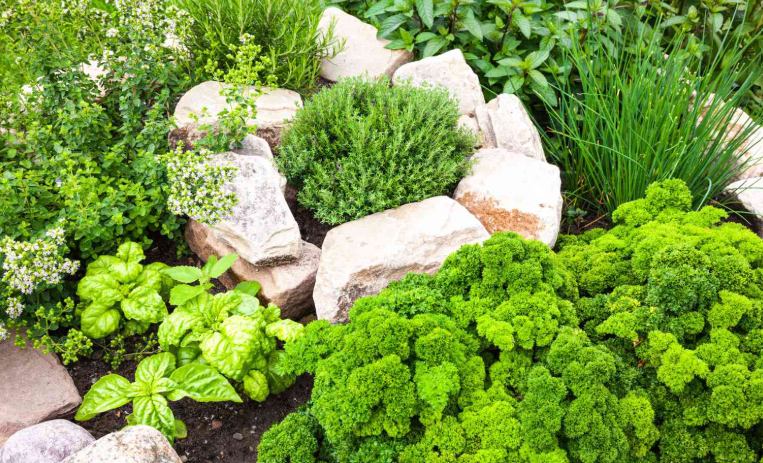
There’s a specific kind of relief that comes with gardening in Zone 9: you stop digging things up. Somewhere north of you, a gardener is hauling a rosemary shrub into the garage before the first hard freeze, or wrapping a bay laurel in burlap and praying it survives the winter in a pot by a sunny window. According to Illinois Extension, rosemary only behaves as a true perennial evergreen shrub in zone 8 and warmer, meaning everywhere colder than that, it’s a plant people baby indoors for 5 months a year just to keep it alive. In Zone 9, you just… don’t do that. You plant it once, by a wall that catches the afternoon sun, and it becomes furniture.
That’s really what this list is about: the herbs that stop being seasonal houseguests and start being permanent residents once you’ve got Zone 9’s long, mild, mostly frost-light winters on your side. A few of them go the other direction entirely, thriving specifically because your summers are hot and humid enough to make cooler-climate herbs miserable. According to a Florida gardening resource covering the Deep South, Thai basil, Cuban oregano, holy basil, and lemongrass are the herbs that shine in exactly the kind of heat and humidity that would send Italian basil, cilantro, and dill bolting to seed within weeks.
So this isn’t really a list of “herbs that survive” Zone 9. It’s a list of herbs that are actually better off here than almost anywhere else in the country. What follows covers 18 of them, along with what makes each one worth the garden space.
Rosemary
Rosemary produces stiff, needle-like, aromatic leaves on a woody shrub that, according to Illinois Extension, can reach 4 to 6 feet tall in warmer growing zones, with some varieties trailing or cascading rather than growing upright. In Zone 9, it stops being a potted houseplant and becomes a genuine landscape shrub, sometimes trained as an informal hedge along a walkway.
It tolerates poor, sandy, well-draining soil better than almost any other herb on this list, and once established, it needs remarkably little supplemental water even through a dry summer.
Bay Laurel
Bay laurel is technically a tree, not a shrub, capable of reaching 10 to 60 feet tall in the wild, though most home gardens keep it considerably smaller through regular pruning. Its glossy, leathery leaves are harvested and dried for cooking, and a single well-tended tree can supply a household’s bay leaf needs indefinitely.
It’s slow-growing and genuinely long-lived, doing well in full sun with consistently moist, well-draining soil, and it tolerates being grown in a large container just as readily as in open ground.
Lemongrass
Lemongrass grows into dense, arching clumps of long, blade-like foliage reaching 4 to 6 feet tall, and according to Clemson’s Home and Garden Information Center, it’s genuinely hardy outdoors specifically in USDA zones 9 through 10. The swollen, pale lower stems are what actually gets harvested and used in cooking, prized throughout Southeast Asian cuisine.
It wants full sun and regular watering through the growing season, and unlike in colder zones where it’s treated as an annual, a Zone 9 planting can be cut back hard each year and simply regrow from its own root clump.
Lemon Verbena
Lemon verbena produces narrow, intensely lemon-scented leaves on a rangy, somewhat sprawling shrub, and according to Clemson Extension, it genuinely needs zones 9 through 10 to survive outdoors year-round, since anywhere colder requires bringing it indoors for winter. Its fragrance is often described as the most purely lemon-scented of any herb grown.
It benefits from a hard pruning in late winter to keep its naturally loose, leggy growth habit in check, and its leaves dry beautifully for tea long after the fresh plant has finished for the season.
Vietnamese Coriander
Vietnamese coriander, also called rau ram, produces narrow, pointed, peppery-flavored leaves on a low, spreading plant that, according to a Portland-area nursery’s herb guide, is genuinely hardy in zone 9 while requiring indoor protection almost everywhere colder. In its native Southeast Asian range it behaves as a forest floor perennial, favoring some afternoon shade rather than blazing full sun.
It wants generous, consistent watering, and in a hot Zone 9 summer, a little shade cloth or a partially shaded bed keeps the leaves tender rather than tough and bitter.
Cuban Oregano
Cuban oregano, also called Mexican mint despite belonging to neither the oregano nor mint families, produces thick, fuzzy, intensely aromatic leaves on a sprawling, succulent-like plant that thrives specifically in heat and humidity. It’s one of the herbs that genuinely performs better in a Florida-style summer than a milder climate would allow.
It roots easily from cuttings, spreads readily as a groundcover in a warm bed, and tolerates considerably more neglect and drought than its lush appearance would suggest.
Thai Basil
Thai basil produces purple-stemmed, anise-scented leaves on a plant that holds up to heat and humidity noticeably better than sweet Italian basil, which tends to bolt to flower and turn bitter once summer temperatures climb. Its licorice-forward flavor is a staple of Southeast Asian cooking.
It wants full sun and consistent moisture, and regularly pinching off flower buds keeps the plant producing tender new leaves throughout a long Zone 9 growing season.
Holy Basil
Holy basil, also called tulsi, produces fuzzy, peppery-sweet leaves on a plant valued both as a culinary herb and, in Ayurvedic tradition, as a medicinal one. Like Thai basil, it’s specifically named among the herbs that thrive in exactly the heat and humidity that make delicate Mediterranean herbs struggle.
It grows readily from seed, tolerates full sun without complaint, and can be harvested repeatedly through the season as long as it’s not allowed to fully flower and set seed too early.
French Lavender
French lavender, along with other Mediterranean lavender types too tender for colder gardens, becomes a genuinely reliable perennial once winters stop dropping below the threshold that kills its roots. Its fragrant purple flower spikes and silvery foliage make it as much an ornamental as a culinary herb.
It demands excellent drainage above nearly everything else, and a Zone 9 gardener’s main job is keeping its roots from sitting in soggy soil during the rainy season rather than worrying about winter cold at all.
Society Garlic
Society garlic produces grass-like leaves and clusters of small pink flowers on a bulb that stays evergreen through a mild Zone 9 winter rather than dying back completely. Its leaves and flowers both carry a mild, usable garlic flavor.
It tolerates poor soil and drought remarkably well once established, making it one of the lower-maintenance edging plants a Zone 9 herb garden can rely on.
Mexican Oregano
Mexican oregano, botanically unrelated to true Mediterranean oregano despite the shared name, produces small, fuzzy leaves with a bold, slightly citrusy, more pungent flavor than its European counterpart. It’s a genuine shrub in warm climates rather than the low, spreading herb most people picture.
It handles heat and drought considerably better than true oregano, and its woody growth habit means it can eventually be treated as a small, informal hedge.
Curry Leaf
Curry leaf produces glossy, aromatic compound leaves on a small tree that releases an intensely savory scent, essential to South Indian and Sri Lankan cooking, when the leaves are bruised or cooked in hot oil. It has no relation to curry powder despite the shared name.
It wants full sun, consistent warmth, and protection from anything approaching frost, since even a Zone 9 cold snap can set it back if the tree isn’t given a sheltered spot.
Ginger
Ginger produces thick, aromatic underground rhizomes beneath tall, reed-like foliage, and while it’s often grown as an annual further north, Zone 9’s mild winters let an established clump persist and expand in the ground year after year. A single planting can be harvested gradually rather than dug up all at once.
It wants rich, consistently moist soil and at least partial shade during the hottest part of a Zone 9 afternoon, since intense, unbroken sun can scorch its broad leaves.
Turmeric
Turmeric, a close relative of ginger, produces similarly rhizomatous roots beneath broad, tropical-looking foliage, and it shares ginger’s ability to overwinter in the ground in a climate that never truly freezes hard. Its bright orange rhizomes are the source of the familiar spice.
It wants the same rich, moist, partially shaded conditions as ginger, and a single clump can be divided and replanted every couple of years as it naturally expands.
Peppermint
Peppermint spreads via aggressive underground runners into a dense, low mat of intensely cooling, menthol-scented foliage, staying evergreen through much of a Zone 9 winter rather than dying back to bare ground. Its vigorous spread makes container planting a genuinely wise precaution.
It wants more consistent moisture than most other herbs on this list, and it tolerates partial shade considerably better than the sun-loving Mediterranean herbs it’s often planted alongside.
Sage
Sage produces silvery-green, velvety leaves on a woody-based perennial that handles Zone 9’s mild winters without any trouble at all, often staying at least partially evergreen year-round. Its robust, savory flavor makes it a staple of both roasted dishes and herbal teas.
It wants full sun and genuinely well-drained soil, since it’s considerably more likely to succumb to root rot in a wet Zone 9 rainy season than to any winter cold.
Thyme
Thyme forms a low, spreading, woody mat of tiny, intensely aromatic leaves that stays evergreen through a Zone 9 winter, functioning almost as much as a groundcover as a culinary herb. Numerous varieties exist, from classic English thyme to lemon-scented types.
It thrives in exactly the lean, well-drained, sun-baked conditions that make many other plants struggle, and it tolerates considerable neglect once its roots are established.
Oregano
Oregano produces small, pungent, savory leaves on a low, spreading perennial that, unlike in colder climates where it dies back hard each winter, stays evergreen or semi-evergreen through a mild Zone 9 cold season. Its intense flavor is a foundation of Mediterranean and Italian cooking.
It wants full sun and lean, well-drained soil, spreading readily enough over a few seasons that it can double as an informal, edible groundcover along a garden path.
Conclusion
Zone 9 provides a long growing season and generally mild winters, allowing gardeners to grow a wide variety of herbs throughout much of the year. Many culinary and aromatic herbs can thrive in these conditions when given suitable sunlight, soil, moisture, and airflow.
Choosing herbs that match the local growing conditions can make maintenance easier and encourage healthy growth. Some herbs prefer the warmer conditions of Zone 9, while others may benefit from afternoon shade or protection during periods of extreme heat.
With proper selection and basic care, a Zone 9 garden can provide fresh herbs across multiple seasons. Growing herbs in garden beds, containers, or dedicated herb gardens can also add fragrance, useful foliage, and seasonal interest to the landscape.