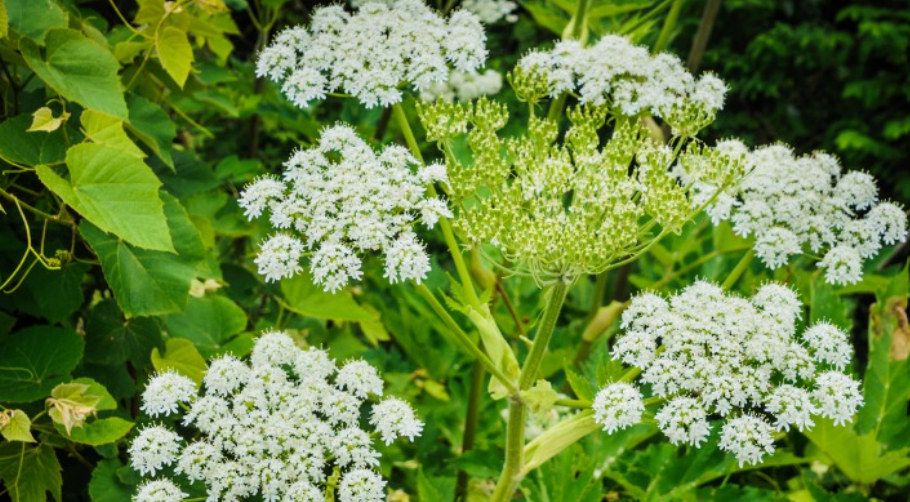
Invasive plants in Ontario are tracked through both provincial legislation and a dedicated advocacy organization, and according to Ontario’s Invasive Species Act, 2015, species can be formally classified as either “prohibited” or “restricted,” each carrying different legal obligations for possession, sale, and transport. Giant hogweed, one of the most dangerous plants on this list, was listed as a provincially noxious weed under Ontario’s Weed Control Act back in 2010 specifically to ban its sale as a garden plant, years before the broader Invasive Species Act came into effect.
That early hogweed listing reflects a genuine public health concern beyond simple ecological disruption. According to a technical document developed by the Ontario Invasive Plant Council in partnership with the province, giant hogweed’s sap can cause a condition called phytophotodermatitis, making skin extremely sensitive to sunlight and capable of producing burns and blisters severe enough to require hospitalization in some documented cases. Wild parsnip, another entry on this list, causes an almost identical reaction, and according to the City of Guelph, it’s frequently confused with several visually similar plants, including Queen Anne’s lace, cow parsnip, angelica, and giant hogweed itself.
The Ontario Invasive Plant Council maintains a comprehensive, continuously updated list of the species causing the most significant ecological damage across the province, spanning wetland invaders, aggressive vines, and widely planted ornamental trees. What follows covers 25 invasive plants in Ontario, along with where each one grows and the data behind its spread.
Giant Hogweed
Giant hogweed produces enormous, umbrella-shaped white flower clusters atop a stem that can reach 10 to 16 feet tall by mid-June, according to regional reporting on Ontario’s most harmful invasive species. Its photoreactive sap causes severe burns and blistering on contact with sunlight, and some documented exposures have required hospitalization.
It grows throughout fields, open forests, ditches, riverbanks, and even city parks across much of southern and central Ontario, and it’s been listed as a provincially noxious weed since 2010 specifically to ban its sale as a garden ornamental.
Wild Parsnip
Wild parsnip produces flat clusters of small yellow flowers on a plant whose sap causes the same sunlight-triggered skin reaction as giant hogweed, resulting in severe irritation, rashes, and inflammation on contact. It’s commonly mistaken for several other carrot-family plants, including Queen Anne’s lace, cow parsnip, and giant hogweed itself.
It grows throughout roadsides and disturbed fields across Ontario, and it should never be touched directly, with protective clothing recommended for anyone attempting removal.
Dog-Strangling Vine
Dog-strangling vine produces small, star-shaped dark purple flowers on a twining vine that spreads both above ground and through an extensive root system, making it difficult to eliminate through pulling alone. Its milkweed-like appearance frequently fools monarch butterflies into laying eggs on it, where the resulting caterpillars fail to survive.
It grows throughout old fields, forest edges, and roadsides across much of southern Ontario, forming dense monocultures that displace native meadow and woodland vegetation.
Garlic Mustard
Garlic mustard produces small clusters of white, 4-petaled flowers atop a biennial plant whose roots release chemicals into the surrounding soil that actively suppress the germination of nearby native plants. A single mother plant can produce thousands of seeds that remain viable in the soil for years.
It grows throughout wooded areas across southern Ontario, threatening spring ephemerals that can’t compete with its early, aggressive growth.
Japanese Knotweed
Japanese knotweed produces hollow, bamboo-like stems that can push through cracks in pavement and foundations as a colony expands, spreading through an extensive underground rhizome network that extends well beyond the visible canes. Even a small fragment of rhizome left in the soil can regenerate an entirely new colony the following season.
It grows in scattered infestations throughout Ontario, particularly along riverbanks, roadsides, and disturbed urban lots.
Japanese Barberry
Japanese barberry produces small, oval leaves and bright red berries on a dense, spiny shrub originally valued for its ornamental foliage. Research elsewhere has linked dense barberry thickets to higher populations of ticks, since the humid microclimate beneath the shrub favors both tick survival and their small mammal hosts.
It grows throughout woodlands and forest edges across southern Ontario, forming dense stands that few native plants can successfully compete against.
Multiflora Rose
Multiflora rose produces arching, thorny canes lined with clusters of small white flowers, forming dense, nearly impassable thickets wherever it’s left unmanaged. A single mature shrub can produce hundreds of thousands of seeds in a year, widely dispersed by birds through fall and winter.
It grows throughout pastures, fence rows, and forest edges across southern Ontario.
Oriental Bittersweet
Oriental bittersweet produces a woody, twining vine capable of climbing high into a tree canopy, eventually girdling and killing its host through a combination of constriction and accumulated weight. Its bright orange-yellow seed capsules split open in fall to reveal striking red seeds, a display that’s ironically helped spread the vine further since it remains popular for autumn wreaths.
It grows throughout forest edges and disturbed woodland across southern Ontario, increasingly displacing the considerably less aggressive American bittersweet native to the same region.
Periwinkle
Periwinkle produces glossy evergreen leaves and simple, 5-petaled purple-blue flowers on a trailing vine capable of forming a dense mat that smothers native woodland groundcover. Its evergreen foliage lets it outcompete native spring ephemerals even through the winter months.
It grows throughout woodland edges and disturbed ground across southern Ontario, commonly escaping from old cemetery and homestead plantings into adjacent natural areas.
Phragmites
Phragmites, referring specifically to the invasive non-native lineage of common reed, forms dense, towering stands reaching 15 feet or more, displacing native wetland vegetation across huge areas of Ontario’s marshes and shorelines. It spreads both by seed and by an extensive rhizome network capable of pushing out nearly everything growing nearby.
It grows throughout wetlands and shorelines across the province, forming monocultures so dense that almost nothing else can grow beneath the towering canopy it creates.
Purple Loosestrife
Purple loosestrife produces tall spikes of vivid magenta-purple flowers each summer, a display so attractive that it was originally introduced to gardens before its aggressive wetland behavior became apparent. A single mature plant can produce well over a million seeds in a season.
It grows throughout marshes and wetland margins across Ontario, forming dense monocultures that crowd out the native plants waterfowl depend on.
Reed Canary Grass
Reed canary grass forms dense, tall stands of coarse, wide blades capable of reaching 6 feet or more, spreading aggressively through both an extensive rhizome system and abundant seed production. It’s considered one of the most difficult wetland grasses to control once established.
It grows throughout wet meadows, ditches, and streambanks across Ontario.
Spotted Knapweed
Spotted knapweed produces grayish-green, deeply divided leaves and thistle-like purple-pink flower heads ringed with distinctive black-tipped bracts. It releases an allelopathic compound from its roots that suppresses the germination and growth of neighboring plants.
It grows throughout dry fields and roadsides across Ontario, capable of forming dense monocultures on disturbed, sunny ground.
Tree-of-Heaven
Tree-of-heaven produces large, compound leaves and grows remarkably fast even by invasive tree standards, with root sprouts capable of reaching several feet in their very first year alone. Its rapid, suckering growth makes it notoriously difficult to eliminate through cutting alone.
It grows throughout much of southern Ontario, particularly along roadsides, rail corridors, and disturbed urban lots, and it also serves as the preferred host plant for the invasive spotted lanternfly.
White Mulberry
White mulberry produces variably shaped leaves on the same tree, some smooth-edged and others deeply lobed, a trait that can make identification by leaf shape alone unreliable. It also hybridizes readily with the native red mulberry, a genuine conservation concern for the less common native species.
It grows throughout much of southern Ontario, particularly in urban and disturbed areas where birds readily disperse its seeds.
White Sweet Clover
White sweet clover produces tall, slender spikes of small white flowers on a biennial plant that can reach several feet tall in its second year. Its deep taproot makes it notably drought tolerant, and its abundant, fragrant flowers make it a valuable nectar source even as its aggressive seeding crowds out native prairie plants.
It grows throughout much of Ontario, commonly found in disturbed soil along roadsides and in restoration sites.
Winged Euonymus
Winged euonymus, also called burning bush, produces distinctive corky, wing-like ridges along its stems and intensely saturated red fall foliage. It’s restricted from sale in several jurisdictions given its documented tendency to escape cultivation and spread via bird-dispersed seed into forest understories.
It grows in scattered naturalized populations throughout southern Ontario, forming dense stands that crowd out native shrubs.
Yellow Iris
Yellow iris, also called yellow flag iris, produces showy yellow flowers on an aquatic and wetland perennial that forms dense, thick rhizome mats along shorelines. Every part of the plant is toxic if ingested, and its dense growth can alter natural water flow in the wetlands it invades.
It grows throughout marshes, ditches, and pond edges across Ontario, displacing native cattails and other wetland vegetation.
Autumn Olive
Autumn olive produces bright green leaves that are distinctively silver underneath, with strongly fragrant cream to pale yellow flowers blooming each spring. Because it fixes atmospheric nitrogen through its root system, it can alter soil chemistry in ways that favor its own continued spread over native vegetation.
It grows throughout old fields and disturbed ground across southern Ontario, and its abundant, easily dispersed berries have made it difficult to eliminate once established.
Black Locust
Black locust produces fragrant white flower clusters each spring and fern-like compound leaves on a fast-growing tree that spreads aggressively through root suckers, allowing a single tree to form an entire grove without any seed dispersal at all. Its extensive cloning habit and sharp thorns make removal a genuinely difficult, multi-year undertaking.
It grows throughout much of southern Ontario, particularly on disturbed, sandy, or poor soils.
Buckthorn
Buckthorn, covering both common and glossy species, leafs out earlier in spring and holds its leaves later into fall than most native trees and shrubs, giving it a considerable competitive advantage. Its berries have a noticeable laxative effect on the birds that eat them, which paradoxically helps disperse its seeds more widely.
It grows extensively throughout woodlands and fence rows across southern Ontario, forming dense understory thickets that shade out native tree seedlings.
Norway Maple
Norway maple closely resembles the native sugar maple at a glance, distinguished most reliably by the milky sap that oozes from a broken leaf stem, a trait sugar maple entirely lacks. It casts notably dense shade that suppresses the growth of native wildflowers and tree seedlings beneath its canopy.
It grows throughout much of southern Ontario, planted extensively as a street tree before its invasive tendencies in natural forest settings became fully understood.
Manitoba Maple
Manitoba maple, also called box elder, produces compound leaves unlike the simple lobed leaves typical of most other maples, on a fast-growing, weak-wooded tree that readily self-seeds into disturbed ground. Its brittle branches are prone to storm damage, and its seeds germinate prolifically in gardens and vacant lots alike.
It grows throughout much of Ontario, particularly in urban and disturbed areas, often considered a persistent volunteer tree rather than a deliberate planting.
Goutweed
Goutweed, also called bishop’s weed, produces flat-topped clusters of tiny white flowers atop a fast-spreading groundcover that can overtake an entire garden bed within just a couple of growing seasons. Its extensive underground rhizome network makes it notoriously difficult to eliminate, since even a small root fragment left behind can regenerate the entire infestation.
It grows in shaded gardens and disturbed woodland edges throughout southern Ontario, having escaped widely from historic ornamental groundcover plantings.
Himalayan Balsam
Himalayan balsam produces showy pink to purple flowers on a tall annual capable of reaching over 6 feet in a single growing season, with explosive seed pods that fling seeds several feet from the parent plant. Its rapid growth and prolific seeding let it quickly dominate the moist streamside habitat it favors.
It grows along riverbanks and wet ditches throughout parts of Ontario, capable of forming dense stands that shade out native streamside vegetation within a single season.
Conclusion
Invasive plants in Ontario can spread across forests, wetlands, grasslands, roadsides, gardens, and other habitats. They may compete with native plants for sunlight, water, nutrients, and space, and some species can alter natural habitats and affect local biodiversity.
Learning to identify invasive plants is an important step in limiting their spread. Early detection and regular monitoring can help find new populations before they become firmly established, while appropriate management can reduce their impact on native vegetation.
Protecting Ontario’s natural areas requires continued attention from homeowners, gardeners, land managers, and communities. Choosing non-invasive plants, preventing the movement of seeds and plant material, and managing established populations can help maintain healthy and diverse ecosystems throughout the province.