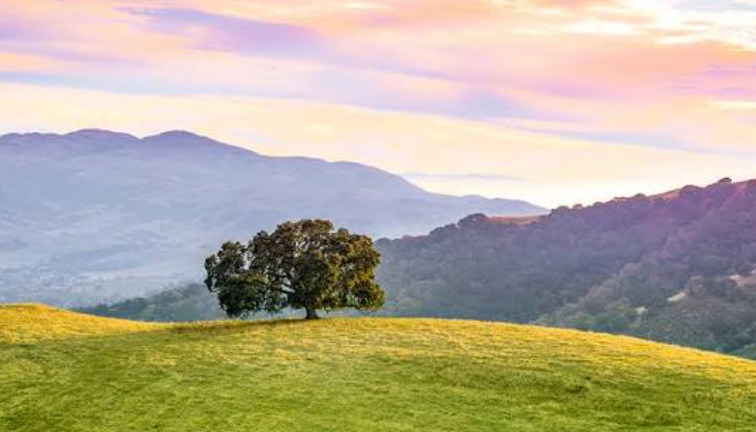
Types of oak trees in California make up one of the richest oak floras of any U.S. state, and according to UC Master Gardeners of San Luis Obispo County, the state is home to 15 native oak species, though only 8 of those actually reach full tree size, with the rest remaining shrubby chaparral species even at maturity. To reach a fuller count of 21 distinct oak trees found in California, this list also includes tanoak, a broadleaf evergreen long grouped with true oaks despite belonging to a separate genus, along with a couple of naturally occurring hybrids that form wherever 2 parent oak species grow close enough together to cross-pollinate.
California’s oaks split into 2 major subgroups with genuinely different vulnerabilities, and forest health researchers have found that species in the red oak group, including California black oak, coast live oak, and canyon live oak, are particularly susceptible to sudden oak death, a fungus-like pathogen first identified in 1995 that can transition an apparently healthy tree to a dead one within weeks. White oak group species, including valley oak and blue oak, appear considerably more resistant to that same disease.
According to UC Agriculture and Natural Resources’ oak woodland habitat program, California’s oak-dominated woodlands are classified into 5 major habitat types based on which species dominates, including Valley Oak Woodland, Blue Oak Woodland, Blue Oak-Foothill Pine Woodland, Coastal Oak Woodland, and Montane Hardwood Forest, each supporting a genuinely different community of associated wildlife. What follows covers 21 types of oak trees in California, along with where each one grows and the data behind its distribution.
Valley Oak
Valley oak is the largest oak native to North America, capable of living more than 500 years, with deeply lobed, deciduous leaves that carry a soft, velvet-like texture and turn yellow-orange each fall. Its pale gray, narrowly furrowed bark and cone-shaped acorns, which begin dropping in October, make it one of the more recognizable oaks in the state.
It grows throughout California’s Central Valley and Coast Range on deep, well-drained alluvial soil, generally found below 2,400 feet, though scattered populations reach as high as 5,600 feet in the south Coast Range and Tehachapi Mountains.
Blue Oak
Blue oak produces lobed leaves with a distinctive bluish-gray tint, frequently mistaken for valley oak at a glance despite forming a somewhat smaller tree overall. It dominates entire woodlands so completely that blue oak alone can make up 80 to 100% of the trees present in a given stand.
It grows in a nearly continuous band along the Sierra Nevada-Cascade foothills bordering the Sacramento-San Joaquin Valley, also found along the Tehachapi Mountains and the state’s interior Coast Range foothills.
Coast Live Oak
Coast live oak produces oval, spiny-edged leaves that cup and curl inward at the margins, remaining evergreen year-round rather than dropping in fall. Young trees develop bark resembling an elephant’s skin, gray and fairly smooth but bunched where branches split from the trunk, developing deeper furrows with age.
It grows throughout California’s coastal ranges south from Mendocino County, tolerating a wide range of soil and moisture conditions better than most other native oak species.
Interior Live Oak
Interior live oak closely resembles coast live oak in its evergreen, spiny-edged foliage, distinguished by leaves that lack hairs on the underside and by a shorter overall lifespan than its coastal relative. It commonly grows as a shrubby chaparral form in addition to its tree form.
It grows widely below 5,000 feet elevation throughout inland California, developing a full, rounded canopy typically as broad as or broader than it is tall.
California Black Oak
California black oak produces lobed leaves with distinctly pointed tips and a fringed edge where the acorn cap wraps around the nut, turning attractive shades of yellow and orange each fall as one of the state’s few deciduous oaks outside the valley oak and blue oak. It belongs to the red oak subgroup, making it particularly susceptible to sudden oak death.
It grows throughout mixed-conifer and oak woodland habitats across much of California, often found at higher elevations alongside valley oak in Coast Range settings.
Canyon Live Oak
Canyon live oak, sometimes called golden cup oak for the golden, shallow cap on its acorns, is the most widespread oak species in California, ranging from Oregon south into Baja California and surviving at elevations from sea level up to 9,000 feet. Its evergreen leaves are geometrically flat, a trait not shared by most other California oak species.
It grows throughout a remarkably broad elevation and habitat range statewide, taking on a narrow, cylindrical form in dense forest and a broader, more spreading shape in open, exposed sites.
Engelmann Oak
Engelmann oak produces oval leaves with smooth edges and a distinctive bluish tint, developing gnarled trunks and winding, swooping branches as trees mature. It occupies one of the smallest native ranges of any California oak.
It grows in a limited area of southern California, sometimes forming nearly pure stands and other times mixing with coast live oak in the same coastal oak woodland habitat.
Oregon White Oak
Oregon white oak produces lobed leaves with rounded rather than pointed tips and a distinctively straight-edged acorn cap, a deciduous species belonging to the more disease-resistant white oak subgroup. It dominates the moister, northern range of California’s coastal oak woodland community.
It grows throughout northern California’s coastal ranges, commonly associated with California black oak, canyon live oak, and interior live oak in the same woodland habitat.
Scrub Oak
Scrub oak produces small, spiny, evergreen leaves on a dense, multi-stemmed shrub that rarely reaches true tree height, forming a major component of California’s chaparral plant community. Its low, tangled growth habit provides significant cover and forage for chaparral wildlife.
It grows throughout chaparral habitat across much of California, tolerating the dry, fire-prone conditions typical of that ecosystem.
Leather Oak
Leather oak produces small, thick, leathery evergreen leaves on a low shrub specifically adapted to serpentine soil, a notoriously mineral-poor and toxic substrate that excludes most other plant species entirely. Its specialization to that unusual soil type has made it a genuine indicator species for serpentine habitat.
It grows in scattered serpentine soil outcrops throughout parts of California, rarely found anywhere else given its narrow soil requirements.
Island Oak
Island oak produces elongated, evergreen leaves on a tree restricted almost entirely to California’s Channel Islands, considered one of the rarest oak species in the state given its limited native range. Its isolated island population has made it a specific conservation priority.
It grows only on a handful of California’s Channel Islands, absent from the mainland entirely in its natural range.
Huckleberry Oak
Huckleberry oak produces small, evergreen leaves resembling those of a huckleberry shrub rather than a typical oak, forming a low, spreading groundcover shrub rather than any recognizable tree form. Its diminutive size and unusual foliage make it one of the more visually distinctive California oak species.
It grows at higher elevations in California’s mountain ranges, favoring rocky, exposed subalpine habitat.
Sadler Oak
Sadler oak produces broad, evergreen leaves on a low, spreading shrub found in a relatively narrow range along California’s northern border region. Its restricted distribution makes it one of the lesser-known native oak species in the state.
It grows in scattered locations in far northern California and adjacent southern Oregon, favoring shaded forest understory habitat.
Muller Oak
Muller oak produces small, spiny, evergreen leaves on a desert-adapted shrub found in the arid mountain ranges of southeastern California. Its tolerance for extreme heat and minimal rainfall sets it apart from most of the state’s other native oak species.
It grows in scattered desert mountain locations throughout southeastern California, favoring rocky slopes and canyon habitat.
Tucker Oak
Tucker oak produces small, evergreen leaves on a shrub closely related to muller oak, similarly adapted to the hot, dry conditions of California’s desert mountain ranges. The 2 species are sometimes difficult to distinguish without close examination of leaf and acorn detail.
It grows in scattered desert mountain locations throughout parts of southern California.
Palmer’s Oak
Palmer’s oak produces small, spiny, evergreen leaves on a desert shrub capable of forming remarkably long-lived clonal colonies, with some documented individual clones estimated to be thousands of years old. That extreme longevity comes from the plant’s ability to regenerate from its root crown indefinitely.
It grows in scattered desert locations throughout southeastern California, favoring the same arid mountain habitat as several other regional scrub oak species.
Shreve Oak
Shreve oak, a member of the red oak subgroup, forms a shrubby tree rarely exceeding 30 feet, often found growing near coast redwoods in low-elevation valleys of California’s Coast Range. Its close relationship to the Santa Cruz Island oak has led some researchers to reconsider the taxonomic boundaries between the 2 species.
It grows in scattered low-elevation Coast Range locations throughout central California, favoring the same foggy, moist habitat that supports nearby redwood groves.
Tanoak
Tanoak, despite its common name and oak-like acorns, actually belongs to an entirely separate genus from true California oaks, though it’s long been grouped alongside them given its similar appearance and ecological role. It’s highly susceptible to sudden oak death, and the disease has caused significant mortality in tanoak populations across its range.
It grows throughout coastal forests in northern and central California, commonly found alongside coast live oak and canyon live oak on moister sites.
Oracle Oak
Oracle oak is a naturally occurring hybrid between California black oak and interior live oak, combining traits from both parent species wherever their ranges overlap closely enough for cross-pollination. Its intermediate leaf shape and semi-evergreen habit can make field identification genuinely difficult.
It grows in scattered locations throughout California wherever both parent species grow in close proximity.
Alvord Oak
Alvord oak is a naturally occurring hybrid between valley oak and scrub oak, combining the deciduous, deeply lobed foliage of one parent with the smaller stature of the other. Its intermediate characteristics reflect its mixed parentage.
It grows in scattered locations throughout parts of California wherever both parent species overlap.
Turbinella Oak
Turbinella oak, also called Sonoran scrub oak, produces small, spiny, evergreen leaves on a desert-adapted shrub extending into California from its more extensive range across the broader Southwest. Its tolerance for extreme heat and drought lets it survive in some of the driest habitat occupied by any oak species in the state.
It grows in scattered desert locations in far southeastern California, at the edge of its broader Southwestern range.
Conclusion
California is home to a wide variety of oak trees, ranging from large valley and coast live oaks to smaller species adapted to dry hillsides and mountainous areas. Each type has its own characteristics, growing conditions, and role within California’s diverse landscapes.
Understanding the differences between oak species can make identification easier and help with choosing suitable trees for gardens, properties, and restoration projects. Factors such as soil, moisture, elevation, and local climate can influence which oak species grows best in a particular location.
California’s native oaks are also important components of many ecosystems, providing food and shelter for wildlife while contributing to healthy landscapes. Protecting established oak trees and selecting appropriate native species for new plantings can help preserve these valuable trees for future generations.