Invasive plant species in Canada are regulated through a genuinely fragmented system rather than a single unified national law, and according to the Canadian Coalition for Invasive Plant Regulation, the country relies on 2 federal statutes, each with a narrow and distinct purpose, rather than a comprehensive invasive species framework. The Plant Protection Act focuses specifically on protecting agriculture and forestry from plant pests and diseases, while the Seeds Act, through its associated Weed Seeds Order, exists to ensure seed quality and purity for agricultural production rather than to address biodiversity loss directly.
Both of those federal statutes are administered by the Canadian Food Inspection Agency, and according to the CFIA’s own invasive plants policy, federal regulatory action focuses primarily on plants not yet established in Canada or on a limited number of species regulated for specific plant-health reasons, leaving most broader ecological invasive species management to the provinces. That’s exactly why Ontario, British Columbia, and other provinces each maintain their own separate invasive plant lists and legislation, layered on top of whatever narrower federal seed and pest regulations happen to apply.
That federal-provincial patchwork can produce some genuinely inconsistent results from one jurisdiction to the next. According to a CFIA pest risk management document, jointed goatgrass was added to the federal Weed Seeds Order as a prohibited noxious weed seed in 2005 and is separately listed as a provincial noxious weed in British Columbia, while Saskatchewan was still in the process of adding the same species to its own provincial list years later, illustrating just how unevenly a single invasive plant’s legal status can be recognized across the country. What follows covers 30 invasive plant species in Canada, along with where each one grows and the data behind its spread.
Jointed Goatgrass
Jointed goatgrass produces narrow, grass-like foliage closely resembling wheat, making it a persistent contaminant in grain crops that’s genuinely difficult to separate out during harvest and processing. It was added to Canada’s federal Weed Seeds Order as a Class 1 Prohibited Noxious Weed Seed in 2005, a designation that makes its movement illegal both as a standalone seed and as a contaminant mixed into other seed shipments.
It’s regulated as a provincial noxious weed in British Columbia, with Saskatchewan pursuing similar provincial-level restrictions, and its most likely pathway into Canada remains general range expansion from infested U.S. states that share a border with the country.
Giant Foxtail
Giant foxtail produces dense, bristly seed heads on a fast-growing annual grass first added to Canada’s Weed Seeds Order as a Class 1 Prohibited Noxious Weed Seed in 2005. Its classification has since been reconsidered as more distribution data became available, with the CFIA proposing to reclassify it to the less restrictive Class 2 Primary Noxious category, illustrating how a species’ regulatory status can shift as its established range within the country becomes better understood.
It grows in scattered agricultural locations across parts of Canada, primarily introduced and spread through contaminated crop seed shipments rather than through deliberate ornamental planting. Its presence is monitored closely enough that even a reclassification to a less restrictive category still requires ongoing distribution surveys.
Purple Loosestrife
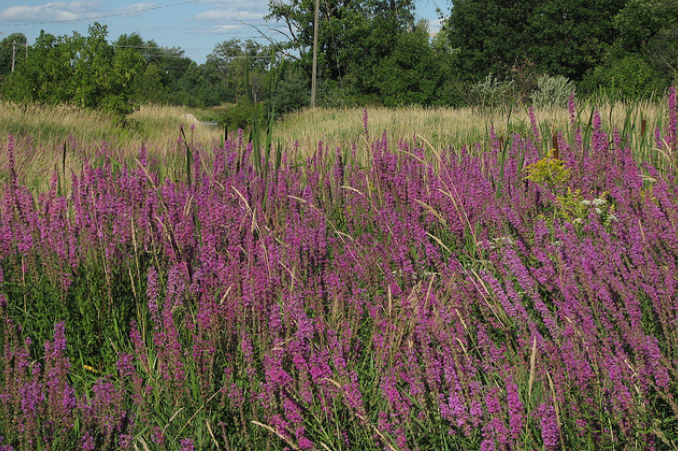
Purple loosestrife produces tall spikes of vivid magenta-purple flowers each summer, a display so attractive that it was originally introduced to gardens across the country before its aggressive wetland behavior became fully apparent. A single mature plant can produce well over a million seeds in a season, an output that has allowed it to overwhelm native wetland vegetation from coast to coast.
It grows throughout marshes and wetland margins across nearly every Canadian province, forming dense monocultures that crowd out the native plants waterfowl depend on for food and cover.
Japanese Knotweed
Japanese knotweed produces hollow, bamboo-like stems that can push through cracks in pavement and building foundations as a colony expands, spreading through an extensive underground rhizome network that extends well beyond the visible canes. Even a small fragment of rhizome left in the soil after removal attempts can regenerate an entirely new colony the following season, making it one of the most expensive invasive plants to fully eliminate in the country.
It grows in scattered infestations across much of southern Canada, particularly along riverbanks, roadsides, and disturbed urban lots in Ontario, Quebec, and British Columbia.
Giant Hogweed
Giant hogweed produces enormous, deeply lobed leaves and a thick, hollow stem marked with distinctive purple blotches, capable of towering well over head height in favorable growing conditions. Its sap contains compounds that react violently with sunlight on exposed skin, causing severe burns and blistering that can take months to fully heal, prompting several provinces to issue specific public safety advisories about the plant.
It grows in scattered, closely monitored infestations primarily in Ontario and parts of the Maritime provinces, and residents are actively encouraged to report suspected sightings rather than attempt removal without proper protective equipment.
Garlic Mustard
Garlic mustard produces small clusters of white, 4-petaled flowers atop a biennial plant whose roots release chemicals into the surrounding soil that actively suppress the germination of nearby native plants. A single mother plant can produce thousands of seeds that remain viable in the soil for up to a decade, making a single missed season of control enough to undo years of previous removal work in an affected woodland.
It grows throughout wooded areas across much of eastern Canada, threatening spring ephemerals like trilliums and trout lilies that can’t compete with its early, aggressive growth each spring.
Common Buckthorn
Common buckthorn leafs out earlier in spring and holds its leaves later into fall than most native trees, giving it a considerable competitive advantage over the forest species it displaces across much of the country. Its small, dark berries have a noticeable laxative effect on the birds and other animals that eat them, which paradoxically helps spread its seeds more widely across the landscape.
It grows extensively throughout woodlands and fence rows across southern and central Canada, forming dense understory thickets that shade out native tree seedlings before they have a chance to establish.
Glossy Buckthorn
Glossy buckthorn closely resembles common buckthorn but favors wetter ground and lacks the thorns typically found at its close relative’s branch tips. Its berries ripen through a progression of red to purple to black on the same plant simultaneously, and like common buckthorn, they carry a similar laxative effect that helps disperse its seeds across the wet habitat it favors.
It grows throughout wet woodlands and swamp margins across much of eastern and central Canada, forming dense thickets in exactly the kind of soggy, poorly drained ground many native shrubs struggle to tolerate.
Leafy Spurge
Leafy spurge produces small, yellowish-green flower bracts on a deeply rooted perennial containing a milky, toxic sap capable of causing skin irritation and posing a genuine risk to grazing livestock across the Prairie provinces. Its extensive root system, extending many feet into the soil, makes it one of the most economically damaging agricultural weeds found anywhere on the Canadian Prairies.
It grows throughout pastures and disturbed rangeland across Alberta, Saskatchewan, and Manitoba, capable of reducing usable grazing land by a significant margin wherever it becomes established.
Spotted Knapweed
Spotted knapweed produces grayish-green, deeply divided leaves and thistle-like purple-pink flower heads ringed with distinctive black-tipped bracts that give the plant its common name. It releases an allelopathic compound from its roots that suppresses the germination and growth of neighboring plants, giving it a considerable competitive advantage over native rangeland species across western Canada.
It grows throughout rangeland and disturbed ground across British Columbia and the Prairie provinces, classified as a noxious weed in multiple jurisdictions given how effectively it can spread across an entire pasture.
Diffuse Knapweed
Diffuse knapweed closely resembles spotted knapweed, distinguished by smaller white to pale purple flower heads and a distinctly branched, bushy growth habit that lets mature plants break off and tumble across open rangeland once dry. That tumbling growth habit scatters seed considerably further than a stationary plant ever could, helping the species colonize new ground rapidly.
It grows throughout dry rangeland across British Columbia’s interior, competing directly with native bunchgrasses for limited moisture and soil nutrients.
Canada Thistle
Canada thistle, despite its misleading common name, is actually native to Europe and parts of Asia, producing spiny-edged, deeply lobed leaves and small purple flower heads atop an extensive underground root system. A single root system can spread outward and colonize an entire field within a few growing seasons, and mowing alone often makes an infestation worse by stimulating even more vigorous root sprouting.
It grows throughout pastures, fields, and roadsides across virtually every Canadian province, classified as a noxious weed nationwide despite the confusing name suggesting Canadian origin.
Scentless Chamomile
Scentless chamomile produces small, daisy-like white flowers with a yellow center on a fast-growing annual or short-lived perennial capable of producing enormous quantities of seed in a single season. Unlike true chamomile, it lacks any pleasant fragrance when crushed, a detail that helps distinguish it from beneficial herb-garden relatives.
It grows throughout agricultural fields and roadsides across the Prairie provinces, considered a significant crop contaminant given how readily its seeds mix with harvested grain.
Baby’s Breath
Baby’s breath produces clouds of tiny white flowers on a deep-rooted perennial originally introduced for use in floral arrangements before escaping into sensitive prairie and sand dune ecosystems. Its extensive taproot allows a mature plant to survive and continue producing seed even after visible top growth has been removed or burned back by fire.
It grows throughout Prairie grasslands and sand dune habitat in Alberta, Saskatchewan, and Manitoba, considered a serious threat to the specialized native plant communities adapted to that fragile, sandy environment.
Yellow Toadflax
Yellow toadflax, also called butter and eggs, produces snapdragon-like yellow and orange flowers on a rhizomatous perennial capable of forming dense colonies that spread well beyond any original garden planting. Its extensive underground root system makes hand-pulling largely ineffective, since any root fragment left behind readily regenerates an entirely new plant.
It grows throughout roadsides and disturbed fields across much of Canada, particularly the Prairie provinces and British Columbia’s interior, often forming dense stands that displace native grassland species over time.
Dalmatian Toadflax
Dalmatian toadflax closely resembles yellow toadflax in flower shape and color, distinguished by broader, waxy, blue-green leaves that clasp directly around the stem. Its deep, extensive root system and prolific seed production have made it one of the more persistent rangeland weeds found throughout the interior of British Columbia.
It grows throughout dry rangeland and roadsides across British Columbia and parts of Alberta, competing aggressively with native bunchgrass species for limited moisture.
Oxeye Daisy
Oxeye daisy produces the familiar white-petaled, yellow-centered daisy flower on a plant that spreads aggressively through both seed and shallow rhizomes once established in a meadow or pasture. A single plant can produce over 200 seeds per flower head, and cattle generally avoid grazing it, letting it spread more freely than more palatable native forage growing nearby.
It grows throughout meadows and roadsides across most of Canada, often included in wildflower seed mixes despite its documented tendency to escape and naturalize well beyond an intended planting.
Wild Parsnip
Wild parsnip produces yellow, umbrella-shaped flower clusters atop a grooved, hollow stem, its sap containing compounds that react with sunlight to cause severe burns and blistering on any exposed skin that contacts it. Because it commonly grows along the same roadsides and trails Canadians use for recreation, it poses a genuinely practical hazard beyond its simple competitive impact on other vegetation.
It grows throughout roadsides and disturbed fields across much of southern Canada, particularly Ontario and Quebec, and protective clothing is strongly recommended for anyone attempting to remove it by hand.
Dog-Strangling Vine
Dog-strangling vine produces small, star-shaped dark purple flowers on a twining vine that spreads both above ground and through an extensive root system, making it genuinely difficult to eliminate through pulling alone. Its milkweed-like appearance frequently fools monarch butterflies into laying eggs on it, where the resulting caterpillars fail to survive, a genuine conservation concern given the monarch’s already declining population.
It grows throughout old fields, forest edges, and roadsides across much of southern Ontario and parts of Quebec, forming dense monocultures that displace native meadow and woodland vegetation.
Eurasian Watermilfoil
Eurasian watermilfoil produces feathery, finely divided underwater foliage that can grow to the water’s surface and spread into thick floating mats, fragmenting easily enough that boat traffic has become a primary way the plant spreads between separate lakes. A single colony can eventually cover the surface of an entire small bay or shallow lake, crowding out native aquatic plants in the process.
It grows throughout lakes and slow-moving waterways across much of southern Canada, considered one of the most widespread aquatic invasive plants found anywhere in the country.
Flowering Rush
Flowering rush produces clusters of showy pink flowers atop a tall, grass-like aquatic plant capable of forming dense stands along shorelines and in shallow water. Its extensive rhizome system allows it to spread aggressively once established, and it’s increasingly displacing native shoreline vegetation in several Canadian waterways.
It grows along lake and river shorelines in parts of Ontario, Manitoba, and British Columbia, spreading readily from fragmented root pieces disturbed by boat propellers or shoreline maintenance activity.
European Frog-bit
European frog-bit produces small, floating, heart-shaped leaves resembling a miniature water lily, forming dense surface mats capable of blocking light and reducing oxygen levels in the water below. Its rapid recent spread through connected waterway systems has drawn increasing regulatory attention in several provinces, particularly given how quickly a small founding population can expand.
It grows throughout slow-moving rivers, marshes, and quiet bays across much of eastern Canada, spreading readily whenever fragments are transported on boats or by waterfowl moving between water bodies.
Himalayan Balsam
Himalayan balsam produces showy pink to purple flowers on a tall annual capable of reaching over 6 feet in a single growing season, with explosive seed pods that fling seeds several feet from the parent plant. Its rapid growth and prolific seeding let it quickly dominate the moist streamside habitat it favors, often outcompeting native riparian wildflowers within just a couple of seasons.
It grows along riverbanks and wet ditches in parts of British Columbia and southern Ontario, capable of forming dense stands that shade out native streamside vegetation.
English Ivy
English ivy is an evergreen climbing and groundcover vine that spreads via both seed and rooting stems, planted for decades as low-maintenance landscaping before its invasive woodland behavior became widely recognized across the milder parts of the country. Once a vine climbs high enough into full sun, its leaf shape changes from the familiar lobed juvenile form to a simpler, unlobed adult leaf capable of flowering and fruiting.
It grows throughout coastal British Columbia and parts of southern Ontario as both a cultivated groundcover and an escaped woodland invasive, forming a dense mat capable of smothering entire mature trees.
Periwinkle
Periwinkle, an escaped groundcover, produces glossy evergreen leaves and simple, 5-petaled purple-blue flowers on a trailing vine capable of forming a dense mat that smothers native woodland groundcover. Its evergreen foliage lets it outcompete native spring ephemerals even through the winter months, when most other groundcover plants remain dormant.
It grows throughout woodland edges and disturbed ground across southern Canada, commonly escaping from historic cemetery and homestead plantings into adjacent natural areas.
Norway Maple
Norway maple closely resembles the native sugar maple at a glance, distinguished most reliably by the milky sap that oozes from a broken leaf stem, a trait sugar maple entirely lacks. It casts notably dense shade that suppresses the growth of native wildflowers and tree seedlings beneath its canopy, a genuine concern given how widely it was planted as a street tree throughout Canadian cities.
It grows throughout much of southern Canada, particularly Ontario and Quebec, forming dense monocultures in some urban-adjacent forest fragments where its seedlings can eventually outnumber every native tree species combined.
Tree of Heaven
Tree of heaven produces large, compound leaves and grows remarkably fast even by invasive tree standards, with root sprouts capable of reaching several feet in their very first year alone. Its rapid, suckering growth habit makes it notoriously difficult to eliminate through cutting alone, since removing the visible trunk typically triggers even more vigorous regrowth from the root system.
It grows in scattered locations throughout southern Ontario, particularly along roadsides and disturbed urban lots, and it also serves as the preferred host plant for the invasive spotted lanternfly, a pest actively being monitored for in the region.
Reed Canary Grass
Reed canary grass forms dense, tall stands of coarse, wide blades capable of reaching 6 feet or more, spreading aggressively through both an extensive rhizome system and abundant seed production. It’s considered one of the most difficult wetland grasses to control once established, tolerating both flooding and periods of drier soil equally well across a wide range of Canadian climates.
It grows throughout wet meadows, ditches, and streambanks across most of Canada, forming near-monocultures in some disturbed wetland habitat where few native plants can compete for the same limited light and moisture.
Common Reed
Common reed, referring specifically to the invasive non-native lineage of Phragmites, forms dense, towering stands reaching 15 feet or more, displacing native wetland vegetation across huge areas of wetland and shoreline habitat nationwide. It spreads both by seed and by an extensive rhizome network capable of pushing out nearly everything else growing nearby.
It grows throughout wetlands and shorelines across much of southern Canada, particularly severe along parts of the Great Lakes and St. Lawrence River shoreline.
Russian Olive
Russian olive produces narrow, silvery-gray leaves and small, hard, olive-shaped fruit, closely related to the shrubbier autumn olive but distinguished by longer, narrower foliage. It reproduces both by seed and by root sprouting, with fruit readily eaten and dispersed by numerous bird species that help carry it well beyond its original planting site.
It grows throughout the Prairie provinces and parts of British Columbia, particularly along riverbanks and floodplains, where it forms dense stands that crowd out native streamside vegetation.
Conclusion
Invasive plant species in Canada can spread into forests, grasslands, wetlands, farms, and gardens, where they may compete with native vegetation and alter natural habitats. Learning to identify these plants makes it easier to notice new infestations before they become widespread.
Early detection and proper management are important for limiting their spread. By monitoring local areas, preventing the movement of invasive plants and seeds, and choosing suitable non-invasive plants for landscaping, Canadians can help protect native species and the health of local ecosystems.