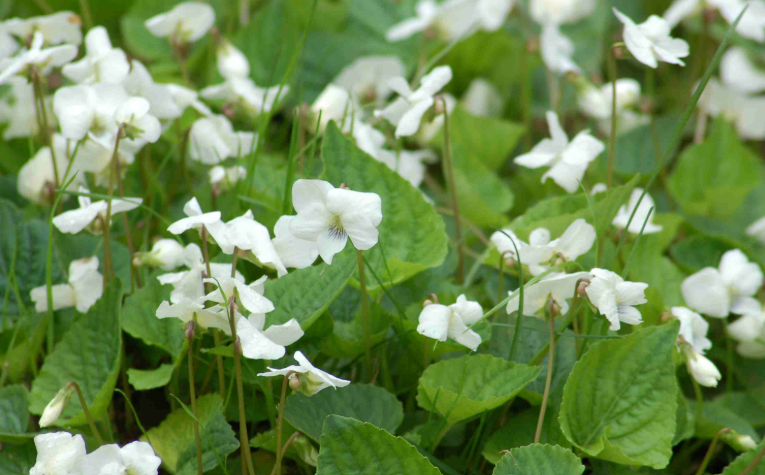
Invasive plants with white flowers share a pattern that distinguishes them from an ordinary lawn or garden weed, since the label “invasive” specifically means a non-native species that displaces native vegetation and disrupts an existing ecosystem, not merely a plant that shows up somewhere unwanted. Many of the species on this list were deliberately introduced decades ago as ornamentals, erosion control, or wildlife forage specifically because their showy white flowers made them attractive garden additions, long before their capacity to escape and spread through natural habitat was fully understood.
That white flower color often served a genuine evolutionary purpose that helped these plants establish so successfully in new territory, since white blooms reflect light efficiently and attract a broad range of generalist pollinators, including moths active at dusk and night when many other flower colors are far less visible. A plant that can secure pollination from whatever insects happen to be active, rather than depending on one specialized partner, has a considerable advantage when colonizing unfamiliar ground.
Several entries here also carry a genuine safety concern well beyond their invasive spread, since a handful of these white-flowered species produce sap or plant tissue capable of causing serious burns, poisoning, or worse if handled or ingested carelessly. What follows covers 40 invasive plants with white flowers, along with where each one grows and the data behind its spread.
Multiflora Rose
Multiflora rose produces clusters of small white flowers on arching, thorny canes, forming dense thickets wherever it’s left unmanaged. A single mature shrub can produce close to 500,000 seeds in a year, widely dispersed by birds that eat its small red hips through fall and winter.
It grows throughout pastures, fence rows, and forest edges across much of the eastern and midwestern United States, now classified as a noxious weed in numerous states despite once being recommended by conservation agencies for erosion control and living fences.
Japanese Knotweed
Japanese knotweed produces plume-like clusters of small white flowers in late summer atop hollow, bamboo-like stems capable of pushing through cracks in pavement as a colony expands. Its underground rhizome network can extend well beyond the visible canes, and even a small fragment left in the soil can regenerate an entirely new colony.
It grows in scattered infestations throughout much of the northeastern and Pacific Northwest United States, particularly along riverbanks and disturbed urban lots, where it’s become one of the most expensive invasive plants to fully remove once established.
Callery Pear
Callery pear, widely sold under ornamental cultivar names including Bradford pear, produces abundant white spring flowers followed by small, hard fruit that birds readily eat and disperse into surrounding natural areas. Its thorny, fast-growing wild seedlings form dense thickets in old fields and forest edges, a genuinely different plant than the tidy ornamental form sold at nurseries.
It’s an increasingly documented concern throughout much of the eastern United States, prompting several states to begin restricting its sale entirely.
Garlic Mustard
Garlic mustard produces small clusters of white, 4-petaled flowers atop a biennial plant whose roots release chemicals into the surrounding soil that actively suppress the germination of nearby native plants. A single mother plant can produce thousands of seeds that remain viable in the soil for up to 10 years.
It grows throughout wooded areas across much of the eastern and midwestern United States, threatening spring ephemerals like trilliums and trout lilies that can’t compete with its early, aggressive growth.
Common Privet
Common privet produces small, tubular white flowers with a notably strong, somewhat unpleasant scent, followed by small dark berries readily spread by birds into adjacent natural areas. Its dense, twiggy growth habit made it an enormously popular hedging plant for decades before its invasive spread became widely recognized.
It grows throughout residential and disturbed areas across much of the eastern United States, forming dense thickets in forest understories once it escapes cultivation.
Border Privet
Border privet produces small, oval, semi-evergreen leaves and clusters of small white flowers with a notably strong scent that many find unpleasant. Its dense, twiggy growth habit made it a popular hedging plant for decades, and its berries are readily spread by birds into adjacent natural areas.
It grows throughout residential and disturbed areas across much of the eastern United States, forming dense thickets in forest understories once it escapes cultivation.
Chinese Privet
Chinese privet closely resembles its border and common privet relatives in small white flower clusters and dark berries, distinguished by slightly different leaf shape and a somewhat more aggressive spread through the southeastern landscape. It’s considered one of the most widespread invasive shrubs in that region specifically.
It grows throughout the southeastern United States, forming dense understory thickets along streams and disturbed forest edges that few native shrubs can successfully compete against.
Wild Chervil
Wild chervil produces small, lacy clusters of white flowers atop a hollow, grooved, hairy stem, closely resembling several other carrot-family plants including poison hemlock. Its rapid spread along highway corridors has made it an increasing concern for regional invasive species councils.
It grows throughout roadsides and disturbed fields across the northeastern United States and Canada, favoring forest edges and disturbed wetland margins.
Giant Hogweed
Giant hogweed produces enormous, flat-topped clusters of small white flowers atop a thick, hollow stem marked with distinctive purple blotches, capable of towering well over head height. Its sap contains compounds that react violently with sunlight on exposed skin, causing severe burns and blistering that can take months to fully heal.
It grows in scattered, closely monitored infestations primarily in the northeastern United States and parts of the Pacific Northwest, and residents are actively encouraged to report suspected sightings rather than attempt removal without proper protective equipment.
Poison Hemlock
Poison hemlock produces small white flowers in umbrella-shaped clusters atop a smooth, hollow stem marked with distinctive purple spots that darken as the plant matures. Every part of the plant is highly toxic if ingested by humans or livestock, and a single plant can produce tens of thousands of seeds in a season.
It grows throughout roadsides, ditches, and disturbed fields across most of the United States and Canada, commonly mistaken for its harmless look-alike Queen Anne’s lace.
Mile-a-Minute Weed
Mile-a-minute weed produces small clusters of tiny white flowers followed by distinctive metallic blue berries on a trailing, barbed vine capable of growing several inches per day. It was first reported in Pennsylvania in the 1930s in contaminated nursery soil, and its seeds can remain dormant in the soil for up to 6 years.
It grows throughout the mid-Atlantic and northeastern United States, favoring moist soil and full sun along forest edges, wetlands, and streambanks.
European Frogbit
European frogbit produces small, white, 3-petaled flowers atop floating, heart-shaped leaves resembling a miniature water lily, forming dense surface mats capable of blocking light and reducing oxygen levels in the water below. Its rapid recent spread through connected waterway systems has drawn increasing regulatory attention in several states.
It grows throughout slow-moving rivers, marshes, and quiet bays across parts of the northern United States, spreading readily whenever fragments are transported on boats or waterfowl moving between water bodies.
Autumn Olive
Autumn olive produces small, fragrant, cream to pale yellow-white flowers each spring on a deciduous shrub that can grow to 20 feet high. Because it fixes atmospheric nitrogen through its root system, it can alter soil chemistry in ways that favor its own continued spread over native vegetation.
It grows throughout old fields, roadsides, and disturbed ground across much of the eastern United States, and its abundant, easily dispersed berries have made it one of the more difficult shrubs to fully eliminate once established.
Russian Olive
Russian olive produces small, fragrant, silvery-cream flowers on narrow, silvery-gray foliage, closely related to the shrubbier autumn olive but distinguished by longer, narrower leaves. It reproduces both by seed and by root sprouting, with fruit readily eaten and dispersed by numerous bird species.
It grows throughout much of the western and central United States, particularly along riverbanks and floodplains, where it forms dense stands that crowd out native streamside vegetation.
Silverthorn
Silverthorn produces small, fragrant, silvery-white flowers in fall, an evergreen shrub whose dense, spiny growth made it a popular privacy hedge before its invasive spread became apparent. Its silvery, scaled foliage remains attractive year-round, part of why it remains widely sold despite documented invasive behavior.
It grows throughout the southeastern United States, forming dense thickets along forest edges and disturbed ground that crowd out native understory shrubs.
Amur Honeysuckle
Amur honeysuckle produces small, fragrant white flowers that fade to yellow as they age, leafing out earlier in spring and holding leaves later into fall than most native shrubs. Its abundant red berries are readily eaten and spread by birds, allowing new infestations to establish well beyond any original planting.
It grows throughout woodland edges and disturbed areas across much of the eastern United States, often forming dense understory thickets that block light from native tree seedlings.
Morrow’s Honeysuckle
Morrow’s honeysuckle closely resembles its Amur relative in small white, fading-to-yellow flowers and prolific red berries, distinguished by slightly hairier leaves and stems. Both species readily hybridize where their ranges overlap, complicating precise identification in the field.
It grows throughout woodland edges and disturbed areas across much of the northeastern and midwestern United States, forming dense thickets that suppress native plant regeneration.
Japanese Honeysuckle
Japanese honeysuckle produces fragrant, tubular white flowers that fade to yellow, growing on an aggressively twining, semi-evergreen vine capable of smothering shrubs and small trees entirely. Its vigorous, nearly year-round growth in mild climates makes it one of the most difficult invasive vines to control through cutting alone.
It grows throughout much of the eastern and southeastern United States, forming dense blankets over understory vegetation that block sunlight from everything beneath it.
Wineberry
Wineberry produces small white flowers followed by bright red, raspberry-like fruit on canes covered in distinctive sticky, reddish, glandular hairs. Its edible, tart-sweet fruit is genuinely popular among foragers even as the plant displaces native blackberry and raspberry species in the same habitat.
It grows throughout the mid-Atlantic and northeastern United States, particularly along forest edges, spreading readily wherever birds disperse its seed after eating the fruit.
Himalayan Blackberry
Himalayan blackberry produces clusters of white to pale pink flowers on thorny, aggressively spreading canes capable of forming impenetrable thickets several feet thick. Its canes can grow more than 20 feet in a single season, rooting wherever the tip touches soil.
It grows throughout the Pacific Northwest and other parts of the western United States, considered one of the most damaging invasive plants in that region given how completely it can overtake riparian corridors.
Bouncing Bet
Bouncing bet, also called soapwort, produces clusters of pale pink to white, 5-petaled flowers that release a sweet fragrance most noticeably in the evening. Its crushed leaves and roots produce a soapy lather when mixed with water, a property once used for actual laundering before modern soap became widely available.
It grows throughout roadsides and disturbed ground across much of the United States and Canada, spreading through rhizomes that let a single planting persist along a roadside for decades.
White Sweet Clover
White sweet clover produces tall, slender spikes of small white flowers on a biennial plant that can reach 3 to 8 feet tall in its second year. Its deep taproot makes it notably drought tolerant, and its abundant, fragrant flowers make it a valuable nectar source even as its aggressive seeding crowds out native prairie plants.
It grows throughout much of the United States and Canada, commonly found in disturbed soil and prairie restoration sites where it can outcompete slower-establishing native species.
Queen Anne’s Lace
Queen Anne’s lace, also called wild carrot, produces a flat-topped cluster of tiny white flowers, often marked with a single dark purple floret at its center, rising from finely divided, carrot-scented foliage. As the direct wild ancestor of the cultivated carrot, its root is technically edible, though considerably more fibrous than a garden carrot.
It grows throughout fields and disturbed meadows across most of the United States and Canada, capable of forming dense stands that crowd out native prairie and meadow wildflowers.
Oxeye Daisy
Oxeye daisy produces the familiar white-petaled, yellow-centered daisy flower on a plant that can spread aggressively through both seed and shallow rhizomes once established in a meadow or pasture. A single plant can produce over 200 seeds per flower head, remaining viable in the soil for several years.
It grows throughout meadows and roadsides across most of the United States and Canada, and cattle generally avoid grazing it, letting it spread more freely in pastures than more palatable native forage.
Porcelain Berry
Porcelain berry produces small, inconspicuous greenish-white flower clusters followed by strikingly colored blue, purple, and turquoise berries on an aggressively twining vine. Its vigorous growth can smother shrubs and small trees within just a few growing seasons, and birds readily disperse its colorful, attractive fruit.
It grows throughout the eastern United States, particularly along forest edges and disturbed ground, forming dense tangles that block light from the native vegetation growing beneath it.
Glossy Buckthorn
Glossy buckthorn produces small, inconspicuous white to greenish-white flowers followed by berries that ripen through a progression of red to purple to black on the same plant simultaneously. Those berries carry a noticeable laxative effect on the birds that eat them, which paradoxically helps disperse its seeds more widely.
It grows throughout wet woodlands and swamp margins across much of the northeastern and midwestern United States, forming dense thickets in exactly the soggy, poorly drained ground many native shrubs struggle to tolerate.
Common Buckthorn
Common buckthorn produces small, inconspicuous white to greenish-white flowers and small, dark berries that persist into winter, leafing out earlier in spring and holding leaves later into fall than most native trees. That extended growing season gives it a considerable competitive advantage over the forest species it displaces.
It grows extensively throughout woodlands and fence rows across much of the northern and midwestern United States, forming dense understory thickets that shade out native tree seedlings.
Brazilian Waterweed
Brazilian waterweed produces small, delicate white flowers that float on the water’s surface, attached to a submerged stem covered in whorls of narrow leaves. Its dense underwater growth can completely fill a small pond or slow-moving waterway, crowding out native aquatic plants and impeding boat traffic.
It grows throughout lakes and slow-moving waterways across much of the United States, spreading readily from even small fragments transported on boats or fishing equipment.
Hydrilla
Hydrilla produces small, inconspicuous white to translucent flowers on thread-like stalks that reach the water’s surface from a submerged stem capable of forming dense underwater mats. Its status as a noxious weed in numerous states makes its transportation, possession, or sale illegal in many jurisdictions.
It grows throughout freshwater lakes, rivers, and canals across much of the United States, considered one of the most aggressively managed aquatic invasive species in the country given the scale of public funding devoted to its control.
Eurasian Watermilfoil
Eurasian watermilfoil produces small, inconspicuous, pinkish-white flowers on spikes that emerge just above the water’s surface, attached to feathery, finely divided underwater foliage. Fragments broken off by boat propellers root readily wherever they drift, making recreational boat traffic a primary way the plant spreads between separate lakes.
It grows throughout lakes and slow-moving waterways across most of the United States, considered one of the most widespread aquatic invasive plants found anywhere in the country.
Parrot Feather
Parrot feather produces tiny, inconspicuous white flowers tucked into the leaf axils of its feathery, blue-green foliage, which grows both underwater and emerges several inches above the surface. Its emergent growth habit lets it survive being pulled from the water far longer than most other aquatic invasive plants, complicating removal efforts.
It grows throughout ponds, ditches, and slow-moving waterways across much of the southern and western United States, forming dense mats that can clog irrigation systems and drainage channels.
Cherry Laurel
Cherry laurel, also called English laurel, produces upright spikes of small white flowers on a dense, evergreen shrub widely planted as a privacy hedge before its invasive tendencies in nearby forests became apparent. Its glossy, dark green leaves and dense growth habit continue to make it a popular hedging choice despite documented ecological concerns.
It grows throughout the Pacific Northwest and other mild-climate regions of the United States, spreading via bird-dispersed seed into adjacent forest understories where it can form dense, shade-tolerant thickets.
English Hawthorn
English hawthorn produces clusters of small white flowers each spring, followed by small red berries readily eaten and dispersed by birds. Its dense, thorny growth was historically valued for hedgerows before its tendency to spread into surrounding pastures and woodland edges became a documented concern.
It grows throughout the Pacific Northwest and other parts of the northern United States, forming dense thorny thickets in pastures and disturbed woodland where it competes directly with native shrubs.
Sericea Lespedeza
Sericea lespedeza produces small, pale pink to white, pea-like flowers on a deeply taprooted perennial capable of forming dense monocultures across entire pastures within a few growing seasons. Its high tannin content makes the mature foliage unpalatable to grazing livestock, allowing it to spread largely unchecked once established.
It grows throughout pastures and disturbed fields across much of the eastern and central United States, classified as a noxious weed in numerous states given the severity of its impact on grazing land.
Dame’s Rocket
Dame’s rocket produces clusters of fragrant, 4-petaled flowers in shades of purple, pink, or white on a tall biennial frequently mistaken for a native wildflower or garden phlox. Despite its attractive appearance, it spreads aggressively into woodland edges and has become a significant concern in several eastern states.
It grows throughout roadsides and woodland edges across much of the northeastern and midwestern United States, often included in wildflower seed mixes despite its documented invasive behavior once established outside a garden.
Field Bindweed
Field bindweed produces small, white to pink, funnel-shaped flowers on a twining vine with a root system that can extend more than 20 feet deep and horizontally in every direction. That extensive root network makes it one of the most difficult weeds to fully eliminate, since even a small fragment left behind after cultivation can regenerate an entirely new plant.
It grows throughout fields, gardens, and disturbed ground across most of the United States, classified as a noxious weed in numerous agricultural states.
Hedge Bindweed
Hedge bindweed produces large, white to pale pink, funnel-shaped flowers that can span up to 3 inches across on a twining vine that wraps tightly around any nearby plant, fence, or structure. Its larger, showier flowers occasionally lead gardeners to mistake it for a desirable morning glory before its smothering growth habit becomes apparent.
It grows throughout fences, hedgerows, and disturbed ground across much of North America, capable of quickly overtopping and shading out smaller perennials planted nearby.
Common Yarrow
Common yarrow produces flat-headed clusters of small white flowers atop finely divided, fern-like, aromatic foliage that spreads readily through both seed and rhizomes once established. Its tolerance for poor, dry soil lets it outcompete many native wildflowers in disturbed prairie and rangeland settings.
It grows throughout nearly all of North America, and while individual populations vary in aggressiveness, its capacity to naturalize widely outside cultivated settings has drawn attention in some native plant restoration contexts.
Ground Elder
Ground elder, also called bishop’s weed, produces flat-topped clusters of tiny white flowers atop a fast-spreading groundcover that can overtake an entire garden bed within just a couple of growing seasons. Its extensive underground rhizome network makes it notoriously difficult to eliminate, since even a small root fragment left behind can regenerate the entire infestation.
It grows in shaded gardens and disturbed woodland edges throughout much of the northeastern United States, having escaped widely from historic ornamental groundcover plantings.
Chinese Wisteria
Chinese wisteria, in white-flowered cultivated forms, produces long, cascading clusters of fragrant white blooms on an aggressively twining, woody vine capable of girdling and eventually killing mature host trees. Its vigorous growth and abundant seed production have made both the purple and white-flowered forms a significant forest health concern throughout much of its introduced range.
It grows throughout the southeastern and mid-Atlantic United States, forming dense canopies over native trees that can collapse entire sections of forest under the vine’s accumulated weight over time.
Things to Remember
Invasive plants with white flowers can be difficult to identify because many unrelated plants produce similar-looking white blooms. Flower color alone is not enough for identification, so pay attention to the leaves, stems, flower shape, growth habit, and the way the flowers are arranged. Some invasive species, such as field bindweed and Queen Anne’s lace, have very different forms despite both producing white flowers.
It is also important to consider where the plant is growing and how it spreads. Some invasive plants can form dense patches, spread through underground structures, or produce large numbers of seeds. These growth patterns can help distinguish an invasive species from a similar-looking native or ornamental plant.
When identifying a white-flowering invasive plant, compare several characteristics rather than relying on the flowers alone. Clear photographs of the flowers, leaves, stems, and entire plant can make identification easier when using a reliable regional plant guide. Confirm the species before deciding how it should be managed, since invasive-plant status and recommended control methods can vary by location.