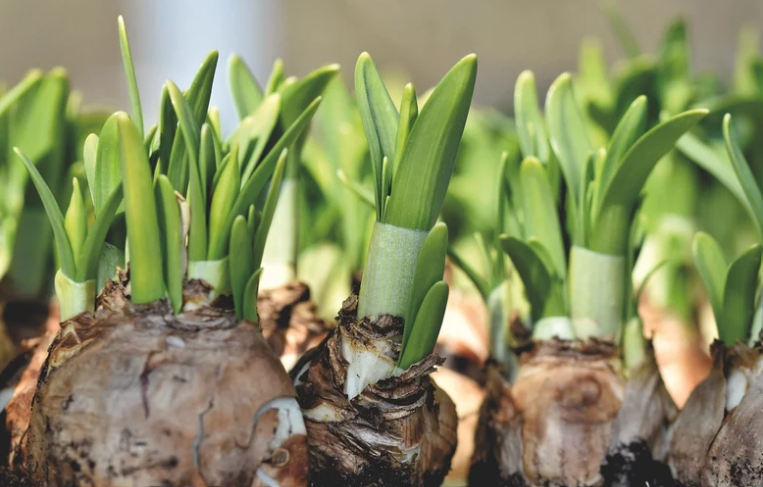
Weeds that grow from bulbs share a genuine advantage over their seed-only relatives, since a bulb stores enough energy to let the plant emerge, flower, and go dormant again within just a few weeks each year while remaining completely invisible and untouched underground the rest of the time. That underground survival strategy is exactly why bulb weeds are notoriously difficult to eliminate through pulling or mowing alone, since even a small bulblet left behind in the soil is often enough to regrow an entire new plant the following season.
Two of the most common bulb weeds in American lawns look similar enough at a glance to cause genuine confusion, and according to the University of Illinois Extension, Star of Bethlehem is commonly confused with Allium species such as wild garlic and wild onion, both of which produce an oniony smell when crushed that Star of Bethlehem entirely lacks. That single smell test is often the fastest way to tell a genuinely toxic bulb weed apart from a merely unwanted but harmless one.
These weeds span lawns, pastures, and coastal hillsides across the United States, with several originally introduced as ornamentals before escaping into the wild. What follows covers 14 weeds that grow from bulbs, along with where each one grows and the data behind its spread.
Wild Garlic
Wild garlic produces slender, hollow, round leaves from a small underground bulb, releasing a strong garlic odor the moment any part of the plant is crushed or cut. It’s especially conspicuous in late winter and early spring, when its bright green shoots stand out sharply against still-dormant lawn grass, and its bulbs are notoriously resistant to mowing since the leaves simply regrow from the same underground structure.
It grows throughout lawns and fields across the eastern and central United States, spreading through both underground bulb offsets and small aerial bulblets that form at the top of the flowering stalk.
Wild Onion
Wild onion closely resembles wild garlic in both appearance and the strong onion odor it releases when crushed, distinguished primarily by its solid rather than hollow leaves and flatter growth habit. Like wild garlic, its underground bulb allows it to survive repeated mowing that would eliminate most other lawn weeds entirely.
It grows throughout prairies, open woods, and lawns across much of North America, often found growing in the same disturbed ground as its close relative wild garlic.
Star of Bethlehem
Star of Bethlehem, and according to West Virginia University Extension, it resembles wild garlic but lacks that plant’s distinct smell, instead identified by slender, succulent leaves with a prominent whitish midrib. According to the North Carolina Extension Gardener Plant Toolbox, the plant can cause gastric problems if the bulbs or flowers are eaten and is classified as a Class C noxious weed in Alabama.
It grows throughout lawns and old flower gardens across much of the eastern United States, spreading primarily through small bulblets that detach from the parent bulb during any digging or tilling.
Bermuda Buttercup
Bermuda buttercup, also called sourgrass, produces shamrock-like leaves and cheerful yellow flowers from November through April, and according to University of California Statewide IPM Program, it’s found throughout California up to elevations of 8,200 feet and contains oxalate compounds capable of causing livestock death if consumed in large quantity. It doesn’t spread by seed at all, relying entirely on small bulbils that form along the stem and new bulbs that develop underground.
It grows throughout coastal California and the Sacramento Valley, originally introduced from South Africa as an ornamental before escaping into gardens, orchards, and natural coastal hillsides.
Crow Poison
Crow poison, also called false garlic, closely resembles wild garlic in its slender, grass-like leaves and small underground bulb, but it produces no garlic scent whatsoever when crushed, a key distinguishing feature from its similar-looking relative. Its small white, star-shaped flowers appear on a leafless stalk in spring, distinguishing it visually from true garlic and onion once it blooms.
It grows throughout lawns and open fields across much of the southeastern and central United States.
Death Camas
Death camas produces narrow, grass-like leaves and a spike of small, cream-colored flowers atop a stem rising from a bulb that closely resembles a wild onion bulb in size and shape. Every part of the plant is highly toxic, and the absence of any onion smell when the bulb is crushed is the single most important safety check before assuming a similar-looking bulb is a safe wild onion.
It grows throughout rangeland and open meadows across much of the western United States, posing a genuine poisoning risk to grazing livestock in early spring before other forage has fully greened up.
Grape Hyacinth
Grape hyacinth produces narrow, grass-like leaves and dense spikes of small, round, deep blue-purple flowers that resemble a tight cluster of grapes each spring. Originally planted as a garden ornamental, it spreads readily by seed and by offsets forming around the base of the original bulb, allowing a single planting to naturalize into a substantial patch within just a few years.
It grows throughout lawns and garden beds across much of the temperate United States, particularly persistent in older, established landscapes.
Squill
Squill produces narrow, strap-like leaves and small, star-shaped blue flowers that carpet the ground in very early spring, often before most other bulb plants have even emerged. Its rapid naturalization from garden plantings into surrounding lawns has made it simultaneously a beloved early spring ornamental and a persistent lawn weed depending entirely on where it happens to be growing.
It grows throughout lawns and woodland edges across much of the northeastern and midwestern United States.
Meadow Saffron
Meadow saffron, also called autumn crocus despite being unrelated to true crocus, produces large, crocus-like purple-pink flowers directly from the bare ground each fall, with strap-like leaves only appearing separately the following spring. Every part of the plant is highly toxic, containing colchicine, a compound potent enough to cause serious poisoning in both livestock and humans who mistake the leaves for a wild edible green.
It grows in scattered pastures and disturbed ground throughout parts of the eastern United States, most often escaped from historic garden plantings.
Onionweed
Onionweed produces narrow, hollow, grass-like leaves and small white, papery flowers on wiry stems rising from a cluster of small bulbs at the plant’s base. Despite its common name, it belongs to an entirely different plant family than true onion and garlic, and its wiry, persistent dead flower stalks remain standing and visible in a field long after the plant has finished flowering.
It grows throughout dry rangeland and disturbed roadsides across the southwestern United States, particularly common in Arizona, California, and Texas.
Spider Lily
Spider lily produces a dramatic cluster of narrow, spidery red petals atop a bare, leafless stalk that emerges suddenly from the ground each fall, with strap-like leaves appearing separately afterward and persisting through winter. Its bulbs multiply readily underground, allowing a single original planting to expand into a dense colony over the course of several years.
It grows throughout old homesites and roadsides across much of the southeastern United States, frequently marking the location of a long-vanished farmhouse or garden decades after the structure itself has disappeared.
Naked Ladies
Naked ladies, a close relative of spider lily, produces tall, leafless stalks topped with clusters of fragrant pink, trumpet-shaped flowers that appear suddenly in late summer with no foliage visible at all, since the strap-like leaves emerged and died back months earlier in spring. That leafless flowering habit, appearing to spring directly from bare soil, is exactly how the plant earned its common name.
It grows in scattered naturalized populations throughout much of the eastern and midwestern United States, most commonly found persisting around old homesteads.
Yellow Star Grass
Yellow star grass produces narrow, grass-like, hairy leaves and small, bright yellow, star-shaped flowers that open only in sunny conditions, growing from a small underground corm rather than a true layered bulb. Its diminutive size and grass-like foliage make it easy to overlook in a lawn until its distinctive yellow flowers appear during the growing season.
It grows throughout lawns, meadows, and open woodland across much of the eastern United States.
Wild Hyacinth
Wild hyacinth produces narrow, grass-like leaves and a tall spike of pale blue to white, star-shaped flowers rising from a true bulb similar in structure to a cultivated hyacinth. While valued as a native wildflower in prairie and meadow plantings, it can become a persistent, difficult-to-remove presence in a lawn once established, since its bulb regrows reliably from underground even after repeated mowing.
It grows throughout prairies, open woods, and lawns across much of the central and eastern United States.
Further References
- Wild Onion and Wild Garlic — Penn State Extension — Useful for identifying bulb-forming perennial weeds such as wild onion and wild garlic, including their underground and aerial bulblets.
- Wild Garlic — Cornell University — Provides detailed identification information for wild garlic, including its bulb, bulblets, leaves, flowers, and growth habit.
- Wild Garlic — UC Statewide IPM Program — Includes photographs and identification details, with specific information on how wild garlic reproduces through bulbs and bulbils.
- Bulbous Bluegrass — Illinois Extension — Covers bulbous bluegrass, a weedy grass that produces bulb-like structures and can spread in disturbed areas.
- Bulbous Oatgrass — University of Missouri Weed ID — Provides identification details for bulbous oatgrass, including its underground bulbous corms and vegetative reproduction.