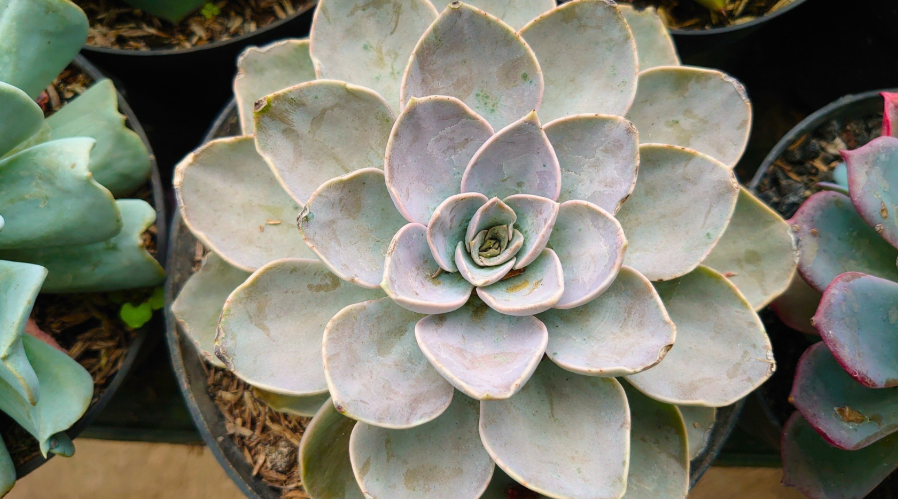
Plants with thick leaves owe that trait almost entirely to one evolutionary problem: surviving somewhere water doesn’t reliably show up. According to California State University, Stanislaus, succulent leaves contain specialized parenchyma cells that act as a water reservoir, along with mucilage cells that give cut leaves their characteristic slimy texture, and species like aloe vera also develop a notably thick epidermis specifically to prevent excessive water loss through transpiration.
Not every thick-leaved plant on this list is a true succulent, though, and a handful earn their leathery, substantial foliage through an entirely different strategy: building leaves tough and waxy enough to resist damage from sun, salt, or physical wear rather than storing water inside them. Both strategies produce a similar visual result, a leaf that feels noticeably substantial to the touch, even though the underlying biology driving each one is genuinely different.
These plants span desert succulents, tropical houseplants, and leathery-leaved shade trees found across dramatically different climates. What follows covers 40 plants with thick leaves.
Jade Plant
Jade plant, and according to South Dakota State University Extension, it’s a succulent native to South Africa and Mozambique that can live approximately 100 years with proper care, with more than 300 different cultivars available. Its thick, oval leaves grow on equally thick, woody stems that give a mature specimen the appearance of a small tree, eventually reaching up to 6 feet tall.
It’s grown as a houseplant worldwide, favoring well-drained, cactus-type soil and infrequent watering.
Aloe Vera
Aloe vera is native to the Arabian Peninsula, its thick, spiky leaves filled with a clear, gel-like substance long used topically for minor burns and skin irritation. That gel is essentially the plant’s water reserve, stored in specialized tissue just beneath a notably thick outer skin that limits water loss even in intense heat.
It’s grown as a houseplant and garden succulent throughout warm, arid regions of the United States.
Echeveria
Echeveria, native to Mexico and Central America, forms tight, symmetrical rosettes of thick, often powdery-coated leaves in shades ranging from blue-green to deep purple depending on the species. Its rosette shape helps funnel any rainfall directly toward the plant’s shallow root system, an efficient design for the rocky, well-drained slopes it naturally grows on.
It’s grown as a garden and container succulent throughout warm, dry regions of the United States.
Hens and Chicks
Hens and chicks, botanically Sempervivum, is native to mountainous regions of Europe, forming dense rosettes of thick, pointed leaves that spread by producing numerous small offset rosettes around the base of the main plant. Its genus name translates to “always alive,” a reference to its remarkable tolerance for both drought and genuinely harsh winter cold.
It’s grown as a garden succulent throughout temperate regions of the United States, tolerating conditions that would kill most other succulents outright.
Burro’s Tail
Burro’s tail, a trailing type of sedum, produces dozens of small, plump, teardrop-shaped leaves densely packed along long, cascading stems. Those leaves are only loosely attached and drop easily with rough handling, making the plant notably better suited to a stationary hanging basket than one that gets moved or bumped often.
It’s grown as a houseplant and hanging basket succulent throughout the United States.
Haworthia
Haworthia, native to South Africa, produces thick, pointed leaves often marked with translucent stripes or bumpy white tubercles, forming a compact rosette considerably smaller than most other rosette succulents. Some species have nearly transparent “windows” at the leaf tips that let light reach photosynthetic tissue even when most of the leaf is buried in sandy native soil.
It’s grown as a houseplant throughout the United States, tolerating lower light than most other succulents.
Gasteria
Gasteria, native to South Africa, produces thick, tongue-shaped leaves arranged in 2 flat rows rather than a spiraling rosette, a distinctive growth pattern that sets it apart from most other succulents. Its stomach-shaped flowers, which give the genus its name, dangle from a tall, arching stalk when the plant blooms.
It’s grown as a houseplant throughout the United States, tolerating lower light and less frequent watering than many other succulents.
Agave
Agave, native to the Americas, produces a dramatic rosette of thick, rigid, often spine-tipped leaves that can range from a few inches to well over 6 feet across depending on the species. A mature plant typically flowers only once in its lifetime, sending up a towering stalk before the original rosette dies, though offsets around the base usually continue the plant’s presence in the garden.
It grows as a landscape and container succulent throughout the warm, arid regions of the southwestern United States.
Aeonium
Aeonium, native to the Canary Islands, produces flattened rosettes of thick, spoon-shaped leaves atop branching stems, unlike many other succulents that grow with little to no visible stem at all. Its rosettes can range from bright green to nearly black depending on the cultivar and light exposure.
It grows as a landscape and container succulent in mild coastal climates throughout the United States.
Panda Plant
Panda plant, a type of kalanchoe native to Madagascar, produces thick, velvety, silver-green leaves edged in dark brown markings that resemble a panda’s fur pattern. Its dense covering of fine hairs helps reflect intense sunlight and reduce water loss in its native semi-arid habitat.
It’s grown as a houseplant throughout the United States, tolerating low humidity better than most other fuzzy-leaved plants.
String of Bananas
String of bananas, native to South Africa, produces small, curved, banana-shaped leaves densely packed along long, trailing stems that can cascade several feet from a hanging container. Each individual leaf stores enough water to let the entire plant go several weeks between waterings without visible stress.
It’s grown as a houseplant and hanging basket succulent throughout the United States.
Ripple Jade
Ripple jade, a cultivar of Crassula ovata, produces distinctively curled, tubular leaves that twist and fold in on themselves, giving the plant a genuinely alien appearance compared to the flat, oval leaves of standard jade plant. Its unusual leaf shape is purely ornamental, offering the same water-storage function as any other jade plant cultivar.
It’s grown as a houseplant throughout the United States, favoring the same care as standard jade plant.
Elephant Bush
Elephant bush, native to South Africa, produces small, round, glossy leaves on reddish-brown stems, forming a dense, shrubby succulent that’s a favorite food source for elephants in its native range. Its compact leaf size and rapid growth have made it a popular choice for succulent bonsai styling.
It’s grown as a houseplant and landscape succulent in mild climates throughout the United States.
Bear’s Paw
Bear’s paw, a type of cotyledon native to South Africa, produces thick, fuzzy, paddle-shaped leaves with small, tooth-like notches along the tip that resemble a bear’s claw marks. Its dense covering of fine hairs serves the same sun-reflecting, water-conserving function found in many other fuzzy-leaved succulents.
It’s grown as a houseplant throughout the United States, favoring bright light for its most compact growth.
Ghost Plant
Ghost plant, native to Mexico, produces thick, pointed, powdery gray-lavender leaves in a loose rosette on trailing stems, with color that shifts toward pink in bright sun. Its leaves detach easily and readily root into new plants wherever they fall, a propagation strategy that’s helped make it one of the more commonly shared succulents among home gardeners.
It’s grown as a houseplant and garden succulent throughout warm regions of the United States.
Moonstones
Moonstones, native to Mexico, produces plump, nearly spherical leaves in soft shades of lavender, blue-gray, and pink, arranged in a loose rosette that looks almost artificial in its uniformity. Its rounded leaf shape minimizes surface area relative to volume, an efficient design for water retention in its native arid habitat.
It’s grown as a houseplant throughout the United States, favoring bright light and minimal watering.
Living Stones
Living stones, botanically Lithops and native to southern Africa, consist of just a single pair of thick, fused leaves so effectively camouflaged that they’re nearly indistinguishable from the surrounding rocks and gravel of their native habitat. Translucent “windows” on the leaf surface let sunlight reach the photosynthetic tissue deep inside the leaf even while the plant stays disguised from grazing animals above.
It’s grown as a specialty houseplant throughout the United States, requiring notably less frequent watering than almost any other succulent.
Adromischus
Adromischus, native to South Africa, produces thick, irregularly shaped leaves often mottled with darker spots or a wavy, crinkled edge, giving individual species a genuinely distinctive, almost stone-like texture. Its compact size and slow growth rate make it a popular choice for small succulent arrangements and dish gardens.
It’s grown as a houseplant throughout the United States, tolerating a range of light conditions.
Euphorbia Obesa
Euphorbia obesa, native to South Africa, grows as a nearly spherical, ridged, leafless succulent that closely resembles a small cactus despite belonging to an entirely different plant family. Its spherical shape minimizes surface area exposed to intense sun and heat, the same water-conserving strategy employed by many true cacti.
It’s grown as a specialty container succulent throughout the United States.
Aloe Brevifolia
Aloe brevifolia, native to South Africa, produces a compact rosette of short, thick, blue-green leaves edged in small white teeth, considerably smaller than the familiar aloe vera most people recognize. Its dense, clustering growth habit allows a single plant to spread into an attractive, low-growing colony over time.
It’s grown as a garden and container succulent throughout warm, dry regions of the United States.
Baby Rubber Plant
Baby rubber plant, a type of peperomia native to tropical Central and South America, produces thick, glossy, rounded leaves that store water similarly to a true desert succulent despite growing naturally in humid tropical forests. That water storage lets it tolerate the inconsistent watering common in houseplant care far better than most other tropical foliage plants.
It’s grown as a houseplant throughout the United States, tolerating lower light than most true succulents.
String of Dolphins
String of dolphins, a hybrid succulent, produces small leaves shaped remarkably like leaping dolphins along long, trailing stems, a novelty trait that’s made it one of the more sought-after trailing succulents in recent years. Its thick, water-storing leaves function identically to its close relatives string of pearls and string of bananas.
It’s grown as a houseplant and hanging basket succulent throughout the United States.
Prickly Pear Cactus
Prickly pear cactus, native throughout much of the Americas, is technically composed of modified, flattened stems called pads rather than true leaves, though the pads are commonly mistaken for exceptionally thick leaves given their fleshy appearance. Both the pads and the fruit are edible once the spines and fine, hair-like glochids have been carefully removed.
It grows throughout much of the southern and western United States.
Mother of Thousands
Mother of thousands, a type of kalanchoe native to Madagascar, produces thick, scalloped leaves that develop dozens of tiny plantlets along their edges, each one capable of dropping off and rooting into an entirely new plant. That prolific reproductive strategy has made it a notably aggressive garden escapee in mild, frost-free climates.
It’s grown as a houseplant throughout the United States, and every part of the plant is toxic to pets if ingested.
Dudleya
Dudleya, native to the western United States and Mexico, produces thick, powdery-coated leaves in a tight rosette, with the waxy white coating helping reflect intense sun and reduce water loss on the rocky coastal cliffs many species naturally inhabit. That powdery coating is easily rubbed off by handling, so the plant is generally best appreciated without touching.
It grows as a garden succulent throughout coastal California and other mild, dry regions of the western United States.
Chinese Dunce Cap
Chinese dunce cap, botanically Orostachys, produces a tight rosette of thick, pointed leaves that gradually build upward into a distinctive cone shape as the plant matures, giving it its unusual common name. Like many rosette succulents, the main rosette typically flowers once and then dies, though offsets around the base continue the colony.
It’s grown as a garden and container succulent throughout temperate regions of the United States.
Ice Plant
Ice plant, native to South Africa, produces thick, cylindrical leaves covered in tiny, glistening bumps that give the plant its name, resembling a fine dusting of ice crystals in bright sunlight. Those bumps are actually specialized water-storage cells on the leaf surface, an adaptation that helps the plant survive in the dry, sandy coastal habitats it naturally colonizes.
It grows as a groundcover succulent throughout warm, dry coastal regions of the United States.
ZZ Plant
ZZ plant, native to eastern Africa, produces thick, glossy, dark green leaflets arranged along equally thick, upright stems that store water similarly to a true succulent despite the plant’s overall tropical appearance. That stored water lets it tolerate weeks of neglect and irregular watering with little visible stress.
It’s grown as a houseplant throughout the United States, tolerating low light better than almost any other commonly sold houseplant.
Rubber Plant
Rubber plant, native to Southeast Asia, produces large, glossy, thick leaves that can reach nearly a foot long on a mature indoor specimen, with a milky latex sap that gives the plant its common name. That sap was historically harvested on a commercial scale before the rubber industry shifted almost entirely to other tree species.
It’s grown as a houseplant throughout the United States, tolerating a range of indoor light conditions once established.
Snake Plant
Snake plant, native to West Africa, produces stiff, upright, blade-like leaves thick enough to store meaningful reserves of water, letting the plant survive weeks of neglect that would kill most other houseplants. Its rigid leaf structure also makes it notably resistant to physical damage compared to the thinner foliage of most other common houseplants.
It’s grown as a houseplant throughout the United States, tolerating low light and infrequent watering better than almost any other species.
Cast Iron Plant
Cast iron plant, native to Japan and Taiwan, produces broad, leathery, deep green leaves so tough and durable that the plant earned its common name from its reputation for surviving conditions that would kill nearly anything else. Unlike most thick-leaved plants on this list, its toughness comes from dense, fibrous leaf tissue rather than any true water-storage function.
It’s grown as a houseplant and shade garden perennial throughout the United States.
Southern Magnolia
Southern magnolia, and according to Mississippi State University Extension, produces individual oblong leaves 5 to 8 inches long that feel distinctly leathery, with a rusty brown fuzz covering the underside of each leaf. That tough, waxy leaf surface helps the tree resist damage from salt spray and air pollution in the coastal and urban settings where it’s commonly planted.
It grows throughout the southeastern United States as both a native forest tree and a widely planted ornamental.
Camellia
Camellia, native to eastern and southern Asia, produces glossy, dark green, notably thick and leathery leaves that persist year-round on this broadleaf evergreen shrub, providing a lush backdrop for its showy winter and spring flowers. That tough leaf surface helps the plant tolerate the humid, disease-prone conditions of its typical Southern garden setting better than many thinner-leaved evergreens.
It grows as a landscape shrub throughout the southeastern United States and other mild-winter regions.
American Holly
American holly, native to the eastern United States, produces stiff, spiny-edged, distinctly thick evergreen leaves that persist through winter, providing both structure and a defensive barrier against browsing animals. That same toughness makes fallen holly leaves notably slow to decompose compared to the leaf litter of most deciduous trees.
It grows throughout the eastern United States as both a native forest understory tree and a widely planted ornamental.
Edible Fig
Edible fig, native to the Mediterranean and western Asia, produces large, deeply lobed, notably thick and slightly rough-textured leaves that provide dense shade over the tree’s edible fruit as it ripens each summer. Despite their substantial feel, the leaves lack the true water-storage function of a genuine succulent, relying instead on the tree’s deep, extensive root system to survive dry periods.
It grows as a garden fruit tree throughout much of the temperate and warm United States.
Banana Plant
Banana plant, native to Southeast Asia, produces enormous, thick-ribbed leaves that can reach several feet long, unfurling from a central growing point in a distinctly tropical, paddle-like shape. Despite their substantial size and texture, the leaves are notably prone to tearing in strong wind, a trait that limits the plant’s usefulness as a windbreak despite its lush appearance.
It grows as a warm-season ornamental and fruit-bearing plant throughout the southernmost United States and as a container plant elsewhere.
Elephant Ear
Elephant ear, native to tropical Asia and South America depending on the specific genus, produces enormous, heart-shaped leaves that can reach several feet across on a mature plant, giving the garden a dramatic, jungle-like presence. Despite their thick, substantial appearance, the leaves are largely water-filled tissue adapted to the plant’s naturally moist, humid native habitat rather than true drought-storage succulence.
It grows as a warm-season garden perennial or annual throughout much of the United States.
Bird of Paradise
Bird of paradise, native to South Africa, produces broad, thick, leathery leaves on long stalks arranged in a distinctive fan shape, providing a bold, tropical backdrop for the plant’s unusual orange and blue flowers. Its tough leaf surface helps the plant withstand the strong coastal winds common in the warm, frost-free landscapes where it’s most often grown outdoors.
It grows as a landscape perennial in South Florida and other frost-free regions and as a container plant elsewhere.
Yucca
Yucca, native to the Americas, produces stiff, thick, sword-shaped leaves that taper to a genuinely sharp point, arranged in a dramatic rosette that provides year-round structure in a dry landscape. That rigid, fibrous leaf tissue historically made yucca an important source of cordage and fiber for numerous Indigenous communities across its native range.
It grows as a landscape perennial throughout much of the United States, tolerating drought and poor soil better than almost any other plant on this list.
String of Pearls
String of pearls, native to South Africa, produces small, nearly spherical, pea-like leaves densely packed along long, trailing stems that cascade dramatically from a hanging container. Each tiny sphere stores enough water to let the entire plant tolerate significant neglect, and a translucent stripe running down one side of each leaf lets light reach the internal photosynthetic tissue even through the leaf’s rounded, light-scattering shape.
It’s grown as a houseplant and hanging basket succulent throughout the United States.
Further References
- Botany — NC State Extension — Explains leaf textures and defines succulent leaves as thickened, fleshy tissues adapted for water storage.
- Cacti and Succulents — University of Minnesota Extension — Provides useful information on plants with thick, fleshy leaves or stems, including jade plants, aloe, and snake plants.
- Succulents — UF/IFAS Extension — Covers several thick-leaved plants such as Echeveria, Kalanchoe, Haworthia, and Sempervivum, with descriptions of their foliage.
- Echeveria — NC State Extension Plant Toolbox — A useful identification reference for Echeveria, particularly its thick, fleshy leaves and distinctive rosette growth.
- Fleshy, Furry and Waxy Foliage Plants — Royal Horticultural Society — Explains how fleshy and waxy foliage helps plants cope with heat and drought and provides examples of plants with distinctive thick foliage.