Propagating plants from cuttings is one of the oldest and most rewarding techniques in horticulture, allowing gardeners to create genetically identical copies of their favorite plants quickly, easily, and at virtually no cost beyond a little time and attention. A cutting is simply a portion of a stem, leaf, or root removed from a parent plant and encouraged to develop its own root system, eventually growing into a fully independent plant identical in every characteristic to the one from which it was taken. This technique has been practiced by gardeners and farmers for thousands of years and remains one of the most widely used propagation methods in both home gardens and commercial horticulture today.
The success rates for propagation from cuttings vary considerably depending on the plant species, the type of cutting taken, the time of year, and the conditions under which rooting is encouraged, but many of the most common garden plants root with remarkable reliability. Research in commercial propagation has found that some plant species achieve rooting success rates exceeding 90% under optimal conditions, while even less cooperative species can often be successfully propagated by home gardeners willing to take multiple cuttings and experiment with different techniques. The global horticultural industry saves billions of dollars annually through cutting propagation compared to the alternative of growing all plants from seed.
Cuttings can be taken from different parts of a plant and at different stages of growth, with the most common categories being softwood cuttings taken from new spring growth, semi-hardwood cuttings taken from partially matured stems in summer, and hardwood cuttings taken from fully dormant woody stems in autumn and winter. Each type of cutting suits different plant groups, with softwood cuttings working well for many herbaceous perennials and fast-growing shrubs, semi-hardwood cuttings being effective for broadleaf evergreens and many flowering shrubs, and hardwood cuttings being particularly reliable for deciduous woody plants. Leaf cuttings represent yet another distinct category that works particularly well for succulents and certain houseplants.
Rooting hormones, available in powder, gel, and liquid formulations, can significantly improve success rates for many plants by stimulating the development of roots at the cut surface, though many of the easiest-to-propagate plants in the following list will root readily without any hormonal assistance. Providing the right balance of warmth, humidity, and indirect light during the rooting period is often more important than rooting hormone for the most cooperative plant species. A simple setup using a plastic bag or humidity dome over cuttings in a well-draining rooting medium is sufficient to successfully propagate the majority of plants on this list.
Whether the goal is multiplying a cherished garden plant, sharing plants with friends and family, or simply saving money on purchasing new plants, the following 60 species and plant groups represent some of the most rewarding and reliable candidates for cutting propagation available to home gardeners.
Easy Plants to Propagate from Cuttings
Pothos
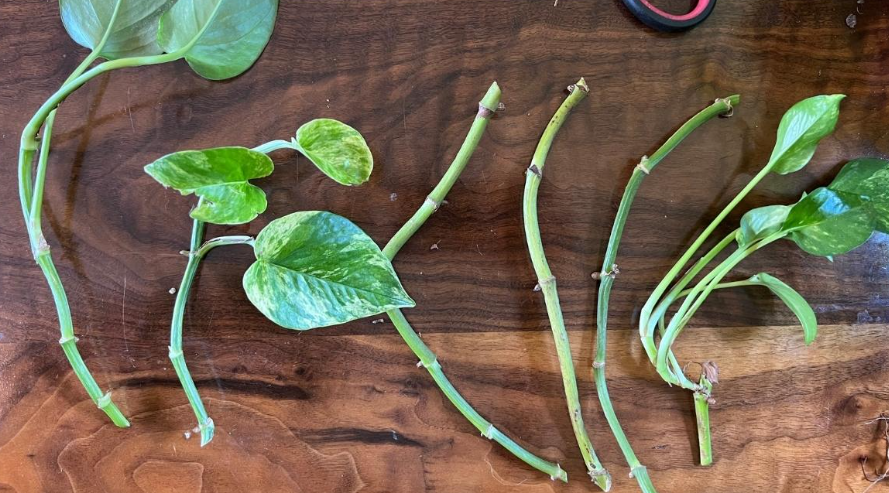
Pothos is one of the easiest houseplants to propagate from cuttings, rooting so readily in plain water that it has become the go-to first propagation project for beginner gardeners. A single stem cutting with one or two leaves placed in a glass of water will typically develop visible roots within one to two weeks.
Once roots reach a few centimeters in length, the cutting can be transferred to a pot of well-draining potting mix and treated as a fully established plant. Pothos tolerates low light, irregular watering, and a wide range of indoor conditions, making it equally easy to grow the resulting plants as it is to root the original cuttings.
Rosemary
Rosemary propagates readily from semi-hardwood cuttings taken in late spring or early summer, with tip cuttings of around ten centimeters stripped of lower leaves and inserted into well-draining compost rooting reliably within four to eight weeks. Having multiple rosemary plants from a single parent plant ensures a generous supply of this aromatic herb.
The cuttings root best when kept in a warm, bright position out of direct sunlight, with a humidity dome or plastic bag placed loosely over them to maintain moisture around the developing roots. Once established, the resulting plants are just as vigorous and aromatic as the parent plant, providing a cost-effective way to multiply this valuable culinary herb.
Also Read: Plants That Easily Grows From Bulbs
Lavender
Lavender propagates well from both softwood cuttings taken in spring and semi-hardwood cuttings taken in late summer, with tip cuttings of around eight to ten centimeters rooting reliably within six to eight weeks when kept in well-draining gritty compost. This is one of the most cost-effective ways to fill a garden with lavender.
Stripping the lower leaves from the cutting and dipping the base in rooting hormone powder before insertion improves success rates, though many lavender varieties will root without this assistance. The resulting plants will flower and grow identically to the parent, preserving whatever specific color or fragrance characteristics made the parent plant worth propagating.
Mint
Mint is arguably the easiest of all culinary herbs to propagate from cuttings, rooting so aggressively that even short stem sections placed in water will develop roots within days. This reflects mint’s naturally vigorous, spreading growth habit, which involves the production of rooting stems as a normal part of the plant’s growth.
A cutting of around ten to fifteen centimeters with the lower leaves removed can be rooted either in water or directly in moist potting mix, with roots typically appearing within one to two weeks regardless of the method used. The resulting plants spread as vigorously as their parent, so planting in containers or using root barriers is advisable when growing mint in open garden beds.
Basil
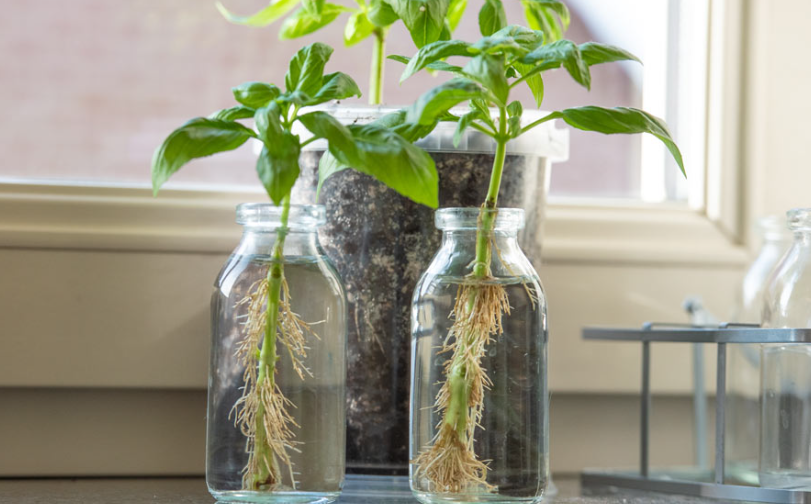
Basil cuttings root readily in water, with stems of around ten centimeters cut just below a leaf node and placed in a glass of water in a warm, bright position developing visible roots within seven to fourteen days. This simple technique allows a single purchased basil plant to be multiplied into several individual plants.
Once roots develop to a length of a few centimeters, the cuttings can be transferred to individual pots of potting mix and grown on as fully independent plants. Basil propagated from cuttings tends to establish more quickly than seed-grown plants and provides a practical way to maintain a continuous supply of fresh basil throughout the growing season.
Geranium
Geraniums, particularly the common pelargonium varieties popular as bedding and pot plants, propagate extremely well from softwood tip cuttings taken in late summer or early spring. Cuttings of around ten to twelve centimeters with the lower leaves and any flower buds removed root readily within three to four weeks in well-draining compost.
Allowing the cut end to dry for an hour or two before insertion helps prevent rotting, which can affect the somewhat succulent stems of geraniums in overly wet conditions. Geraniums propagated from cuttings often flower in their first season, making them a rewarding and economical way to overwinter favorite varieties and produce plants for the following year’s displays.
Fuchsia
Fuchsia produces new plants reliably from softwood tip cuttings taken in spring or early autumn, with short cuttings of three to five centimeters rooting quickly in warm, humid conditions. The resulting plants retain all the flower color and growth characteristics of the parent.
Fuchsia cuttings root particularly well when kept in a propagator or under a humidity dome where moisture around the developing cutting can be maintained, and roots typically appear within two to four weeks under these conditions. Propagating fuchsias from cuttings allows favorite hanging basket varieties to be carried through winter as rooted cuttings rather than as large, space-consuming parent plants.
Hydrangea
Hydrangeas propagate reliably from softwood cuttings taken in early summer, with tip cuttings of around ten to fifteen centimeters stripped of lower leaves and rooted in well-draining compost. Success rates are generally high, making this one of the more accessible shrub propagation projects for home gardeners.
Keeping the cuttings in a humid environment and ensuring the compost remains consistently moist but not waterlogged during the rooting period, which typically takes four to six weeks, are the key factors for success. Hydrangea cuttings taken from mophead, lacecap, and panicle varieties all root readily using this approach.
Forsythia
Forsythia is a particularly easy shrub to propagate from hardwood cuttings taken during the dormant season, with sections of pencil-thick stems cut to around twenty to thirty centimeters and simply pushed into well-prepared soil in an outdoor nursery bed. Few plants are more forgiving of imprecise propagation technique.
The cuttings can be left in the ground through winter and will typically show signs of growth by spring as roots establish naturally in the soil. Forsythia hardwood cuttings require no rooting hormone, no heated propagator, and virtually no attention during the rooting period, making this one of the simplest shrub propagation projects available.
Willow
Willow is perhaps the most naturally inclined of all woody plants toward rooting from cuttings, with even large stems pushed into moist soil readily rooting in a matter of weeks. This extraordinary rooting ability reflects willow’s natural tendency to propagate from branches that break off and fall into water or wet soil.
Willow cuttings contain natural compounds that actually function as rooting hormones, and water in which willow stems have been soaked is sometimes used to stimulate rooting in other, less cooperative plant species. Both small tip cuttings for container-grown specimens and large stem sections for creating living willow structures or privacy screens can be propagated with equal ease.
Coleus
Coleus propagates effortlessly from stem cuttings, rooting readily in water within one to two weeks with minimal attention required beyond keeping the water clean and placing the cuttings in a warm, bright position. This easy rooting combined with coleus’s spectacular foliage colors makes it a popular propagation project.
Once roots have developed, the cuttings can be potted up in standard potting mix and grown on as houseplants or outdoor bedding plants depending on the climate. Taking cuttings from favorite coleus varieties before the first autumn frost allows these tender perennials to be overwintered indoors and multiplied ready for the following season.
Impatiens
Impatiens root quickly and reliably from stem cuttings, particularly when rooted in water, where visible roots typically appear within seven to ten days. Their succulent stems contain abundant moisture and nutrients that fuel rapid root development without the need for rooting hormone.
This easy propagation makes impatiens an economical choice for filling large garden spaces with color, as a small number of purchased plants can be quickly multiplied into many times their original number through cutting propagation. Impatiens cuttings can also be rooted in moist perlite or a standard propagation mix, where they perform equally well.
Begonia
Begonias propagate readily from both stem cuttings and leaf cuttings depending on the variety, with wax begonias and cane begonias rooting easily from stem cuttings while rex begonias can be propagated from single leaves cut into sections. This versatility makes begonia one of the most accommodating propagation subjects.
Stem cuttings of wax begonias root within two to three weeks in moist propagation mix or water, while leaf cuttings from rex begonias can be laid flat on moist compost or inserted upright in sections, with small plantlets developing at the base of each leaf section over several weeks. Both methods allow generous multiplication of favorite begonia varieties.
Jade Plant
The jade plant is a succulent that roots readily from both stem cuttings and individual leaves, though stem cuttings produce established plants more quickly and are the preferred method for most propagation situations. Allowing the cut end to dry and callous over for a day or two before planting significantly reduces the risk of rotting.
Once the cut end has calloused, the cutting can be placed in dry, gritty cactus compost and watered sparingly until roots develop, a process that typically takes three to six weeks. The resulting plants develop into the same compact, tree-like form as the parent and can live for many decades with minimal care.
Aloe Vera
Aloe vera produces offsets, called pups, around its base that can be separated and treated as cuttings, each developing into a fully independent plant. In addition to these natural offsets, leaf sections can also be rooted, though this method is slower and less reliable than using offsets.
Separating a healthy pup from the parent plant and allowing the wound to dry before planting in gritty, well-draining cactus compost allows the young plant to establish without the risk of rotting from excess moisture. Aloe vera’s medicinal and practical uses make it a particularly worthwhile plant to propagate, and the regular production of pups means a single plant can provide a steady supply of propagation material.
Snake Plant
Snake plant propagates from both leaf cuttings and by division, with individual leaves cut into sections of around five to eight centimeters rooting in water or moist compost over a period of several weeks. This simple technique allows a single snake plant to produce many new plants from one leaf.
One important consideration for variegated snake plant varieties is that leaf cuttings will often produce plants with plain green leaves rather than the variegated pattern of the parent, since the variegation is maintained through cell division in the growing point rather than throughout the leaf tissue. Division of the root clump is preferable for maintaining variegated forms.
Spider Plant
Spider plants produce long, arching stems bearing miniature plantlets, known as spiderettes or babies, that can be removed and rooted as cuttings either in water or directly in moist compost. These naturally produced plantlets root so readily that they require virtually no skill to propagate successfully.
The small plantlets can be removed from the parent and placed in a glass of water until roots develop, typically within one to two weeks, before being transferred to pots of well-draining potting mix. Alternatively, a small pot of compost can be placed beneath the parent plant and the plantlet pinned into it while still attached, allowing it to root in place before being severed.
Peace Lily
Peace lilies propagate most reliably through division of established clumps rather than through stem cuttings, with individual sections separated during repotting each containing their own growing point and root system. Each division quickly establishes as an independent plant.
A healthy peace lily that has become pot-bound can typically yield several divisions at repotting time, making this an easy and natural opportunity to increase plant numbers. Division-grown peace lilies establish quickly and typically begin flowering within their first season in their new containers.
Philodendron
Philodendrons are among the easiest houseplants to propagate from stem cuttings, with virtually any stem section bearing at least one leaf node rooting readily in water or moist potting mix within two to four weeks. The genus’s natural vigor and adaptability extend directly to its ease of propagation.
Trailing and climbing philodendron varieties can often be propagated by simply cutting a stem into individual node sections, each of which will develop roots when placed in water or moist compost. This ability to root from single nodes means a single long stem can potentially yield many individual cuttings, making philodendron propagation particularly efficient.
Monstera
Monstera propagates readily from stem cuttings that include at least one leaf and one aerial root, with these cuttings rooting in water within two to four weeks when placed in a warm, bright position out of direct sunlight. Aerial roots present on the cutting accelerate the rooting process significantly.
Once roots develop to a length of several centimeters, the cutting can be transferred to a well-draining potting mix and will typically grow vigorously from the moment it is established in soil. Monstera cuttings with multiple nodes will develop into bushier plants more quickly than single-node cuttings.
Rubber Plant
Rubber plant propagates from stem tip cuttings, with the white milky latex that oozes from the cut surface best managed by allowing the cutting to rest on paper for a few minutes until the flow stops before inserting in rooting medium. Despite this extra step, rubber plant cuttings root reliably within four to six weeks.
Keeping the cuttings warm and maintaining humidity around them through the use of a plastic bag or propagator lid significantly improves success rates. Rubber plant cuttings taken from the growing tips of healthy stems typically establish more quickly than sections taken from lower, older portions of the stem.
Bougainvillea
Bougainvillea propagates from semi-hardwood cuttings taken in late spring or early summer, with cuttings of around ten to fifteen centimeters treated with rooting hormone and kept warm and humid during the rooting period. Rooting typically takes six to ten weeks.
The resulting plants, once established, quickly develop the vigorous, climbing growth habit of the parent and can begin flowering in their first season under appropriate growing conditions. Bougainvillea cuttings require warmth for successful rooting and benefit from bottom heat during the rooting period in cooler climates.
Hibiscus
Hibiscus propagates well from softwood tip cuttings taken in late spring or early summer, with cuttings of around ten to fifteen centimeters stripped of lower leaves and treated with rooting hormone rooting within four to six weeks in warm, humid conditions. Both tropical and hardy hibiscus varieties respond to this approach.
The resulting plants develop the same flower color and growth characteristics as the parent, making cutting propagation the preferred method for preserving specific hibiscus varieties that might not come true from seed. Providing bottom heat during the rooting period significantly improves success rates for tropical hibiscus varieties.
Oleander
Oleander propagates readily from stem cuttings taken at virtually any time of year in warm climates, with cuttings placed in water rooting within two to four weeks with minimal effort. This ease of propagation reflects oleander’s naturally vigorous growth habit.
Important safety note: all parts of oleander are highly toxic, and care should be taken to avoid contact with the milky sap when taking cuttings and to wash hands thoroughly after handling any part of the plant. Despite this precaution, oleander’s ease of propagation makes it a straightforward subject once appropriate safety measures are observed.
Camellia
Camellia propagates from semi-hardwood cuttings taken in mid to late summer, with tip cuttings of around eight to ten centimeters treated with rooting hormone and kept in humid conditions rooting within eight to twelve weeks. Patience is required as camellias root more slowly than many other plants.
The resulting plants develop identically to the parent, preserving the specific flower color, form, and fragrance that made the parent plant worth propagating. Camellia cuttings benefit significantly from bottom heat and high humidity during the rooting period, with a heated propagator providing ideal conditions.
Azalea
Azalea propagates from softwood tip cuttings taken in early summer, with short cuttings of around five to eight centimeters treated with rooting hormone and rooted in acidic propagation compost within six to ten weeks. Maintaining consistently high humidity around the cuttings is important for success.
The resulting plants will flower identically to the parent, making cutting propagation essential for preserving specific flower colors and forms. Azalea cuttings are somewhat more challenging to root than many other shrubs and benefit from the careful attention to humidity and warmth that a propagator provides.
Rose
Roses propagate from hardwood cuttings taken in autumn after leaf fall, with sections of pencil-thick stems cut to around twenty to thirty centimeters and inserted into prepared soil in a sheltered outdoor position. Many rose varieties root reliably using this straightforward method.
While modern hybrid tea and floribunda roses are often grafted for commercial production, hardwood cuttings of many rose varieties will root successfully over winter and produce own-rooted plants by the following spring. Own-rooted roses propagated from cuttings have the advantage of not producing unwanted rootstock suckers that can arise from grafted plants.
Chrysanthemum
Chrysanthemums propagate easily from basal cuttings taken in spring when new growth emerges from the base of overwintered stools, with short cuttings of around five to eight centimeters rooting readily in well-draining compost within two to three weeks. This technique is widely used commercially.
Taking basal cuttings regularly in spring allows a single chrysanthemum plant overwintered as a stool to produce many new plants for the following season’s display. The resulting plants will flower identically to the parent, making this one of the most reliable methods for maintaining and multiplying specific chrysanthemum varieties.
Verbena
Verbena propagates from softwood tip cuttings taken in late summer or early autumn, with cuttings of around five to eight centimeters rooting within two to three weeks in moist propagation compost or perlite. Taking cuttings before the first frost allows tender verbena varieties to be carried through winter.
The resulting cuttings can be overwintered on a bright, frost-free windowsill and grown on as young plants for the following season, providing an economical way to maintain favorite verbena varieties year after year. Verbena cuttings root so readily that they rarely require rooting hormone to achieve good success rates.
Pelargonium
Pelargoniums, commonly known as bedding geraniums, propagate from tip cuttings taken in late summer with exceptional reliability, rooting within three to four weeks in well-draining compost without the need for rooting hormone or high humidity. Few plants are more forgiving of beginner propagators.
The cut end benefits from being allowed to dry for an hour or two before insertion to reduce the risk of rotting in these somewhat succulent-stemmed plants. Overwintering rooted pelargonium cuttings on a frost-free bright windowsill provides compact, ready-to-grow plants for the following season at a fraction of the cost of purchased bedding plants.
Salvia
Salvias propagate readily from softwood cuttings taken in spring or summer, with tip cuttings of around eight to ten centimeters rooting within three to five weeks in well-draining compost. Both ornamental and culinary sage varieties respond well to cutting propagation.
Taking multiple cuttings from a single salvia plant allows a generous supply of plants for garden borders or herb gardens at minimal cost. Salvias propagated from cuttings preserve all the flower color and fragrance characteristics of the parent plant, which can vary considerably between the many species and cultivars within this large genus.
Thyme
Thyme propagates from softwood tip cuttings taken in late spring or early summer, with short cuttings of around five to eight centimeters stripped of lower leaves and rooted in gritty compost within three to five weeks. This Mediterranean herb’s naturally tough constitution extends to easy propagation.
Taking cuttings from thyme plants every couple of years also helps rejuvenate the parent plant by encouraging fresh, vigorous new growth, as thyme can become woody and less productive with age. The resulting cuttings develop into compact, aromatic plants suitable for herb gardens, rock gardens, and container plantings.
Oregano
Oregano propagates easily from stem cuttings taken during the growing season, with cuttings of around eight to ten centimeters rooting within two to four weeks in moist potting compost or perlite. Its naturally vigorous growth habit makes oregano one of the most forgiving plants for cutting propagation.
Both culinary and ornamental oregano varieties respond well to cutting propagation, with the resulting plants developing the same aromatic potency and growth characteristics as the parent. Taking cuttings from the most flavorful plants in a herb garden allows the best-performing individuals to be multiplied and shared.
Sage
Common culinary sage propagates from semi-hardwood cuttings taken in summer, with tip cuttings of around eight to ten centimeters treated with rooting hormone and rooted in gritty, well-draining compost within four to six weeks. Sage cuttings root more reliably in warmer conditions.
Like thyme and rosemary, regular propagation from cuttings helps maintain a fresh supply of productive sage plants, as individual sage plants can become woody and less productive after several years. The resulting plants develop the same distinctive aromatic foliage and flavor profile as the parent, making cutting propagation the preferred method for maintaining specific sage varieties.
Lemon Verbena
Lemon verbena propagates from softwood tip cuttings taken in early summer, with cuttings of around eight to ten centimeters rooting within three to five weeks when kept warm and humid. Its intensely citrus-scented foliage makes it a particularly rewarding herb to propagate.
This tender perennial can be brought through winter in cool climates as a rooted cutting on a frost-free bright windowsill, providing an economical way to maintain this somewhat expensive herb year after year. The resulting plants develop the same intensely lemon-scented foliage as the parent, which can be used for herbal teas, culinary flavoring, and natural fragrance.
Honeysuckle
Honeysuckle propagates from both softwood cuttings in summer and hardwood cuttings in autumn, with semi-hardwood cuttings taken in late summer offering particularly reliable results for many varieties. Cuttings typically root within four to six weeks in well-draining compost.
The resulting plants develop the vigorous climbing habit and fragrant flowers of the parent, quickly establishing and beginning to climb supports in their first season. Honeysuckle’s natural vigor means cuttings often succeed even without rooting hormone, though treating cuttings with hormone powder does improve consistency of results.
Wisteria
Wisteria can be propagated from softwood tip cuttings taken in early summer, with cuttings of around ten to fifteen centimeters treated with rooting hormone and kept in warm, humid conditions rooting within six to eight weeks. Patience is required as wisteria can be slow to begin flowering even after rooting.
While wisteria can also be propagated from seed, plants grown from cuttings flower significantly sooner than seed-grown plants, which may take a decade or more to produce their first blooms. Taking cuttings from a known, free-flowering parent ensures that the resulting plants will eventually display the same flowering characteristics.
Jasmine
Jasmine propagates from semi-hardwood cuttings taken in late summer, with tip cuttings of around eight to ten centimeters treated with rooting hormone and rooted in well-draining compost within four to six weeks. The resulting plants produce the same intensely fragrant flowers as the parent.
Both common jasmine and winter jasmine respond to cutting propagation, though the specific timing may differ slightly between these varieties. Maintaining consistent warmth and humidity during the rooting period significantly improves success rates for jasmine cuttings.
Passion Flower
Passion flower propagates from semi-hardwood tip cuttings taken in summer, with cuttings of around ten to fifteen centimeters treated with rooting hormone and kept in warm, humid conditions rooting within four to six weeks. Its exotic appearance belies its relative ease of propagation.
The resulting plants develop the characteristic tendrils and dramatic flowers of the parent, often beginning to flower in their first season when grown in warm, sunny conditions. Passion flower cuttings root particularly well when provided with bottom heat during the rooting period.
Ivy
Ivy is one of the easiest plants to propagate from cuttings, with stem sections bearing several leaves rooting readily in water or moist compost within two to four weeks with minimal attention required. Few propagation projects are more straightforwardly successful.
Both indoor and outdoor ivy varieties respond well to cutting propagation, making it simple to multiply plants for ground cover, container displays, or topiary forms. Ivy cuttings rooted in autumn can be grown on indoors over winter and planted out in spring as established young plants ready to begin covering their allotted space.
Euonymus
Euonymus propagates from semi-hardwood cuttings taken in summer, with tip cuttings of around eight to ten centimeters rooting within six to eight weeks in well-draining compost. Both evergreen and deciduous varieties respond well to this approach.
Variegated euonymus varieties, which are popular for their attractive gold or silver-margined foliage, propagate true to type from cuttings, preserving the specific variegation pattern that makes the parent plant desirable. This makes cutting propagation the preferred method for multiplying named varieties.
Pittosporum
Pittosporum propagates from semi-hardwood cuttings taken in late summer or early autumn, with tip cuttings of around eight to ten centimeters treated with rooting hormone and rooted in well-draining compost within six to ten weeks. This attractive evergreen shrub roots more reliably than its sometimes-challenging reputation suggests.
The resulting plants develop the same attractive foliage characteristics as the parent, preserving variegation patterns and specific leaf forms that make named pittosporum varieties worth propagating. Pittosporum’s natural toughness and adaptability to a range of growing conditions make the resulting plants valuable additions to garden borders and coastal landscapes.
Escallonia
Escallonia propagates readily from semi-hardwood cuttings taken in summer, with tip cuttings of around eight to ten centimeters treated with rooting hormone and rooted in well-draining compost within four to eight weeks. This popular hedging shrub is among the more straightforward woody plants to propagate.
The resulting plants develop quickly into robust shrubs capable of contributing to a hedge or border planting within two to three years of rooting. Escallonia’s combination of easy propagation and salt tolerance makes it particularly valuable for gardeners in coastal areas seeking to propagate hedging material locally.
Cotoneaster
Cotoneaster propagates from both semi-hardwood cuttings in summer and hardwood cuttings in autumn, with the hardwood method being particularly straightforward as cuttings can simply be inserted into prepared soil in a sheltered outdoor position and left to root over winter.
The resulting plants develop the characteristic berrying habit and attractive form of the parent, with the red or orange berries that make cotoneaster such a popular garden shrub retained in all cutting-raised plants. Different cotoneaster species range from ground-hugging prostrate forms to large upright shrubs, with each propagating readily using cutting techniques.
Viburnum
Viburnum propagates from softwood cuttings taken in early summer, with tip cuttings of around ten to fifteen centimeters treated with rooting hormone and rooted in humid conditions within six to eight weeks. Most viburnum species respond reasonably well to cutting propagation.
Some viburnum species root more readily than others, with fragrant winter-flowering viburnums generally being somewhat more challenging than the larger-leaved deciduous species. Maintaining consistently high humidity throughout the rooting period is particularly important for achieving good results with viburnum cuttings.
Weigela
Weigela propagates readily from both softwood cuttings in early summer and hardwood cuttings in autumn, with the softwood method typically producing rooted plants more quickly. Tip cuttings of around ten to fifteen centimeters treated with rooting hormone root within four to six weeks.
The resulting plants develop the characteristic arching habit and prolific spring flowering of the parent, with specific flower colors of named varieties preserved true in cutting-raised plants. Weigela’s natural vigor means cuttings often succeed even in relatively basic propagation setups without elaborate temperature or humidity control.
Buddleia
Buddleia propagates with exceptional ease from hardwood cuttings taken in autumn or early winter, with sturdy stem sections of around twenty to thirty centimeters simply inserted into prepared soil in a sheltered position in the garden and left to root over the winter months. Few shrubs are more cooperative.
The hardwood cuttings require no rooting hormone, no heated propagator, and no special care during the rooting period, making buddleia propagation one of the most accessible projects for gardeners at any level of experience. The resulting plants establish quickly and will typically flower in their first or second season.
Deutzia
Deutzia propagates from softwood cuttings in early summer or hardwood cuttings in autumn, with both methods producing reliable results within typical timescales for woody plants of this type. Tip cuttings of around eight to ten centimeters treated with rooting hormone root within four to six weeks from softwood material.
The resulting plants develop the arching growth habit and abundant spring flowers that make deutzia a popular garden shrub. Deutzia’s willingness to propagate from both softwood and hardwood cuttings gives gardeners flexibility in timing their propagation efforts.
Phormium
Phormium, commonly known as New Zealand flax, propagates most reliably through division of established clumps rather than from conventional stem cuttings, with individual fans of leaves separated from the parent plant each retaining a portion of root system sufficient to establish independently. Division is best carried out in spring.
Each division establishes quickly as an independent plant, developing the same distinctive strap-like foliage and upright growth habit as the parent. Phormium cultivars with specific leaf colors or variegation patterns are reliably preserved through division, making this the propagation method of choice for maintaining named varieties.
Agapanthus
Agapanthus propagates through division of established clumps, carried out in spring as growth begins, with each division containing a section of root and several growing points developing into a fully established plant within a single growing season. This straightforward technique allows rapid multiplication of established plants.
The resulting divisions develop identically to the parent, producing the same flower color and growth habit that made the original plant worth propagating. Regular division of agapanthus clumps every three to five years also benefits the parent plant by preventing the center of the clump from becoming congested and reducing flowering vigor.
Hosta
Hostas propagate most reliably through division of established clumps in spring, with individual sections each containing several growing points establishing readily as independent plants when replanted promptly after separation. This straightforward technique allows even large hosta varieties to be multiplied efficiently.
Divisions taken in spring establish quickly in the growing season ahead and typically produce a full foliage display within their first season after separation. The specific leaf size, color, and texture characteristics that make named hosta varieties so desirable are fully preserved in divisions, making this the propagation method of choice for these ornamental foliage plants.
Sedum
Sedum propagates with remarkable ease from stem cuttings, leaf cuttings, or even individual leaves that fall from the parent plant and root spontaneously when they make contact with soil. This natural tendency to produce new plants from detached plant parts makes sedum one of the most forgiving propagation subjects.
Stem cuttings of around five to ten centimeters, allowed to dry for a day or two before placing on top of gritty, well-draining compost, will produce roots and begin growing within two to four weeks. The resulting plants develop identically to the parent, preserving specific leaf colors and growth habits through vegetative propagation.
Echeveria
Echeveria propagates from individual leaves gently removed from the parent rosette, which are laid on the surface of dry, gritty compost and allowed to develop tiny plantlets from their base over a period of several weeks. This leaf propagation method is both fascinating to observe and highly productive.
A single echeveria can potentially yield dozens of new plants through leaf propagation, as each removed leaf may develop multiple small rosettes from its base. The resulting plantlets develop slowly into full-sized rosettes identical to the parent, though patience is required as the process from leaf to established plant can take several months.