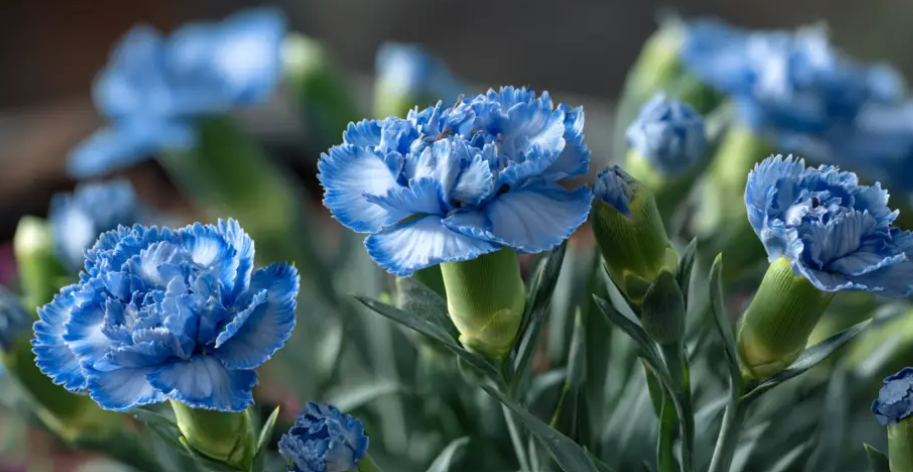
Carnations are one of the oldest cultivated flowers in the world, with a documented history of over 2,000 years stretching back to ancient Greece and Rome where they were used in garlands, ceremonial decorations, and early herbal medicine. Belonging to the pink family alongside dianthus and sweet william, there are over 300 species within the broader genus and thousands of named cultivars developed through centuries of selective breeding. They are the third most commercially important cut flower in the world after roses and chrysanthemums, with global annual production estimated at over 10 billion stems.
Carnations range in size from miniature spray types with clusters of small flowers under 1 inch across to large-flowered standard types with blooms reaching 3 to 4 inches in diameter. Most cultivated varieties grow to 12 to 24 inches in height, though some greenhouse types grown for commercial cut flower production can reach 3 to 4 feet on long, straight stems specifically selected for bouquet use. They are grown as perennials in USDA zones 6 to 10 and as annuals in cooler zones, performing best in full sun with well-draining, slightly alkaline soil.
Carnations are celebrated for their exceptionally long vase life compared to most cut flowers, lasting 2 to 3 weeks in fresh water with proper care — significantly longer than roses, lilies, or most other popular cut flowers. Colombia is the world’s largest carnation exporter, supplying approximately 60 to 70 percent of carnations sold in the United States market, while the Netherlands dominates European carnation trade and Kenya has become a major supplier to European markets. The flowers are available in virtually every color except true blue and black.
Carnations carry rich symbolic significance across many cultures, with different colors conveying specific meanings — red for love and admiration, white for pure love and good luck, pink for gratitude and motherly love, yellow for disappointment or rejection in some traditions. They are the official flower of Mother’s Day in the United States, a tradition established in the early twentieth century by Anna Jarvis who chose her mother’s favorite flower for the occasion. Spain, Slovenia, and Monaco have adopted the carnation as a national flower, and they remain one of the most universally recognized and emotionally resonant flowers in the world.
Also Read: Different Types of Cosmos Flowers
Types of Carnation Flowers
1. Sim Carnation
The Sim Carnation is the most important and widely grown commercial cut flower carnation variety ever developed, introduced in 1938 by William Sim of Massachusetts and dominating the global commercial carnation industry for several decades. It produces large, single blooms up to 3 to 4 inches across in vivid, saturated shades of red, pink, white, and salmon on long, straight, strong stems reaching 24 to 36 inches in length that are ideal for commercial bouquet and arrangement use. The Sim remains the foundational variety from which the majority of modern commercial standard carnation cultivars were developed and is still grown commercially worldwide.
2. Spray Carnation
Spray Carnations are the second most important commercial carnation category, producing multiple smaller flowers — typically 1 to 1.5 inches across — on branching stems that carry 5 to 10 blooms per stem rather than the single large flower of standard types. They are enormously popular in the cut flower trade for their generous, multi-flower stems, long vase life of 2 to 3 weeks, and the wide range of colors and bicolor patterns available across the many named spray cultivars. Spray carnations account for a significant and growing share of global commercial carnation production, particularly valued for bouquet work where multiple small flowers on a single stem provide maximum color impact.
3. Grenadin Carnation
Grenadin is one of the most important and widely grown carnation varieties for home garden cultivation, producing fully double, richly fragrant flowers in vivid shades of red, scarlet, pink, and white on sturdy, upright plants reaching 18 to 24 inches in height. It is one of the most fragrant of all carnation varieties available to home gardeners — a quality that has become increasingly rare as commercial breeding has prioritized vase life and color intensity over fragrance. It grows as a perennial in USDA zones 6 to 9 and produces flowers in its first year from seed if started early indoors.
4. Chabaud Carnation
Chabaud is the most important group of garden carnations for home growing in Europe and North America, producing large, fully double, very fragrant flowers in a wide range of colors including red, pink, white, yellow, orange, and bicolors on compact, bushy plants reaching 18 to 24 inches in height. The Chabaud group is derived from old French heirloom varieties and is celebrated for combining the large flower size and fragrance of the finest heritage carnations with reasonable ease of cultivation as an annual or short-lived perennial. They are widely available from seed and are among the most satisfying carnations a home gardener can grow.
5. Dianthus Caryophyllus (Border Carnation)
Border Carnations are the traditional hardy carnation of the English garden, growing as perennial plants reaching 18 to 24 inches in height and producing large, fully double, intensely fragrant flowers in a wide range of self-colored and fancy patterned forms during their main midsummer blooming season. They have been cultivated in British gardens for several hundred years and are the subject of a long tradition of specialist cultivation by carnation societies in the United Kingdom where named varieties are shown competitively at exhibitions. They are hardy in USDA zones 6 to 9 and perform best in the cool, moist summers of maritime northern European climates.
6. Perpetual Flowering Carnation
Perpetual Flowering Carnations are the primary type used in commercial greenhouse cut flower production worldwide, selected for their ability to flower continuously year-round under controlled greenhouse conditions rather than producing a single seasonal flush like border carnation types. They grow as tall, upright plants reaching 3 to 4 feet in height under greenhouse conditions and produce large, single blooms on long, strong stems throughout the year with appropriate temperature, light, and nutrition management. The perpetual flowering characteristic combined with the large bloom size and long stem length makes this group the cornerstone of global commercial carnation production.
7. Malmaison Carnation
Malmaison Carnations are among the most prestigious and historically significant carnation varieties in British horticulture, descended from a variety originally grown at the Château de Malmaison near Paris and producing enormous, extremely double, outrageously fragrant blooms that can reach 4 to 5 inches across — among the largest and most fragrant of any carnation variety in existence. They require greenhouse cultivation in the United Kingdom as they are too tender for permanent outdoor growing in most of the country, but the extraordinary size, doubling, and scent of the flowers are considered by carnation connoisseurs to be unmatched by any other type. They are prized as collector’s plants of considerable rarity.
8. Flamenco Carnation
Flamenco is a popular commercial spray carnation variety producing clusters of medium-sized, ruffled, fully double flowers in vivid red-orange to scarlet tones on well-branched stems carrying 5 to 8 blooms per stem. It is one of the most widely grown red spray carnation varieties in the Colombian and Kenyan commercial cut flower industries and is exported in large volumes to North American and European flower markets. The vivid, warm red-orange flower color and excellent vase life make it a reliable bestseller in the commercial spray carnation trade.
9. White Dream Carnation
White Dream is one of the most important commercial white standard carnation varieties, producing large, pure white, fully double blooms of excellent substance and form on long, strong stems reaching 24 to 30 inches in length. It is a cornerstone white carnation variety for the wedding flower and funeral flower trade where demand for high-quality, pure white blooms of consistent size and form is continuous throughout the year. The clean, brilliant white flowers hold their color without yellowing for 2 to 3 weeks in vase water, making it one of the most reliable white cut flowers available to florists.
10. Nelson Carnation
Nelson is a classic red standard carnation widely grown commercially for its rich, deep, saturated red flower color that is considered one of the finest commercial reds available in large-flowered standard carnation forms. It produces large, fully double blooms of good substance on long, strong stems and has excellent vase life and post-harvest handling characteristics that suit commercial supply chain requirements. Red standard carnations of the Nelson type are among the most widely purchased carnations for Valentine’s Day, Mother’s Day, and other seasonal gift flower occasions globally.
11. Pikes Peak Purple
Pikes Peak Purple is a distinctive carnation variety producing large, fully double flowers in a rich, deep lavender-purple tone that is among the most unusual and striking colors available in standard carnation forms. It grows to 18 to 24 inches in height in garden conditions and produces flowers with reasonable fragrance and good color saturation. The purple-lavender flower color suits contemporary and sophisticated floral arrangement styles and is a popular choice in specialty cut flower production for florists seeking unusual carnation colors.
12. Clove Pink
Clove Pink, also called Gillyflower, is one of the oldest and most historically important carnation types, the ancestor from which all modern cultivated carnations are ultimately descended and named for the rich, spicy, clove-like fragrance that is more intense and complex in this ancient type than in most modern cultivars. It produces relatively small, single to loosely double, deeply fringed pink flowers on wiry stems reaching 12 to 18 inches in height, and is grown primarily by heritage flower enthusiasts and those who prioritize the extraordinary fragrance that commercial varieties have largely lost through breeding for commercial characteristics. It is the benchmark for carnation fragrance against which all other types are measured.
Also Read: Types of Prayer Plants
13. Haytor White Border Carnation
Haytor White is one of the most celebrated border carnation varieties in British horticulture, producing very large, pure white, fully double, intensely fragrant blooms of exceptional quality on vigorous plants reaching 18 to 24 inches in height during the midsummer blooming season. It has won numerous prizes at the national carnation shows held by the British National Carnation Society and is widely regarded as one of the finest white border carnation varieties ever bred. It is hardy in USDA zones 6 to 9 and is available from specialist carnation nurseries in the United Kingdom.
14. Olivia Carnation
Olivia is a widely grown commercial spray carnation variety producing clusters of medium-sized, fully double, soft salmon-pink to peach-toned flowers on well-branched, strong stems carrying multiple blooms. The warm, soft salmon and peach tones are among the most popular color families in the commercial spray carnation trade, particularly valued for bridal bouquets, wedding arrangements, and feminine gift flower products where a warm, romantic color palette is desired. It is widely grown in Colombian and Kenyan commercial cut flower production.
15. Dianthus Chinensis (Annual Carnation)
Annual Carnations derived from the China Pink species are the most widely grown carnation relatives for bedding plant and annual border use, producing masses of small to medium, single or semi-double flowers in vivid shades of red, pink, white, bicolor, and picotee in compact, bushy plants reaching 6 to 12 inches in height. They are heat-tolerant, free-flowering, and exceptionally easy to grow from seed or transplant, making them one of the most widely sold annual bedding plants in garden centers across North America, Europe, and Asia. They bloom from late spring through early autumn and tolerate a wider range of growing conditions than true perennial carnations.
16. Carnation Moonpie
Moonpie is a modern commercial standard carnation variety producing large, fully double flowers in a soft, creamy-white to pale ivory tone with a subtle warmth quite different from the stark brilliance of pure white varieties. The soft, warm ivory coloring makes it particularly popular for wedding and event floristry where a slightly warmer, more romantic white tone is preferred over harsh pure white. It produces long, strong stems of 24 to 30 inches in length and has excellent vase life and post-harvest handling characteristics.
17. Carnation Prado
Prado is one of the most important and widely grown commercial green carnation varieties, producing large, fully double flowers in an unusual, soft, lime-green to fresh medium-green tone that makes it one of the most distinctive and sought-after specialty carnation colors in the commercial cut flower trade. Green flowers are naturally unusual and inherently eye-catching in floral arrangements, and Prado carnations are widely used by florists in contemporary, fashion-forward floral designs where unusual color combinations are valued. It is grown commercially in Colombia, Kenya, and the Netherlands.
18. Carnation Lena
Lena is a popular commercial spray carnation variety producing clusters of medium-sized, fully double flowers in a bright, vivid, hot-pink to cerise tone on well-branched stems carrying 6 to 10 blooms per stem. The vivid, saturated hot-pink color is one of the most eye-catching and commercially popular color expressions in the spray carnation range and is a consistent bestseller in the global cut flower spray carnation trade year-round. It is widely grown in the major commercial carnation-producing countries and exported globally.
19. Carnation Tsugaru
Tsugaru is a Japanese carnation variety developed through Japan’s active domestic carnation breeding program, producing large, ruffled, fully double flowers in soft, delicate shades of pink with a lighter center that creates a subtle two-tone effect within each bloom. Japanese carnation breeding has produced some of the most refined and delicately colored carnation varieties in the world, prioritizing subtle, complex color blending over the bold, saturated tones favored in commercial Western production. It is grown primarily in Japan for the domestic fresh flower market where refined color and delicate form are highly valued.
20. Carnation Tabasco
Tabasco is a vivid, eye-catching commercial standard carnation variety producing large, fully double flowers in a bold, bright, warm orange to orange-red tone that is among the most vibrantly colored of all standard carnation varieties. Orange carnations are in consistently high demand for autumn seasonal floral arrangements, Halloween-themed displays, and vibrant mixed bouquets, and Tabasco is one of the primary commercial varieties supplying this demand. It produces good-length stems and has reasonable vase life for a warm-colored variety.
21. Carnation Domingo
Domingo is an important red standard carnation variety widely grown in Colombian and Kenyan commercial cut flower production, producing large, fully double, vivid crimson-red blooms of excellent substance and form on long, straight, strong stems reaching 24 to 30 inches. Red carnations in general and Colombian-grown varieties specifically dominate the Valentine’s Day flower market in the United States, and Domingo is among the key commercial varieties supplying red carnations to North American florists during this peak demand period. The deep, saturated crimson color holds well throughout the post-harvest supply chain.
22. Carnation Farida
Farida is a yellow standard carnation variety producing large, fully double flowers in a clear, bright, warm golden-yellow tone on long, strong stems reaching 24 to 30 inches in length. Yellow carnations are an important color in the commercial cut flower trade, widely used in bright, cheerful mixed bouquets and in specific cultural traditions where yellow flowers carry positive symbolic meaning. Farida is one of the primary commercial yellow standard carnation varieties grown in Colombia and Kenya for the global fresh cut flower export market.
23. Carnation Intrega
Intrega is a commercial bicolor carnation variety producing large, fully double flowers with vivid contrasting color combinations — typically a white or cream ground with bold red or pink striping, edging, or flecking across the petals — creating one of the most eye-catching and visually complex flower patterns available in standard carnation forms. Bicolor and fancy-patterned carnations are a distinctive and important segment of the commercial carnation trade, appealing to consumers and florists who want more complex, detailed flower patterns for arrangements and bouquets. It is grown commercially in the major cut flower producing nations.
24. Carnation Purple Haze
Purple Haze is a distinctive commercial spray carnation variety producing clusters of medium-sized, fully double flowers in a soft, hazy, lavender-purple to mauve tone on well-branched stems carrying multiple blooms. The unusual, muted lavender-purple color sits between the warmer pink tones and the cooler blue-purple tones and creates a sophisticated, contemporary effect in floral arrangements and bouquets. It is a popular specialty color in the commercial spray carnation trade and is grown in Colombia and Kenya for export to European and North American markets.
25. Carnation Cherry Ripple
Cherry Ripple is a bicolor spray carnation variety producing clusters of medium-sized, fully double flowers with white petals rippled, striped, and flecked with vivid cherry-red to crimson markings in a random, spontaneous pattern that varies from flower to flower. The lively, variable bicolor pattern creates an energetic, festive quality in mixed floral arrangements, and the spray habit providing multiple blooms per stem makes it particularly cost-effective for commercial florist use. It is available from specialist carnation and cut flower suppliers.
26. Carnation Green Trick
Green Trick is one of the most unusual and popular specialty carnations available in the contemporary floral trade, not producing traditional petalled flowers at all but instead forming extraordinarily dense, rounded, moss-like balls of tightly packed, extremely fine green filaments that create a uniquely textural, almost spherical green element in floral arrangements. Stems typically carry these distinctive rounded green flower-heads at 18 to 24 inches in height and the unusual, sculptural quality of Green Trick has made it enormously popular with contemporary florists for its extraordinary textural contrast in arrangements. It is grown commercially in the Netherlands, Colombia, and Japan.
27. Carnation Chomley Farran
Chomley Farran is an important and historically significant fancy border carnation variety with deep roots in British carnation history, producing fully double flowers with white or pale ground color elaborately striped and flecked with vivid crimson-scarlet in the traditional fancy carnation style that has been cultivated in British gardens for centuries. The fancy border carnation style with its elaborate striping and flecking on a pale ground is considered the most sophisticated and historically important of all traditional carnation decorative styles in British horticulture. It is grown by specialist carnation enthusiasts and exhibited at British carnation shows.
28. Carnation Can-Can
Can-Can is a popular commercial spray carnation variety producing clusters of medium-sized, ruffled, fully double flowers with elegantly fringed petal margins that give each bloom a more ornate and decorative appearance than plain-petalled standard spray types. The fringed petal edges catch light attractively and add texture and visual interest to floral arrangements, making Can-Can and similar fringed spray carnation varieties popular with florists who want added detail and refinement in their designs. It is available in a range of colors from specialist commercial carnation suppliers.
29. Carnation Bailey
Bailey is a classic and widely grown commercial pink standard carnation variety producing large, fully double, clear, warm pink blooms of excellent substance and form on long, straight, strong stems reaching 24 to 30 inches in length. Pink standard carnations are among the most consistently popular colors in the global cut flower carnation trade, used in enormous volumes for Mother’s Day, Valentine’s Day, and general gift bouquet production year-round. Bailey is one of the benchmark pink standard carnation varieties in the commercial industry.
30. Carnation Fancy Clown
Fancy Clown is a bicolor standard carnation variety producing large, fully double flowers with white petals broadly and irregularly streaked, splashed, and flecked with vivid purple-violet in a bold, spontaneous pattern that varies significantly from flower to flower and bloom to bloom. The unusual purple and white bicolor combination creates a striking and distinctive flower that stands out in mixed arrangements and is popular with florists seeking unusual carnation color effects for contemporary floral design work. It is grown commercially and available from specialist carnation suppliers.
31. Carnation Reina Blanca
Reina Blanca, meaning White Queen in Spanish, is a classic Spanish commercial white standard carnation variety reflecting Spain’s long tradition of carnation cultivation and commercial production, producing large, pure white, fully double blooms of excellent quality on long, strong stems. Spain has historically been one of the most important carnation-producing and carnation-culturally significant nations in the world, and traditional Spanish carnation varieties like Reina Blanca carry considerable horticultural heritage alongside their commercial value. It is grown in the major Spanish carnation production regions and exported across Europe.
32. Carnation Dianthus Gratianopolitanus (Cheddar Pink)
Cheddar Pink is a low-growing, mat-forming carnation relative native to the limestone cliffs of the Cheddar Gorge in Somerset, England, producing small, single, deeply fringed, intensely fragrant pink flowers on compact, evergreen, grey-green cushions of foliage reaching only 4 to 6 inches in height. It is one of the finest and most fragrant of all rockery and alpine carnation relatives and is widely grown as a hardy perennial in USDA zones 3 to 8 where it forms attractive, long-lived mats of silvery foliage studded with fragrant pink flowers in early summer. It has received the Royal Horticultural Society’s Award of Garden Merit.
33. Carnation Jeanine
Jeanine is a widely grown commercial salmon-pink spray carnation variety producing clusters of medium-sized, fully double flowers in a warm, soft salmon to peachy-pink tone on well-branched, strong stems carrying 5 to 8 blooms per stem. The warm salmon-pink color is one of the most consistently popular color families in the commercial spray carnation trade, particularly valued for bridal work, baby shower arrangements, and warm-toned gift bouquets. It is grown commercially in Colombia and Kenya and widely exported to North American and European flower markets.
34. Carnation Oscar
Oscar is a widely recognized red spray carnation variety producing clusters of medium-sized, fully double, vivid crimson-red flowers on well-branched stems carrying multiple blooms, widely grown in Colombia and Kenya for the global cut flower market. Red spray carnations are among the most commercially important colors in the spray carnation category, used in large volumes for Valentine’s Day, anniversaries, and general romantic occasion flower products. Oscar is one of the primary red spray carnation varieties supplied to North American and European florists.
35. Carnation Sazanka
Sazanka is a Japanese carnation variety producing large, fully double flowers in soft, blended tones of pale pink and cream with a slightly deeper pink center that creates a refined, subtle color gradient within each bloom. Japanese carnation breeding programs have produced some of the most delicately colored and refined carnation varieties in existence, and Sazanka represents the Japanese preference for subtle color blending and exceptional flower quality over the bolder, more saturated tones of commercial Western varieties. It is grown primarily for the premium Japanese domestic fresh flower market.
36. Carnation Harvest Moon
Harvest Moon is a warm, amber-yellow to golden-orange carnation variety producing large, fully double flowers in a rich, warm tone that sits between yellow and orange in the color spectrum, creating a distinctive, autumnal flower color popular for harvest season and autumn-themed floral arrangements. The warm, glowing amber-gold color is unusual enough to attract attention in mixed flower displays while being harmonious enough to blend beautifully with orange, red, and warm-toned companion flowers. It is available from specialty carnation and cut flower suppliers.
Also Read: Different Types of Impatiens
37. Carnation Raggio di Sole
Raggio di Sole, meaning Ray of Sunshine in Italian, is a warm, vivid yellow standard carnation variety with a slightly more intense and saturated yellow tone than most standard commercial yellow types, producing large, fully double blooms of good substance on long, strong stems reaching 24 to 30 inches. Italy has a long tradition of carnation cultivation and breeding, and Italian carnation varieties are valued for their vivid color expression and strong stem quality. It is grown commercially in Italian greenhouse production and exported to European flower markets.
38. Carnation Dianthus Plumarius (Cottage Pink)
Cottage Pink is one of the most beloved and widely grown carnation relatives for traditional garden use, producing semi-double to double, deeply fringed, intensely fragrant flowers in shades of pink, white, and bicolor on compact, mat-forming, evergreen plants reaching 12 to 18 inches in height. It has been grown in cottage gardens across Britain and Europe for several centuries and is among the most fragrant of all readily available garden plants, with a rich, spicy, clove-tinged scent that is the definitive carnation fragrance of the traditional garden. It is hardy in USDA zones 3 to 9 and widely available from mainstream garden centers.
39. Carnation Baltico
Baltico is a commercial bicolor spray carnation variety producing clusters of medium-sized, fully double flowers in white with vivid red or pink striping, edging, and picotee markings that create an attractive, festive bicolor pattern popular for Christmas and Valentine’s Day seasonal flower products. The red and white bicolor combination of Baltico and similar picotee spray types is one of the most commercially important seasonal color combinations in the cut flower carnation trade, with demand peaking sharply during the winter holiday and Valentine’s Day seasons. It is grown commercially in Colombia and Kenya.
40. Carnation Black Adder
Black Adder is a specialist carnation variety producing flowers in an extremely deep, near-black burgundy-purple to dark maroon tone that is among the darkest flower colors achievable in the carnation species. Dark, near-black flowers are highly fashionable in contemporary floral design and Black Adder carnations are prized by avant-garde florists for the dramatic, sophisticated, and gothic-inspired color effects they create in arrangements. The very dark color makes it one of the most distinctive and sought-after specialty carnation colors in the contemporary floral trade.
41. Carnation Indios
Indios is an important commercial purple standard carnation variety producing large, fully double flowers in a rich, medium purple to violet tone on long, straight, strong stems reaching 24 to 30 inches in length. Purple carnations occupy an important and growing segment of the commercial cut flower carnation market, particularly valued for sympathy arrangements, contemporary mixed bouquets, and seasonal products where purple flowers are traditionally associated with dignity and elegance. Indios is one of the primary commercial purple standard carnation varieties supplied to global cut flower markets.
42. Carnation Super Star
Super Star is a classic, large-flowered commercial standard carnation variety producing exceptionally large, fully double blooms of outstanding size and substance — among the biggest individual carnation flowers available in commercial production — in rich, vivid red and deep pink tones. The exceptional flower size makes Super Star and similar large-flowered varieties particularly valued for high-end bouquet and arrangement work where maximum visual impact from individual flowers is desired. It is grown commercially in the major cut flower producing nations.
43. Carnation Princess
Princess is a popular commercial pink standard carnation variety producing large, fully double, clear, soft pink blooms with excellent substance and a classic, well-formed, round flower shape that is the standard of elegance in commercial standard carnation flower form. The soft, clear pink tone is one of the most universally appealing carnation colors across different consumer demographics and cultural contexts, making Princess-type pink standard carnations among the most consistently and reliably purchased carnation colors in the global fresh flower market throughout the year.
44. Carnation Dianthus Barbatus (Sweet William)
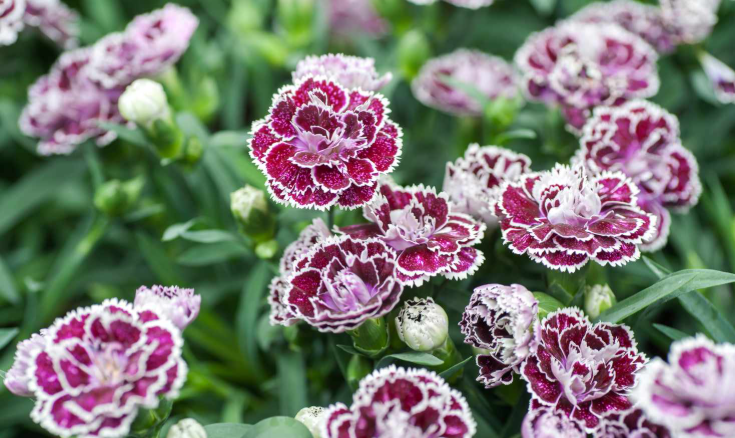
Sweet William is one of the most beloved and widely grown carnation relatives for garden use, producing rounded, domed clusters of small, single to semi-double, fragrant flowers in vivid combinations of red, pink, white, and bicolor on upright, leafy stems reaching 12 to 24 inches in height. It is grown as a biennial or short-lived perennial in USDA zones 3 to 9 and produces one of the most cheerful and colorful early summer flower displays of any garden plant. The clusters of small, intricately marked flowers in richly contrasting bicolor combinations make it one of the most visually complex and beautiful of all garden carnation relatives.
45. Carnation Etincel
Etincel, meaning Spark in French, is a vivid, bright red spray carnation variety producing clusters of medium-sized, fully double, intensely colored scarlet-red blooms on well-branched stems carrying 6 to 10 flowers per stem. French carnation breeding has produced some important commercial spray varieties and Etincel is among the most vivid and color-saturated red spray carnation varieties available in the commercial trade. The intensity of the scarlet-red color in Etincel flowers is exceptional even by the high color standards of commercial red carnation varieties.
46. Carnation Dianthus Deltoides (Maiden Pink)
Maiden Pink is a low-growing, mat-forming carnation relative producing masses of small, single, star-shaped flowers in vivid shades of pink, red, and white on compact, spreading, evergreen plants reaching only 4 to 8 inches in height. It is one of the most widely used ground-covering alpine and rockery carnation relatives, spreading slowly to form attractive, flowering mats that provide good weed suppression and prolific color from early summer through midsummer. Hardy in USDA zones 3 to 9 and widely available from mainstream garden centers and perennial plant nurseries.
47. Carnation Sorentino
Sorentino is an Italian commercial standard carnation variety producing large, fully double flowers in a warm, rich, coral-orange to salmon tone that bridges the gap between orange and pink in an unusual and appealing color combination. Italian commercial carnation production focuses significantly on warm, Mediterranean-toned color expressions that differ from the cooler, more saturated colors favored in northern European production, and Sorentino represents this warm, richly toned Italian aesthetic in standard carnation form. It is grown in Italian greenhouse production and distributed across European flower markets.
48. Carnation Magnum
Magnum is a large-flowered commercial standard carnation variety bred specifically for maximum individual bloom size, producing some of the largest carnation flowers available in commercial production on strong, long stems reaching 24 to 36 inches in length. The emphasis on exceptional flower size rather than any particular color expression means Magnum is produced in multiple color variants including red, pink, white, and yellow, with the defining characteristic across all colors being the extraordinary size of the individual blooms rather than any single color. It is valued in the premium cut flower market segment.
49. Carnation Asso di Fiori
Asso di Fiori, meaning Ace of Flowers in Italian, is a classic Italian spray carnation variety producing clusters of medium to large, fully double flowers in warm, vivid shades of red-orange to scarlet on well-branched, strong stems. Italian spray carnation varieties are characterized by their exceptionally vivid color expression and strong stem quality, and Asso di Fiori is one of the more celebrated traditional Italian spray carnation varieties with a long history of commercial greenhouse cultivation in Italy. It is grown in Italian commercial production and exported across European flower markets.
50. Carnation Vienna Mix
Vienna Mix is a classic, comprehensive seed-grown carnation mixture producing large, fully double, fragrant flowers in a wide range of colors including red, pink, white, salmon, yellow, and bicolors on vigorous, upright plants reaching 18 to 24 inches in height, grown from seed as an annual or short-lived perennial. It is one of the most widely available seed-grown carnation mixes for home garden production, offering the broadest possible color range from a single seed packet. The good fragrance, large flower size, and wide color range make Vienna Mix one of the most satisfying and rewarding carnation seed mixes for the home cutting garden.