American Fringe Tree: A Complete Guide to Its Botany, History, Characteristics, and Landscape Value
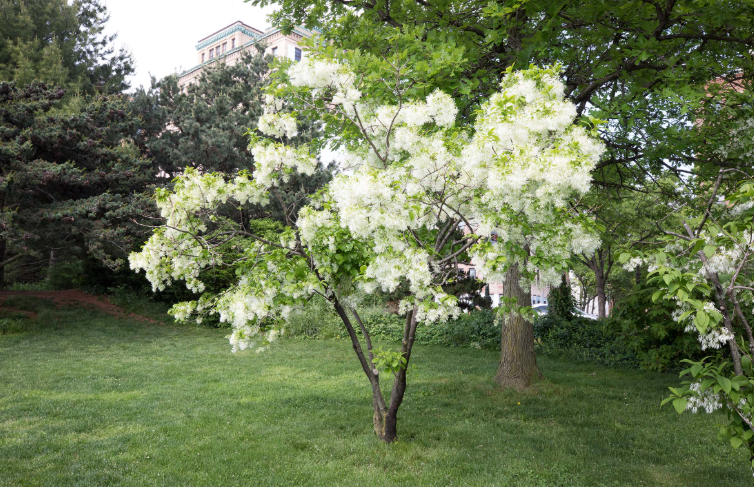
The American fringe tree (Chionanthus virginicus) is one of North America’s most elegant native ornamental trees. Admired for its cloud-like clusters of fragrant white flowers that appear in late spring, this small deciduous tree has become a favorite among landscapers, homeowners, and conservationists alike. Despite its remarkable beauty, the American fringe tree remains relatively underutilized compared to flowering dogwoods, redbuds, and magnolias.
Native to the eastern United States, the American fringe tree offers much more than ornamental appeal. It supports pollinators, provides food for birds, tolerates a variety of growing conditions, and requires relatively little maintenance once established. Its manageable size also makes it an excellent choice for urban gardens and residential landscapes.
This article explores the botanical classification, history, identifying characteristics, landscape uses, growing requirements, ecological importance, and maintenance considerations of the American fringe tree.
Botanical Classification
The American fringe tree belongs to the olive family, Oleaceae, which also includes olives (Olea europaea), ash trees (Fraxinus spp.), lilacs (Syringa spp.), and forsythias. Despite belonging to the same family as olives, the American fringe tree is cultivated primarily for its ornamental qualities rather than edible fruits. The genus name Chionanthus originates from the Greek words chion (snow) and anthos (flower), referring to its snow-like blossoms, while the species name virginicus denotes its historical association with Virginia.
Botanical Classification
- Kingdom: Plantae
- Division: Magnoliophyta (Flowering Plants)
- Class: Magnoliopsida (Dicotyledons)
- Order: Lamiales
- Family: Oleaceae
- Genus: Chionanthus
- Species: Chionanthus virginicus
The tree is closely related to the Chinese fringe tree (Chionanthus retusus), another ornamental species widely planted in landscapes. While both species share similar floral displays, the American fringe tree has a more natural, open growth habit and softer, drooping flower clusters.
History and Native Distribution
The American fringe tree is indigenous to the eastern and southeastern United States, where it naturally grows in woodland edges, moist forests, stream banks, and upland slopes. Its native range stretches from New Jersey south to Florida and west to Texas and parts of Oklahoma, covering hundreds of miles across diverse climatic regions.
Long before European settlement, Native American tribes valued the tree for medicinal purposes. Bark extracts were traditionally used as a disinfectant and for treating skin ailments and fevers. Early American herbal medicine also employed preparations from the bark as a tonic, although such historical uses should not be interpreted as modern medical recommendations.
The species was formally described by Swedish botanist Carl Linnaeus during the eighteenth century and has remained a recognized native ornamental ever since. Today, it is increasingly promoted as an environmentally friendly alternative to many introduced ornamental trees.
Identifying Characteristics
The American fringe tree is generally classified as a small deciduous tree or large multi-stemmed shrub. Mature specimens commonly reach 12–20 feet (3.6–6 meters) in height with an equal spread, although exceptional wild specimens may approach 30–35 feet (9–11 meters) under ideal conditions.
Flowers
The tree’s greatest ornamental feature is its spectacular bloom.
Flowering occurs in late spring, usually from April through May depending on climate. Long clusters, or panicles, measuring 4–8 inches (10–20 cm) bear hundreds of delicate white flowers composed of four narrow, ribbon-like petals that create a feathery or fringed appearance.
The flowers are lightly fragrant and often appear as the leaves begin expanding, creating the illusion of snow draped across the canopy.
Male trees generally produce larger and more abundant flowers than female trees, making them especially popular for ornamental planting.
Leaves
Leaves are simple, opposite, and elliptical to oblong in shape. Individual leaves typically measure 3–8 inches (7.5–20 cm) long.
During summer they maintain a glossy medium-green color before turning attractive golden-yellow in autumn. Although the fall display is not as dramatic as maples, it adds valuable seasonal interest.
Fruit
Female trees develop bluish-black, olive-like drupes approximately 0.5–0.8 inches (1.5–2 cm) long.
These fruits mature from late summer into early autumn and provide an important food source for numerous bird species including bluebirds, robins, and mockingbirds.
Bark and Form
Young bark appears smooth and gray, gradually becoming ridged and scaly with age. The tree naturally develops a rounded, open crown and frequently grows with multiple trunks, though it can be trained into a single-stem specimen.
Growth Rate and Lifespan
The American fringe tree is considered a slow-growing species, typically adding only 6–10 inches (15–25 cm) of new growth annually under average conditions.
Although slower than many ornamental trees, its moderate size reduces maintenance needs while allowing it to fit comfortably into small residential landscapes.
Healthy specimens can live for several decades, often exceeding 50 years when grown in favorable environments with minimal disturbance.
Landscape Uses
The American fringe tree is exceptionally versatile in landscape design.
Specimen Tree
Its striking spring flowers make it an ideal focal point in lawns, courtyards, and entrance gardens.
Woodland Gardens
Because it naturally occurs along woodland margins, it performs beautifully in native woodland settings where filtered sunlight mimics its natural habitat.
Foundation Plantings
Its relatively compact size allows planting near homes without overwhelming foundations or utility lines.
Pollinator Gardens
The fragrant flowers attract numerous bees, butterflies, and other pollinating insects, making the tree a valuable addition to wildlife-friendly landscapes.
Rain Gardens
Its adaptability to periodically moist soils enables successful use in rain gardens and bioswales where drainage fluctuates.
Urban Landscapes
The American fringe tree demonstrates moderate tolerance to urban pollution and can be planted along streets, parks, institutional landscapes, and commercial developments.
Growing Conditions
Although adaptable, the American fringe tree performs best when several cultural requirements are met.
Light
The tree thrives in:
- Full sun (6 or more hours of sunlight daily)
- Partial shade
Full sun generally produces the heaviest flowering, while partial shade often results in richer foliage.
Soil
Ideal soils are:
- Moist
- Well-drained
- Fertile
- Slightly acidic to neutral
The species tolerates clay, loam, and sandy soils provided drainage remains adequate.
Water
Young trees require regular watering during establishment, especially during the first two growing seasons.
Once established, the American fringe tree develops moderate drought tolerance but still performs best with consistent soil moisture.
USDA Hardiness Zones
The tree grows successfully across USDA Hardiness Zones 3 through 9, making it suitable for much of the United States.
Planting and Maintenance
Proper establishment contributes greatly to long-term success.
Planting Tips
Plant during spring or autumn when temperatures are moderate.
Dig a planting hole approximately twice as wide as the root ball but no deeper than its height.
Mulching with 2–3 inches (5–7.5 cm) of organic material helps conserve soil moisture and suppress weeds while keeping mulch away from direct contact with the trunk.
Fertilization
Most established trees require little supplemental fertilizer.
Where soils are nutrient deficient, a balanced slow-release fertilizer applied in early spring is generally sufficient.
Pruning
Minimal pruning is necessary.
Remove:
- Dead branches
- Crossing limbs
- Damaged wood
If a single-trunk tree is desired, structural pruning should begin while the plant is young.
Transplanting
One noteworthy characteristic is the tree’s sensitivity to root disturbance. Smaller nursery-grown specimens establish more successfully than larger transplanted trees.
Wildlife and Ecological Benefits
The American fringe tree contributes significantly to biodiversity.
Its flowers attract numerous native pollinators including bees, butterflies, and beneficial insects.
Female trees produce nutrient-rich fruits consumed by many songbirds and small mammals.
As a native species, it supports regional ecosystems more effectively than many exotic ornamentals, requiring fewer chemical inputs and integrating naturally into local food webs.
The tree also contributes to urban sustainability by providing shade, improving air quality, and helping reduce stormwater runoff through rainfall interception.
Common Pests and Diseases
Fortunately, the American fringe tree experiences relatively few serious health problems.
Potential issues include:
- Scale insects
- Leaf spot fungi
- Powdery mildew (occasionally)
- Root problems in poorly drained soils
Good air circulation, proper spacing, and avoidance of overwatering greatly reduce disease pressure.
Compared to many flowering ornamentals, the species remains remarkably low maintenance.
Comparison with the Chinese Fringe Tree
Gardeners frequently compare the American fringe tree with its Asian relative.
The American species generally has:
- Softer, drooping flower clusters
- More natural branching
- Greater wildlife value for North American ecosystems
- Native ecological significance
The Chinese fringe tree typically displays:
- More upright growth
- Slightly larger, denser flower clusters
- Attractive exfoliating bark
Both species are outstanding landscape trees, although native plant enthusiasts often favor the American fringe tree for its ecological contributions.
Interesting Facts
Several fascinating facts make the American fringe tree particularly memorable:
- The tree belongs to the same botanical family as olive trees.
- Individual flowers have only four slender petals, yet thousands bloom simultaneously to create a cloud-like display.
- Male trees usually produce showier blossoms than female trees.
- Female trees bear decorative blue-black fruits that attract birds.
- Growth averages only 6–10 inches per year, making the species suitable for small gardens where rapid growth would be undesirable.
- Mature landscape specimens generally remain under 20 feet tall, allowing use beneath utility lines and in compact urban spaces.
Conclusion
The American fringe tree is a remarkable native ornamental that combines elegance, ecological value, and ease of care. Its spectacular white spring blossoms, manageable size, attractive yellow autumn foliage, and wildlife-supporting fruits make it one of the finest small trees available for residential and public landscapes.
Although it grows more slowly than many ornamental species, its longevity, adaptability, and minimal maintenance requirements more than compensate for its measured pace. As interest in native landscaping and pollinator-friendly gardens continues to grow, the American fringe tree deserves greater recognition as both a beautiful specimen and an environmentally responsible planting choice. Whether used as a standalone focal point, incorporated into woodland gardens, or planted along urban streetscapes, Chionanthus virginicus offers year-round appeal while strengthening local ecosystems for generations to come.