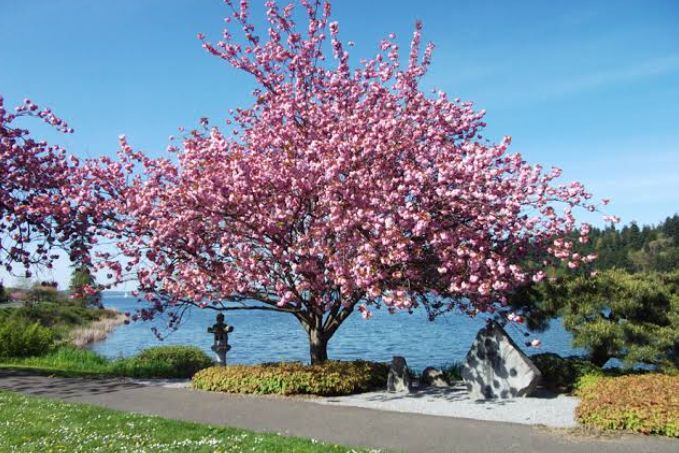
The Japanese flowering cherry tree is one of the most recognizable ornamental trees in the world, prized for the brief but spectacular flush of pink and white blossoms it produces each spring. Unlike its fruiting cherry cousins, this tree is grown almost entirely for visual impact rather than for harvest, and it has become a defining feature of parks, campuses, and residential streets across North America.
Understanding its origins, its botanical background, and the conditions it needs to thrive helps explain why it remains such a sought-after landscape specimen more than a century after it first arrived on American soil.
Botanical Classification
Japanese flowering cherries belong to the same broad plant family as roses, apples, and plums, a family known for producing showy five-petaled blossoms in early spring. Within that family, they sit in the genus that also contains peaches, apricots, and almonds, all of which share the trait of producing a single hard-pitted stone fruit.
Most ornamental Japanese cherries grown today are not wild species at all but cultivated hybrids, developed and selected over centuries in Japan for flower color, petal count, and bloom timing rather than fruit quality. Botanists estimate there are more than 200 named ornamental cherry cultivars in circulation worldwide, though only a few dozen are commonly available in the North American nursery trade.
A Brief History
Cherry cultivation for ornamental purposes in Japan stretches back well over a thousand years, with imperial court gardens documented as celebrating cherry blossoms as early as the eighth century. The tradition of hanami, or flower viewing, grew from these early court customs into a broad cultural practice that continues today.
Japanese flowering cherries reached the United States in a well-known 1912 gift of more than 3,000 trees from the city of Tokyo to Washington, D.C., a planting that still lines the Tidal Basin and draws over 1.5 million visitors during peak bloom each year. That gift introduced several cultivars that remain nursery staples, and it sparked a wave of municipal plantings across American cities throughout the twentieth century.
Identifying Characteristics
The most obvious identifying feature is the bloom itself, which typically appears for just one to two weeks in early to mid-spring, before the leaves fully emerge. Flower color ranges from pure white to deep pink depending on the cultivar, and blossoms may be single-petaled with five petals or double-petaled with 20 or more, giving certain varieties a fuller, pompom-like appearance. Bark is another reliable identifier, typically smooth and reddish-brown with distinctive horizontal lenticels, the small raised pores that run in bands around the trunk.
Mature height varies considerably by cultivar, ranging from compact weeping forms that stay under 15 feet to upright varieties that can reach 40 feet at maturity. Leaves are oval with finely serrated edges, emerging bronze-green in spring before turning a deeper green in summer, and many cultivars offer a secondary show of orange or copper fall color. Growth habit differs widely as well, spanning weeping, columnar, vase-shaped, and broad spreading forms, which gives landscapers considerable flexibility in how the tree is used.
Landscape Uses
Japanese flowering cherries are almost always planted as focal points rather than background trees, since their seasonal bloom draws the eye regardless of surrounding plantings. Weeping cultivars work particularly well near water features or as a single specimen on a lawn, where their cascading branches can be viewed from multiple angles. Upright and vase-shaped varieties are the standard choice for street tree plantings and formal allées, and it is common to see them spaced 15 to 20 feet apart along walkways to create a canopy effect during bloom season.
Because the flowering display is so short-lived, many designers pair these trees with spring bulbs or later-blooming perennials underneath, extending visual interest through the rest of the growing season. The trees also perform well in mixed borders near patios or entryways, where their modest mature size in many cultivars keeps them from overwhelming a residential-scale planting. Some municipalities have gone further, developing entire festival economies around cherry plantings, with blossom-related tourism estimated to generate tens of millions of dollars annually in cities that host well-known bloom displays.
USDA Hardiness Zones
Most Japanese flowering cherry cultivars are rated for USDA Hardiness Zones 5 through 8, which covers a wide swath of the continental United States from the upper Midwest and New England down through the mid-Atlantic and into the Pacific Northwest. Some cultivars extend slightly further, tolerating the milder winters of zone 9 in parts of the Southeast and California, though extreme summer heat in zones 9 and above can shorten bloom duration and stress the tree over time.
Gardeners in zone 4 can grow a handful of especially cold-hardy cultivars, but flower bud damage from late frosts becomes a more frequent risk that far north. Because bloom timing is closely tied to a chilling requirement followed by a warming period, a tree planted outside its recommended zone range often produces fewer flowers or blooms unpredictably from year to year.
Growing Considerations
Soil and site selection have an outsized effect on how well these trees perform over their lifespan, which typically runs between 15 and 25 years for most cultivars, noticeably shorter than many shade trees.
Sunlight. Full sun is essential for a strong bloom, with at least six hours of direct light recommended daily. Trees grown in partial shade tend to flower sparsely and develop a looser, less appealing form.
Soil drainage. Well-drained, slightly acidic soil is critical, since Japanese cherries are notably intolerant of standing water and are prone to root rot in compacted or poorly drained sites.
Watering. Newly planted trees need consistent moisture during their first two growing seasons, roughly one to two inches of water per week, after which established trees become moderately drought tolerant.
Pruning. Pruning should be done immediately after flowering, since these trees set next year’s flower buds on old wood during the summer, and any pruning delayed until winter or early spring will remove buds and reduce the following year’s display.
Pests and disease. Common problems include borers, aphids, and a fungal condition known as brown rot, which affects roughly one in five ornamental cherries in humid climates over their lifetime if left unmanaged.
Mulching. A two-to-three-inch layer of mulch around the base, kept away from direct contact with the trunk, helps regulate soil temperature and moisture while reducing competition from turf grass roots.
Fertilization. Light feeding with a balanced, slow-release fertilizer in early spring supports healthy growth, though over-fertilizing tends to push leafy growth at the expense of flower production.
Winter protection. Young trees benefit from trunk wrapping in their first few winters in colder zones, since sunscald and frost cracking are common on the thin bark of juvenile specimens.
Spacing. Adequate spacing at planting, generally 15 to 25 feet from structures and other trees depending on the cultivar’s mature spread, prevents future crowding and improves air circulation that reduces fungal disease pressure.
Root considerations. Roots are relatively shallow and can lift nearby pavement over time, making sidewalk-adjacent plantings a common source of long-term maintenance issues in urban settings.
Fun Facts
The Yoshino cherry, the most widely planted flowering cherry cultivar in the world, is believed to have originated as a hybrid developed in Tokyo during the 1800s and was not identified as a distinct type until the early twentieth century. In Japan, meteorologists track and forecast the “cherry blossom front,” a line showing the wave of blooming trees as it moves north across the country each spring, a forecast followed with the same seriousness as a weather report.
Individual blossoms typically last only four to ten days once fully open, and a strong wind or rain shower can strip a tree bare within hours, which is part of what makes the bloom feel so fleeting and valuable. Despite the name, many Japanese flowering cherry cultivars produce little to no edible fruit; they were bred specifically for flower display, unlike their fruit-producing Prunus relatives. The trees are also deeply tied to the Japanese concept of mono no aware, an appreciation for the transience of beauty, since the short bloom period is seen as part of the flower’s appeal rather than a shortcoming.
Frequently Asked Questions
How long do Japanese flowering cherry trees bloom? Individual flowers last about one to two weeks, though exact timing depends on cultivar, local weather, and geographic location, with warmer springs often shortening the display.
Do Japanese flowering cherry trees produce fruit? Most ornamental cultivars produce only small, inedible fruit or none at all, since they were bred for flower quality rather than fruit production.
What is the difference between a Japanese flowering cherry and a fruiting cherry tree? Fruiting cherries are cultivated primarily for their edible fruit and tend to have simpler, less showy blossoms, while flowering cherries are bred for dense, ornamental blooms with reduced or absent fruiting.
How fast do Japanese flowering cherry trees grow? Most cultivars grow at a moderate rate, adding roughly 12 to 24 inches of height per year under good conditions, reaching mature size within 15 to 20 years.
What is the best time to plant a Japanese flowering cherry tree? Early spring or fall planting is generally recommended, allowing the tree to establish roots before facing the stress of summer heat or winter cold.
Final Overview
Few ornamental trees generate as much anticipation as the Japanese flowering cherry, whose brief spring display has shaped garden traditions, civic plantings, and tourism calendars for more than a century in North America. Its relatively short lifespan and specific site requirements mean it rewards attentive placement and care, but for gardeners and landscape planners willing to meet those conditions, few trees deliver as much visual impact for the investment. With hundreds of cultivars now available and a hardiness range that covers most of the temperate United States, there is a Japanese flowering cherry suited to nearly any garden looking to capture that unmistakable spring moment.