
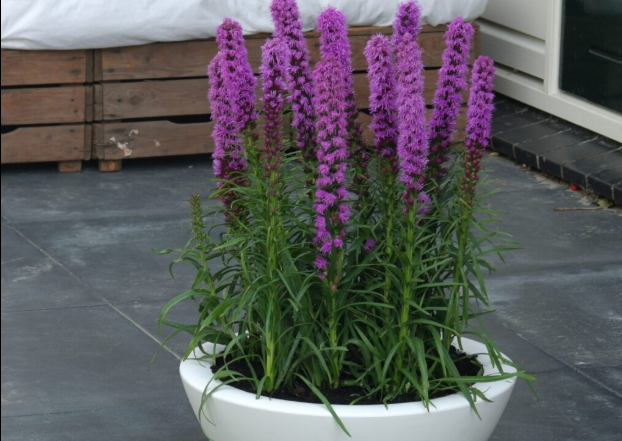
Liatris (Liatris spicata), commonly known as blazing star or gayfeather, is a native North American wildflower belonging to the Asteraceae family. It is found naturally across more than 30 states in the eastern and central United States, as well as parts of Canada, growing wild in prairies, open meadows, and woodland edges. The plant is instantly recognizable by its tall, slender spikes densely packed with feathery, rose-purple florets, and it holds the unusual distinction of being one of the very few flowering plants that blooms from the top of its spike downward rather than from the base up.
Ecologically, liatris is considered one of the most valuable native wildflowers for pollinators in North America. Studies have recorded more than 50 species of native bees visiting liatris blooms during its flowering season, alongside monarch butterflies, swallowtails, and hummingbirds. Monarch butterflies in particular rely heavily on late-summer nectar sources like liatris to fuel their annual migration of up to 3,000 miles to their overwintering grounds in Mexico. Goldfinches and sparrows further extend its wildlife value by feeding on the protein-rich seed heads well into autumn and winter.
Liatris has a long history of human use stretching back centuries among Indigenous North American peoples. Various tribes used the corms and roots medicinally to treat conditions ranging from sore throats and kidney disorders to general fatigue, and the plant was also occasionally used as a flavoring agent. By the 19th century, liatris had made its way into formal botanical collections in Europe, where it became popular in ornamental gardens. Today it is cultivated commercially in at least 15 countries and is a significant presence in the global cut flower trade, particularly in the Netherlands, which processes billions of cut flowers annually.
In the garden, liatris is celebrated for its bold vertical form and long bloom season, which typically spans 6 to 8 weeks between July and September depending on climate and variety. Flower spikes commonly reach 2 to 4 feet in height, with some vigorous varieties exceeding 5 feet under ideal growing conditions. The genus Liatris contains approximately 40 recognized species, the most widely cultivated of which is Liatris spicata, available in dozens of named cultivars ranging from compact 18-inch border plants to stately full-sized prairie forms in shades of purple, violet, and white.
Liatris is prized by gardeners for its outstanding resilience and low-maintenance nature once established. It is rated hardy across USDA zones 3 through 9, tolerating winter temperatures as low as minus 40 degrees Fahrenheit in its dormant state. The plant is drought-tolerant, deer-resistant, and thrives in poor, sandy, or gravelly soils where many other perennials struggle. Its deep corms, which can penetrate the soil to depths of 12 inches or more, allow it to access moisture and nutrients that shallower-rooted plants cannot reach, giving it a competitive advantage in dry or challenging growing conditions.
As a cut flower, liatris has become a staple of the floral industry, valued for its long vase life of 10 to 14 days and its striking vertical form that adds height and drama to arrangements. It is a popular choice for weddings, event floristry, and everyday bouquets, and pairs exceptionally well with roses, dahlias, and ornamental grasses. Beyond its ornamental appeal, liatris plays an increasingly important role in habitat restoration projects across North America, where native plant advocates and conservation organizations plant it widely to rebuild degraded prairie ecosystems and support declining pollinator populations.
Also Read: How To Grow And Care For Geraniums
How to Grow and Care for Liatris
1. Climate and Hardiness
Liatris is a hardy perennial suited to USDA hardiness zones 3 through 9, making it adaptable to a broad range of climates from cold northern regions to warm southern gardens. It is exceptionally cold-tolerant in winter and equally comfortable in the heat of summer, thriving in temperate, continental, and even semi-arid conditions with relative ease.
2. Sunlight Requirements
Liatris performs best in full sun, requiring a minimum of six hours of direct sunlight per day for strong, upright growth and prolific flowering. Plants grown in partial shade tend to produce fewer blooms, develop weaker stems that are more prone to flopping, and may be more susceptible to fungal issues caused by poor air circulation.
3. Soil Preferences
Liatris thrives in well-drained, moderately fertile soil and is notably tolerant of poor, sandy, or gravelly conditions that would challenge many other perennials. It does not perform well in heavy clay or consistently waterlogged soils, as the corms are prone to rotting when moisture cannot drain freely away from the root zone.
Also Read: How To Grow And Care For Clematis
4. Planting Corms
Liatris is most commonly established from corms, which are small, rounded storage organs resembling flat bulbs. Plant corms in spring after the last frost, placing them two to three inches deep with the flattened side facing up. Space corms approximately twelve to fifteen inches apart to allow adequate airflow and room for the clumps to expand over time.
5. Planting from Transplants
Liatris can also be planted from nursery-grown transplants in spring or early fall, which provides a faster path to a first-season bloom compared to starting from corms. When transplanting, disturb the roots as little as possible, set plants at the same depth they were growing in their containers, and water thoroughly immediately after planting to help them establish quickly.
6. Watering Needs
During the first growing season, regular watering is important to help liatris develop a strong root system and establish its corms firmly in the soil. Once established, liatris is remarkably drought-tolerant and requires only supplemental watering during extended dry spells, as overwatering or poorly drained conditions are far more damaging to the plant than moderate drought.
7. Fertilizing
Liatris does not require heavy feeding and actually performs best in soils that are not overly rich in nutrients. A single light application of a balanced, slow-release fertilizer worked into the soil at planting time is generally sufficient, as excessive nitrogen promotes lush leafy growth at the expense of flower production and can make stems weak and floppy.
8. Mulching
Applying a two to three inch layer of organic mulch around liatris plants helps conserve soil moisture, regulate soil temperature, and suppress competing weeds during the growing season. Keep mulch a few inches away from the base of the plant to prevent moisture from accumulating directly around the corms, which could encourage crown rot in wet conditions.
9. Staking
Taller liatris varieties, particularly those growing in partially shaded locations or especially fertile soils, may benefit from light staking to keep their spikes upright during summer storms and strong winds. Inserting a single bamboo stake and loosely tying the stem early in the season before the flower spike fully develops is the least intrusive and most effective method.
10. Deadheading and Pruning
Deadheading spent flower spikes after blooming can encourage a tidier appearance and may prompt a modest secondary flush of growth in some varieties, though it is not strictly necessary for the plant’s health. If you wish to support wildlife, leaving the seed heads in place through autumn and winter provides valuable food for goldfinches and other seed-eating birds before cutting the plant back in late winter or early spring.
11. Division
Liatris clumps should be divided every three to four years to prevent overcrowding, maintain vigor, and encourage the best possible flowering performance. Division is best carried out in early spring just as new growth begins to emerge, carefully lifting the clump, separating the corms by hand, and replanting divisions at the correct depth in freshly prepared soil.
12. Pest Management
Liatris is largely resistant to serious pest problems and is rarely troubled by the deer and rabbit pressure that damages so many other garden perennials. Slugs and snails may occasionally feed on young emerging foliage in wet seasons, and aphids can sometimes cluster on new growth, but both issues are usually minor and can be addressed with simple hand-removal or a gentle spray of water.
13. Disease Prevention
The most common disease issues affecting liatris are fungal problems such as powdery mildew and stem rot, both of which are almost always linked to poor drainage, excessive soil moisture, or insufficient air circulation around the plants. Planting in well-drained soil, avoiding overhead watering, spacing plants adequately, and removing any dead or diseased foliage promptly are the most effective preventive measures.
14. Winter Care
In most of its hardiness range, liatris requires very little winter care beyond leaving the foliage in place until late winter to help insulate the corms during periods of hard frost. In colder climates at the northern end of its range, applying a light layer of straw mulch over the planting area after the ground freezes provides additional protection without encouraging moisture buildup around the dormant corms.
Also Read: How To Grow And Care For Stock Flower
15. Propagation from Seed
Liatris can be propagated from seed, though this method requires patience as plants grown from seed typically take two to three years to produce their first flowers. Fresh seed sown directly into the garden in autumn benefits from natural cold stratification over winter, which breaks dormancy and improves germination rates considerably in the following spring.
16. Companion Planting
Liatris pairs beautifully with a wide range of late-summer and fall-blooming perennials that share its preference for full sun and well-drained soil. Excellent companions include black-eyed Susan, coneflower, rudbeckia, ornamental grasses, and goldenrod, all of which create a vibrant, naturalistic planting that maximizes visual impact while providing an extended seasonal buffet for pollinators and wildlife.
Also Read: How To Grow And Care For Daffodil