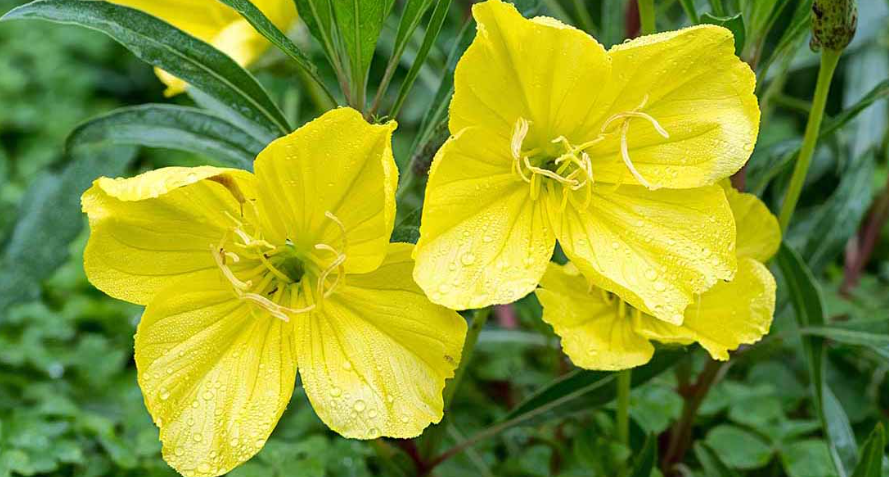
Evening Primrose (Oenothera biennis) is a fascinating and versatile flowering plant belonging to the family Onagraceae, native to North America but now naturalized across Europe, Asia, and beyond. With over 145 recognized species within the Oenothera genus, evening primrose encompasses a wide range of forms, from low-growing groundcovers to tall, upright biennials reaching 6 feet in height. Global interest in evening primrose has grown substantially in recent decades, driven largely by the commercial value of its seed oil, with the global evening primrose oil market valued at hundreds of millions of dollars annually.
As a plant, evening primrose produces a basal rosette of lance-shaped, slightly wavy-edged leaves in its first year, followed by tall, upright flowering stems in its second year for biennial species. The stems are often reddish-tinged and covered in fine hairs, giving the plant a distinctive appearance. Leaves along the flowering stems are alternate, progressively smaller toward the top, and similarly lance-shaped.
Evening Primrose thrives in USDA zones 4 through 9, where it adapts to a remarkably wide range of soil and climate conditions. Perennial species within the genus extend hardiness into zone 3 in some cases, making the genus one of the most climate-adaptable flowering plant groups available. Its tolerance of poor, dry soils and exposed conditions allows it to thrive where many other garden plants struggle.
The flowers are evening primrose’s most enchanting feature, consisting of four broad, silky petals in shades of bright yellow, pale pink, white, and occasionally lavender depending on the species. True to its name, the flowers of most species open in the evening and remain open through the night, closing again by midday the following day. This nocturnal blooming habit makes evening primrose uniquely valuable for moon gardens and for attracting night-flying pollinators such as hawkmoths.
Evening primrose has enormous commercial and medicinal significance, with its seed oil being one of the most widely sold botanical supplements in the world. The oil is exceptionally rich in gamma-linolenic acid, an omega-6 fatty acid with documented benefits for skin health, hormonal balance, and inflammation. Annual global production of evening primrose oil runs into thousands of metric tons, with major cultivation centered in the United Kingdom, China, and parts of Eastern Europe.
Beyond its medicinal use, all parts of the evening primrose plant are edible, with roots, leaves, and flowers consumed in various culinary traditions. Native American tribes used the plant extensively as both a food source and a medicinal herb, treating conditions ranging from skin disorders to digestive complaints. This long history of human use underscores the plant’s remarkable versatility beyond its ornamental value.
With its enchanting nocturnal flowers, exceptional medicinal value, and outstanding toughness in difficult growing conditions, evening primrose is a uniquely rewarding garden plant. Whether grown for its beauty, its wildlife value as a pollinator plant, or its practical uses in cooking and natural health, it delivers outstanding results with minimal care. Its ability to self-seed and naturalize makes it an effortless addition to wildflower gardens, meadows, and informal plantings.
Also Read: Types of Primrose Flowers
How to Grow and Care for Evening Primrose
- Choose a Sunny to Partly Shaded Location: Evening primrose thrives in full sun to light partial shade, performing best with at least six hours of direct sunlight daily. In hotter climates, some afternoon shade helps extend the flowering season and prevents premature flower fading. An open, south-facing position with good air circulation is ideal for most species.
- Select Well-Draining, Average Soil: Evening primrose is remarkably tolerant of poor, sandy, or gravelly soils and actually performs better in lean conditions than in overly rich, fertile ground. Excessive soil fertility leads to lush, floppy growth and reduced flowering. The most important soil requirement is adequate drainage, as waterlogged conditions cause root rot and plant decline.
- Sow Seeds Directly in the Garden: Evening primrose seeds are best sown directly into prepared garden beds in spring or autumn, as the plants do not always transplant well due to their taproot. Surface sow seeds and press them lightly into the soil without covering, as they need light for germination. Autumn sowing allows seeds to undergo natural cold stratification over winter, improving spring germination rates.
- Thin Seedlings for Proper Spacing: Once seedlings emerge and develop their first true leaves, thin them to approximately 12 to 18 inches apart depending on the species and expected mature size. Adequate spacing allows each plant to develop fully and ensures good air circulation. Thinning is best done with scissors rather than pulling to avoid disturbing neighboring seedlings.
- Water Moderately During Establishment: Newly sown or transplanted evening primrose plants need moderate watering to establish a strong root system. Once established, the plant is highly drought-tolerant and rarely requires supplemental irrigation in most climates. Overwatering established plants is one of the most common causes of poor performance and root rot.
- Avoid Heavy Fertilization: Evening primrose rarely needs additional feeding and actually thrives in poor to average soil conditions. Excessive nitrogen in particular leads to lush, floppy growth and significantly reduced flowering. If soil is extremely poor, a single light application of balanced fertilizer in early spring is the most that should ever be applied.
- Support Taller Varieties: Taller biennial species of evening primrose, which can reach 4 to 6 feet in height, may require light staking in exposed or windy garden positions. Installing stakes early in the season before stems reach their full height minimizes root disturbance. Alternatively, planting in a sheltered position against a fence or wall provides natural wind protection.
- Deadhead to Extend Blooming: Removing spent flower spikes promptly encourages the plant to produce additional flowering side shoots and extends the overall bloom period. For gardeners wishing to allow self-seeding, some seed heads can be left to mature before removing the rest. This balance between deadheading and seed retention maintains both flowering performance and natural garden spread.
- Allow Self-Seeding for Naturalization: Evening primrose self-seeds prolifically when seed heads are left to mature, gradually establishing a self-sustaining colony over time. This naturalistic spreading habit is ideal for wildflower gardens, meadow plantings, and informal borders. Unwanted seedlings are easy to remove or transplant while still small and before the taproot becomes established.
- Mulch Lightly Around Plants: A thin layer of organic mulch helps retain soil moisture, regulate root temperature, and suppress competing weeds around evening primrose plants. Avoid heavy mulching, which can create overly moist conditions around the base of stems. Light mulching also allows self-seeded seedlings to emerge naturally through the mulch layer.
- Grow in Containers for Smaller Spaces: Compact perennial evening primrose species adapt reasonably well to container growing in large pots with excellent drainage. Container plants require more frequent watering than those in the ground and benefit from a light monthly feeding during the growing season. Containers also allow gardeners to position plants precisely where their evening blooms and fragrance can be most appreciated.
- Attract Night Pollinators: To maximize the pollinator value of evening primrose, plant it in positions that are easily visible in the evening, such as near pathways, seating areas, or garden lighting. Hawkmoths, the primary natural pollinators of many evening primrose species, are drawn to the pale flowers and sweet evening fragrance. Pairing evening primrose with other night-blooming plants creates an outstanding moon garden display.
- Monitor for Aphids: Aphids occasionally cluster on new growth and flower spikes of evening primrose, particularly during spring. Early detection and treatment with insecticidal soap or a strong water spray prevents infestations from becoming significant. Natural predators such as ladybugs and lacewings help keep aphid populations at manageable levels naturally.
- Watch for Powdery Mildew: Powdery mildew can affect evening primrose foliage during warm, humid conditions or when air circulation is poor. Proper plant spacing and avoiding overhead watering significantly reduces disease risk. Removing affected foliage promptly prevents the fungal infection from spreading to healthy growth.
- Harvest Seeds for Propagation or Oil: Evening primrose produces abundant seed capsules that can be harvested when they begin to yellow and split. Seeds stored in a cool, dry location remain viable for several years and can be sown the following season. For those interested in the plant’s medicinal properties, cold-pressed evening primrose seed oil can be produced at home in small quantities.
- Combine with Moon Garden Plants: Evening primrose is a natural companion for other night-blooming and pale-colored plants in moon garden designs. Pairing it with white nicotiana, moonflower vine, night-scented stock, and white roses creates a garden that comes alive with fragrance and soft color after dark. This combination not only maximizes the visual impact of evening primrose but also creates an enchanting outdoor space for evening relaxation.
Also Read: How To Grow And Care For Primrose