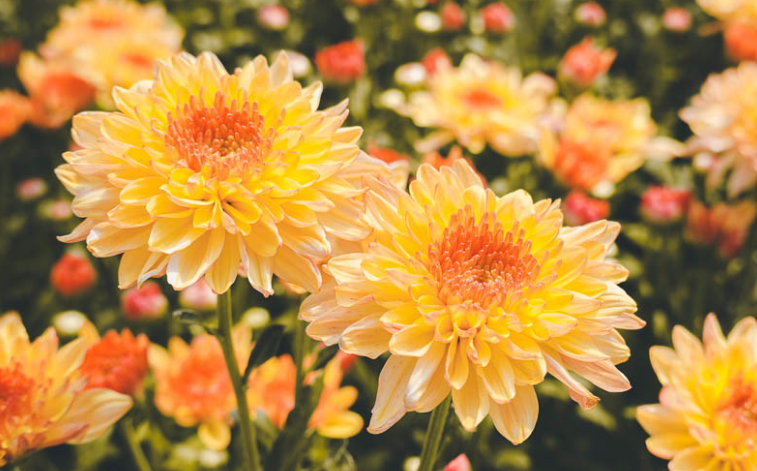
Chrysanthemums, commonly known as mums, are one of the most popular and widely cultivated flowering plants in the world, belonging to the daisy family Asteraceae. With over 40 recognized species and thousands of cultivated varieties, chrysanthemums are grown commercially and ornamentally across more than 100 countries worldwide. Global chrysanthemum production is enormous, with China alone accounting for the majority of the world’s supply, reflecting the plant’s deep cultural roots in Asian horticulture.
As a plant, chrysanthemums produce deeply lobed, aromatic leaves that are typically dark green with a slightly rough texture on the upper surface. The stems are upright and woody at the base, becoming softer toward the tips where flower buds develop. Plants range in height from compact 6-inch cushion types to tall varieties reaching 5 feet or more, offering enormous flexibility for different garden applications.
Chrysanthemums thrive in USDA zones 5 through 9, with some hardy varieties surviving in zone 4 with adequate winter protection. Tropical and tender varieties are often grown as annuals in cooler climates, replaced each season for reliable color. In zones 7 through 9, chrysanthemums often behave as reliable perennials, returning dependably each year with minimal intervention.
The flowers are chrysanthemum’s most celebrated feature, appearing in an extraordinary range of forms including single, double, pompon, spider, quill, and spoon types. Bloom colors span nearly the entire spectrum, from pure white and pale yellow to deep burgundy, bronze, lavender, and bicolored varieties. This remarkable flower diversity has made chrysanthemums a favorite subject for plant breeders for centuries.
Chrysanthemums hold profound cultural significance across Asia, particularly in China and Japan, where they have been cultivated for over 2,500 years. In Japan, the chrysanthemum, known as kiku, is the symbol of the imperial family and appears on the Imperial Seal of Japan. Annual chrysanthemum festivals are celebrated across both countries, drawing millions of visitors each year to view elaborate displays.
Beyond ornamental use, chrysanthemums have important commercial applications in the cut flower industry, representing one of the top three most traded cut flowers globally alongside roses and carnations. Pyrethrin, a natural insecticide derived from chrysanthemum flowers, is widely used in organic pest control products worldwide. Some varieties are also used in herbal teas, particularly in Chinese traditional medicine, where chrysanthemum tea is consumed for its cooling and anti-inflammatory properties.
With their spectacular flower forms, wide color range, and reliable autumn blooming season, chrysanthemums fill a critical gap in the garden when most other flowering plants are winding down. Their ability to thrive in containers, borders, and cutting gardens makes them extraordinarily versatile for gardeners of all experience levels. Few flowering plants combine such diversity, cultural depth, and garden reliability into a single genus.
Also Read: Types of Chrysanthemums
How to Grow and Care for Chrysanthemums
- Choose the Right Location: Chrysanthemums perform best in a position that receives at least six hours of full sun daily. Insufficient sunlight leads to weak, leggy stems and significantly reduced flower production. An open, south-facing border with good air circulation around the plants is ideal.
- Prepare Fertile, Well-Draining Soil: Rich, loamy soil with excellent drainage produces the strongest chrysanthemum plants. Incorporating generous amounts of compost into the planting area improves both fertility and soil structure. Avoid waterlogged or compacted soils, which can cause root rot and poor performance.
- Plant After the Last Frost: Chrysanthemums should be planted outdoors after all danger of frost has passed in spring. Early planting gives the longest establishment period before autumn flowering begins. Spacing plants 18 to 24 inches apart allows adequate room for mature growth and air circulation.
- Water Deeply and Consistently: Chrysanthemums require regular, deep watering throughout the growing season to support vigorous growth and flowering. The soil should be kept evenly moist but never waterlogged. Watering at the base of the plant rather than overhead helps prevent fungal disease on the foliage.
- Fertilize Regularly Through Summer: A balanced fertilizer applied every two to four weeks from spring through midsummer supports strong growth and abundant bud development. Switching to a low-nitrogen, high-potassium fertilizer in late summer encourages flowering rather than leafy growth. Stop feeding once flower buds begin to show color.
- Pinch Back for Bushier Plants: Pinching out the growing tips of young chrysanthemum plants in spring and early summer encourages branching and produces a fuller, more compact plant. Each pinching should remove about one inch of growth from each stem tip. The last pinch should be completed by midsummer to allow time for bud development.
- Stake Taller Varieties: Taller chrysanthemum varieties benefit from staking to prevent stems from collapsing under the weight of heavy blooms. Installing stakes or grow-through supports early in the season causes less root disturbance than adding them later. Soft ties should be used to avoid damaging the stems.
- Mulch Around the Base: Applying a 2 to 3 inch layer of organic mulch around plants helps retain soil moisture, regulate root temperature, and suppress weeds. Mulch is particularly important during hot, dry summer periods when moisture loss is greatest. Keep mulch a few inches away from the main stems to prevent rot.
- Deadhead Spent Blooms: Removing faded flowers promptly encourages the plant to continue producing new buds rather than directing energy toward seed production. Regular deadheading extends the overall flowering period significantly. It also keeps plants looking neat and well-maintained throughout the blooming season.
- Cut Back After Flowering: Once blooming is complete in autumn, cutting stems back to about 6 inches above ground level tidies the plant and prepares it for winter dormancy. Leaving some stem length helps protect the crown during cold weather. Final cleanup can be completed in early spring before new growth begins.
- Protect Roots Through Winter: In zones 5 and 6, applying a thick layer of mulch over the root zone after the first hard frost helps insulate roots from damaging cold. Avoid cutting plants all the way to the ground before winter, as remaining stems provide additional crown protection. Mulch can be removed gradually in spring as temperatures warm.
- Divide Plants Every Two to Three Years: Chrysanthemums spread through underground runners and benefit from regular division to maintain vigor and flowering quality. Dividing in spring using outer sections of the clump and discarding the older woody center produces the most vigorous new plants. Divided sections should be replanted promptly and watered thoroughly.
- Watch for Aphids and Spider Mites: These common pests can cause significant damage to chrysanthemum foliage and buds if left unchecked. Regular inspection and early treatment with insecticidal soap or neem oil prevents infestations from escalating. Strong jets of water can also dislodge small pest populations effectively.
- Monitor for Fungal Diseases: Powdery mildew, botrytis, and leaf spot are the most common fungal issues affecting chrysanthemums, particularly in humid conditions. Improving air circulation through proper spacing and avoiding overhead watering significantly reduces disease pressure. Affected foliage should be removed and destroyed promptly.
- Grow in Containers for Flexibility: Chrysanthemums adapt well to container growing, allowing gardeners in colder climates to bring plants indoors before frost. Use large pots with excellent drainage and a fertile, well-draining potting mix. Container plants require more frequent watering and feeding than those grown directly in garden beds.
- Overwinter Cuttings Indoors: In colder zones, taking stem cuttings in autumn and rooting them indoors ensures a supply of healthy plants for the following season. Cuttings of 3 to 4 inches root readily in moist potting mix under bright indoor light. These young plants can be grown on through winter and planted out again the following spring.
Also Read: How to Grow and Care for Yarrow