The many types of jade plants include one of the world’s most familiar houseplants and a long list of its relatives. The true jade plant is a succulent shrub from the stonecrop family, and it is also called the money plant, lucky plant and friendship tree. It belongs to a genus of about 200 succulent species, nearly all of them native to southern Africa.
In the wild, the jade plant grows in the dry valley thickets of South Africa’s Eastern Cape and KwaZulu-Natal, with a few populations in Mozambique. There it becomes a stout, branching shrub several feet tall. It stores water in its thick, glossy leaves and trunk, which lets it survive long droughts.
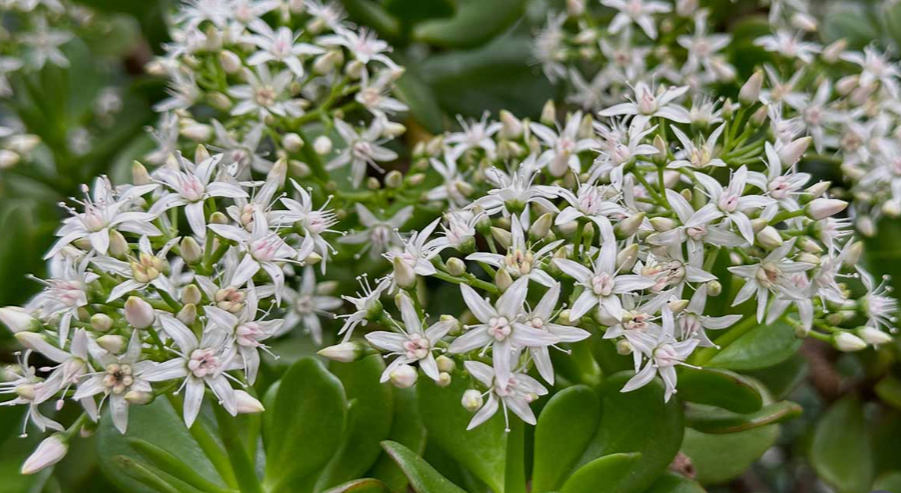
Outside Africa, the jade plant is grown mainly indoors. It survives outdoors only where winters stay frost-free, such as coastal California, southern Florida, Hawaii, the Mediterranean and much of Australia. Mature plants bloom in winter with clusters of small white or pink, star-shaped flowers.
Gardeners also use the name jade for many related crassulas and for a few unrelated succulents that look similar. Most jade plants are mildly toxic and can cause vomiting in pets and people if eaten. The 50 types below include named cultivars, related species and look-alikes, and each entry notes where they are grown.
1. Common Jade Plant
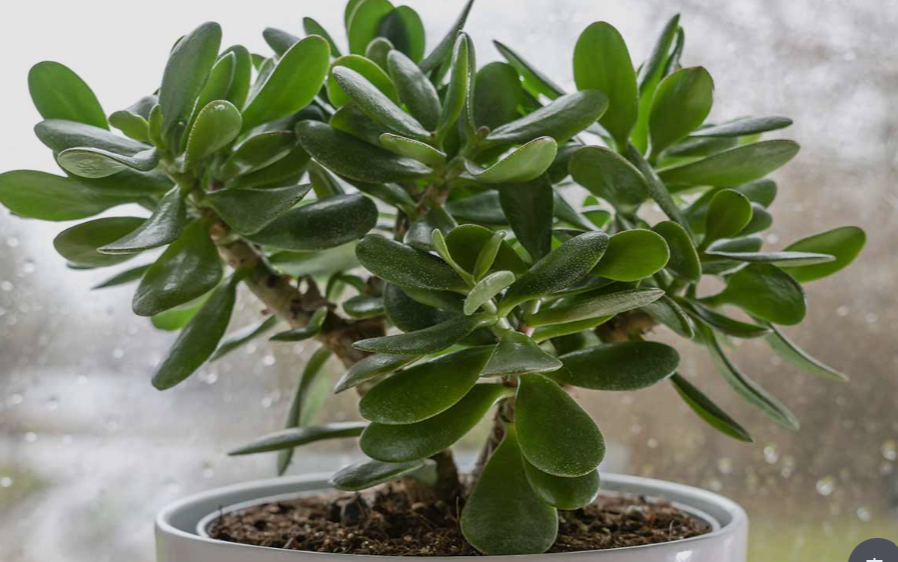
The common jade plant is the original species from which most jade cultivars come. It grows as a thick-trunked, tree-like shrub. Its leaves are oval, fleshy and a glossy jade green. In bright sun the leaf edges often turn red. Mature plants bloom in winter with white to pale pink, star-shaped flowers. Indoors it usually reaches 2 to 3 feet, but outdoors it can grow 6 to 8 feet tall.
North Carolina State University describes it as a subtropical, evergreen, flowering succulent shrub that is a popular, low-maintenance houseplant worldwide. It roots easily from a single leaf or stem cutting. It is often trained as a bonsai. Its main pest is the mealybug. Overwatering is the most common cause of death. It is native to South Africa and Mozambique and is grown outdoors in California, Florida, Hawaii, Australia and the Mediterranean, and indoors worldwide.
2. Gollum
Gollum is the most unusual-looking jade cultivar. Its leaves are rolled into slender tubes. Each tube ends in a small, flattened, suction cup–shaped tip. The tips turn red in strong sun. The plant grows slowly into a compact, branching shrub. It usually stays under 3 feet tall.
Its name comes from a character in The Lord of the Rings. It is also sold as finger jade, ET’s fingers and trumpet jade. North Carolina State University lists it among the established jade cultivars. It blooms with pink-white flowers in late fall and winter. It makes an excellent bonsai or windowsill plant. It is grown indoors worldwide and outdoors in California, Arizona, Florida and South Africa.
Also Read: Different Types of Flowering Succulent Plants
3. Hobbit
Hobbit is a close relative of Gollum with a slightly different leaf shape. Its leaves are curled inward like spoons or open tubes. They are not fully closed like Gollum’s leaves. The leaf tips turn reddish in bright light. The plant grows slowly. It can eventually reach about 3 feet tall.
North Carolina State University describes its leaves as spoon-shaped and curling inward. It was introduced in the United States in the 1970s. Hobbit and Gollum are often confused in the nursery trade. Hobbit’s leaves are wider and more open at the tip. It is a favorite for small bonsai. It is grown indoors worldwide and outdoors in frost-free regions of California and the Southwest.
4. Hummel’s Sunset
Hummel’s Sunset is the most colorful of the green-leaved jades. Its leaves are green in shade. In strong sun and cool weather they turn golden yellow. Their edges then flush bright red. The plant forms a rounded, shrubby mound. It grows 2 to 3 feet tall in a container.
Penn State Extension notes that its leaves turn golden yellow with red margins when grown in adequate sunlight. The university also notes that jade plants are hardy only in USDA zones 11 to 12. Hummel’s Sunset has received the Royal Horticultural Society’s Award of Garden Merit. It is also sold as golden jade. It blooms with white flowers in winter. It is grown in California gardens, Mediterranean gardens and sunny windows worldwide.
5. Gollum Variegata
Gollum Variegata is a variegated form of the tubular-leaved jade. Its leaves have the same rolled shape as Gollum. They are streaked with pale green, cream and white. The tips blush pink to red in bright light. It grows more slowly than plain Gollum. It stays compact.
North Carolina State University describes its leaves as variegated pale green and white. The lighter tissue makes the plant more sensitive to strong afternoon sun. It needs bright light to keep its colors. Some branches may revert to plain green. Those branches should be removed. It is grown mainly as a collector’s houseplant in North America, Europe and East Asia.
6. Crosby’s Compact
Crosby’s Compact is a dwarf jade with small leaves. It is also sold as Crosby’s Dwarf and Crosby’s Red. Its leaves are small, oval and closely spaced. They are usually red or red-edged in good light. The plant forms a dense, bushy shape. It stays about a foot tall for many years.
It is one of the best jades for miniature bonsai. Its short spacing between leaves gives it a tidy appearance. It needs strong light to keep its red color. In low light it becomes greener and looser. It is very easy to propagate from cuttings. It is grown indoors worldwide and outdoors in frost-free gardens.
7. Minima
Minima is a small-leaved jade bred for compact growth. Its leaves are only about half the size of the common jade’s. They are green with thin red margins. The stems branch heavily. The plant stays small and bushy. It grows slowly.
North Carolina State University lists it among jade cultivars. Its small size suits desks and windowsills. It is often used in dish gardens with other succulents. It makes a natural miniature tree with little pruning. It needs the same dry, well-drained soil as other jades. It is grown indoors in North America, Europe and Asia.
8. Botany Bay
Botany Bay is a dwarf jade with small, rounded leaves. The leaves are green and glossy. In sun they develop red edges. The stems are thick for the plant’s size. It grows into a neat, compact shrub. It rarely exceeds 2 feet.
It is named for the bay south of Sydney, Australia. North Carolina State University includes it in its list of jade cultivars. It suits small bonsai and containers. It tolerates hot, dry conditions well. It needs very little water in winter. It is grown in Australia, California and as a houseplant elsewhere.
9. Pink Beauty
Pink Beauty is a jade grown for its flowers. Its leaves look much like those of the common jade. They are oval, glossy and green. In winter it produces clusters of pink, star-shaped flowers. The flowers are deeper pink than those of the common type. The plant grows into a tree-like shrub.
North Carolina State University lists it among the named jade cultivars. It needs cool nights and short days in fall to set flower buds. Plants kept warm all year rarely bloom. Mature plants flower more freely than young ones. It is a popular choice for outdoor gardens. It is grown in California, Australia, South Africa and the Mediterranean.
10. Red Coral
Red Coral is a jade with tubular, finger-like leaves. Its leaves resemble those of Gollum. They are green with bright red tips. The color is strongest in full sun. The plant branches into a dense shrub. It grows slowly.
North Carolina State University includes it in its jade cultivar list. Its red-tipped fingers look like coral branches. It makes a striking container plant. It needs strong light to keep its color. It tolerates drought well. It is grown indoors worldwide and outdoors in frost-free regions.
Also Read: Different Types of Indoor Fragrant Plants
11. Skinny Fingers
Skinny Fingers is a jade with very narrow leaves. It is also sold as Lady Fingers. Its leaves are long, slender and nearly cylindrical. They are green with red tips in bright light. The plant grows upright and branches well. It reaches about 2 to 3 feet tall.
North Carolina State University lists it among jade cultivars. Its leaves are thinner than those of Gollum and Hobbit. They do not have suction-cup tips. It produces pink-white flowers in winter. It is easy to grow from cuttings. It is grown indoors worldwide and outdoors in California and Arizona.
12. Tricolor
Tricolor is one of the most colorful variegated jades. Its leaves are green streaked with creamy white. Their edges turn pink to rose in good light. The plant grows into a branching shrub. It reaches about 2 to 4 feet tall. It produces pink and white flowers.
The University of Wisconsin describes it as a chimeral variety with creamy white and rose-striped pointed leaves and pink and white flowers. A chimera is a plant whose tissues carry two different genetic makeups. That is why the colors appear in stripes. It grows more slowly than plain green jades. It needs bright, indirect light to avoid scorch. It is grown as a houseplant in North America, Europe and Asia.
13. Variegata
Variegata is the classic variegated jade. Its leaves are green with white, cream or yellow variegation. Some leaves may be almost entirely cream. In bright light the edges may blush pink. It grows into a tree-like shrub. It is slower-growing than the common jade.
North Carolina State University notes that its leaves may be light green, white, yellow and sometimes pink. The pale parts of the leaves make less food for the plant. That slows its growth. Fully white shoots cannot survive on their own. Reverted green shoots should be pruned out. It is grown indoors worldwide and outdoors in frost-free gardens.
14. Lemon and Lime
Lemon and Lime is a variegated jade named for its leaf colors. Its leaves are striped in lime green, yellow and cream. The edges turn pink to red in sun. The plant forms a bushy shrub. It grows slowly. It stays under about 3 feet in containers.
Its bright stripes stand out among other succulents. It needs more sun than the common jade to keep its colors. Too much hot afternoon sun can scorch the pale leaves. It needs very well-drained soil. It is propagated from stem cuttings. It is grown indoors and in frost-free gardens in California, Florida and Australia.
15. Harbour Lights
Harbour Lights is a jade grown for its winter color. Its leaves are small and densely packed. They are green in summer. In cool, bright weather they turn deep red. The color gives it its name. The plant forms a compact, bushy shrub.
It is one of the most intensely colored jades in winter. It needs cool nights and full sun to color well. It suits small bonsai and mixed succulent pots. It grows slowly. It produces white to pink flowers. It is grown in California, Australia, New Zealand and sunny windows elsewhere.
16. Bronze Beauty
Bronze Beauty is a jade with copper-tinted leaves. Its leaves are small, rounded and coppery green. The color deepens in strong light. The plant grows extremely slowly. It forms a small, dense shrub. It is also sold as copper jade.
The University of Connecticut describes it as having small, coppery leaves and very slow growth. Its slow growth makes it well suited to bonsai. It needs bright light to keep its bronze tone. In shade the leaves turn plain green. It is easy to keep small for many years. It is grown as a houseplant in North America and Europe.
17. Obliqua
Obliqua is a jade with pointed leaves. Its leaves are oval with sharp tips. They are larger than those of most cultivars. In direct sun their edges turn purple. The plant grows into a tall, branching shrub. It is vigorous and easy to grow.
Penn State Extension notes that its leaves can turn royal purple at the edges when exposed to direct sun. Some botanists consider it a natural form of the species. It is sometimes sold as Crassula ovata ‘Obliqua’ or simply as large jade. It flowers freely as it matures. It makes a good outdoor specimen. It is grown in California, Australia, South Africa and as a houseplant worldwide.
18. Monstruosa
Monstruosa is a jade with twisted, irregular leaves. Its leaves are curled, folded and sometimes partly tubular. No two leaves look exactly alike. They are green with red tips in sun. The plant grows into a dense, gnarled shrub. It is slow-growing.
Its name refers to its abnormal leaf shapes. It looks like a cross between the common jade and Gollum. Collectors prize it as a curiosity. It suits bonsai and novelty plant displays. It needs the same care as other jades. It is grown as a collector’s plant in North America, Europe and Asia.
19. Green Coral
Green Coral is a jade with tubular leaves that stay green. Its leaves are rolled into slender cylinders. Each ends in a small, round, depressed tip. They resemble Gollum’s leaves but lack strong red coloring. The plant branches into a compact shrub. It grows slowly.
The Royal Botanic Gardens Victoria describes its leaves as rolled into a solid cylinder with a depressed circular tip. Its uniform green color gives it a fresh, coral-like look. It suits small pots and terrariums with good drainage. It is easy to propagate from leaf tips. It tolerates indoor conditions well. It is grown in Australia and as a houseplant worldwide.
20. Silver Jade
Silver jade is a separate species from the common jade. Its leaves are round, flat and blue-gray. They have dark red edges. Small maroon dots speckle the leaf surface. The plant grows into a sturdy, branching shrub. It can reach 4 to 5 feet tall.
North Carolina State University describes it as a South African succulent with rounded, blue-gray leaves, maroon edges and small maroon speckles. It is also called the silver dollar plant. Its leaves are larger and flatter than those of the common jade. It produces white to pale pink flowers. It tolerates more sun and drought than many jades. It is native to the Western and Eastern Cape of South Africa and is grown in California, Australia, the Mediterranean and as a houseplant.
21. Blue Bird
Blue Bird is a cultivar of the silver jade. Its leaves are oval and powdery blue-gray. They are smaller than those of the species. Their edges have a thin red rim. The plant forms a compact, branching shrub. It grows slowly.
Its blue color comes from a waxy coating on the leaves. Touching the leaves rubs the coating off. It needs bright light to keep its color. In shade it turns greener. It suits bonsai and mixed succulent displays. It is grown in California, Australia and as a houseplant in North America and Europe.
22. Variegated Blue Bird
Variegated Blue Bird is a colorful form of Blue Bird. Its leaves mix blue-gray, aqua, cream and green. Their edges flush red in sun. The plant stays compact. It grows more slowly than the plain form. It is popular with collectors.
The variegation varies from leaf to leaf. Some leaves are mostly cream, and others mostly blue. It needs bright, filtered light. Strong afternoon sun can scorch the pale areas. It is propagated from stem cuttings. It is grown as a houseplant and in frost-free gardens in the United States, Europe and Asia.
23. Ripple Jade
Ripple jade is a subspecies of the silver jade. Its leaves are blue-gray with wavy, rippled edges. They twist slightly along their length. The leaf margins often turn red. The plant forms a dense, rounded shrub. It is also called curly jade.
North Carolina State University notes that the common jade is often confused with this plant. It produces pinkish-white, star-shaped flowers in spring and summer. It grows slowly and needs little pruning. It tolerates drought very well. It makes an attractive patio plant. It is native to South Africa and is grown in California, Australia and as a houseplant elsewhere.
24. Elephant Bush
Elephant bush is a jade look-alike from a different plant family. It is also called dwarf jade, miniature jade and spekboom. Its leaves are small, round and bright green. Its stems are reddish-brown. It grows into a dense shrub or small tree. In the wild it can reach 10 to 15 feet.
The University of Pretoria notes that it is usually found in dry areas and bushveld and is dominant in the spekboom thicket of the Eastern Cape. Elephants browse it heavily, which gives it its name. Its leaves are edible and slightly sour. It is considered non-toxic to pets. It is widely used for bonsai. It is native to South Africa and is grown in California, Arizona, Australia and as a houseplant worldwide.
25. Rainbow Elephant Bush
Rainbow elephant bush is a variegated form of elephant bush. Its leaves are cream with a green center. Their edges flush pink in sun. Its stems are bright reddish-purple. It grows more slowly than the green form. It has a looser, more spreading habit.
Its colorful leaves make it popular in hanging baskets. It needs bright light but some protection from harsh sun. It is more sensitive to cold and overwatering than plain elephant bush. Reverted green shoots should be removed. It is easy to grow from cuttings. It is grown as a houseplant and in frost-free gardens in the United States, Europe and Australia.
26. Trailing Elephant Bush
Trailing elephant bush is a low, spreading form of elephant bush. Its stems creep along the ground or spill over pot edges. Its leaves are small, round and green. They are closely spaced. The plant forms a dense mat. It rarely grows more than a few inches tall.
It makes an excellent groundcover in dry gardens. It is also used in hanging baskets and rock walls. It tolerates heat and drought. It roots wherever its stems touch soil. It needs very little care. It is grown in California, Arizona, Texas, Australia and the Mediterranean.
27. String of Buttons
String of buttons is a small crassula with stacked leaves. Its triangular leaves are joined in pairs around the stem. Each pair sits at right angles to the one below. The stem looks threaded through the leaves like beads. The leaves are gray-green with red edges. The plant grows about 1 to 2 feet tall.
The stems grow upright at first and then sprawl. It produces small, pale yellow flowers in spring. It needs bright light and very well-drained soil. It suits rock gardens and mixed succulent pots. It is easy to propagate from stem pieces. It is native to South Africa and is grown in California, Australia and as a houseplant worldwide.
Also Read: Different Types of Flowering Cactus
28. Variegated String of Buttons
Variegated string of buttons is a striped form of string of buttons. Its leaves are green with cream or yellow margins. The edges blush pink in sun. The stacked leaf pairs give the stems a geometric look. It is smaller and weaker-stemmed than the plain form. It sprawls as it grows.
Its leaves are smaller than those of the green type. The stems may need support or a wide pot. It needs bright light to keep its colors. It is sensitive to overwatering. It is popular in succulent arrangements. It is grown as a houseplant and in frost-free gardens worldwide.
29. Watch Chain
Watch chain is a crassula with tiny, overlapping leaves. Its leaves are packed tightly around thin stems. They form square, braided columns. The stems look like a chain or a lizard’s tail. The plant forms a dense clump about 6 to 12 inches tall. It is also called rattail crassula and princess pine.
Its stems branch freely and spread sideways. It produces tiny, yellow-green flowers that smell musty. It needs bright light and very well-drained soil. Pieces root easily when pressed into soil. It suits dish gardens and rock gardens. It is native to South Africa and Namibia and is grown in California, Australia and as a houseplant.
30. Campfire
Campfire is a crassula grown for its fiery color. Its leaves are long, flat and propeller-shaped. They are lime green in shade. In sun and cool weather they turn bright red and orange. The plant spreads into a low clump. It grows about 6 inches tall.
Its intense color gives it its name. Gardeners report that it glows red in cold weather or strong sun. It produces small white flowers in summer. It spreads quickly by branching stems. It is easy to propagate. It is grown in California, Australia, New Zealand and as a houseplant.
31. Red Pagoda
Red Pagoda is a crassula with stacked, triangular leaves. Its leaves are arranged in tight, layered rosettes. They look like the tiers of a pagoda. They are green with red and purple tints. The color deepens in sun and cold. The plant forms a low clump.
It is a selection of the same species as Campfire. It produces small, white flower spikes. It needs bright light to keep its compact shape. It suits rock gardens and small pots. It is easy to grow from cuttings. It is native to South Africa and is grown in California, Australia and as a houseplant.
32. Propeller Plant
Propeller plant is a crassula with sickle-shaped leaves. Its leaves are thick, gray-green and curved. They grow in pairs that overlap like the blades of a propeller. The plant grows about 1 to 2 feet tall. It is also called airplane plant. Its flowers are bright scarlet.
The red flowers bloom in dense, flat-topped clusters in summer. They are among the showiest of any crassula. The leaves have a soft, velvety texture. It needs bright light and dry soil. It can be propagated from a single leaf. It is native to South Africa and is grown in California, Australia and as a houseplant.
Also Read: Succulents With White Flowers
33. Calico Kitten
Calico Kitten is a small, trailing crassula with heart-shaped leaves. Its leaves are variegated in green, cream and pink. The pink deepens in bright light. The stems trail and spread. The plant stays under 6 inches tall. It produces small white flowers.
Its soft colors make it a favorite for hanging baskets. It needs bright, indirect light. Too much hot sun can scorch it. It is more sensitive to overwatering than larger jades. It is propagated from stem cuttings. It is grown as a houseplant and in frost-free gardens in North America, Europe and Australia.
34. Little Missy
Little Missy is a tiny, trailing crassula. Its leaves are very small and bright green. They have pink or red edges. The plant forms a dense mat. Its stems spill over pot edges. It produces tiny white flowers.
It is a close relative of Calico Kitten. It suits terrariums, fairy gardens and small pots. It grows quickly for a succulent. It needs bright light and well-drained soil. It is easy to propagate from cuttings. It is grown as a houseplant and groundcover in California, Australia and Europe.
35. Buddha’s Temple
Buddha’s Temple is a hybrid crassula with square, stacked leaves. Its leaves are pressed tightly together. They form neat, four-sided columns. The columns look like small temples. The leaves are gray-green. The plant grows about 6 inches tall.
It was created by a botanist at the Huntington Botanical Gardens in California in 1959. It produces small, pink-white flowers on top of the columns. It needs bright light and very little water. It rots easily if kept wet. It is prized by succulent collectors. It is grown as a collector’s plant worldwide.
36. Miniature Pine Tree
Miniature pine tree is a crassula with needle-like leaves. Its leaves are narrow, pointed and bright green. They grow in pairs along upright stems. The plant looks like a tiny pine seedling. It grows about 1 to 2 feet tall. It branches as it ages.
It is popular for miniature landscapes and bonsai. Its stems become woody over time. It produces small white flowers in summer. It needs bright light and well-drained soil. It grows easily from cuttings. It is native to South Africa and is grown as a houseplant and in frost-free gardens.
37. Baby’s Necklace
Baby’s Necklace is a hybrid crassula with bead-like leaves. Its leaves are small, round and plump. They are stacked tightly along the stems. The stems look like strings of beads. The leaves are green with red edges. The plant grows about 6 inches tall.
Its stems grow upright and then trail. It produces small white flowers in spring. It needs bright light and very well-drained soil. It is sensitive to overwatering. It suits small pots and hanging baskets. It is grown as a houseplant and in rock gardens worldwide.
Also Read: Houseplants That Like High Humidity
38. Jade Necklace
Jade necklace is a trailing crassula with tightly stacked leaves. Its leaves are small, round and green. They overlap so closely that they hide the stem. The stems droop as they lengthen. The leaf edges turn red in sun. It is also called Chinese pagoda.
It suits hanging pots and the edges of containers. It produces small white flowers in spring. It needs bright light and little water. Its stems break easily, but pieces root readily. It is a popular collector’s plant. It is native to South Africa and is grown as a houseplant worldwide.
39. Tiger Jade
Tiger jade is a small crassula with spotted leaves. Its leaves are narrow, flat and form low rosettes. They are green with dark red spots. The undersides are often reddish. The plant forms a dense mat. It stays only a few inches tall.
It produces small, pink-white flowers on thin stalks. Its spots are strongest in bright light. It suits terrariums and small dish gardens. It tolerates more shade than many crassulas. It spreads by small offsets. It is native to South Africa and is grown as a houseplant and in rock gardens.
40. Comet
Comet is a variegated trailing crassula. Its leaves are oval and pointed. They are green with broad cream edges. The edges blush pink in cool weather. The stems trail and sprawl. It is also called variegated trailing jade.
It suits hanging baskets and the edges of containers. It produces small, star-shaped, white to pink flowers in fall. It grows faster than most jades. It tolerates some shade. It roots easily from cuttings. It is grown in New Zealand, Australia, California and as a houseplant elsewhere.
41. Bonsai Crassula
Bonsai crassula is a small, woody crassula that looks like a natural bonsai. Its stems are thick and gnarled. Its leaves are small, narrow and green. The plant forms a dense, twiggy shrub. It grows about a foot tall. It bears clusters of pink flowers.
Its flowers have a sweet but sometimes unpleasant scent. It is one of the more cold-tolerant crassulas. It needs bright light and well-drained soil. It is easy to shape by pruning. It suits rock gardens and containers. It is native to South Africa and is grown in California, Europe and Australia.
42. Fairy Crassula
Fairy crassula is a spreading crassula for shady spots. Its leaves are round to oval and soft green. They often have tiny dots along the edges. The plant forms a low, dense groundcover. It produces airy sprays of tiny pink-white flowers. It grows about 6 to 12 inches tall.
Small plantlets form on its flower stalks after blooming. They drop and root, which helps it spread. It tolerates more shade than most succulents. It is used under trees and on slopes. It can become weedy in mild climates. It is native to South Africa and is grown in California, Australia and the Mediterranean.
43. Moonglow
Moonglow is a hybrid crassula with pale, stacked leaves. Its leaves are thick, triangular and silvery gray. They are covered in fine, velvety hairs. They are stacked in tight columns. The plant grows slowly. It stays only a few inches tall.
Its pale color gives it a glowing look. It produces small, pale yellow flowers. It needs bright light and very little water. It rots easily in wet soil. It is prized by succulent collectors. It is grown as a collector’s plant worldwide.
44. Morgan’s Beauty
Morgan’s Beauty is a hybrid crassula with silver leaves. Its leaves are thick, rounded and silvery gray. They are stacked in compact rosettes. The plant stays low and clumping. It produces large clusters of bright pink flowers. It grows slowly.
Its flowers are unusually large for its size. They bloom in winter and spring. It needs bright light and dry conditions. It suits small pots and rock gardens. It is a popular collector’s plant. It is grown in California, Australia and as a houseplant elsewhere.
45. Springtime
Springtime is a hybrid crassula grown for its spring flowers. Its leaves are small, plump and gray-green. They are stacked along short stems. The plant forms a compact clump. It produces dense clusters of pink flowers in spring. It grows about 6 inches tall.
Its flowers are sweetly scented. It is easy to grow and propagate. It needs bright light and well-drained soil. It suits mixed succulent pots and rock gardens. It is fairly tolerant of indoor conditions. It is grown as a houseplant and in frost-free gardens worldwide.
46. Ivory Pagoda
Ivory Pagoda is a hybrid crassula with fuzzy white leaves. Its leaves are thick and covered in fine white hairs. They are stacked in neat, layered columns. The plant looks like a small pagoda. It grows only a few inches tall. It produces small yellow flowers.
Its soft, pale foliage makes it a collector’s favorite. It needs bright light and very little water. It is sensitive to wet soil and humid air. It grows slowly. It suits small pots and display shelves. It is grown as a collector’s plant worldwide.
Also Read: Houseplants That Don’t Need Sunlight
47. Tom Thumb
Tom Thumb is a tiny crassula with stacked leaves. Its leaves are very small and round. They are packed tightly along the stems. They are green with red edges in sun. The plant forms a dense, miniature shrub. It rarely exceeds a few inches tall.
It is one of the smallest crassulas sold. It suits terrariums, fairy gardens and miniature landscapes. It produces tiny white flowers. It needs bright light and well-drained soil. It is easy to propagate from cuttings. It is grown as a houseplant worldwide.
48. Arab’s Turban
Arab’s turban is a low, flat crassula. Its leaves are rounded and tightly packed. They form a neat, flattened rosette. The rosette resembles a turban seen from above. The leaves are green with white edges. The plant stays only a few inches tall.
It grows mainly in the cooler months. It goes partly dormant in summer heat. It produces a slender spike of small white flowers. It needs bright light and very little summer water. It is prized by succulent collectors. It is native to South Africa and Namibia and is grown as a collector’s plant.
49. Ogre Ears
Ogre Ears is a tubular-leaved jade closely related to Gollum. Its leaves are rolled and finger-like. Their tips are flattened and open slightly. The tips turn red in bright light. The plant grows into a compact shrub. It grows slowly.
The name is often used interchangeably with Gollum and Hobbit in the nursery trade. Its leaves are usually somewhat thicker and more open than Gollum’s. It suits bonsai and windowsill pots. It blooms with pink-white flowers in winter. It needs the same dry soil and bright light as other jades. It is grown as a houseplant worldwide and outdoors in frost-free regions.
50. Trailing Jade
Trailing jade is an unrelated succulent that resembles a jade. It belongs to the daisy family. Its leaves are round, flat and gray-green. They line long, trailing stems. The plant spills over pots and baskets. It produces small orange flowers.
It is often sold alongside jades because of its similar leaves. It grows quickly for a succulent. It needs bright light and well-drained soil. It suits hanging baskets and tall planters. It is easy to root from cuttings. It is native to Kenya and Tanzania and is grown as a houseplant worldwide.
Further Sources:
- North Carolina State University: Jade Tree
- Penn State Extension: Jade Plant, A No Fuss Houseplant
- University of Wisconsin: Jade Plant
- University of Connecticut: Jade Plants
- North Carolina State University: Silver Dollar Plant
- University of Pretoria: Crassula arborescens and Portulacaria afra
- North Carolina State University: Variegated Jade Plant
- Clemson University: Jade Plant
- University of California: Crassula ovata safety
- South African National Biodiversity Institute: Crassula ovata
- Royal Botanic Gardens Victoria: Crassula ovata
- National Gardening Association: Crassulas
- Wikipedia: Crassula
- Wikipedia: Crassula arborescens