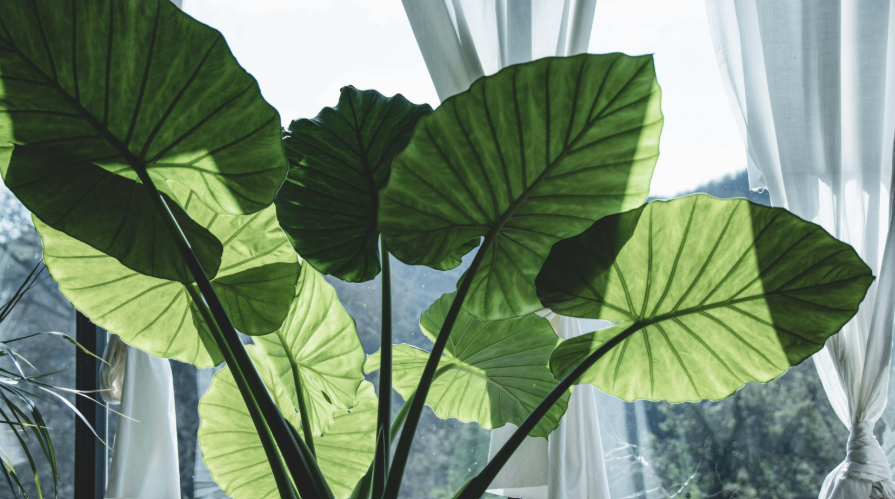
Plants with very large leaves push the basic rules of leaf engineering about as far as they can go, since an oversized leaf has to move enough water from root to tip to keep the whole structure from wilting under its own weight, all while surviving wind, pests, and physical damage a smaller leaf would simply shrug off. According to the North Carolina Extension Gardener Plant Toolbox, bigleaf magnolia carries the largest simple leaves and largest flowers of any tree native to North America, with individual leaves reaching up to 3 feet long and a foot wide, and strong winds can tear those leaves and make the tree considerably less attractive as a result.
That vulnerability to wind damage shows up again and again across this list, since a genuinely oversized leaf trades away wind resistance and physical durability in exchange for maximizing the surface area available for catching sunlight in a shaded understory or humid tropical canopy. It’s exactly why so many of the largest-leaved plants in cultivation are understory or tropical species in the first place, evolved to compete for filtered light beneath a taller canopy rather than to withstand an exposed, windy site.
These plants span tropical houseplant collections, shaded woodland gardens, and towering native shade trees found across dramatically different climates. What follows covers 50 plants with very large leaves.
Monstera Deliciosa
Monstera deliciosa is native to the tropical rainforests of southern Mexico and Central America, producing large, deeply split, heart-shaped leaves that can exceed 2 feet across on a mature specimen. Those natural splits and holes, called fenestrations, are thought to help the leaf withstand heavy tropical rain and wind without tearing, while also letting dappled light reach the lower leaves of a densely growing plant.
It’s grown as a houseplant worldwide, climbing readily when given a support to grow up.
Split-Leaf Philodendron
Split-leaf philodendron is native to Brazil, producing enormous, deeply lobed leaves that can reach 3 feet or more across on a mature outdoor specimen in a warm, frost-free climate. Its sprawling, self-heading growth habit lets a single plant eventually cover a substantial area of ground or container space.
It’s grown as a landscape plant in South Florida and other frost-free regions and as a houseplant elsewhere.
Giant Taro
Giant taro is native to Southeast Asia and the Pacific Islands, producing some of the largest leaves of any commonly cultivated aroid, with individual leaves capable of reaching 3 to 6 feet long on a mature outdoor specimen. Its massive, arrow-shaped foliage gives even a modest planting an immediately jungle-like, tropical presence.
It grows as a landscape plant in South Florida and other tropical regions and as a container plant elsewhere.
Elephant Ear
Elephant ear, botanically Colocasia esculenta, is native to Southeast Asia, producing heart-shaped leaves that can reach 2 to 3 feet long on a mature plant, giving the garden a dramatic, tropical presence within a single growing season. Its underground corms are also a significant food crop in many tropical countries, known as taro once properly prepared to remove naturally occurring irritant compounds.
It grows as a warm-season garden perennial or annual throughout much of the United States.
Bird’s Nest Fern
Bird’s nest fern is native to tropical regions of Asia, Africa, and Australia, producing broad, glossy, undivided fronds that can reach 4 to 5 feet long, radiating outward from a central rosette in a shape resembling its namesake nest. Unlike the finely divided fronds of most other ferns, its solid, strap-like leaf shape is a relatively unusual adaptation within the fern family.
It’s grown as a houseplant worldwide, favoring high humidity and indirect light.
Traveler’s Palm
Traveler’s palm is native to Madagascar, producing enormous, paddle-shaped leaves arranged in a single flat, fan-like plane that can eventually span 15 feet or more across on a mature specimen. Despite its palm-like appearance and common name, it’s actually more closely related to the bird of paradise than to any true palm tree.
It grows as a landscape specimen throughout South Florida and other tropical regions of the United States.
Fiddle Leaf Fig
Fiddle leaf fig is native to western Africa, producing large, glossy, violin-shaped leaves that can reach over a foot long on a mature indoor specimen, with prominent, deeply etched veining running through each leaf. Its dramatic, sculptural foliage has made it one of the most popular statement houseplants of the past decade despite a reputation for being somewhat finicky about light and watering consistency.
It’s grown as a houseplant throughout the United States and as an outdoor tree in frost-free tropical climates.
Rubber Plant
Rubber plant is native to Southeast Asia, producing large, glossy, thick leaves that can reach nearly a foot long on a mature indoor specimen, with a milky latex sap that gives the plant its common name. In its native tropical forest habitat, a mature tree can grow well over 100 feet tall with correspondingly larger foliage than any indoor specimen typically develops.
It’s grown as a houseplant throughout the United States.
Banana Plant
Banana plant is native to Southeast Asia, producing enormous, thick-ribbed leaves that can reach several feet long, unfurling from a central growing point in a distinctly tropical, paddle-like shape. A single mature plant can produce a canopy of leaves large enough to create dense, cooling shade within just a single growing season in a warm climate.
It grows as a warm-season ornamental and fruit-bearing plant throughout the southernmost United States and as a container plant elsewhere.
Giant White Bird of Paradise
Giant white bird of paradise is native to South Africa, producing enormous, banana-like leaves on tall, woody stems that can reach 20 feet or more in height in a frost-free climate. Its scale and dramatic foliage make it one of the largest non-palm ornamental plants commonly grown in South Florida landscaping.
It grows as a landscape specimen throughout South Florida and other frost-free regions of the United States.
Gunnera
Gunnera, also called giant rhubarb, is native to South America, producing some of the largest leaves of any plant grown outdoors in temperate gardens, with individual leaves capable of unfurling up to 6 feet wide on stalks reaching 10 feet tall. A single mature plant can spread 10 feet or more across, forming a dramatic, jungle-like specimen in moist garden settings.
It grows as a garden perennial in mild, wet coastal climates, particularly the Pacific Northwest.
Butterbur
Butterbur is native to Europe and parts of Asia, producing enormous rounded leaves that can reach 3 feet across on a mature plant, among the largest individual leaves of any temperate perennial. A mature colony spreads aggressively via rhizomes, often carpeting large areas of moist ground before most other vegetation has even emerged in spring.
It grows in scattered wet meadows and stream banks across parts of the northeastern United States and Canada.
Garden Rhubarb
Garden rhubarb is native to Siberia and other cold regions of Asia, producing large, deeply veined, heart-shaped leaves that can reach up to 2 feet across on thick, fleshy stalks. While the reddish stalks are widely used in pies and preserves, the broad leaf blades themselves are toxic due to concentrated oxalic acid and should never be eaten.
It grows as a garden perennial throughout the northern United States and Canada.
Empress Wu Hosta
Empress Wu hosta is a cultivar bred specifically for scale, producing enormous, deeply veined, blue-green leaves on a plant that can eventually reach 4 feet tall and 6 feet wide, dwarfing nearly every other hosta cultivar on the market. Its sheer size makes it a genuine focal point in a shaded garden bed rather than just another groundcover perennial.
It grows as a shade garden perennial throughout the northern and midwestern United States.
Bigleaf Ligularia
Bigleaf ligularia produces large, rounded, deeply veined leaves that can reach over a foot across on a mature plant, topped with tall spikes of yellow-orange daisy-like flowers in late summer. Its substantial foliage provides a bold textural contrast against the finer-textured ferns and grasses often planted alongside it in a shaded border.
It grows as a garden perennial throughout temperate regions of the United States, favoring consistently moist soil.
Umbrella Plant
Umbrella plant, also called Indian rhubarb, is native to the Pacific coast of North America, producing large, rounded, scalloped leaves that can reach up to 2 feet across on tall stalks rising directly from the soil before any leaves are visible. Its flowers actually emerge first in early spring on bare stalks, with the umbrella-like leaves following separately afterward.
It grows as a garden perennial along streams and moist ground throughout the Pacific Northwest and other temperate regions.
Rodgersia
Rodgersia, native to eastern Asia, produces large, deeply textured, compound leaves resembling an oversized horse chestnut leaf, with individual leaflets contributing to an overall leaf structure that can span 2 feet or more. Its bold, coarse foliage texture makes it a popular choice for adding visual weight to a shaded perennial border.
It grows as a garden perennial throughout temperate regions of the United States, favoring consistently moist, rich soil.
Elephant Ear Begonia
Elephant ear begonia produces enormous, asymmetrical, heart-shaped leaves that can reach well over a foot across on a mature plant, often marked with dramatic silver, bronze, or burgundy patterning depending on the specific cultivar. Its oversized, showy foliage has made it a popular choice among begonia collectors specifically seeking scale rather than the more delicate leaves typical of many other begonia types.
It’s grown as a houseplant throughout the United States.
Alocasia Portrait
Alocasia ‘Portrait’ produces broad, arrow-shaped leaves with prominent, deeply etched silvery-white veining against a dark green background, reaching well over a foot long on a mature specimen. Its dramatic vein pattern has made it one of the more sought-after Alocasia cultivars among houseplant collectors.
It’s grown as a houseplant throughout the United States.
Paulownia
Paulownia, also called princess tree, is native to China, producing enormous, heart-shaped leaves that can reach 2 feet or more across on young growth or coppiced stems, considerably larger than the foliage found on a mature, unpruned tree. A single tree can grow 15 feet or more in its very first year, with correspondingly oversized leaves during that initial burst of rapid growth.
It grows throughout much of the eastern United States, commonly found colonizing recently cleared or disturbed ground.
Catalpa Tree
Catalpa tree is native to the central and southeastern United States, producing large, heart-shaped leaves that can reach a foot or more across on a mature tree, among the largest leaves of any common native shade tree. Its oversized foliage combines with showy white spring flowers and long, bean-like seed pods to make it a genuinely distinctive tree throughout the growing season.
It grows throughout much of the central and eastern United States.
Bigleaf Magnolia
Bigleaf magnolia is native to the southeastern United States, and according to the North Carolina Extension Gardener Plant Toolbox, it has the largest simple leaves and largest flowers of any tree indigenous to North America, with leaves measuring up to 3 feet long and a foot wide. According to UF/IFAS Extension Escambia County, even a foot-tall sapling of this species already displays strikingly oversized leaves well before the tree reaches any significant height.
It grows as a rare native understory tree throughout parts of the southeastern United States, typically found in rich, moist woodland valleys.
Umbrella Magnolia
Umbrella magnolia, a close relative of bigleaf magnolia, produces large, oblong leaves that can reach 2 feet long, clustered at the branch tips in a whorled, umbrella-like arrangement that gives the tree its common name. It’s frequently confused with its larger-leaved relative, though its leaves taper more sharply at the base rather than developing the pronounced ear-like lobes found on bigleaf magnolia.
It grows throughout the eastern United States as a native understory tree.
American Sycamore
American sycamore is native to the eastern United States, producing broad, maple-like leaves that can reach 6 to 8 inches across, among the larger leaves of any common native shade tree found along rivers and floodplains. Its distinctive mottled, peeling bark is often just as recognizable as its oversized foliage.
It grows throughout the eastern United States, favoring the rich, consistently moist soil found along rivers and streams.
Philodendron Giganteum
Philodendron giganteum is native to the Caribbean, producing enormous, heart-shaped leaves that can reach 3 feet or more long on a mature specimen, among the largest leaves of any commonly cultivated philodendron. Its sheer scale makes it a dramatic focal point in a large indoor space or frost-free outdoor garden.
It grows as a landscape plant in South Florida and other frost-free regions and as a houseplant elsewhere.
Xanthosoma
Xanthosoma, also called malanga, is native to tropical Central and South America, producing large, arrow-shaped leaves that can reach 2 to 3 feet long, closely resembling elephant ear in overall appearance. Its starchy underground tubers are a significant food crop throughout the Caribbean and Latin America once properly cooked.
It grows as a warm-season garden perennial throughout much of the southern United States.
Hardy Banana
Hardy banana, native to Japan, produces large, paddle-shaped leaves similar to tropical banana varieties but on a plant considerably more cold-tolerant, allowing it to survive winters far outside the range of true tropical bananas. A mature plant can still produce leaves several feet long despite growing in a noticeably cooler climate than its tropical relatives.
It grows as a garden perennial throughout much of the temperate United States.
Fatsia Japonica
Fatsia japonica is native to Japan and Korea, producing large, glossy, deeply lobed leaves that can reach a foot or more across on a mature shrub, tolerating deep shade better than most other broadleaf evergreens of similar leaf size. Its bold, tropical-looking foliage provides strong textural contrast in shaded garden beds.
It grows as a landscape shrub in mild coastal climates and as a houseplant elsewhere.
Schefflera
Schefflera, also called umbrella tree, is native to Australia and Southeast Asia, producing large, glossy, umbrella-shaped compound leaves that can reach a foot or more across on a mature specimen. Its distinctive growth habit lets it establish as an epiphyte on other trees before eventually sending roots to the ground.
It’s grown as a houseplant throughout the United States and as a landscape tree in South Florida.
Devil’s Walking Stick
Devil’s walking stick is native to the eastern and central United States, producing some of the largest compound leaves of any plant native to North America, with a single leaf capable of spanning several feet across. Its enormous, doubly divided leaves are clustered at the top of otherwise bare, spiny stems.
It grows throughout the eastern and central United States, favoring moist, partially shaded woodland edges.
Wild Angelica
Wild angelica is native to Europe and parts of Asia, producing large, deeply divided compound leaves atop thick, hollow stems, with the overall leaf structure spanning well over a foot across on a mature plant. Its bold, architectural foliage makes it a striking addition to a damp perennial border.
It grows in wet meadows and along stream banks throughout parts of the northern United States and Canada.
Cow Parsnip
Cow parsnip is native to North America, producing large, deeply lobed leaves that can reach up to 2 feet across on a mature plant, among the larger native herbaceous leaves found in moist meadows. Its considerable size and coarse texture give it a substantial presence despite being considerably smaller and less dangerous than its infamous relative giant hogweed.
It grows throughout most of the United States and Canada, typically found in moist meadows and along stream banks.
Giant Hogweed
Giant hogweed is native to the Caucasus region, producing enormous, deeply lobed leaves reaching up to 5 feet wide, among the largest herbaceous plants found anywhere in North America. Its sap contains compounds that react violently with sunlight on exposed skin, causing severe burns and blistering that can take months to fully heal.
It grows in scattered infestations primarily in the northeastern United States and parts of the Pacific Northwest.
Mayapple
Mayapple is native to eastern North America, producing distinctive umbrella-like leaves deeply divided into lobes that can span up to a foot across on a single unbranched stem. Most plants produce just one or two of these oversized leaves each, with a single small fruit forming where 2 leaf stems meet.
It grows throughout most of eastern North America, favoring moist, shaded woodland soil.
Common Burdock
Common burdock is native to Europe and northern Asia, producing enormous first-year basal leaves that can exceed a foot in length before the plant sends up a spiny, second-year flowering stalk. Its oversized leaves make the plant easy to identify well before its familiar hooked burs ever appear.
It grows throughout most of North America, typically found along fences, trails, and disturbed pasture edges.
Colocasia Thailand Giant
Colocasia ‘Thailand Giant’ is a cultivar bred specifically for exceptional scale, producing some of the largest leaves available in cultivated elephant ear, with individual leaves capable of reaching 3 to 4 feet long on a mature outdoor specimen. Its truly massive foliage has made it a favorite among gardeners specifically chasing the biggest possible tropical leaf display.
It grows as a warm-season garden perennial or annual throughout much of the United States.
Volunteer Squash
Volunteer squash, sprouting unexpectedly from a home compost pile after seeds survive the composting process, produces large, coarse, prickly-textured leaves that can reach up to a foot across on long, sprawling vines. A single plant can sprawl 10 feet or more across a garden bed in a single season, with correspondingly oversized foliage covering the ground beneath it.
It appears as an unintentional garden weed anywhere squash or pumpkin seeds have been discarded in compost across the temperate United States.
Common Sunflower
Common sunflower is native to North America, producing large, rough, heart-shaped leaves that can reach up to a foot across on plants that grow 8 to 15 feet tall under favorable wild conditions. Its leaves are covered in coarse, bristly hairs on both surfaces, adding to their substantial, textured appearance.
It grows throughout most of the central United States, particularly common in prairies and disturbed cropland.
Castor Bean
Castor bean produces large, deeply lobed, star-shaped leaves that can reach up to 2 feet across on a fast-growing plant capable of reaching 6 to 15 feet tall in a single growing season in warm climates. Its seeds contain ricin, one of the most potent natural toxins known, and should never be handled by children despite the plant’s popularity as a dramatic ornamental.
It grows as a warm-season garden annual throughout temperate regions of the United States.
Skunk Cabbage
Skunk cabbage is native to eastern North America, producing enormous, broad leaves that can reach 2 feet or more long by early summer, unfurling from a hooded, mottled flower structure that emerges even before the snow has fully melted each spring. Its considerable leaf size develops rapidly once the plant transitions from its unusual early flowering stage into full leafy growth.
It grows throughout wet, boggy woodlands across the northeastern United States and Canada.
False Hellebore
False hellebore is native to North America, producing broad, heavily pleated, oval leaves that can reach up to a foot long, clasping the thick stem in an alternating pattern that gives the whole plant a distinctly ribbed, corn-like appearance. Every part of the plant is highly toxic, and its size alone makes it one of the more visually imposing plants found in a wet mountain meadow.
It grows in wet meadows, swamps, and stream banks across the northeastern United States and parts of the West.
Bear’s Breeches
Bear’s breeches is native to the Mediterranean region, producing large, deeply cut, glossy dark green leaves that can reach 2 feet or more in length, radiating outward from a central crown in a dramatic, architectural rosette. A mature clump can produce dozens of these oversized leaves, creating a genuinely bold textural statement in a garden border.
It grows as a garden perennial in mild, frost-free coastal climates, particularly the Pacific Coast.
Calathea Orbifolia
Calathea orbifolia is native to Bolivia, producing large, rounded leaves striped in silvery green that can reach a foot or more across on a mature specimen, among the largest leaves of any commonly grown calathea. Like other calathea species, its leaves fold upward at night in a subtle movement sometimes described as praying.
It’s grown as a houseplant worldwide, requiring consistently high humidity to keep its large leaves from browning at the edges.
Comfrey
Comfrey is native to Europe and Asia, producing large, bristly, lance-shaped leaves that can reach up to a foot long on flowering stems reaching 2 to 3 feet tall. All parts of the plant contain toxic alkaloids, with the roots considered more toxic than the leaves, and repeated ingestion has been linked to serious liver damage.
It grows as a naturalized weed scattered throughout the eastern half of the United States, favoring rich, moist, shaded ground.
Rice Paper Plant
Rice paper plant, and according to the University of Arkansas Cooperative Extension Service, it’s a frost-tender small tree or large shrub native to southern China and Taiwan that spreads sideways via underground rhizomes, forming a thicket 20 to 30 feet across in its native range. According to University of Tennessee Gardens, cultivars like ‘Steroidal Giant’ produce leaves so oversized and exotic-looking that they tower dramatically over nearby annual flower beds.
It grows as a dieback perennial in cooler climates and as a shrub or small tree in warmer parts of the southern United States, spreading aggressively enough that gardeners are advised to give it plenty of room.
Queen Anthurium
Queen anthurium is native to Colombia, producing enormous, velvety, heart-shaped leaves with pale, sunken veining that can reach 3 to 4 feet long on a mature specimen, among the largest and most dramatic leaves in the entire anthurium genus. Its slow growth rate and demanding humidity requirements have made it a prized, sometimes expensive specimen among serious houseplant collectors.
It’s grown as a specialty houseplant throughout the United States, requiring consistently high humidity to thrive.
Leopard Plant
Leopard plant, botanically Farfugium japonicum, is native to Japan and Korea, producing large, rounded, glossy leaves that can reach a foot or more across on a mature clump, with certain cultivars marked in bold yellow spots that give the plant its common name. Its bold, substantial foliage provides a striking textural contrast in a shaded garden bed well before its yellow daisy-like flowers appear in fall.
It grows as a garden perennial in mild, humid climates throughout the southeastern United States.
Horse Chestnut
Horse chestnut is native to the Balkan Peninsula, producing large, palmately compound leaves made up of 5 to 7 individual leaflets that together can span nearly 2 feet across on a mature tree. Its shiny brown seeds, called conkers, are a well-known feature of the tree despite being mildly toxic if eaten.
It grows as a landscape shade tree throughout much of the northern United States.
Paw Paw
Paw paw is native to the eastern United States, producing large, drooping, tropical-looking leaves that can reach a foot long on a tree that also produces the largest edible fruit native to North America. Its oversized leaves give the tree a distinctly lush, understory jungle appearance despite growing wild as far north as the Great Lakes region.
It grows throughout much of the eastern United States, typically found in rich, moist bottomland forests.
Further References
- Elephant Ears (Colocasia, Alocasia, and Xanthosoma) — University of Wisconsin–Madison — Excellent reference for large-leaved elephant ears, including leaf sizes, shapes, colors, and growing conditions.
- Alocasia — UF/IFAS Extension — Covers Alocasia species with unusually large, shield-shaped leaves and provides information on their size, appearance, and landscape use.
- Banana — NC State Extension Plant Toolbox — Useful for banana plants, whose huge paddle-shaped leaves can reach 6–10 feet long.
- Gunnera — University of Arkansas Division of Agriculture — Detailed information on Gunnera, a striking plant known for enormous leaves that can reach 5–6 feet across.
- Xanthosoma — Illinois Extension — Provides identification and growing information for Xanthosoma, including its exceptionally large, shield-shaped leaves and impressive mature size.