Invasive trees in Florida share a common origin story more often than not, since the overwhelming majority were deliberately introduced as ornamentals, shade trees, or even as a deliberate land-management tool before their spread proved impossible to contain. According to a UF/IFAS Pest Alert, Brazilian peppertree alone now occupies more than 700,000 acres across the state, and the Florida Fish and Wildlife Conservation Commission and South Florida Water Management District together spend over $4.7 million every year just trying to manage it.
That scale of infestation isn’t unique to peppertree. According to University of Florida News, melaleuca had already spread over hundreds of thousands of acres within just 50 years of its introduction, and by 1993 it covered an estimated 488,000 acres of South Florida alone. According to UF/IFAS Horticultural Sciences, camphor tree, mimosa, and Chinese tallow tree round out the most common invasive trees found specifically in northern Florida, giving the state a genuinely different invasive tree profile between its subtropical south and its more temperate north.
These trees span coastal dunes, Everglades wetlands, and suburban yards throughout the state. What follows covers 16 invasive trees in Florida, along with where each one grows and the data behind its spread.
Brazilian Pepper Tree
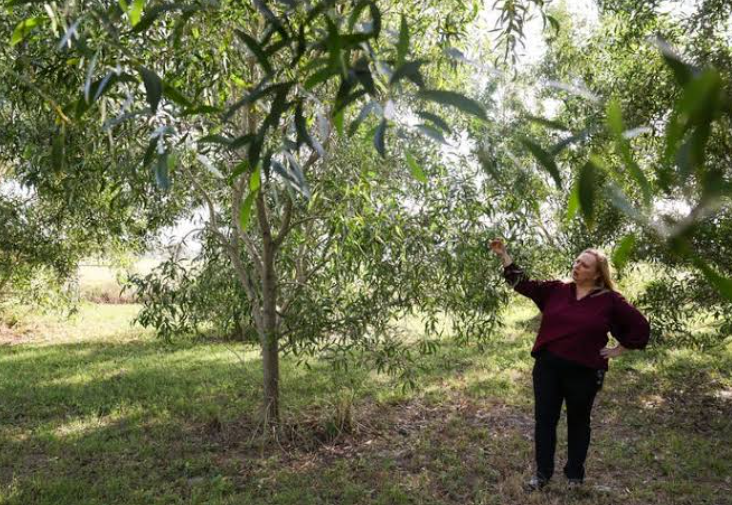
Brazilian pepper tree, and according to a UF/IFAS Pest Alert, is a member of the same plant family as poison ivy, poison oak, and poison sumac, meaning people sensitive to those plants may also develop an allergic skin reaction or respiratory irritation from handling it. It was first introduced to the United States in the mid-19th century as an ornamental, and its attractive red berries are readily eaten and further spread by raccoons, opossums, and migratory birds.
It’s now present across more than 700,000 acres statewide, forming dense canopies that shade out native vegetation and create inhospitable conditions for wildlife. It grows throughout central and southern Florida, aggressively invading both terrestrial habitats and sensitive coastal mangrove communities alike.
Melaleuca
Melaleuca, also called the paperbark tree, was brought to Florida from Australia in the late 1800s, and according to University of Florida News, some seeds were later deliberately spread over the Everglades in an effort to help dry out wetland areas. The tree’s distinctive white, bottle-brush flowers and thick, papery, peeling bark make it visually striking, but its oils burn extremely hot when dry, creating a serious wildfire hazard wherever dense stands have formed.
It’s estimated to have covered around 488,000 acres of South Florida by the early 1990s, though ongoing removal efforts have cleared roughly 100,000 acres of publicly managed land. It continues spreading largely unchecked on private land throughout Broward, Miami-Dade, Palm Beach, Lee, Martin, and Collier counties.
Australian Pine
Australian pine produces slender, drooping, pine-needle-like branches that actually belong to a flowering tree rather than a true conifer, despite the deceptively similar appearance. It grows extremely quickly along beaches and disturbed coastal ground, and its shallow root system makes mature trees notoriously prone to toppling during hurricanes, often taking out power lines and structures in the process.
It’s established throughout coastal areas of South and Central Florida, where its dense shade and needle litter prevent native beach vegetation, including the plants that protect sea turtle nesting sites, from growing beneath it. Its rapid growth and salt tolerance made it a popular windbreak tree before its invasive behavior became fully apparent.
Chinese Tallow Tree
Chinese tallow tree, sometimes called the popcorn tree for the waxy white seeds that split open in fall, was introduced to the United States first as a seed oil crop in the late 18th century and later spread further as a popular ornamental for its colorful autumn foliage. Birds eat its seeds and disperse them widely through their droppings, and the seeds can also travel considerable distances by water, allowing the tree to colonize wetland and coastal habitats far from any original planting.
It’s now prohibited from sale or planting under Florida state law, though it remains common in older yards and neighborhoods where it was planted decades ago. It grows throughout much of the state, capable of converting open, herbaceous coastal prairie into dense, closed-canopy tallow forest within about a decade of establishment.
Earleaf Acacia
Earleaf acacia produces sickle-shaped, leaf-like structures called phyllodes rather than true compound leaves, along with fuzzy yellow flower clusters and long, twisted seed pods each spring. It grows remarkably fast even by invasive tree standards, and its shallow, wide-spreading root system frequently causes it to topple in Florida’s frequent summer thunderstorms and hurricanes.
It’s established throughout much of central and southern Florida, particularly along roadsides and disturbed forest edges where its rapid growth lets it quickly outcompete slower-growing native trees. Its abundant seed production allows a relatively small original planting to spread into a substantial surrounding infestation within just a few years.
Java Plum
Java plum produces glossy, leathery leaves and clusters of small, dark purple fruit that ripen through summer, staining sidewalks and driveways a deep purple wherever fallen fruit accumulates beneath a mature tree. Birds and mammals eat the fruit readily and disperse the seeds widely, allowing the tree to establish in a broad range of disturbed and natural habitats across the state.
It’s found throughout much of central and southern Florida, tolerating both wet and relatively dry conditions once established. Its dense, spreading canopy and prolific seed production allow it to outcompete native trees in hammocks and disturbed woodland alike.
Carrotwood
Carrotwood produces glossy, compound leaves and small, star-shaped yellow flowers followed by distinctive woody seed capsules that split open to reveal bright orange seeds. Its common name comes from the orange color visible when its roots or inner bark are cut, a distinguishing feature that helps separate it from similar-looking native trees.
It’s established throughout coastal areas of South and Central Florida, particularly in beach dune, mangrove, and hammock habitats where it displaces native vegetation. Its salt tolerance and adaptability to both wet and dry conditions have allowed it to spread into a wide range of otherwise very different coastal ecosystems.
Chinaberry
Chinaberry produces fragrant, lavender flower clusters each spring followed by round, yellow-green berries that persist on the bare branches well into winter after the leaves have dropped. Those berries are toxic to humans and many animals if eaten in quantity, though birds appear largely unaffected and help spread the seeds widely across the landscape.
It grows throughout much of Florida, particularly common in disturbed areas, fence rows, and old homestead sites where it was historically planted as a fast-growing shade tree. Its ability to resprout vigorously from cut stumps makes mechanical removal alone an unreliable long-term control method.
Mimosa
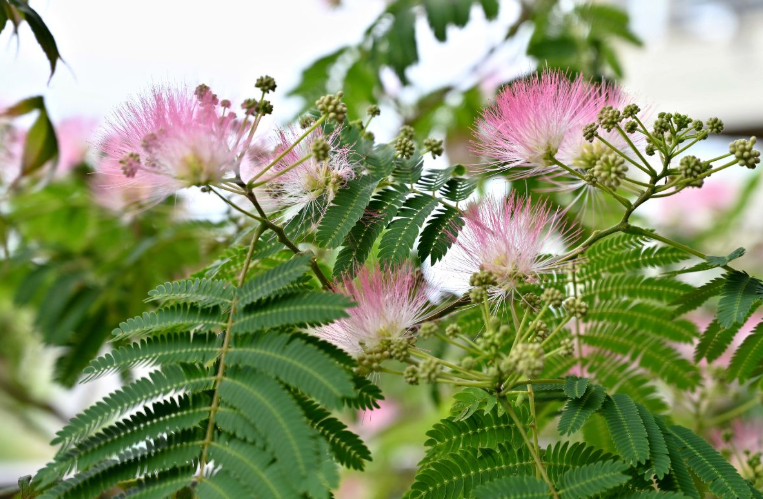
Mimosa, also called silk tree, produces fern-like, finely divided leaves and fluffy, pink pom-pom flower clusters that make it a recognizable and still-popular ornamental despite its documented invasive behavior. Its long, flat seed pods persist on the tree through much of the year, gradually releasing seeds that remain viable in the soil for years after falling.
It’s listed among the most common invasive trees found specifically in northern Florida, where its cold tolerance lets it thrive in conditions too cool for some of the state’s more subtropical invasive species. It readily colonizes disturbed roadsides, fence lines, and forest edges throughout the northern half of the state.
Camphor Tree
Camphor tree produces glossy, aromatic leaves that release a distinctive camphor scent when crushed, along with small white flowers and dark purple-black berries that ripen in fall. Birds readily eat and disperse the fruit, allowing the tree to establish in forest understories where its dense shade then suppresses the native seedlings that would otherwise regenerate the canopy.
It’s identified as one of the most common invasive trees in northern Florida, where it was historically planted for its attractive form and fragrant foliage. Its ability to tolerate a wide range of soil and light conditions has allowed it to spread well beyond its original ornamental plantings into surrounding natural areas.
Bischofia
Bischofia produces large, glossy, compound leaves and clusters of small, dark red-purple fruit that ripen through fall and winter, readily eaten and dispersed by a wide range of birds. Its rapid growth rate and dense, spreading canopy allow it to quickly overtop and shade out native trees in the hammocks and disturbed woodlands it colonizes.
It’s established throughout much of central and southern Florida, particularly in wetter hammock and floodplain habitats. Its prolific fruit production and effective bird dispersal have allowed it to spread well beyond the ornamental plantings that first introduced it to the state.
Woman’s Tongue Tree
Woman’s tongue tree, a relative of mimosa, produces fragrant, greenish-white flower puffs followed by long, flat, papery seed pods that rattle noticeably in the wind, giving the tree its unusual common name. Its rapid growth and tolerance for poor, disturbed soil let it establish quickly along roadsides and cleared land throughout its range in the state.
It’s found throughout much of South and Central Florida, particularly in disturbed coastal and upland habitats. Its abundant, wind-dispersed seed pods allow a single mature tree to seed a considerable surrounding area within just a few growing seasons.
Queensland Umbrella Tree
Queensland umbrella tree produces large, glossy, umbrella-shaped compound leaves and distinctive spikes of small red flowers, often growing as an epiphyte on other trees before eventually sending roots to the ground and overtaking its host. That unusual growth habit lets it establish in places most trees can’t, including cracks in walls, rooftops, and the trunks of other large trees.
It’s established throughout much of South Florida, particularly in urban and suburban landscapes where it frequently escapes cultivation. Its seeds are readily spread by birds, allowing new plants to sprout in gutters, tree crotches, and other elevated locations well away from any deliberate planting.
Laurel Fig
Laurel fig, also called Chinese banyan, produces small, glossy leaves and tiny fig fruit that ripen through much of the year, providing a steady food source for birds that then disperse its seeds widely across the landscape. Once a seed germinates in a crack or crevice, the tree can send down aerial roots that eventually engulf and strangle whatever structure or living tree it germinated on.
It’s found throughout much of South and Central Florida, frequently sprouting in gutters, on rooftops, and in the bark crevices of other trees. Its aggressive root system is also notorious for damaging sidewalks, foundations, and underground plumbing wherever a mature tree has been allowed to establish nearby.
Paper Mulberry
Paper mulberry produces large, rough, variably lobed leaves and small, round, orange-red fruit clusters that ripen through summer, readily eaten and dispersed by birds and small mammals. Its extensive root system sends up numerous root suckers around the base of an established tree, allowing a single planting to expand into a dense thicket over just a few growing seasons.
It’s found in scattered populations throughout much of Florida, particularly in disturbed sites, fence rows, and old homestead locations. Its aggressive suckering habit makes it notoriously difficult to fully eliminate, since cutting the main trunk alone typically triggers even more vigorous resprouting from the root system.
Silk Oak
Silk oak produces fern-like, deeply divided leaves and striking clusters of golden-orange flowers that appear each spring, a combination that made it a popular ornamental and street tree throughout much of the state. Its abundant, lightweight, wind-dispersed seeds allow a single mature tree to colonize a considerable area of surrounding disturbed or natural habitat.
It’s established in scattered populations throughout Central and South Florida, particularly along roadsides and in disturbed woodland edges. Its rapid growth rate and prolific seeding have led to increasing recognition of its invasive potential in the years since it was widely planted as a landscape tree.
Further References
- Invasive Plants — UF/IFAS — Excellent overview of invasive trees in Florida, including Brazilian pepper, melaleuca, camphor tree, mimosa, and Chinese tallow tree.
- Integrated Management of Invasive Plants in Natural Areas of Florida — UF/IFAS Extension — Provides Florida-specific information on nonnative invasive plants, including lists of invasive species and management considerations.
- UF/IFAS Florida Trees Tutorial — Useful for identifying Florida trees and checking characteristics such as invasive potential, origin, size, flowers, and other species information.
- Trees: North and Central Florida — UF/IFAS — A photographic field guide covering native, introduced, and invasive trees found in North and Central Florida, including melaleuca, Brazilian pepper, camphor tree, and other species.
- Help Protect Florida’s Natural Areas from Invasive Plants — UF/IFAS Extension — Explains how to recognize nonnative invasive plants in Florida and provides guidance on avoiding invasive species in landscaping.