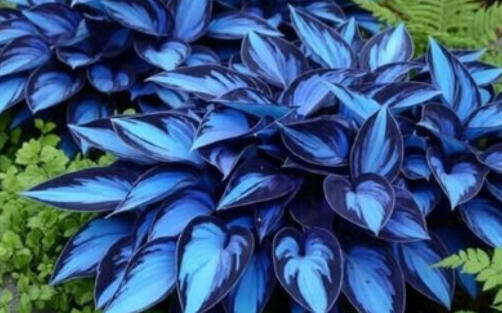
Plants with blue and black leaves get their striking coloring from two completely different sources, neither of which involves an actual blue or black pigment, since no such pigment exists in plant foliage. According to Oregon State University’s Landscape Plants database, the silvery-blue color seen on plants like Colorado blue spruce comes from a waxy coating on the surface of the foliage, a trait botanists call glaucous, which scatters light in a way that reads as blue or silvery-gray to the human eye rather than reflecting any blue pigment directly.
“Black” foliage works through an entirely different mechanism, since it’s really an extremely concentrated dose of anthocyanin, the same red-purple pigment responsible for burgundy and maroon leaves elsewhere in the plant world, layered so densely that it overwhelms the underlying green chlorophyll and reads as black or near-black to the eye. Both traits tend to intensify in full sun and fade toward duller green in shadier conditions, since both the waxy bloom and the pigment concentration typically develop most strongly under stronger light exposure.
These plants span alpine conifers, desert succulents, and shaded woodland perennials, with native ranges stretching from the Rocky Mountains to East Asia. What follows covers 21 plants known for blue and black leaves, along with where each one grows and the data behind its coloring.
Colorado Blue Spruce
Colorado blue spruce is native to the Rocky Mountains of Colorado, Wyoming, Utah, and New Mexico, and according to Oregon State University’s Landscape Plants database, its silvery-blue color comes from a wax coating the surface of the needles, with the variety name glauca literally meaning “covered with a waxy bloom.” A mature tree can reach 50 to 75 feet tall, with needle color that reportedly intensifies as the tree ages.
It grows as a widely planted ornamental throughout the northern United States, performing best in cool summer climates and struggling in the heat and humidity of the Southeast.
Blue Atlas Cedar
Blue Atlas cedar is native to the Atlas Mountains of Morocco and Algeria, displaying stiff, silvery-blue needles arranged in dense clusters along sweeping, upward-angled branches. A mature tree can reach 40 to 60 feet tall, with a distinctive irregular, picturesque form that becomes more pronounced with age. Its blue coloring comes from the same type of waxy surface coating found on blue spruce.
It grows as a landscape specimen tree throughout temperate regions of the United States, tolerating heat and drought better than many other blue-needled conifers.
Blue Fescue
Blue fescue is native to Europe, displaying fine, wiry, intensely blue-gray leaf blades arranged in a tight, rounded clump. A mature clump typically reaches 8 to 12 inches tall, forming a distinctive pincushion-like mound. Its blue coloring is most vivid in cool weather and full sun, fading somewhat during peak summer heat.
It grows as an ornamental grass throughout temperate regions of the United States, favoring well-drained soil and tolerating drought once established.
Blue Oat Grass
Blue oat grass is native to central and southern Europe, displaying stiff, arching, steel-blue leaf blades that form a substantial, fountain-like clump considerably larger than blue fescue. A mature clump typically reaches 2 to 3 feet tall and wide. Its blue coloring persists through much of the growing season before fading to a tan color in winter.
It grows as an ornamental grass throughout temperate regions of the United States, tolerating poor, rocky soil better than many other ornamental grasses.
Blue Chalk Sticks
Blue chalk sticks is native to South Africa, displaying cylindrical, finger-like, powder-blue succulent leaves along trailing stems. A mature planting spreads to form a low, dense mat, typically staying under a foot tall. Its powdery blue coating rubs off easily to the touch, similar to the bloom found on some grapes and plums.
It grows as a groundcover and container succulent throughout warm, dry regions of the southwestern United States, tolerating drought exceptionally well once established.
Blue Agave
Blue agave is native to Mexico, displaying thick, spiny, blue-gray succulent leaves arranged in a large, symmetrical rosette. A mature rosette can reach 4 to 6 feet across, taking several years to mature before sending up a single towering flower stalk and then dying. Its blue-gray color comes from a dense waxy coating that helps the plant conserve moisture in its hot, arid native habitat.
It grows as a landscape accent plant throughout the warm, arid regions of the southwestern United States, and it’s the specific species used commercially to produce tequila in Mexico.
Blue Star Juniper
Blue star juniper is native to China, displaying dense, prickly, star-shaped clusters of intensely silvery-blue foliage on a low, mounding shrub. A mature plant typically reaches 1 to 2 feet tall and 3 to 4 feet wide. Its compact, slow-growing habit has made it a popular low-maintenance landscape accent.
It grows as a landscape shrub throughout temperate regions of the United States, tolerating poor, rocky soil and drought once established.
Blue Hosta
Blue hosta, including cultivars like ‘Halcyon’ and ‘Blue Angel,’ is native to East Asia, displaying broad, heavily textured leaves coated in a thick, waxy bloom that gives them a distinctly blue-gray cast. A mature plant can range from 1 to 3 feet across depending on the specific cultivar. Unlike gold or white variegated hosta types, blue hostas generally require more shade to prevent their waxy coating from breaking down in intense sun.
It grows as a shade garden perennial throughout the northern and midwestern United States, among the most widely planted perennials in American gardens.
Sea Holly
Sea holly is native to Europe, displaying stiff, spiny, blue-gray leaves and equally blue, thistle-like flower heads that appear in summer. A mature plant typically reaches 2 to 3 feet tall, thriving in poor, dry, sandy soil where many other perennials struggle. Both its foliage and its flowers share the same steely blue coloring, an unusual trait even among plants with blue foliage.
It grows as a garden perennial throughout temperate regions of the United States, tolerating coastal conditions and salt spray better than most other blue-foliage perennials.
Silver Dollar Eucalyptus
Silver dollar eucalyptus is native to Australia, displaying rounded, silvery-blue juvenile leaves that are commercially harvested for floral arrangements before the tree matures into a different, narrower adult leaf form. A mature tree can reach 40 to 75 feet tall if allowed to grow unpruned, though it’s frequently coppiced and kept smaller specifically to maintain its more ornamental juvenile foliage. Its blue-gray coloring comes from the same type of waxy surface coating found on many other blue-leaved plants.
It grows as an ornamental and cut-foliage crop in mild coastal climates of California and other frost-free regions of the United States.
Rue
Rue is native to the Mediterranean region, displaying finely divided, blue-green foliage on a compact, shrubby plant. A mature plant typically reaches 2 to 3 feet tall. Its sap contains compounds capable of causing significant skin irritation and blistering when exposed to sunlight after contact, a serious consideration given the plant’s otherwise unassuming appearance.
It grows as an occasional garden herb and ornamental across warmer regions of the United States, and gloves are recommended when handling or pruning the plant.
Black Mondo Grass
Black mondo grass, botanically Ophiopogon planiscapus ‘Nigrescens,’ is native to Japan, and according to the North Carolina Extension Gardener Plant Toolbox, its leaves are black to purple-black in color, growing to about 14 inches long despite the plant itself staying compact. A mature clump typically reaches 8 to 12 inches tall, spreading slowly to form a dense groundcover. Despite its common name, it isn’t a true grass at all, but a member of the asparagus family more closely related to lilies.
It grows as a groundcover throughout temperate regions of the United States, favoring rich, slightly acidic, evenly moist soil in full sun to partial shade.
Black Magic Colocasia
Black Magic colocasia, an elephant ear cultivar, is a hybrid derived from species native to Southeast Asia, displaying enormous, heart-shaped leaves in a deep, velvety near-black purple. A mature plant can reach 4 to 6 feet tall, with individual leaves spanning up to 2 feet across. Its dramatic dark coloring provides striking contrast against the typically green foliage of surrounding tropical plantings.
It grows as a warm-season garden accent throughout temperate regions of the United States, favoring consistently moist soil and full sun to partial shade.
Black Coral Bells
Black coral bells, particularly the cultivar ‘Obsidian,’ is a variegated form of a plant native to North America, displaying nearly solid black-purple, ruffled leaves with a glossy sheen. A mature clump typically reaches 8 to 12 inches tall, sending up tall, wiry flower stalks in late spring. Its foliage color remains dark through most of the growing season, intensifying somewhat in cooler weather.
It grows as a garden perennial throughout temperate regions of the United States, tolerating partial shade better than many other dark-leaved perennials.
Black Sweet Potato Vine
Black sweet potato vine, particularly the cultivar ‘Blackie,’ is a variegated form of a plant native to tropical regions of the Americas, displaying deeply lobed, glossy leaves in a color so dark purple it reads as black from a distance. A mature vine can trail or climb several feet in a single growing season. Its dramatic dark foliage has made it a popular filler plant in mixed container plantings.
It grows as a warm-season garden annual throughout temperate regions of the United States, thriving in full sun with consistent moisture.
Black Aeonium
Black Aeonium, particularly the cultivar ‘Zwartkop,’ is native to the Canary Islands, displaying rosettes of glossy, near-black succulent leaves atop upright, branching stems. A mature plant can reach 2 to 3 feet tall, with individual rosettes spanning several inches across. Its dark coloring is most intense in full sun, fading toward green in shadier conditions.
It grows as a landscape and container succulent in mild, frost-free coastal climates of California and the Southwest.
Black Scallop Ajuga
Black scallop ajuga is a variegated form of a groundcover native to Europe, displaying glossy, deeply scalloped leaves in a dark chocolate to near-black purple. A mature planting spreads via above-ground runners, typically staying under 4 inches tall. Its dark, low-growing foliage makes an effective, weed-suppressing groundcover in shaded garden beds.
It grows as a groundcover throughout temperate regions of the United States, tolerating both sun and shade, though its darkest coloring develops in brighter light.
Black Lace Elderberry
Black Lace elderberry is a cultivar of a shrub native to Europe, displaying finely divided, almost fern-like leaves in a deep black-purple color, contrasting sharply with its pale pink flower clusters in early summer. A mature shrub typically reaches 6 to 8 feet tall. Its dramatic dark, lacy foliage sets it apart visually from green-leaved elderberry cultivars.
It grows as a landscape shrub throughout temperate regions of the United States, favoring full sun for its most saturated dark coloring.
Diabolo Ninebark
Diabolo ninebark is a cultivar of a shrub native to eastern North America, and according to the North Carolina Extension Gardener Plant Toolbox, it displays deep purple to nearly black foliage that holds its color well through summer heat. A mature shrub typically reaches 6 to 8 feet tall, with peeling, exfoliating bark that adds winter interest once the leaves drop. Its dark foliage provides strong contrast against the shrub’s small white to pink spring flower clusters.
It grows as a landscape shrub throughout the eastern and midwestern United States, tolerating wet soil and urban conditions better than many other flowering shrubs.
Black Beauty Barberry
Black Beauty barberry, also sold as ‘Concorde,’ is a cultivar of a shrub native to Japan, displaying small, rounded leaves in one of the darkest purple-black shades available among barberry cultivars. A mature shrub typically reaches 2 to 3 feet tall, considerably more compact than many other barberry varieties. Its dark coloring holds up well through the full growing season in full sun.
It grows as a landscape shrub throughout temperate regions of the United States, though its parent species is classified as invasive in several states.
Winecraft Black Smokebush
Winecraft Black smokebush is a cultivar bred at North Carolina State University, native to a species found from southern Europe to central China, and according to the North Carolina Extension Gardener Plant Toolbox, its foliage starts out purple in spring, turns nearly black in summer, and finishes with a brilliant orange in fall. A mature shrub typically reaches 8 to 10 feet tall and 6 to 8 feet wide, considerably more compact than the straight species. Its soft, pink flower panicles create the misty “smoke” effect that gives the whole genus its common name.
It grows as a landscape shrub throughout temperate regions of the United States, tolerating drought once established and requiring full sun for its darkest summer coloring.
Further References
- Honeybush — University of Wisconsin–Madison — Provides detailed information on Melianthus major, a foliage plant known for its large blue to bluish-green, deeply divided leaves.
- Elephant Ears — University of Wisconsin–Madison — Covers black- and blue-toned elephant ear cultivars, including ‘Black Coral,’ ‘Black Magic,’ ‘Blue Hawaii,’ and ‘Illustris,’ with descriptions of their distinctive foliage.
- Croton — University of Wisconsin–Madison — Includes cultivars such as ‘Evening Embers,’ which has metallic blue-black foliage highlighted with red and green.
- Little Bluestem — University of Wisconsin–Madison — Describes several cultivars with blue-gray or deep blue foliage, including ‘The Blues,’ ‘Blue Heaven,’ and ‘Blue Paradise.’
- Foliage Plants — University of Illinois Extension — Provides useful background on colorful foliage, including blue-gray, purple, bronze, and black leaves, and explains how these colors are used in landscape planting.