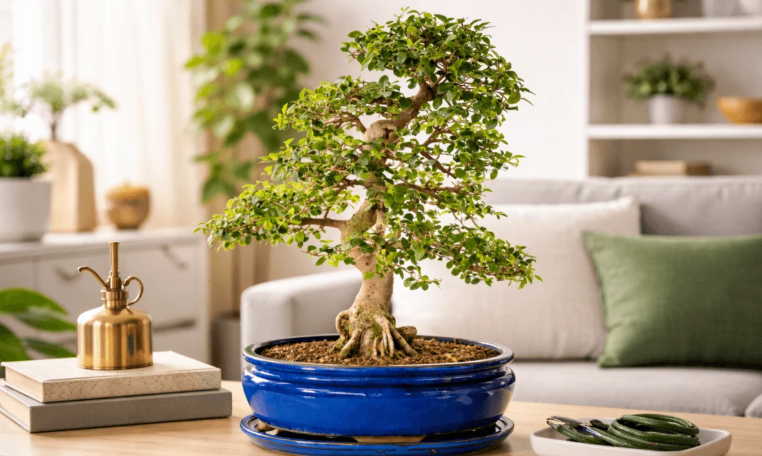
Watering an indoor bonsai tree sounds simple, but getting the timing and amount right can make the difference between healthy growth and stressed roots. Bonsai are grown in small, often shallow containers, which means they have a limited amount of soil available to hold water. The Royal Horticultural Society (RHS) notes that bonsai containers restrict the amount of water available to the tree and recommends keeping the growing medium just moist while checking the plant regularly. Royal Horticultural Society bonsai growing guide
The challenge becomes greater indoors because temperature, humidity and light can vary considerably from one room to another. A bonsai sitting beside a bright window may dry much faster than one kept in a cooler, dimmer location. RHS houseplant watering guide This is why there is no reliable rule that says every indoor bonsai should be watered every day or every week.
Instead, the best approach is to check the soil and water when it begins to dry slightly. Bonsai Empire similarly recommends checking the soil rather than following a fixed watering schedule, then thoroughly soaking the root system when watering is needed. Once you understand how quickly your particular bonsai dries out, watering becomes a much easier part of your regular plant-care routine.
How Often Should You Water an Indoor Bonsai Tree?
You should water an indoor bonsai when the soil begins to become slightly dry, rather than automatically watering it on a particular day of the week. Some trees may need water every few days, while others may go longer between waterings. A small pot in a warm, bright room can dry considerably faster than a larger pot sitting in a cooler location.
To check, feel the soil about 1–2 cm below the surface with your finger. If it still feels noticeably moist, wait and check again later. If it feels slightly dry, it is generally time to water. The surface alone can sometimes be misleading, so checking just below the top layer gives you a better idea of what is happening around the roots.
How Much Water Does a Bonsai Tree Need?
When your bonsai needs water, don’t give it just a few spoonfuls. The objective is to wet the entire root ball, not merely the surface of the soil. Water slowly and evenly across the surface until water begins flowing freely from the drainage holes underneath the pot.
This thorough watering helps prevent dry pockets from remaining inside the container. If water immediately runs down the sides and out of the drainage holes without soaking the root mass, the soil may have become excessively dry or compacted. In that situation, watering slowly and thoroughly is more useful than simply increasing the amount of water poured onto the tree.
How to Water an Indoor Bonsai Step by Step
1. Check the Soil
Before reaching for the watering can, check the soil. Insert your finger about 1–2 cm into the growing medium and determine whether it is still moist or has begun drying.
Do not water simply because it is morning, Monday, or because several days have passed. Your bonsai’s actual moisture level is more useful than the calendar.
2. Use a Fine Water Stream
A watering can with a fine rose or nozzle works well because it distributes water gently over the soil. A strong stream can displace the soil and expose roots, especially in a shallow bonsai container.
For an indoor tree, you can place the bonsai in a sink or another area where excess water can drain safely. This makes thorough watering much easier and keeps water from collecting on furniture.
3. Soak the Entire Root Ball
Water across the entire surface rather than concentrating on one spot. Continue until water comes out through the drainage holes.
If the soil was quite dry, allowing the first application to soak in and then watering again a few minutes later can help thoroughly rehydrate the root mass.
4. Let Excess Water Drain
Allow the bonsai to drain completely before returning it to its normal position. Never leave the pot sitting in a saucer or decorative container filled with standing water.
Good drainage is particularly important for bonsai because the roots are confined to a small container. Constantly saturated soil can create conditions that encourage root problems.
Also Read: Best Types of Bonsai Trees You Need To Know
Should You Water a Bonsai From the Top or Bottom?
For routine watering, watering from the top is generally the simplest method. Apply water evenly over the soil until it drains from the bottom of the pot.
Bottom watering can sometimes help rehydrate extremely dry soil, but it should not become an excuse to keep the root ball permanently wet. Bonsai soil needs both moisture and air, so the important thing is not whether the water comes from above or below but whether the entire root system becomes adequately moist while excess water can drain away.
What Is the Best Water for an Indoor Bonsai?
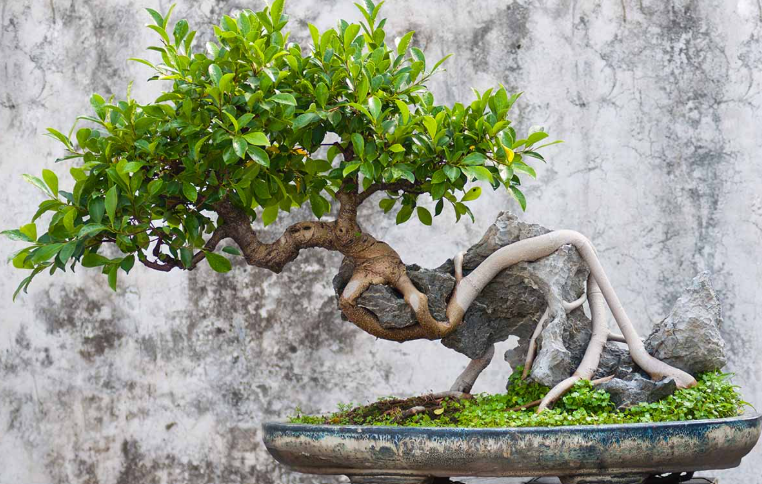
Ordinary tap water is generally suitable for many bonsai trees. However, water quality varies from one location to another, and some species can be more sensitive to mineral accumulation than others.
Rainwater is often considered a good option because it does not contain the same added minerals or treatment chemicals found in some tap-water supplies. If tap water is what you have available, however, there is usually no need to make watering unnecessarily complicated. The species of bonsai and the quality of the growing medium are often more important considerations.
Can You Overwater an Indoor Bonsai?
Yes. One of the most common misconceptions is that overwatering simply means giving too much water at one time. In practice, watering too frequently is often the bigger problem.
A bonsai can receive a thorough soaking and remain perfectly healthy if the excess water drains away. Problems arise when the soil stays wet for too long and the roots do not receive enough oxygen. For that reason, don’t interpret “water thoroughly” as “keep the soil constantly wet.”
The safest approach is to let the soil begin drying slightly before watering again. Exactly how much drying is appropriate depends on the species and soil mixture, so a tropical Ficus should not necessarily be treated exactly like another type of bonsai.
Signs Your Indoor Bonsai Needs Water
Your bonsai may need water when:
- The soil feels slightly dry below the surface.
- The pot feels noticeably lighter than it did after watering.
- Leaves begin to lose firmness or droop.
- The growing medium is pulling away from the sides of the container.
- Water runs unusually quickly through the pot because the soil has become very dry.
Don’t wait until severe wilting occurs before checking the soil. By the time a bonsai is visibly collapsing, it may already be under significant water stress.
Signs You Are Watering Too Often
Overwatering is harder to diagnose because the symptoms can resemble other problems. Watch for:
- Soil that remains wet for long periods.
- Yellowing or dropping leaves.
- Poor or weak growth.
- Persistent unpleasant odors from the growing medium.
- A bonsai that appears stressed even though the soil is constantly wet.
These symptoms do not automatically prove overwatering because poor light, pests, temperature changes and other problems can produce similar effects. Start by checking the soil, drainage and growing conditions together rather than assuming every yellow leaf means the tree needs less water.
How Indoor Light Affects Watering
Light has a major influence on how quickly an indoor bonsai uses water. A bonsai growing beside a bright window can lose moisture more quickly than one sitting several feet away in a dim room.
This is one reason moving a bonsai to a new location can change its watering requirements. A tree placed in brighter light may dry faster, while a tree moved into a cooler or darker area may remain wet longer. Indoor bonsai also need adequate light in their own right; watering cannot compensate for a chronically poor light environment.
How Temperature Affects Watering
Warm indoor temperatures generally increase water use, while cooler conditions can slow drying. Heating systems and air conditioning can also change the environment around the tree.
During periods of active growth, check the soil more frequently. In cooler months, you may find that the bonsai needs water less often. Rather than reducing watering according to a fixed winter schedule, continue checking the actual condition of the soil.
Do Indoor Bonsai Need More Water in Summer?
Often, yes, but not automatically. Summer usually brings higher temperatures and stronger light, which can cause the growing medium to dry more rapidly. If the bonsai is near a bright window or receives supplemental lighting, its water demand may increase.
The important distinction is that summer does not mean “water every day.” Check the soil and respond to what the plant actually needs. A bonsai kept in a cooler indoor location may dry much more slowly than one growing in a warm, sunny position.
Do Indoor Bonsai Need Less Water in Winter?
Many indoor bonsai need less frequent watering during winter, especially when growth slows and indoor conditions are cooler. However, the answer depends strongly on the species.
True indoor bonsai are generally tropical or subtropical species such as Ficus, dwarf jade and some Schefflera and Fukien tea bonsai. These trees do not all respond identically to winter conditions. Ficus, for example, should still be watered when its soil begins to dry rather than according to a fixed winter calendar.
Watering a Ficus Bonsai Indoors
Ficus is one of the most popular bonsai choices for indoor growing because it tolerates indoor conditions better than many temperate trees. It still needs plenty of light, however, and its watering should be based on soil moisture rather than a predetermined schedule.
When the Ficus soil becomes slightly dry, water it generously until water flows from the drainage holes. In a warm indoor location, it may require more frequent watering than a Ficus kept somewhere cooler.
Should You Mist an Indoor Bonsai?
Misting is often recommended as a way to increase humidity, but it should not be considered a replacement for proper watering. Water absorbed by the roots is what supplies the plant’s primary water needs.
Misting can temporarily wet the foliage and may provide a short-lived increase in humidity, but the effect does not last long. If your home is very dry, other approaches such as grouping plants, using a humidity tray or employing a humidifier can be more effective for increasing ambient humidity. Most importantly, don’t use misting as a substitute for watering the soil.
Should You Water Bonsai Every Day?
No—not unless the tree actually dries that quickly.
Some bonsai may need daily watering under particularly warm, bright and dry conditions, while others may need water much less frequently. Following a daily schedule without checking the soil can lead to unnecessary watering.
Instead, make checking your bonsai part of your daily or regular plant-care routine. You may discover that the tree needs water today, but not tomorrow.
What Time of Day Is Best to Water an Indoor Bonsai?
There is no strict hour at which an indoor bonsai must be watered. If the soil has become slightly dry and the tree needs water, it is better to water it properly than to postpone watering simply because it is not a particular time of day.
The more important consideration is making sure the root ball becomes thoroughly wet and excess water drains away.
Why Is My Bonsai Soil Drying Out So Fast?
Several factors can make bonsai soil dry quickly:
- A very small pot
- Warm indoor temperatures
- Strong sunlight
- Low humidity
- Fast-draining bonsai soil
- A rapidly growing tree
- Roots that have filled much of the container
Bonsai are intentionally grown in small containers, so their water reserves are limited. If the tree seems to dry unusually quickly, examine the pot, soil and roots rather than simply watering more frequently. A root-bound tree can also have difficulty absorbing water properly because the soil mass has become densely occupied by roots.
What If Bonsai Soil Becomes Completely Dry?
If the soil has become completely dry, water the bonsai thoroughly rather than giving it a tiny amount and walking away. Extremely dry growing media can sometimes repel water, allowing it to run around the edges of the root ball and out of the drainage holes.
Water slowly so the medium has time to absorb moisture. If necessary, repeat the watering after several minutes. Then monitor the tree closely over the following days.
A Simple Indoor Bonsai Watering Routine
For beginners, a simple routine works better than trying to memorize an exact number of days.
Every day or so: check the soil.
If it is still moist: don’t water yet.
If it has started to dry: water thoroughly.
During watering: wet the entire root ball.
After watering: allow excess water to drain completely.
Between waterings: continue monitoring rather than following the calendar.
This approach can be adapted as your indoor temperature, light levels and seasons change.
Common Watering Mistakes to Avoid
Watering on a Fixed Schedule
A calendar cannot account for changing temperature, light, soil and plant growth. Check the bonsai instead.
Giving Only a Small Amount of Water
A few drops or a small splash may wet the surface without properly hydrating the root ball. When watering is needed, water thoroughly.
Leaving the Pot in Standing Water
A bonsai needs drainage. Empty any saucer or outer container that collects excess water.
Assuming Yellow Leaves Always Mean Underwatering
Yellowing can have several causes, including watering problems, inadequate light, environmental stress and other issues. Examine the whole growing environment.
Ignoring the Species
An indoor Ficus and an outdoor temperate bonsai should not automatically receive identical care. First identify the tree and learn its basic requirements. Only certain tropical and subtropical species are genuinely suited to living indoors long-term.
Things To Remember
Watering an indoor bonsai becomes much easier once you stop thinking in terms of “How many times per week?” and start asking “Is the soil ready for water?” That small change can prevent many of the problems beginners encounter.
Check the soil regularly, water when it has begun to dry, soak the entire root system, and let excess water drain away. Then adjust your routine according to the species, pot, soil, temperature and amount of light your bonsai receives. With consistent observation, you will gradually learn how quickly your particular tree dries and can develop a watering routine that keeps it healthy without keeping its roots constantly saturated.
References
- Royal Horticultural Society (RHS) — Bonsai: Growing and Caring for Bonsai.
Royal Horticultural Society — Bonsai
A highly authoritative horticultural reference covering bonsai watering, compost, drainage, positioning, feeding, repotting, and general care. It is particularly useful for explaining why bonsai require careful attention to moisture levels. - University of Minnesota Extension — Bonsai.
University of Minnesota Extension — Bonsai
Provides practical guidance on caring for bonsai indoors and outdoors, including watering, light, humidity, soil, fertilization, pruning, and repotting. - University of Florida IFAS Extension — Bonsai.
University of Florida IFAS Extension — Bonsai
Useful for explaining basic bonsai care requirements, including watering and environmental conditions that affect how quickly the growing medium dries. - U.S. National Arboretum — National Bonsai & Penjing Museum.
National Bonsai & Penjing Museum — U.S. National Arboretum
An authoritative resource for bonsai cultivation and the care of established bonsai specimens. It also provides valuable background on bonsai species and cultivation practices. - American Bonsai Society — Bonsai Resources.
American Bonsai Society
A specialist bonsai organization offering resources on bonsai cultivation, including watering, soil, species selection, styling, and general maintenance. - Missouri Botanical Garden — Bonsai Plant Information.
Missouri Botanical Garden — Plant Finder
Useful when discussing how watering requirements vary between different bonsai species because individual trees have different moisture, light, and environmental preferences.