Key Takeaways: What the major types are, how they differ, what each is used for, and where sorghum is grown.
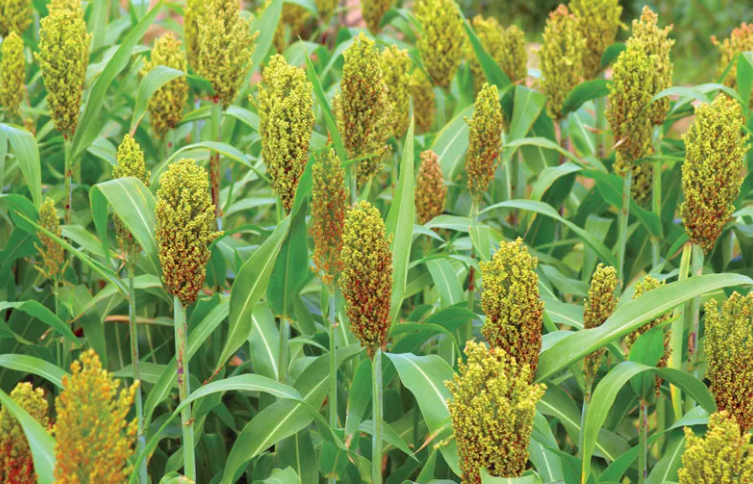
Sorghum is one of those crops that can look deceptively simple from a distance. It resembles corn in some ways, but instead of producing large ears, it develops grain clusters on the tops of tall grass-like plants. Depending on the type, sorghum can be grown for food, livestock feed, sweet syrup, silage, biofuel, biomass, or even traditional broom making. It is especially valuable in areas where hot weather and limited rainfall make some other grain crops more difficult to produce. USDA research describes sorghum as a drought-resistant crop grown extensively in arid and semi-arid tropical and subtropical regions.
In the United States, sorghum is particularly associated with the Central and Southern Plains, although it is also grown in other regions. Kansas, Nebraska, Missouri, Oklahoma, Texas and nearby states have important sorghum production, while USDA research also notes production in the Southeast. Grain sorghum is an important U.S. feed grain, while other forms are grown specifically for forage, syrup or industrial purposes.
The term “sorghum” therefore covers considerably more than one crop type. Some types are selected for large grain heads, others for tall leafy growth, and others for high sugar content or large amounts of plant material. Below are the major types of sorghum and what makes each one different.
1. Grain Sorghum
Grain sorghum is the type most commonly associated with sorghum grown as a cereal crop. It is generally shorter than forage sorghums and puts much of its energy into producing grain rather than tall stems and leaves. The grains can occur in different colors, including white, red, bronze and brown, depending on the variety.
The grain is used for livestock feed, bird feed and human food, while some grain sorghum is also processed for industrial applications. In the United States, sorghum is one of the four major feed grains tracked by USDA, alongside corn, barley and oats.
Also Read: Different Types of Wheat
2. Forage Sorghum
Forage sorghum is grown primarily for livestock feed rather than for harvesting dry grain. These plants are usually much taller and leafier than grain sorghums and can produce substantial amounts of forage. Some forage sorghums are harvested for silage or green chop, making them useful where producers want a high-yielding warm-season forage crop.
Many forage sorghums have thick stems and mature relatively late. They can be particularly useful in hot, dry growing conditions, although livestock producers need to manage them carefully because sorghum forage can develop potentially dangerous prussic acid levels following drought, frost or other stress.
3. Sweet Sorghum
Sweet sorghum is grown primarily for the sugary juice contained in its stalks. Unlike grain sorghum, the main attraction is not the seed but the high sugar content of the plant. The stalks can be crushed to extract juice that is traditionally used to make sorghum syrup.
Sweet sorghum has also attracted attention for ethanol and other bio-based products because its juice contains fermentable sugars. It is therefore one of the most versatile sorghum types, combining agricultural, culinary and industrial uses.
4. Sudangrass
Sudangrass is a fast-growing type of sorghum grown primarily as forage. It has relatively fine stems, produces many tillers and tends to be leafy, making it useful for hay, grazing and other livestock-feeding systems. It also has good regrowth after cutting compared with many taller forage sorghums.
Because it grows quickly during warm weather, Sudangrass is also useful as a summer forage crop and temporary cover. However, like other sorghum forages, it can present a prussic acid risk under certain drought or freezing conditions, so livestock should not simply be turned onto a stressed stand without proper management.
5. Sorghum-Sudangrass Hybrids
Sorghum-sudangrass hybrids combine characteristics of forage sorghum and Sudangrass. They are generally vigorous, tall plants capable of producing large amounts of forage, making them popular for hay, grazing, green chop and silage.
Compared with pure Sudangrass, these hybrids often have thicker stems and can produce more total forage, while their regrowth characteristics vary by hybrid. They are particularly useful when a producer wants a high-yielding summer forage crop rather than a grain harvest.
6. Biomass Sorghum
Biomass sorghum is selected for producing large quantities of plant material rather than maximizing grain production. These plants can become very tall and generate substantial amounts of stems and leaves, which can then be used as feedstock for renewable energy and other industrial purposes.
Biomass sorghum has received attention because sorghum grows rapidly, uses water efficiently and can perform well under relatively dry conditions. USDA research identifies biomass sorghum as one of the major sorghum categories being investigated for biofuel and value-added products.
7. Broomcorn
Broomcorn is a distinctive type of sorghum grown for its long, stiff seed branches rather than primarily for grain or livestock feed. Those branches can be harvested, dried and used to make traditional brooms and decorative products.
Although broomcorn represents a specialized agricultural use, it is an important example of how widely sorghum has been adapted. USDA’s Forest Service materials classify broomcorn separately from grain, forage, syrup and grass sorghums, reflecting its distinctive purpose.
8. Dual-Purpose Sorghum
Dual-purpose sorghum is selected to provide both grain and useful forage. Instead of being optimized entirely for one purpose, these varieties attempt to balance grain production with enough stalk and leaf material to provide additional feed value.
This can be useful for farmers who want flexibility at harvest. Depending on the variety and growing conditions, the crop may be managed toward grain production, forage, silage or a combination of these uses. USDA’s conservation commodity classifications recognize dual-purpose sorghum as a distinct agricultural category.
9. Silage Sorghum
Silage sorghum is grown specifically for harvesting as silage, where the entire plant is chopped and preserved through fermentation. These sorghums are generally selected for high biomass production, good forage characteristics and suitable moisture at harvest.
Sorghum silage can provide an alternative to corn silage, particularly in regions where hot and dry conditions make corn production more challenging. Some forage sorghums can produce yields comparable to silage corn, although forage quality depends heavily on the variety and stage at harvest.
10. Grass Sorghum
Grass sorghums are a broad category that includes Sudangrass and sorghum-Sudangrass hybrids. They are primarily grown for their grass-like forage rather than harvested as a conventional grain crop.
These sorghums are valued for rapid summer growth and can also be used as temporary cover crops. USDA Forest Service guidance notes that grass sorghums can be useful for erosion control and quick temporary ground cover, while forage and grass sorghums can also be used for pasture, silage and fodder.
Where Is Sorghum Grown?
Sorghum is grown in many parts of the world, but it is particularly important in warm, relatively dry regions. The crop originated in Africa and became widely established in other parts of the world because of its ability to tolerate heat and drought. USDA research describes sorghum as particularly well adapted to arid and semi-arid regions of Africa, Asia and the southern United States.
In the United States, sorghum production is concentrated heavily across the Great Plains and Southern Plains. Kansas has historically been a leading producer, with major production also occurring in Texas, Nebraska, Oklahoma and surrounding states. USDA describes the Central Plains as including Kansas, Missouri and Nebraska and the Southern Plains as including Arkansas, Oklahoma and Texas for sorghum production regions.
Sorghum is also grown in the Southeast. USDA Agricultural Research Service researchers note that sorghum is primarily grown in the Central Plains and Southeast United States, illustrating how the crop can be adapted to more than one U.S. production environment.
Globally, sorghum is especially important in parts of Africa and Asia, where grain sorghum is used extensively as a food crop. In other regions, it is more commonly used for animal feed, forage or industrial purposes.
What Is Sorghum Used For?
The use of sorghum depends largely on the type grown. Grain sorghum can be milled into food products or used for livestock feed, while forage sorghum, Sudangrass and sorghum-Sudangrass hybrids are primarily grown for animals.
Sweet sorghum is valued for its sugary stalk juice and syrup production, while biomass sorghum is being developed for renewable energy and industrial feedstocks. Broomcorn has a much more specialized use, providing material for traditional broom production. This range of uses is one reason sorghum remains an important crop despite being less familiar to many consumers than corn or wheat.
Why Is Sorghum Important in Dry Regions?
One of sorghum’s biggest advantages is its ability to continue producing under conditions that can be difficult for some other crops. It is a warm-season C4 grass with strong drought tolerance and efficient water use, characteristics that help explain its importance in semi-arid farming regions.
This does not mean sorghum requires no water or that every type performs equally well under drought. Rather, its combination of heat tolerance, water-use efficiency and adaptability makes it particularly valuable where growing conditions are hot and rainfall is unreliable.
Sorghum vs. Corn
Sorghum and corn are both warm-season cereal crops, but they differ considerably in appearance and management. Corn produces ears containing rows of kernels, while grain sorghum produces clusters of relatively small grains at the tops of its stalks.
Sorghum is also known for its drought tolerance and is often chosen for environments where water availability is more limited. Corn remains by far the dominant U.S. feed grain, but sorghum occupies an important niche, particularly in the Plains and other areas where its environmental advantages can be valuable.
How to Choose a Type of Sorghum
The best type of sorghum depends on what you want to harvest. For grain production, grain sorghum is the obvious choice. For livestock forage, forage sorghum, Sudangrass or sorghum-Sudangrass hybrids are more appropriate. If the goal is syrup, sweet sorghum is the specialized choice.
For renewable-energy or industrial applications, biomass sorghum may be more suitable, while farmers wanting both grain and forage can consider dual-purpose sorghum. The important point is that sorghum should be selected according to its intended use rather than simply choosing a variety because it grows tall or produces large seed heads.
Things To Remember
There are many types of sorghum, but most can be understood by looking at what the crop is bred to produce. Grain sorghum is grown for its kernels, forage sorghum and grass sorghums for livestock feed, sweet sorghum for sugary stalk juice, biomass sorghum for plant material, and broomcorn for its specialized fibers.
Where sorghum is grown is just as interesting as the different types. From the Great Plains of the United States to dry farming regions of Africa and Asia, the crop has become important because it can combine useful yields with strong adaptation to heat and relatively dry conditions. Its versatility makes sorghum much more than simply another grain—it is a group of crops serving food, livestock, agricultural and industrial needs.
References
- Food and Agriculture Organization of the United Nations (FAO) — Sorghum.
FAO — Sorghum
Provides authoritative information on sorghum, including its botanical characteristics, cultivation, environmental requirements, uses, and importance as a cereal crop. - International Crops Research Institute for the Semi-Arid Tropics (ICRISAT) — Sorghum.
ICRISAT — Sorghum
A strong research source covering sorghum diversity, breeding, production, nutrition, drought tolerance, and different types and uses of sorghum. - USDA Agricultural Research Service — Sorghum.
USDA Agricultural Research Service
Useful for scientific information on sorghum genetics, crop improvement, plant characteristics, grain quality, and agricultural production. - Oklahoma State University Extension — Sorghum.
Oklahoma State University Extension — Sorghum Production
Provides practical information about grain sorghum, forage sorghum, production characteristics, planting, management, and environmental adaptation. - University of Florida IFAS Extension — Sorghum.
University of Florida IFAS Extension
Offers extension resources on sorghum production, varieties, forage use, and management in agricultural systems. - Purdue University Extension — Sorghum.
Purdue University Extension
Useful for information on sorghum production, crop characteristics, management practices, and choosing varieties for different growing conditions. - CABI — Sorghum bicolor.
CABI — Sorghum bicolor
Provides scientific information on Sorghum bicolor, including taxonomy, distribution, ecology, cultivation, uses, pests, and diseases.