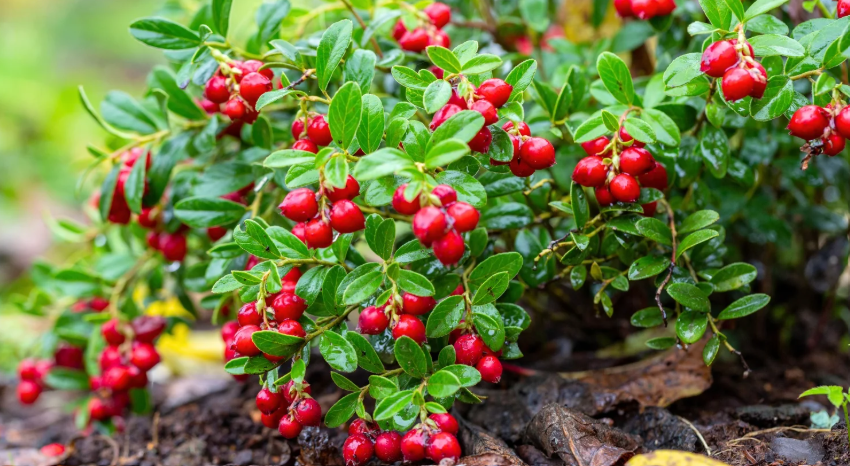
Native berry bushes are some of the most useful plants you can add to a wildlife garden. Their berries provide seasonal food for birds and other animals, while their flowers can support pollinators and their branches and foliage offer shelter and nesting habitat. Unlike many ornamental shrubs, native berry-producing plants are adapted to the climates and ecosystems where they naturally occur.
The best wildlife garden is rarely built around a single species. A mixture of shrubs that fruit at different times can provide food over a much longer season. Some plants produce red berries, others blue, purple, orange, or nearly black fruit, creating both ecological value and visual interest.
When choosing native berry bushes, consider your USDA hardiness zone, soil type, moisture, sunlight, mature size, and the wildlife species you want to attract. Also remember that a berry being attractive to birds does not necessarily mean it is edible for humans.
1. Serviceberry (Amelanchier spp.)
Serviceberries are excellent all-around wildlife shrubs. Depending on the species, they can grow as shrubs or small trees and produce white spring flowers followed by small berries that mature from red to purple or blue-black.
Birds readily consume the fruit, while the spring flowers attract pollinating insects. Serviceberry can also provide nesting and cover habitat.
Several species are native to different regions of North America, so choose one naturally suited to your location.
Also Read: Best Native Berry Bushes for Wildlife Gardens
2. American Elderberry (Sambucus canadensis)
American elderberry is a fast-growing native shrub that can become an important food source for wildlife.
Large clusters of white flowers appear in summer, followed by dark purple-black berries. Birds are particularly attracted to the fruit.
It grows best with adequate moisture and can work well along woodland edges, rain gardens, and naturalized areas.
3. Black Chokeberry (Aronia melanocarpa)
Black chokeberry is a hardy deciduous shrub with white spring flowers and dark berries.
The fruits have a strongly astringent flavor for people when eaten fresh, but they provide food for wildlife. The shrub also develops attractive fall foliage.
Its tolerance of different soil conditions makes it a useful choice for naturalistic landscapes.
4. Red Chokeberry (Aronia arbutifolia)
Red chokeberry produces bright red berries that can persist into the colder months.
The shrub offers several seasons of interest, with spring flowers, summer fruit, and colorful autumn foliage.
Plant it where you want a native shrub that provides both wildlife food and strong ornamental value.
5. Highbush Cranberry (Viburnum opulus var. americanum)
American cranberrybush, often called highbush cranberry, is a large native viburnum with clusters of bright red fruit.
The shrub provides spring flowers, summer and autumn berries, and dense branching that can offer cover.
It is particularly useful in larger wildlife gardens where there is room for a substantial shrub.
6. Winterberry (Ilex verticillata)
Winterberry is one of the most spectacular native berry shrubs for a wildlife garden.
Female plants produce masses of bright red berries that can remain on bare branches after the leaves fall. The fruit provides an important winter food source for birds.
Winterberry is dioecious, meaning male and female plants are separate. A suitable male plant is needed nearby for pollination and fruit production.
7. Inkberry (Ilex glabra)
Inkberry is an evergreen native holly that produces small dark fruits on female plants.
Its dense evergreen foliage gives wildlife year-round cover, making it useful in gardens where shelter is as important as food.
It performs particularly well in acidic soils and can be used for informal hedges and foundation-style naturalistic plantings.
8. American Beautyberry (Callicarpa americana)
American beautyberry is easy to recognize when its vivid purple berry clusters appear.
The berries form in dense rings around the stems, creating an unusual ornamental display. Birds and other wildlife can consume the fruit.
It is particularly valuable in warmer regions of the southeastern United States.
9. Coralberry (Symphoricarpos orbiculatus)
Coralberry produces clusters of pinkish-red berries that can persist well into winter.
Its dense, branching habit provides excellent cover for small wildlife.
This shrub can spread by suckers, making it more suitable for naturalized areas than tightly controlled formal landscapes.
10. Common Snowberry (Symphoricarpos albus)
Common snowberry is named for its distinctive white berries.
The fruits stand out against green foliage and bare winter branches. Its dense growth also creates useful cover.
Snowberry is particularly well suited to naturalized gardens and woodland-edge landscapes.
Also Read: Best Berry Bushes for Backyard Planting
11. Red Huckleberry (Vaccinium parvifolium)
Red huckleberry is a Pacific Northwest native valued for its bright red berries.
It naturally grows in forest environments and can provide food for birds and other wildlife.
Its delicate foliage and reddish fruit make it particularly attractive in woodland gardens designed around native species.
12. Evergreen Huckleberry (Vaccinium ovatum)
Evergreen huckleberry provides something many berry shrubs cannot: year-round foliage.
Its small dark berries mature against glossy green leaves, while its dense growth provides cover for wildlife.
It is particularly useful in Pacific coastal gardens and generally prefers acidic, well-drained soil.
13. Mountain Huckleberry (Vaccinium membranaceum)
Mountain huckleberry is an important berry-producing shrub of western mountain forests.
Its berries can range from reddish to dark purple or nearly black as they mature. The fruit is consumed by birds, mammals, and people.
It is an excellent candidate for gardens that recreate cool, forest-like conditions.
14. Evergreen Wintergreen (Gaultheria procumbens)
Eastern teaberry, or wintergreen, is a low-growing native evergreen rather than a large shrub.
Its bright red berries provide winter interest and food, while its creeping growth makes it useful beneath taller native shrubs.
It is best suited to acidic woodland conditions.
15. Lowbush Blueberry (Vaccinium angustifolium)
Lowbush blueberry is an excellent native choice for acidic soils.
Its spring flowers attract pollinators, while its blueberries provide food for birds and mammals. The shrub also develops attractive autumn color.
It works particularly well in sunny woodland edges, native plant gardens, and other acidic sites.
Also Read: Types of Huckleberries
16. Highbush Blueberry (Vaccinium corymbosum)
Highbush blueberry is both a valuable wildlife plant and a popular fruiting shrub.
White or pinkish flowers appear in spring, followed by blue berries. Birds and mammals readily use the fruit, while pollinators visit the flowers.
Its brilliant fall foliage adds another reason to include it in a wildlife landscape.
17. Northern Bayberry (Morella pensylvanica)
Northern bayberry is a hardy native shrub particularly suited to coastal and sandy conditions.
Its small waxy fruits provide food for certain bird species, while the dense shrub offers cover.
It is also useful for erosion control and naturalistic planting in appropriate regions.
18. Wax Myrtle (Morella cerifera)
Southern wax myrtle is an evergreen or semi-evergreen shrub of the southeastern United States.
Its waxy berries are especially valuable to birds, while the dense foliage provides shelter.
Wax myrtle is particularly useful for screening, coastal gardens, and wildlife plantings in warmer climates.
19. Spicebush (Lindera benzoin)
Spicebush is an outstanding wildlife shrub because it supports more than just berry-eating animals.
Female plants produce bright red fruits after yellow spring flowers. The leaves are also important food for the caterpillars of the spicebush swallowtail butterfly.
For a wildlife garden, this combination of fruit, flowers, and caterpillar habitat makes spicebush particularly valuable.
20. Elderberry (Sambucus racemosa)
Red elderberry is a western and northern native shrub with clusters of bright red berries.
The flowers provide resources for insects, while the fruit is consumed by numerous birds and mammals.
It can become a relatively large shrub, so allow plenty of room when planting it.
21. Oregon Grape (Mahonia aquifolium)
Oregon grape is an evergreen native shrub with holly-like leaves.
Clusters of yellow flowers appear in spring, followed by blue-purple berries. The plant provides year-round foliage and can tolerate relatively dry conditions once established.
It is particularly valuable in western native gardens.
22. Buffalo Berry (Shepherdia argentea)
Silver buffaloberry is a hardy shrub of western and northern North America.
Its small red or yellowish fruits provide food for wildlife, while the plant’s silvery foliage gives it a distinctive appearance.
It is particularly useful in dry landscapes and prairie-style wildlife gardens.
23. Red Mulberry (Morus rubra)
Red mulberry is technically a tree rather than a shrub, but its wildlife value makes it worth including in a broader list of native berry-producing plants.
Its elongated fruits mature to reddish-purple or dark purple and are highly attractive to birds and mammals.
Because it can become a large tree, give it substantially more space than a typical berry shrub.
24. Salmonberry (Rubus spectabilis)
Salmonberry is a Pacific Northwest native shrub related to raspberries and blackberries.
Its pink flowers appear in spring, followed by yellow, orange, or reddish berries depending on the plant.
Dense salmonberry thickets can provide excellent cover while the fruit supplies food for birds and mammals.
How to Choose the Best Native Berry Bushes
The best plants for your wildlife garden depend heavily on where you live.
For Wet Areas
Consider plants such as:
- American elderberry
- Winterberry
- Spicebush
- Highbush blueberry
- American cranberrybush
For Dry or Well-Drained Areas
Consider:
- Oregon grape
- Buffalo berry
- Chokeberries
- Some serviceberries
- Certain huckleberries
For Woodland Gardens
Good choices include:
- Red huckleberry
- Mountain huckleberry
- Spicebush
- Serviceberry
- Wintergreen
- Highbush blueberry
For Winter Wildlife Food
Look for shrubs whose fruits persist into the colder months, such as:
- Winterberry
- Chokeberry
- Snowberry
- Coralberry
- Northern bayberry
- Wax myrtle
How to Create a Berry-Focused Wildlife Garden
Planting one berry bush is helpful, but a diverse planting can provide considerably more habitat value.
Try combining shrubs of different heights and fruiting seasons. For example, a tall serviceberry can provide an upper layer, while lower-growing blueberry and wintergreen can occupy the space underneath.
Include flowering native plants between the berry shrubs to provide food for pollinators. Dense shrubs can also be allowed to grow naturally rather than being tightly clipped.
Avoid excessive pesticide use, particularly during flowering and fruiting periods.
Plant Berry Bushes for Different Seasons
One of the smartest strategies is to select plants that produce food at different times.
Spring: Flowers provide nectar and pollen.
Summer: Blueberries, huckleberries, serviceberries, elderberries, and other fruits begin to mature.
Autumn: Chokeberries, viburnums, beautyberries, and other late-season fruits become available.
Winter: Persistent berries from plants such as winterberry and some hollies can provide food when other resources are scarce.
This seasonal approach turns a garden into a more consistent source of wildlife food.
Do You Need Male and Female Plants?
Some native berry shrubs are dioecious, meaning male and female flowers occur on separate plants.
Winterberry is a well-known example. A female plant can produce abundant berries only when an appropriate male pollinator is nearby and flowering at the correct time.
Before buying plants, check whether the species requires separate male and female plants.
Are Native Berries Safe for People?
Not necessarily.
A plant can be extremely valuable to wildlife without being suitable for human consumption. Some native berries are edible when ripe and correctly prepared, while others can cause illness or have toxic parts.
Never eat a wild berry based solely on its color or resemblance to a familiar fruit. Correctly identify the entire plant first.
Final Thoughts
The best native berry bushes for wildlife gardens are not necessarily the plants with the largest or most attractive berries. The most useful choices are those that provide food at different times of the year while also offering flowers, foliage, shelter, and nesting habitat.
Serviceberries, elderberries, huckleberries, blueberries, winterberry, chokeberries, spicebush, beautyberry, snowberry, and many other native species can transform an ordinary landscape into a much richer habitat.
Before planting, check which species are native to your region and match each shrub to its preferred soil, moisture, sunlight, and hardiness zone. A diverse collection of locally appropriate plants will generally create a more useful and sustainable wildlife garden than a landscape built around a single berry-producing species.