Growing berry bushes in a backyard can turn an ordinary garden into a productive edible landscape. Unlike many fruit trees, berry bushes generally require less space and can be incorporated into borders, hedges, raised beds, or dedicated fruit gardens. University extension services recommend many small fruits for home gardens, including blueberries, raspberries, blackberries, currants, gooseberries, elderberries, and serviceberries.
The best berry bush for your yard depends on more than flavor. Soil pH, sunlight, drainage, winter temperatures, available space, and pollination requirements all influence how well a plant performs. Blueberries, for example, require strongly acidic soil, while currants and gooseberries can tolerate some shade and generally prefer less acidic conditions.
With the right selection, you can have berries ripening at different times throughout the growing season. The following 21 berry bushes for backyard gardens include familiar favorites as well as less-common choices that can add variety to a home fruit garden.
1. Highbush Blueberry (Vaccinium corymbosum)
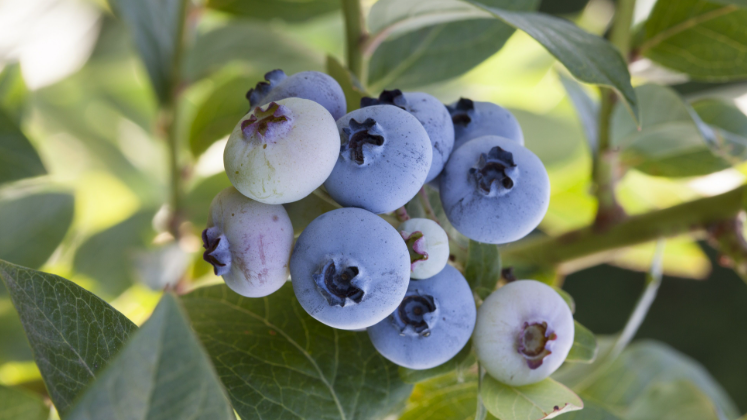
Highbush blueberry is one of the most popular berry bushes for a backyard because it combines ornamental appeal with useful fruit. In spring, the shrubs produce clusters of white to pinkish flowers, followed by berries that gradually change color as they ripen.
The plants can also provide attractive autumn foliage, making them useful in an edible landscape rather than requiring a separate fruit patch. Their relatively compact growth makes them practical for many residential gardens.
The major consideration is soil. Blueberries require acidic, well-drained soil with plenty of organic matter. Different cultivars are adapted to different climates, so choose varieties suited to your region.
2. Raspberry (Rubus idaeus and related species)
Raspberries are excellent for gardeners who want fruit that can be eaten straight from the plant. Depending on the cultivar, berries can be red, black, purple, or yellow.
Raspberry plants produce perennial roots with canes that have different roles during their two-year cycle. Some newer types produce fruit on first-year canes, simplifying management for home gardeners.
Give raspberries a sunny location with good drainage and enough room for their canes. A simple support system can make harvesting and pruning much easier.
3. Blackberry (Rubus spp.)
Blackberries are vigorous fruiting plants that can produce generous harvests when given suitable conditions.
Modern cultivars include thornless types, which can be particularly appealing in a family backyard where easier harvesting is important. Upright and compact varieties can also make blackberries more manageable in limited spaces.
Plant them in full sun and well-drained soil. Depending on the cultivar, blackberries may benefit from trellising or other support.
4. Red Currant (Ribes rubrum)
Red currants produce attractive hanging clusters of translucent red berries.
They are particularly useful in smaller gardens because the plants can be grown as individual specimens, grouped together, or incorporated into hedges. Iowa State University notes that currants can grow in partial to full sun and are generally self-fruitful.
The tart berries are excellent for jellies, sauces, desserts, and fresh eating. In warmer areas, provide protection from intense afternoon heat when appropriate.
5. Black Currant (Ribes nigrum)
Black currants are valued for their intensely flavored, dark berries.
The fruit has a stronger flavor than many common backyard berries, making it especially useful for jams, syrups, baked goods, and beverages.
Black currants can be a good option where summers are relatively cool. Choose disease-resistant cultivars appropriate for your region, particularly where diseases affecting Ribes are a concern.
6. Gooseberry (Ribes spp.)
Gooseberries are among the more underused berry bushes for home gardens.
Depending on the cultivar, the fruits can be green, yellow, pink, or red. They have a distinctive sweet-tart flavor and are excellent for pies, jams, sauces, and desserts.
One advantage for gardeners with limited sunlight is that gooseberries can tolerate partial to full sun. However, choose cultivars suited to your local climate and keep the plants adequately ventilated.
7. American Elderberry (Sambucus canadensis)
American elderberry is a larger berry-producing shrub that offers more than fruit. Its clusters of flowers attract pollinators, while the berries provide food for birds.
The shrub is particularly useful where the soil stays somewhat moist. University of Maine Extension identifies American elderberry as an option for wetter backyard locations where blueberries and brambles may struggle.
The ripe berries are commonly cooked before being used in foods such as jams, pies, and syrups. Because elderberry plants and preparation methods vary, follow reliable food-safety guidance rather than eating unverified plant material raw.
8. Serviceberry (Amelanchier spp.)
Serviceberry is a particularly attractive choice for an edible landscape because it combines fruit production with ornamental qualities.
The plant produces delicate flowers in spring, edible berries later in the season, and often develops attractive autumn color. It can grow as a large shrub or small tree depending on the species.
University of Maryland Extension describes serviceberry as a suitable home-garden plant with early spring flowers, edible fruit, wildlife value, and fall color.
9. Aronia or Black Chokeberry (Aronia melanocarpa)
Black chokeberry is a hardy native shrub that produces clusters of dark berries.
Fresh berries are notably astringent, so they are more commonly used in processed foods than eaten directly. The shrub compensates with excellent ornamental qualities, including white flowers and colorful fall foliage.
It is also valuable for wildlife. University of Maine Extension lists black chokeberry among berry shrubs that tolerate wet conditions and provide forage for birds.
10. Haskap or Honeyberry (Lonicera caerulea)
Haskap, commonly called honeyberry, is an exceptionally cold-hardy berry shrub.
Its elongated blue fruits ripen early, often before many traditional backyard berries. The flavor can remind gardeners of a mixture of blueberry, raspberry, and currant.
Because cultivars can differ in pollination requirements and performance, plant compatible varieties recommended for your climate. Haskap is particularly attractive to gardeners in regions with severe winters.
11. Saskatoon (Amelanchier alnifolia)
Saskatoon is closely related to other serviceberries and is particularly useful in colder climates.
Its berries mature to dark purple and can be eaten fresh or turned into jams, jellies, syrups, and baked goods. The plants also provide attractive spring flowers and fall color.
OSU Extension notes that Saskatoons prefer full sun and moist, well-drained soil and can begin producing fruit within a few years of planting.
12. Jostaberry (Ribes × nidigrolaria)
Jostaberry is a hybrid related to black currants and gooseberries.
The plants produce dark berries that combine characteristics of their parent plants. They can be used fresh or incorporated into preserves, desserts, and sauces.
For gardeners looking for something different from standard blueberries and raspberries, jostaberry offers an interesting addition to the edible landscape.
13. Beach Plum (Prunus maritima)
Beach plum is a native shrub associated with sandy coastal environments.
Its small fruits can range from purple to red and are often used for preserves and other cooked preparations. White spring flowers also make the shrub attractive before the fruit develops.
It is particularly useful for gardeners in suitable coastal regions who want a native fruiting shrub rather than a conventional berry crop.
14. Black Raspberry (Rubus occidentalis)
Black raspberries are closely related to red raspberries but produce distinctive dark fruit.
The berries are delicious fresh and work well in jams, pies, sauces, and frozen desserts.
They require careful cane management, and their spreading growth means they should be given adequate space. A sunny site with good drainage is particularly important for productive plants.
15. Wineberry (Rubus phoenicolasius)
Wineberry produces attractive red fruits surrounded by a distinctive reddish husk.
The berries are juicy and can be eaten fresh or used in desserts and preserves.
However, wineberry is invasive in some parts of North America. Check your local invasive-species regulations before planting it. Where it is considered invasive, choose a non-invasive raspberry or blackberry cultivar instead.
16. Nanking Cherry (Prunus tomentosa)
Nanking cherry is a hardy fruiting shrub that produces small red fruits.
Its spring flowers appear before the foliage fully develops, giving the plant ornamental value as well as fruit.
The shrub can be useful as an informal hedge or specimen plant in suitable climates. It generally appreciates good drainage and plenty of sunlight.
17. Goumi (Elaeagnus multiflora)
Goumi is an unusual fruiting shrub that produces small red berries with a characteristic tart flavor.
The silvery foliage and attractive spring flowers give it ornamental appeal, while the fruit adds another edible crop to the backyard.
Because goumi can behave aggressively in some regions, check local recommendations before planting. It is better suited to gardeners who have enough room to accommodate a vigorous shrub.
18. Lingonberry (Vaccinium vitis-idaea)
Lingonberries are low-growing evergreen plants rather than tall bushes.
They produce bright red berries and are closely related to blueberries and cranberries. Their compact habit makes them useful for small gardens, containers, and acidic planting beds.
Like blueberries, they prefer acidic soil. They are particularly interesting for gardeners who want a berry crop without sacrificing much garden space.
19. Hardy Kiwi (Actinidia arguta)
Hardy kiwi is technically a vigorous woody vine rather than a berry bush, but it deserves consideration when planning a backyard fruit garden.
The small, smooth-skinned fruits can be eaten whole when ripe. The plant requires a strong support structure because its vines become substantial.
Many cultivars require separate male and female plants for reliable fruit production, so check the requirements of your chosen variety before planting.
20. Dwarf Blueberry (Vaccinium hybrids)
Compact blueberry cultivars are particularly useful where backyard space is limited.
They can fit into small fruit beds, ornamental borders, and, with appropriate cultivar and container selection, patio gardens.
The same basic blueberry requirements still apply: acidic soil, good drainage, adequate moisture, and sufficient sunlight. Growing a compact plant does not eliminate the need for proper soil preparation.
21. Raspberry Hybrids and Compact Brambles
Modern raspberry and bramble cultivars give homeowners more choices than traditional sprawling varieties.
Some compact or specially selected cultivars can fit into smaller gardens, while thornless options can make harvesting easier. Pennsylvania State University notes that newer compact bramble cultivars have expanded the possibilities for home gardens, including some container-growing situations.
When selecting one, pay attention to mature size, fruiting type, winter hardiness, disease resistance, and whether the plant requires support.
Final Thoughts
The best berry bush for your backyard is the one that matches your climate, soil, sunlight, available space, and gardening goals. Blueberries are excellent for acidic soil, while currants and gooseberries can be more forgiving when light shade is unavoidable. Raspberries and blackberries are productive choices when you have room for their canes, and serviceberries, elderberries, and chokeberries can combine fruit production with wildlife value.
Before buying plants, check the mature size and hardiness of the specific cultivar rather than relying only on the common name. A well-planned backyard berry garden can include several species with different harvest seasons, giving you fresh fruit over a longer period while also creating an attractive edible landscape. Full sun is generally advantageous for fruit production, although currants and gooseberries can tolerate less light than many other small fruits.
Further References
- University of Maryland Extension — Starting a Home Fruit Garden. Information on site selection, sunlight, spacing, pollination, and recommended small fruits. University of Maryland Extension
- University of Maryland Extension — Growing Blueberries in a Home Garden. Detailed guidance on blueberry soil, pruning, fruiting, and cultivation. Growing Blueberries in a Home Garden
- Penn State Extension — Brambles in the Home Fruit Planting. Information on raspberries, blackberries, cane growth, and compact cultivars. Penn State Extension
- Iowa State University Extension — Growing Currants and Gooseberries in the Home Garden. Guidance on growing conditions, sunlight, pollination, and cultivars. Iowa State University Extension
- University of Maine Cooperative Extension — Berry Bushes in the Backyard. Practical recommendations for blueberries, brambles, elderberries, chokeberries, and winterberry. University of Maine Cooperative Extension
- Oregon State University Extension — Selecting Berry Crop Varieties. Information on raspberries, blackberries, currants, gooseberries, and Saskatoons. Oregon State University Extension