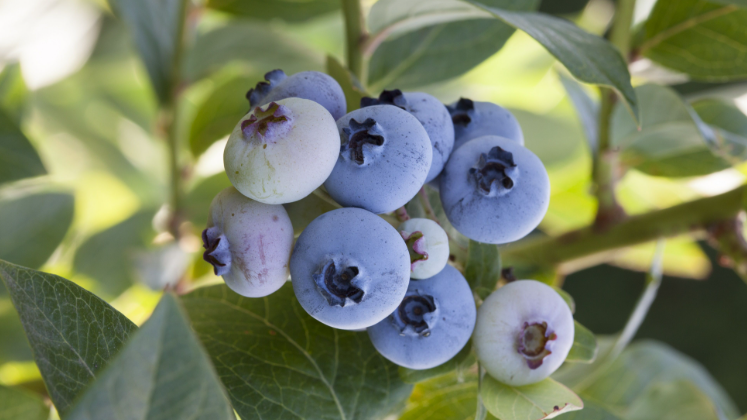
Huckleberries are woodland-adapted plants that look especially natural when grown alongside other species that enjoy similar conditions. Rather than treating a huckleberry as an isolated shrub, you can build a layered planting around it using trees, shrubs, ferns, ground covers, and flowering natives.
The best companion plants depend on the huckleberry species. Red huckleberry (Vaccinium parvifolium), evergreen huckleberry (Vaccinium ovatum), and mountain huckleberry (Vaccinium membranaceum) have somewhat different habitats. However, many huckleberries prefer acidic, organic-rich, well-drained soil and consistent moisture. Western huckleberries can also benefit from conditions that resemble their native forest environments.
Several plants below are particularly appropriate for Pacific Northwest-style huckleberry gardens, where huckleberries naturally occur with species such as salal, sword fern, thimbleberry, salmonberry, Oregon grape, and rhododendrons.
1. Salal (Gaultheria shallon)
Salal is one of the most natural companions for huckleberries, particularly in Pacific Northwest gardens. It is an evergreen shrub with leathery leaves, pinkish-white flowers, and dark edible berries.
Its dense growth creates a useful lower shrub layer beneath taller huckleberries. Red huckleberry commonly occurs with salal in natural forest communities.
Also Read: How to Store Fresh Huckleberries
2. Sword Fern (Polystichum munitum)
Western sword fern is an excellent understory companion for woodland huckleberries.
Its arching evergreen fronds create a lush ground layer without competing visually with the berries. Sword fern is also documented as an associate of evergreen huckleberry in Pacific Northwest forests.
3. Pacific Rhododendron (Rhododendron macrophyllum)
Pacific rhododendron makes a strong companion for huckleberries because both can fit naturally into acidic woodland gardens.
Its large evergreen leaves and spring flowers provide contrast with the smaller leaves and berries of huckleberries. Red huckleberry is specifically listed with rhododendrons as a suitable companion.
4. Oregon Grape (Mahonia aquifolium)
Oregon grape provides evergreen foliage, yellow flowers, and blue-purple berries.
It works especially well in a mixed native planting because it contributes food and habitat while giving the garden another evergreen layer.
It is also a documented associate of red huckleberry in western forests.
5. Thimbleberry (Rubus parviflorus)
Thimbleberry is a deciduous native shrub with large, soft leaves and raspberry-like red fruit.
It naturally grows alongside several western huckleberries, making it a particularly convincing choice for a naturalistic woodland planting.
Give it plenty of room because it can spread and form colonies.
6. Salmonberry (Rubus spectabilis)
Salmonberry is another excellent Pacific Northwest companion.
It produces attractive flowers followed by yellow, orange, or reddish fruits and can form substantial thickets. The U.S. Forest Service lists salmonberry among the plants commonly associated with red and evergreen huckleberries.
7. Vine Maple (Acer circinatum)
Vine maple can add a small-tree layer above huckleberries.
Its branching structure and colorful autumn foliage provide seasonal interest, while its natural woodland habit makes it appropriate for a native forest-edge garden.
Because it can eventually create shade, position it where it will not block all the light needed by fruiting huckleberries.
8. Western Azalea (Rhododendron occidentale)
Western azalea is a deciduous native shrub with fragrant flowers.
It works well in a mixed woodland or forest-edge planting and shares the preference for acidic growing conditions common among many huckleberry species.
Its flowers also add seasonal color without overwhelming a berry-focused garden.
9. Oceanspray (Holodiscus discolor)
Oceanspray is a graceful deciduous shrub with cascading clusters of small flowers.
It can add height and structure to a huckleberry planting while maintaining a natural woodland appearance.
Oregon State University includes oceanspray among recommended Northwest native shrubs.
10. Pacific Ninebark (Physocarpus capitatus)
Pacific ninebark is useful when you want a larger native shrub around huckleberries.
Its white flower clusters attract attention in late spring and its branching structure provides habitat.
It is another Pacific Northwest native listed by Oregon State University for native landscape plantings.
11. Red Flowering Currant (Ribes sanguineum)
Red flowering currant brings an important early-season flowering period to the garden.
Its clusters of pink to reddish flowers can provide resources for pollinators before many summer-flowering plants begin blooming.
OSU Extension recommends it among Northwest native shrubs.
12. Indian Plum (Oemleria cerasiformis)
Indian plum is an early-flowering native shrub that can provide another layer of seasonal interest.
Its berries develop later in the year, making it useful in a wildlife-oriented garden where different plants contribute food at different times.
It is included among recommended Northwest native shrubs by OSU Extension.
13. Kinnikinnick (Arctostaphylos uva-ursi)
Kinnikinnick is a low-growing evergreen ground cover that can fill space beneath taller shrubs.
Its trailing habit contrasts nicely with upright huckleberries, while its small berries add another wildlife food source.
It is particularly appropriate for dry, well-drained sites where the local climate suits it.
Also Read: How to Increase Huckleberry Fruit Production
14. Bunchberry (Cornus canadensis)
Bunchberry is a low woodland plant with attractive foliage, white flower-like bracts, and red berries.
It can occupy the ground layer while huckleberries dominate the shrub layer.
Red huckleberry is naturally associated with bunchberry in several forest communities.
15. Oregon Oxalis (Oxalis oregana)
Oregon oxalis is a shade-loving woodland ground cover that can soften the area around huckleberries.
Its clover-like foliage and small flowers create a natural forest-floor effect.
It is listed among the common understory associates of evergreen huckleberry.
16. Deer Fern (Blechnum spicant)
Deer fern is another excellent choice for a moist woodland setting.
Its tidy foliage creates a low, textural layer beneath huckleberry shrubs without competing for attention with the berries.
The species occurs naturally among evergreen huckleberry communities.
17. Hazel (Corylus cornuta)
Beaked hazelnut can add a taller shrub layer to a native planting.
It is documented as an understory associate of evergreen huckleberry and can help create the layered structure typical of natural woodland vegetation.
Give it enough space because mature plants can become substantial.
18. Douglas-Fir (Pseudotsuga menziesii)
Douglas-fir is not appropriate for every garden because it can eventually become enormous.
However, in a large property or restoration-style planting, it can provide the tall canopy layer associated with many western forest ecosystems.
Use it only where there is adequate room for the mature tree and its root system.
19. Pacific Madrone (Arbutus menziesii)
Pacific madrone is another large native tree associated with evergreen huckleberry habitats.
Its evergreen foliage, peeling bark, flowers, and fruits provide considerable visual and ecological interest.
Because it is a tree rather than a small companion shrub, it is best reserved for spacious landscapes.
20. California Hazelnut and Related Woodland Shrubs
In regions where huckleberries naturally grow with hazel and other woodland shrubs, using locally native species can create a more authentic plant community.
The key is not to select plants simply because they look attractive together. Choose species that share the same moisture, light, soil, and climate requirements.
This approach reduces competition and makes the planting more coherent.
21. Native Ferns and Woodland Ground Covers
If you cannot accommodate another large shrub, native ferns and suitable woodland ground covers are excellent companions.
Red huckleberry, for example, naturally occurs with lady fern, oak fern, and other forest-floor plants.
These lower-growing plants help create the layered structure that huckleberries experience in nature without requiring another large woody plant.
How to Choose Huckleberry Companion Plants
The most important consideration is matching growing conditions.
Huckleberries generally prefer acidic soils, and western species can thrive in soil rich in organic material and decomposed woody matter. The University of Idaho notes that western huckleberries perform well in acidic soils and that productive natural sites often contain substantial forest organic matter.
A soil test is useful before planting. Rutgers also lists huckleberries, blueberries, chokeberries, inkberry, rhododendrons, and other acid-loving plants among species adapted to acidic soil.
For Moist Woodland Gardens
Consider:
- Red huckleberry
- Sword fern
- Deer fern
- Salmonberry
- Thimbleberry
- Oregon oxalis
- Bunchberry
For Pacific Northwest Forest Gardens
Consider:
- Salal
- Oregon grape
- Vine maple
- Pacific rhododendron
- Oceanspray
- Western azalea
- Sword fern
For Smaller Gardens
Focus on lower-growing companions such as:
- Kinnikinnick
- Bunchberry
- Oregon oxalis
- Deer fern
- Sword fern
Avoid large trees unless you have sufficient space.
What Should You Avoid Planting Beside Huckleberries?
The biggest mistake is choosing a companion solely because it looks good.
Avoid aggressive plants that can overwhelm young huckleberries or compete heavily for moisture. Plants that require very different soil conditions may also perform poorly in the same bed.
Huckleberries are sensitive to both drought and excessive watering, so companions should ideally have compatible moisture requirements.
Also avoid overcrowding. Good companion planting should create layers without forcing plants to compete for every available root space.
How to Create a Huckleberry Companion Planting
For a natural woodland effect, think in three layers.
Upper layer: Use a small native tree or tall shrub such as vine maple where appropriate.
Middle layer: Plant huckleberries alongside salal, Oregon grape, rhododendron, thimbleberry, or other compatible shrubs.
Ground layer: Fill the woodland floor with ferns, bunchberry, Oregon oxalis, or another locally appropriate ground cover.
This arrangement resembles the layered structure found in natural forest communities and can make the garden more attractive to wildlife.
Final Thoughts
The best companion plants for huckleberries are those that share their ecological preferences rather than simply those that look attractive beside them. Salal, sword fern, Oregon grape, rhododendrons, thimbleberry, salmonberry, vine maple, bunchberry, and Oregon oxalis are especially useful choices for Pacific Northwest-style plantings.
Most importantly, choose companions according to your particular huckleberry species. Evergreen huckleberry, red huckleberry, and mountain huckleberry do not all occupy exactly the same habitats.
A diverse planting with compatible shrubs, ferns, ground covers, and native flowering plants can create a healthier and more natural-looking garden while providing additional food and shelter for wildlife.
References
- University of Idaho Extension — Growing Western Huckleberries. Provides information on huckleberry soil, moisture, sunlight, organic matter, and cultivation. University of Idaho Extension
- Oregon State University Extension — Gardening with Oregon Native Plants. Includes information on red huckleberry and compatible native plants and wildlife value. Oregon State University Extension
- USDA Forest Service — Vaccinium ovatum (Evergreen Huckleberry). Documents natural plant associations and habitat relationships of evergreen huckleberry. USDA Forest Service Research and Development
- USDA Forest Service — Vaccinium parvifolium (Red Huckleberry). Provides information on natural associates and forest communities containing red huckleberry. USDA Forest Service Research and Development
- North Carolina Extension Gardener Plant Toolbox — Highbush Huckleberry. Covers huckleberry growing conditions, wildlife value, pollinators, and native habitat. NC State Extension Plant Toolbox
- Rutgers New Jersey Agricultural Experiment Station — Soil pH and Lime Requirement. Provides information on acid-loving plants and suitable soil pH ranges. Rutgers NJAES