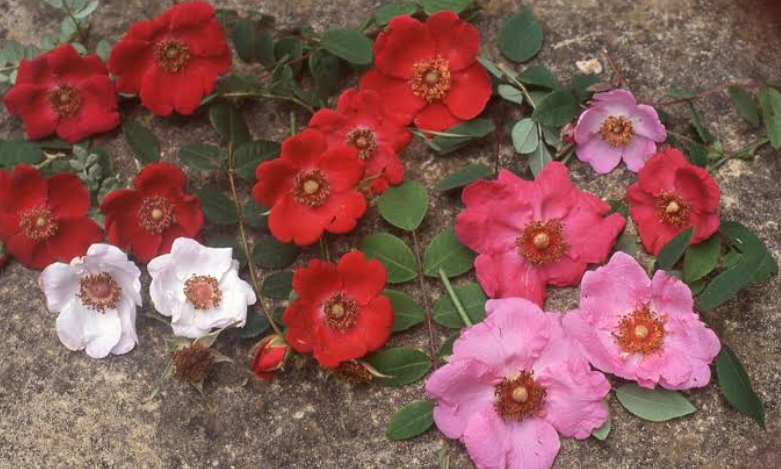
Wild roses are the original members of the Rosa genus from which many familiar garden roses ultimately descended. Unlike highly bred modern roses, wild species generally have simpler flowers, often with five petals, prominent stamens, and a natural, informal appearance. They occur across much of the Northern Hemisphere, with species adapted to forests, grasslands, mountains, wetlands, coastlines, and other habitats.
One of the easiest ways to recognize a wild rose is to look beyond the flower. Many species are thorny or prickly shrubs with pinnately divided, toothed leaves, while their flowers are followed by colorful rose hips. These hips are important to wildlife because birds and mammals can eat them and help disperse the seeds.
There are hundreds of accepted Rosa species worldwide, although the exact number can change as botanists revise the classification of this complicated genus. Kew’s Plants of the World Online currently recognizes more than 290 accepted species. The 24 wild roses below highlight some of the most recognizable and horticulturally interesting species.
What Is a Wild Rose?
A wild rose is generally a naturally occurring Rosa species rather than a highly bred garden cultivar. Wild roses usually have simpler flowers than hybrid teas, floribundas, and other cultivated roses.
Their flowers commonly contain five petals and numerous stamens. After flowering, many species develop rose hips that range from orange and red to dark purple or nearly black.
Wild roses can be valuable ecological plants because their flowers provide resources for pollinating insects while their hips provide food for wildlife. However, some introduced species can become invasive outside their native range, so local recommendations should always be considered.
1. Prairie Rose (Rosa arkansana)
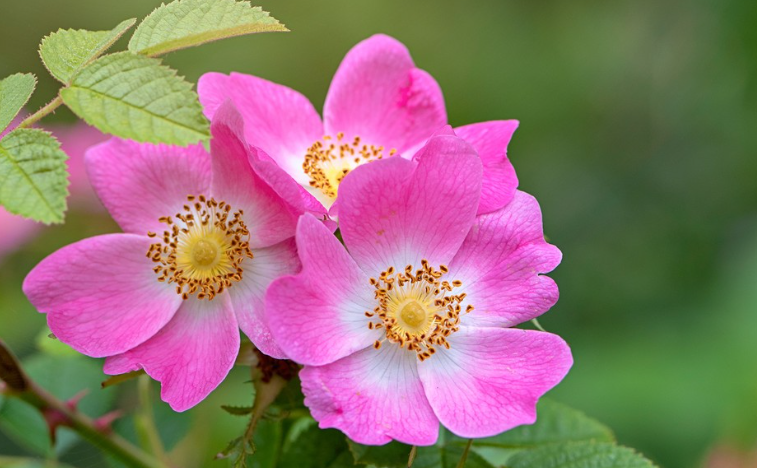
The prairie rose is a low-growing wild rose native to parts of central North America. It is commonly associated with prairies, open woodland edges, and other sunny habitats.
Its flowers are usually pink with five broad petals surrounding prominent yellow stamens. The simple blooms have a distinctly natural appearance.
This species can spread through underground stems and form colonies. Its compact growth makes it particularly recognizable among North American wild roses.
2. Carolina Rose (Rosa carolina)
Carolina rose is a North American species found in open woodlands, meadows, roadsides, and other sunny locations. It is generally a low to medium-sized shrub.
The flowers are typically soft pink with five petals and a bright cluster of yellow stamens in the center. They have the classic appearance of a wild rose.
Its red hips develop after flowering and can add seasonal interest. The species is especially attractive when allowed to grow naturally rather than being heavily shaped.
Also Read: Different Types of Roses
3. Virginia Rose (Rosa virginiana)
Virginia rose is a hardy wild rose native to eastern North America. It commonly grows in sandy areas, coastal habitats, meadows, and open woodland.
Its pink flowers are relatively large for a wild rose and have five petals surrounding golden stamens. The foliage is green and divided into several toothed leaflets.
Bright red hips follow the flowers and can persist into the cooler months. This combination of flowers, foliage, and hips gives the plant several seasons of interest.
4. Swamp Rose (Rosa palustris)
Swamp rose is a moisture-loving species associated with wetlands, marshes, stream edges, and other damp environments. Unlike roses adapted to dry ground, it performs naturally in wet habitats.
The flowers are pink and relatively simple, with five petals and numerous yellow stamens. They provide a delicate contrast against the surrounding vegetation.
Its stems can become arching or somewhat sprawling. The species is an excellent example of how wild roses occupy habitats very different from conventional garden rose beds.
5. Woods’ Rose (Rosa woodsii)
Woods’ rose is a widespread North American wild rose found in parts of western and central North America. It can occur in open forests, shrublands, valleys, and mountainous areas.
Its flowers are generally pink with five petals and a conspicuous center of yellow stamens. The blooms have the uncomplicated structure typical of wild roses.
After flowering, red hips develop and provide food for wildlife. Its natural growth habit makes it more suited to informal landscapes than highly formal rose gardens.
Also Read: Major Types of Hybrid Tea Roses
6. Nootka Rose (Rosa nutkana)
Nootka rose is native to western North America, particularly areas around the Pacific region. It can grow in coastal areas, woodland margins, and open habitats.
The flowers are pink and usually solitary or occur in small groups. Their five-petaled form makes them easy to distinguish from many double-flowered cultivated roses.
The species produces noticeable hips after flowering. Its ability to grow naturally in diverse western habitats makes it an important native rose for regional landscapes.
7. Baldhip Rose (Rosa gymnocarpa)
Baldhip rose is a western North American species often associated with forests and shaded woodland environments. It is generally smaller and more delicate than some shrub-forming wild roses.
Its flowers are usually pale pink to nearly white and have the familiar five-petal structure. The blossoms contrast nicely with its green foliage.
The name refers to a distinctive characteristic of its rose hips. It is an interesting species for anyone studying the diversity of native roses.
8. California Wild Rose (Rosa californica)
California wild rose is native to western North America and is particularly associated with California and neighboring regions. It often grows in moist areas, stream corridors, and open woodland.
The flowers are pink with five petals and a central cluster of yellow stamens. Their simple form attracts pollinating insects.
The shrub can form dense growth, providing cover for wildlife. Its hips add another source of seasonal interest after flowering.
9. Wood’s Rose, Mountain Form (Rosa woodsii varieties)
Different regional forms of Rosa woodsii can vary in growth and appearance. This diversity reflects how wild roses adapt to different landscapes.
The flowers remain characteristically simple, generally appearing in shades of pink around yellow stamens. Their natural appearance is very different from heavily hybridized garden roses.
These regional forms can be important for native-plant restoration. Choosing locally appropriate material is preferable to treating every population as interchangeable.
10. Arctic Rose (Rosa acicularis)
The Arctic rose has one of the broadest distributions among North American wild roses and is adapted to cold climates. It occurs across northern regions and extends into parts of Asia.
Its pink flowers have five petals and numerous stamens. The plant can form a thorny shrub that tolerates challenging environments.
The species is particularly interesting because of its cold adaptation. It demonstrates how the Rosa genus can survive in northern habitats where many cultivated roses struggle.
11. Dog Rose (Rosa canina)
Dog rose is a familiar European wild rose that also occurs in parts of North Africa and western Asia. It commonly grows as an arching shrub or scrambling plant.
Its flowers are usually pale pink or white with five petals. The simple blooms are followed by oval red hips.
Dog rose has a long association with European landscapes and hedgerows. Its hips are also an important food resource for wildlife.
Also Read: Different Types of Thornless Roses
12. Sweet Briar (Rosa rubiginosa)
Sweet briar is a European wild rose famous for its fragrant foliage. When the leaves are crushed, they can produce a distinctive apple-like scent.
The flowers are generally pink with five petals and prominent golden stamens. The combination of fragrant foliage and simple flowers makes this species especially memorable.
It produces red hips after flowering. Because it has been introduced beyond its native range, gardeners should check whether it is considered invasive locally.
13. Rugosa Rose (Rosa rugosa)
Rugosa rose is native to eastern Asia and is recognized by its strongly wrinkled, leathery leaves. The species has become widely cultivated because of its toughness and attractive flowers.
Its flowers may be pink or white and usually have five petals. The foliage provides one of its strongest identification features.
Large, fleshy hips can develop after flowering. Although useful ornamentally, Rosa rugosa has become invasive in some regions, particularly coastal areas, so local regulations and recommendations matter.
14. Multiflora Rose (Rosa multiflora)
Multiflora rose is an Asian species recognized for producing numerous small flowers in large clusters. This characteristic distinguishes it from many native wild roses.
The flowers are generally white and relatively small, but their abundance can create an impressive display. Each cluster may contain many individual blooms.
The species has naturalized extensively in some regions outside Asia. In parts of North America, it is considered invasive and can form dense thickets, making local status important before planting.
15. Gallica Rose (Rosa gallica)
Rosa gallica is a European wild rose with a long history of cultivation. It is considered one of the important ancestral species involved in the development of old garden roses.
Its flowers are usually pink to reddish-purple and can be more richly colored than those of many wild species. The blooms have a traditional rose appearance while retaining a relatively simple structure.
The species is particularly important historically because wild roses served as genetic building blocks for later cultivated varieties.
16. Field Rose (Rosa arvensis)
Field rose is a European species that differs from many upright shrub roses because it can grow in a scrambling or climbing manner. Kew recognizes Rosa arvensis as an accepted species.
Its flowers are generally white, with five petals and prominent yellow stamens. The blooms appear especially attractive against surrounding green vegetation.
It can spread through hedgerows, woodland margins, and other habitats. Its flexible growth habit makes it an interesting wild counterpart to cultivated climbing roses.
17. Evergreen Rose (Rosa sempervirens)
Evergreen rose is a Mediterranean species and is classified by Kew as a liana. Its natural range includes parts of southern Europe and North Africa.
The flowers are typically white and have the characteristic simple structure of a species rose. The foliage can remain relatively persistent in suitable climates.
Its climbing habit makes it particularly different from compact wild roses. It demonstrates the range of growth forms found within the Rosa genus.
18. Apple Rose (Rosa villosa)
Apple rose is a European species extending toward the Caucasus. Kew lists Rosa villosa as an accepted species and gives “apple rose” as one of its English common names.
The flowers are generally pink and have five petals. Its foliage and fruiting characteristics also contribute to its identification.
The hips can be relatively large and rounded compared with those of some other wild roses. This makes the plant interesting beyond its flowering period.
Also Read: Different Types of Grandiflora Roses
19. Burnet Rose (Rosa spinosissima)
Burnet rose is a European and western Asian species that often develops into a compact, densely branched shrub. It is especially associated with sandy and coastal habitats.
Its flowers are usually white with a conspicuous yellow center. The contrast between the petals and stamens gives the blooms a clean, bright appearance.
The species can produce dark-colored hips that contrast with its foliage. Its ability to tolerate exposed conditions has contributed to its usefulness in challenging landscapes.
20. Glaucous Rose (Rosa glauca)
Glaucous rose is an unusual wild rose because its foliage can have a distinctive bluish or gray-green cast. This gives the plant interest even when it is not flowering.
Its flowers are generally pink and relatively simple, appearing against the unusual foliage. The combination creates a softer, muted color palette.
The species can be useful in informal borders where foliage is as important as flowers. Its hips provide additional seasonal color after blooming.
21. Musk Rose (Rosa moschata)
Musk rose is an old species associated with regions of Asia and has played a role in the history of cultivated roses. It is often described as a scrambling or climbing plant.
Its flowers are typically white and can appear in clusters. The blooms are relatively simple but can be produced in considerable numbers.
The species is particularly interesting for rose enthusiasts because of its historical importance and fragrance associations. It illustrates how wild species contributed characteristics to later garden roses.
22. Himalayan Musk Rose (Rosa brunonii)
Rosa brunonii is a climbing wild rose native to parts of the Himalayan region. Its growth habit allows it to scramble through surrounding vegetation.
The flowers are generally white and occur in clusters, creating a light, airy appearance. The simple blooms are characteristic of species roses.
Its climbing habit makes it visually different from many compact shrub roses. It is best appreciated as a botanical species rather than as a substitute for a modern garden climber.
23. China Rose (Rosa chinensis)
The China rose is native to China and is one of the historically important species associated with the development of modern cultivated roses. Kew notes that only a relatively small number of species contributed to the ancestry of today’s cultivated roses.
Its flowers can vary considerably in color and form depending on the botanical material and cultivated selections associated with the species.
The importance of Rosa chinensis goes beyond its appearance. Its genetic contribution helped introduce characteristics such as repeat flowering into the breeding history of garden roses.
Also Read: Different Types of Floribunda Roses
24. Evergreen Mediterranean Rose (Rosa sempervirens)
Rosa sempervirens deserves special attention among wild roses because of its evergreen character and climbing habit. Kew identifies its native range as Mediterranean and classifies it as a liana.
Its white flowers contrast with its persistent foliage, creating an attractive combination in suitable climates. The flowers retain the five-petaled simplicity typical of species roses.
For gardeners interested in botanical roses, this species demonstrates that wild roses are not limited to thorny, upright shrubs. Some are evergreen climbers capable of creating a very different landscape effect.
How to Identify a Wild Rose
Identifying wild roses is easier when you examine several characteristics together rather than relying only on flower color. Look at the number of petals, leaflet shape, prickles, flower arrangement, plant height, habitat, and especially the shape and color of the hips.
Most species roses have relatively simple flowers compared with modern double roses. The typical flower has five petals surrounding numerous stamens, although natural variation and hybridization can make identification more complicated.
Habitat is also important. A rose growing in a wetland may suggest a different species from one growing on a dry prairie or coastal dune. Because Rosa taxonomy can be complicated, difficult specimens are best identified using a regional botanical key or herbarium resource.
Wild Roses vs. Cultivated Roses
The biggest difference between wild and cultivated roses is their breeding history. Wild species evolved naturally, while modern garden roses have been selected and crossed for characteristics such as flower size, repeat blooming, fragrance, color, disease resistance, and growth habit.
Wild roses often have simpler flowers and stronger ecological relationships with local wildlife. Their hips can provide food for birds and mammals, while their flowers offer pollen and other resources to insects.
Cultivated roses, meanwhile, offer an enormous range of colors and flower forms. Both groups have value, but wild species can be especially useful when the goal is to create a more naturalistic garden or support local biodiversity.
Also Read: Plants that Grow Well With Roses
Growing Wild Roses in the Garden
Wild roses generally perform best when their growing conditions resemble those of their natural habitat. Many appreciate full sun, reasonable soil drainage, and sufficient moisture, although individual species vary considerably.
Avoid assuming that every wild rose has the same requirements. A wetland species such as swamp rose has very different preferences from a species naturally found on dry prairie or sandy coastal ground.
It is also important to choose species responsibly. Some wild roses introduced outside their native ranges can spread aggressively. Rosa rugosa and Rosa multiflora, for example, are considered invasive in some areas.
References
- Royal Botanic Gardens, Kew — Plants of the World Online: Rosa L. Taxonomic information, accepted species, distribution, and classification of the rose genus.
- Royal Botanic Gardens, Kew — Roses (Rosa). Information about rose diversity, morphology, hips, cultivation, and historical importance.
- USDA Forest Service — Rosa L.: Rose, Briar. Information on wild rose growth habits, distribution, ecology, and wildlife value.
- North Carolina State University Extension — Rosa rugosa. Botanical characteristics, habitat, growing conditions, and invasive potential of rugosa rose.