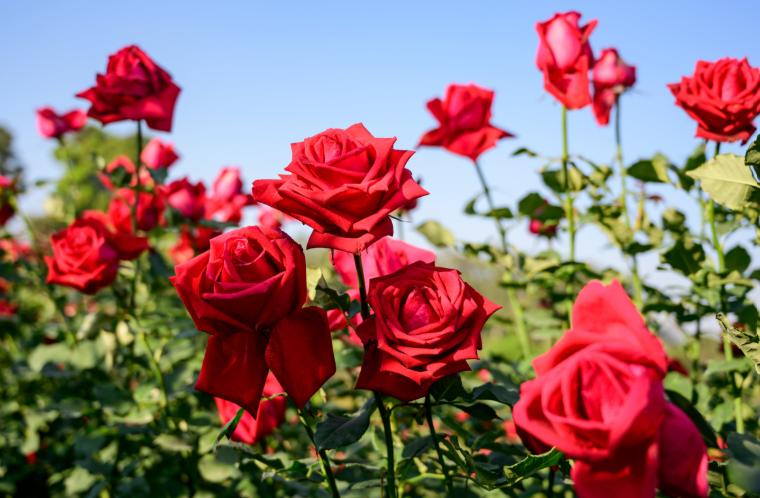
Roses rank among the most widely grown ornamental plants on earth, and understanding the different types of roses makes it far easier to choose the right variety for a garden, a cutting bed, or a container on a balcony. The genus Rosa contains more than 300 species and tens of thousands of cultivated hybrids, a scale of diversity that has built up over roughly 5,000 years of cultivation, starting in ancient China and spreading through Persia, the Mediterranean, and eventually Europe and the Americas. That long history means the roses sold at a garden center today are the product of centuries of crossbreeding between wild species and selectively bred garden forms, and each resulting class carries its own growth habit, bloom style, and native background.
Rose classification generally falls into three broad groups: species roses, which grow wild and have never been altered by breeders; old garden roses, a category that includes any class documented before the introduction of the first hybrid tea rose in 1867; and modern roses, which cover everything bred after that date. This system matters because it explains why a damask rose smells and grows so differently from a floribunda, even though both are technically roses. Old garden roses tend to bloom once a season but carry intense fragrance and cold hardiness passed down from their wild ancestors, while modern roses were bred primarily for repeat flowering, larger blooms, and a wider color range, often at some cost to scent.
Geography plays a defining role in how these types developed. Many of the oldest classes, including gallica, damask, and alba roses, trace back to the Middle East and the Mediterranean basin, where they were cultivated for perfume, medicine, and religious use long before they reached European gardens.
China roses, by contrast, arrived in Europe only in the late 1700s, but they changed rose breeding permanently because they were the first roses capable of blooming repeatedly through a growing season rather than just once in spring. Crossing these repeat-blooming Chinese roses with the older European classes produced hybrids like the bourbon, noisette, and hybrid perpetual roses, setting the stage for the modern rose varieties gardeners grow today.
This guide walks through the major types of roses grown around the world, organized from the modern classes most commonly sold in nurseries through the historic old garden roses and the wild species that started it all. Each entry covers where the type originated and what sets its growth habit, bloom form, and fragrance apart from the rest, so gardeners can match a rose’s background to the conditions and purpose it suits best, whether that is a formal cutting garden, a fragrant heirloom border, or a low-maintenance hedge.
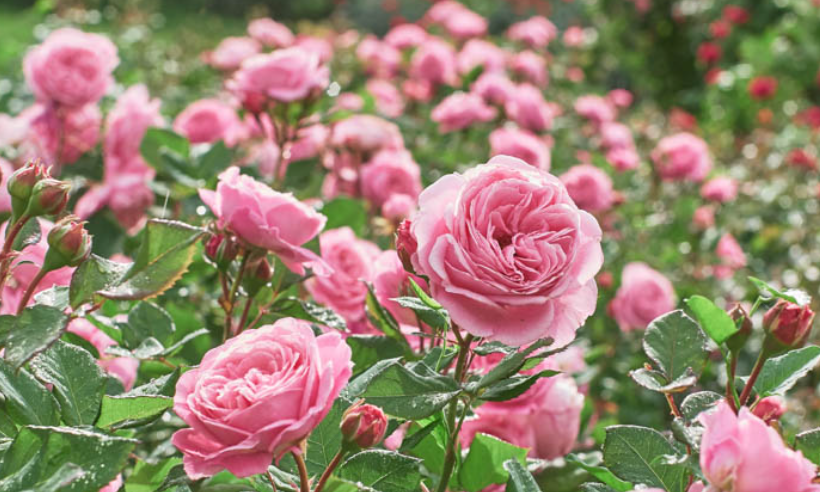
Types of Roses (Classification/Categories)
Hybrid Tea Rose
The hybrid tea rose is the classic long-stemmed rose sold in flower shops, and it originated in France in 1867 when breeder Jean-Baptiste Guillot crossed a hybrid perpetual rose with a tea rose to create the cultivar ‘La France.’
This cross combined the hardiness and large blooms of European roses with the repeat flowering and refined bud shape of Chinese tea roses, and the resulting class is generally treated as the starting point of modern rose breeding. Hybrid teas produce one large, high-centered bloom per stem, making them the standard choice for cut-flower arrangements and formal rose gardens.
Floribunda Rose
Floribunda roses were developed in Denmark in the early twentieth century by breeder Svend Poulsen, who crossed hybrid tea roses with polyantha roses to combine the polyantha’s clustered blooms with the hybrid tea’s larger flower size.
The name, from the Latin for “many-flowering,” reflects the class’s defining trait: instead of one bloom per stem, floribundas produce large clusters of medium-sized flowers that bloom continuously through the season. Because they are hardier and more disease-resistant than hybrid teas, floribundas became a popular choice for landscape borders and mass plantings rather than formal cutting gardens.
Grandiflora Rose
Grandiflora roses were bred in the United States in 1954, created by crossing a hybrid tea with a floribunda to combine the best traits of both parent classes.
The result is a tall, vigorous shrub that produces hybrid tea-style blooms in floribunda-style clusters, giving gardeners the elegant bud shape of a hybrid tea along with much heavier flowering. The first grandiflora cultivar, ‘Queen Elizabeth,’ was introduced to mark the coronation of Britain’s Queen Elizabeth II and remains one of the most widely grown roses in this class today.
Climbing Rose
Climbing roses are not a single breed but a growth habit found across many rose classes, including climbing sports of hybrid teas, floribundas, and old garden roses that developed long canes capable of being trained onto trellises, arbors, and walls.
This climbing trait has appeared repeatedly throughout rose history as a natural mutation, first documented in old European and Chinese garden roses centuries before formal rose breeding began. Unlike true vines, climbing roses do not twine or attach themselves; gardeners must tie their long canes to a support structure, and most varieties bloom most heavily on canes trained horizontally.
Rambling Rose
Rambling roses share the climbing habit but grow far more vigorously, with canes capable of reaching twenty to thirty feet, and most trace their ancestry to wild Asian species such as Rosa multiflora and Rosa wichurana, both native to China and Japan.
European breeders crossed these vigorous Asian ramblers with garden roses throughout the nineteenth century to produce cultivars suited to covering large structures like pergolas and old trees. Ramblers typically bloom only once each season, in a spectacular flush of small clustered flowers, distinguishing them from repeat-blooming climbing roses.
Miniature Rose
Miniature roses descend primarily from Rosa chinensis minima, a naturally dwarf form of China rose discovered growing in Mauritius and later documented in Europe in the early 1800s.
Breeders spent the following two centuries developing this dwarf species into a full class of roses that rarely exceed eighteen inches in height while retaining the same bloom shape and repeat flowering found in full-sized roses. Because of their compact size, miniature roses are grown extensively in containers and as houseplants, a use case that few other rose classes can fill.
Polyantha Rose
Polyantha roses were developed in France in the 1870s from crosses between Rosa multiflora, a rambling species native to East Asia, and China roses, producing a low, bushy shrub covered in large clusters of small flowers.
The class name means “many-flowered” in Greek, describing the dense clusters that became its signature trait before floribundas were bred from it decades later. Polyanthas remain valued for their compact size, heavy repeat blooming, and strong disease resistance, and many older landscape roses still sold today descend directly from this class.
Wild Roses
Wild roses are naturally occurring members of the genus Rosa. They are generally less formal in appearance than modern garden roses and often have single flowers.
They are valuable in wildlife gardens because their flowers provide pollen for insects and their hips can provide food for birds and other animals.
Origin: Various regions throughout the Northern Hemisphere.
Shrub Rose
Shrub rose is a broad modern category covering roses bred primarily for landscape use rather than cut flowers or formal show gardens, and it draws on parentage from nearly every other rose class, including species roses, old garden roses, and modern hybrids.
Breeders in the twentieth century, particularly in Canada and Germany, focused shrub rose development on cold hardiness and disease resistance for regions where hybrid teas struggled to survive winter. The result is a diverse class of roses bred for reliability and low maintenance in home gardens rather than for a single uniform bloom style.
English Rose
English roses were developed by British breeder David Austin beginning in the 1960s, who crossed old garden roses like gallicas and damasks with modern hybrid teas and floribundas to recreate the cupped, many-petaled bloom shape and strong fragrance of historic roses while adding the repeat flowering of modern varieties.
Austin bred and introduced the class from his nursery in Shropshire, England, and it remains closely associated with British rose breeding even though it has since been expanded by other growers worldwide. English roses are prized for combining old-fashioned bloom form and scent with the hardiness and continuous flowering that historic roses generally lack.
Damask Rose
Damask roses take their name from Damascus, Syria, reflecting their long cultivation history across the Middle East, where they were grown for centuries before European crusaders are traditionally credited with carrying them back to Europe.
The class is a naturally occurring hybrid between Rosa gallica and Rosa moschata, producing intensely fragrant, loosely double blooms that remain the primary source of rose oil and rose water used in perfumery today. Bulgaria’s Rose Valley and parts of Iran and Turkey still cultivate damask roses commercially for the perfume industry, a use that has continued largely unbroken since antiquity.
Gallica Rose
Gallica roses are among the oldest cultivated rose classes, native to central and southern Europe and western Asia, with cultivation records extending back to ancient Persia, Greece, and Rome.
The species Rosa gallica formed the genetic base for many later old garden rose classes, including damask and centifolia roses, through natural and deliberate hybridization over centuries. Gallica roses typically grow as compact, suckering shrubs with richly colored, fragrant blooms in shades of pink, mauve, and deep red-purple, and many surviving heirloom cultivars date back several hundred years.
Alba Rose
Alba roses originated in Europe as a natural hybrid between Rosa gallica and Rosa canina, the common dog rose native throughout the continent, and the class has been documented in cultivation since at least Roman times.
The name, Latin for “white,” describes the class’s typically pale pink to white blooms, though the plants themselves are notably vigorous and disease-resistant compared to other old garden roses. Alba roses tolerate partial shade and poor soil better than most rose classes, a trait inherited from the hardy dog rose parent that made them a practical choice in medieval European gardens.
Centifolia Rose
Centifolia roses, also called cabbage roses, were developed by Dutch breeders in the sixteenth and seventeenth centuries by layering crosses among gallica, damask, and alba roses over many generations.
The name, meaning “hundred-leaved” in Latin, refers to the densely packed, globular blooms containing far more petals than earlier rose classes, a shape that became a favorite subject for Dutch Golden Age flower painters. Because of this artistic association, centifolia roses are sometimes called the “painter’s rose,” and the class is still grown commercially in France for perfume production alongside damask roses.
Moss Rose
Moss roses emerged as a natural mutation of the centifolia rose in seventeenth-century France, distinguished by a moss-like, sticky growth covering the flower buds and stems that releases a resinous, pine-like scent when touched.
Breeders propagated and stabilized this mutation into its own class, and moss roses became especially fashionable in Victorian-era gardens across Europe and North America. Beyond the mossy texture, the class shares most of its bloom form, fragrance, and once-blooming habit with its centifolia parent.
Bourbon Rose
Bourbon roses originated on Île Bourbon, now Réunion, a French island in the Indian Ocean, where a chance natural cross occurred between a China rose and a damask rose growing together as a hedge in the early 1800s.
French botanist Édouard Perichon identified the resulting seedling and sent it to Paris, where breeders developed it into a full class known for large, cupped, intensely fragrant blooms and, unlike most old garden roses, the ability to repeat bloom through the season. This repeat-flowering trait made bourbon roses influential parents in the later development of hybrid perpetual roses.
China Rose
China roses, native to southern China, were cultivated there for well over a thousand years before European traders and plant collectors introduced them to the West in the late eighteenth century.
Their arrival transformed European rose breeding because China roses were the first class capable of blooming repeatedly throughout the growing season rather than just once, a trait almost entirely absent from the old European roses at the time. Modern rose breeding’s emphasis on continuous flowering traces directly back to these Chinese introductions, making the class one of the most historically significant in the genus.
Tea Rose
Tea roses developed in China alongside China roses but form a distinct class, prized for a bud shape and light fragrance that many growers compared to the scent of fresh tea leaves, which gave the class its name.
Introduced to Europe in the early 1800s slightly after China roses, tea roses were more tender and better suited to warm climates, limiting their popularity in colder parts of Europe. Their true significance came through breeding, since crossing tea roses with hybrid perpetuals produced the hybrid tea rose in 1867, the class that defines most modern rose varieties.
Noisette Rose
Noisette roses originated in South Carolina in the early 1800s, bred by rice farmer John Champneys, who crossed a China rose with a musk rose to produce a repeat-blooming climbing rose called ‘Champneys’ Pink Cluster.
‘ Champneys shared seedlings with nurseryman Philippe Noisette, who sent plants to his brother in Paris, where French breeders expanded the class and gave it its name. Noisette roses are notable as the only major rose class developed in North America, and they combine clustered blooms, a light musky fragrance, and a climbing or lax shrub habit.
Hybrid Perpetual Rose
Hybrid perpetual roses were developed in France beginning in the 1830s through complex crosses among bourbon, China, damask, and portland roses, aiming to combine repeat flowering with the cold hardiness needed for northern European winters.
The class dominated European and American rose gardens through the second half of the nineteenth century, prized for large, fragrant blooms on a hardier plant than the tender tea roses of the period. Hybrid perpetuals were also a direct parent of the hybrid tea rose, making the class a key bridge between old garden roses and modern rose breeding.
Hybrid Musk Rose
Hybrid musk roses were developed in England in the early twentieth century, largely through the work of clergyman and rose breeder Joseph Pemberton, who crossed noisette and multiflora hybrids with other garden roses.
Despite the name, most cultivars carry only a small amount of true musk rose ancestry, but they inherited its light, sweet fragrance along with a graceful, arching shrub habit and large clusters of blooms. Hybrid musks are valued for tolerating partial shade better than most modern roses, making them a practical choice for English cottage-style gardens.
Hybrid Spinosissima Roses
Hybrid spinosissima roses are related to Rosa spinosissima, commonly known as the Scotch rose or burnet rose.
They are often compact, hardy plants with small flowers and dark foliage.
Origin: Europe and western Asia.
Musk Rose
The musk rose, Rosa moschata, is a wild species believed native to the Himalayan foothills and parts of the Middle East, and it has been cultivated since antiquity for the distinctive musky fragrance released from its blooms, most noticeably in the evening.
It served as a parent species for numerous later classes, including damask, noisette, and hybrid musk roses, making it one of the most genetically influential wild roses in cultivation history. The species itself grows as a large, lax shrub or climber with clusters of small, single white flowers.
Modern Roses
Modern roses generally refer to rose groups developed after the introduction of the first hybrid tea rose, ‘La France’, in 1867.
Modern roses were bred for traits such as repeat flowering, improved flower form, new colors, longer stems, disease resistance, and landscape performance.
Origin: Primarily Europe, with important breeding contributions from Asia and North America.
Hybrid teas, floribundas, grandifloras, modern shrub roses, miniature roses, and many climbing roses belong to this broad category.
Rugosa Rose
Rugosa roses are native to the coastal regions of eastern Asia, including Japan, Korea, and northeastern China, where the species Rosa rugosa evolved to tolerate sandy soil, salt spray, and harsh winters along the shoreline.
Introduced to Europe and North America in the late 1800s, rugosa roses became popular for their extreme cold hardiness, disease resistance, and large, showy hips that follow the crinkled-leaved, fragrant blooms. Because of this toughness, rugosa roses are widely planted along coastlines and in northern climates where more delicate rose classes fail to thrive.
Species Rose
Species roses, sometimes called wild roses, are the naturally occurring Rosa species from which every cultivated rose class ultimately descends, found growing wild across the Northern Hemisphere in Asia, Europe, and North America.
Rosa canina, the dog rose common throughout Europe, and Rosa multiflora, native to East Asia, are among the best-known examples, typically producing simple five-petaled flowers followed by prominent hips. Because they have not been altered by breeding, species roses tend to be more disease-resistant and cold-hardy than cultivated hybrids, and many are still used today as breeding stock or rootstock for grafted roses.
Multiflora Rose
Rosa multiflora is native to Japan, Korea, and eastern China, where it grows as a vigorous, thorny rambling shrub covered in large clusters of small white flowers each spring. Introduced to the United States in the late 1800s, first as rootstock for grafted roses and later for erosion control and hedging, the species spread aggressively and is now classified as an invasive plant across much of the eastern and midwestern United States.
Despite its problematic spread outside its native range, multiflora rose remains historically important as a parent species behind polyantha, rambler, and hybrid musk roses.
Old Garden Roses
Old garden roses are traditional rose groups that existed before the widespread introduction of modern hybrid tea roses in the late 19th century.
They are often appreciated for their strong fragrance, historical importance, graceful growth, and distinctive flower forms.
Origin: Primarily Europe, the Middle East, and Asia, although individual groups have different histories.
Important old garden rose groups include Damask, Gallica, Alba, Centifolia, Bourbon, China, Portland, Moss, Noisette, and Tea roses.
Banksia Rose
Banksia rose, Rosa banksiae, is native to central and western China, where it grows along cliffs and forest edges as a large, thornless climbing shrub.
British plant collector William Kerr introduced it to Europe in the early 1800s, naming it after Dorothea Banks, wife of botanist Sir Joseph Banks, and it quickly became popular in warm climates for its vigorous growth and clusters of small, usually double, white or yellow flowers in early spring. Unlike most roses, banksia rose produces almost no thorns, and it tolerates heat better than most other climbing rose classes.
Dog Rose
Scientific name: Rosa canina
Dog rose is a widespread European wild rose with pale pink or white flowers.
Origin: Europe, western Asia, and parts of North Africa.
It produces red-orange hips after flowering.
Sweet Briar Rose
Sweet briar rose, also called eglantine, is native throughout Europe and western Asia, where Rosa eglanteria grows wild in hedgerows and woodland edges. The species is best known for the distinct apple-like fragrance released by its foliage, especially after rain, a trait that made it a popular choice for cottage garden hedging in England for centuries.
Its small pink single flowers are followed by bright orange-red hips, and the species has been referenced in English literature and poetry since at least the sixteenth century.
Portland Rose
Portland roses, sometimes called damask perpetuals, originated from a chance cross discovered in Italy in the late 1700s and were named after the Duchess of Portland, who introduced the class to England. The cultivar combined damask rose ancestry with the newly arrived China rose, and it became historically significant as one of the first old garden rose classes capable of repeat flowering.
Portland roses grow as compact, upright shrubs with fragrant, densely petaled blooms, and the class played a direct role in the later development of hybrid perpetual roses.
Ground Cover Rose
Ground cover roses are a modern landscape category bred specifically for low, spreading growth rather than an upright shrub form, developed largely in Germany during the twentieth century through breeding programs focused on low-maintenance municipal and highway plantings.
These roses typically stay under two feet tall while spreading three feet or more, and breeders prioritized disease resistance and continuous flowering over the large, refined blooms associated with hybrid teas. Because of their spreading habit and toughness, ground cover roses are commonly used to stabilize slopes and fill large landscape beds.
Patio Rose
Patio roses developed in England during the twentieth century as an intermediate class between miniature and floribunda roses, bred to reach a compact size suited to container growing on patios and small garden spaces.
Breeders achieved this by crossing miniature roses with floribundas, producing plants that retain clustered floribunda-style blooms on a scaled-down, well-branched shrub typically under two feet tall. The class remains especially popular in the United Kingdom, where compact garden and balcony spaces make container-friendly roses particularly practical.
Tree Rose
Tree roses, also called standard roses, are not a distinct genetic class but a grafting technique in which a rose variety, often a hybrid tea or floribunda, is budded onto the top of a tall, bare rootstock stem to create a lollipop-shaped plant.
The technique became popular in European formal gardens beginning in the nineteenth century as a way to add height and structure to rose beds without relying on naturally tall-growing classes. Because the graft union sits well above ground level, tree roses are more vulnerable to cold and wind damage than roses grown on their own roots.
Knock Out Rose
The Knock Out rose was developed in the United States by breeder William Radler, who introduced the original cultivar in 2000 after years of breeding for disease resistance without the need for regular spraying.
Radler crossed a hybrid tea rose with a landscape shrub rose, and the resulting Knock Out series quickly became one of the best-selling rose lines in American gardening history due to its continuous bloom and strong resistance to black spot and other common rose diseases. The series has since expanded into several color variations while retaining the same low-maintenance, disease-resistant traits of the original.
Drift Rose
Drift roses were developed jointly by breeders in France and the United States in the early 2000s, created by crossing miniature roses with ground cover roses to combine the compact size of the former with the spreading, low-maintenance habit of the latter.
The result is a rose that grows only about eighteen inches tall while spreading wider, producing continuous clusters of small blooms suited to borders, containers, and mass plantings. Because of this compact spreading habit, drift roses have become a popular modern alternative to traditional ground cover roses in home landscaping.
Autumn Damask Roses
Autumn damasks are particularly valuable because they can flower more than once during the growing season.
Origin: Historical development associated with the Middle East and Europe.
They contributed repeat-flowering characteristics to later rose breeding.
Frequently Asked Questions
What is the oldest type of rose? Gallica roses are generally considered the oldest cultivated rose class still grown today, with a documented history stretching back to ancient Persia, Greece, and Rome, long before formal rose breeding began in the nineteenth century.
What type of rose is used to make perfume? Damask roses and centifolia roses are the two classes most widely grown for perfume production, cultivated commercially in regions such as Bulgaria’s Rose Valley, Turkey, Iran, and parts of France for their essential oils.
What is the difference between a hybrid tea rose and a floribunda rose? Hybrid tea roses produce one large bloom per stem and are favored for cut flowers, while floribunda roses produce large clusters of smaller blooms per stem and are favored for continuous landscape color.
Which rose type is best for beginners? Shrub roses and Knock Out roses are generally recommended for beginners because both classes were bred specifically for disease resistance and repeat blooming with minimal maintenance.
What rose type is native to North America? Noisette roses are the only major rose class developed in North America, first bred in South Carolina in the early 1800s before being expanded by breeders in France.
Further References
References
- Marin Rose Society: Calendar of Rose Care
- Washington State University: Rose Requirements: A Twelve-Step Guide
- Schulte’s Greenhouse and Nursery: Purple Pavement Rose
- Missouri Botanical Gardens: Rosa “Schneekoppe” Snow Pavement
- Iowa State University Extension — Rose Types and Cultivars
- University of Illinois Extension — Rose Types
- Oklahoma State University Extension — Roses in Oklahoma